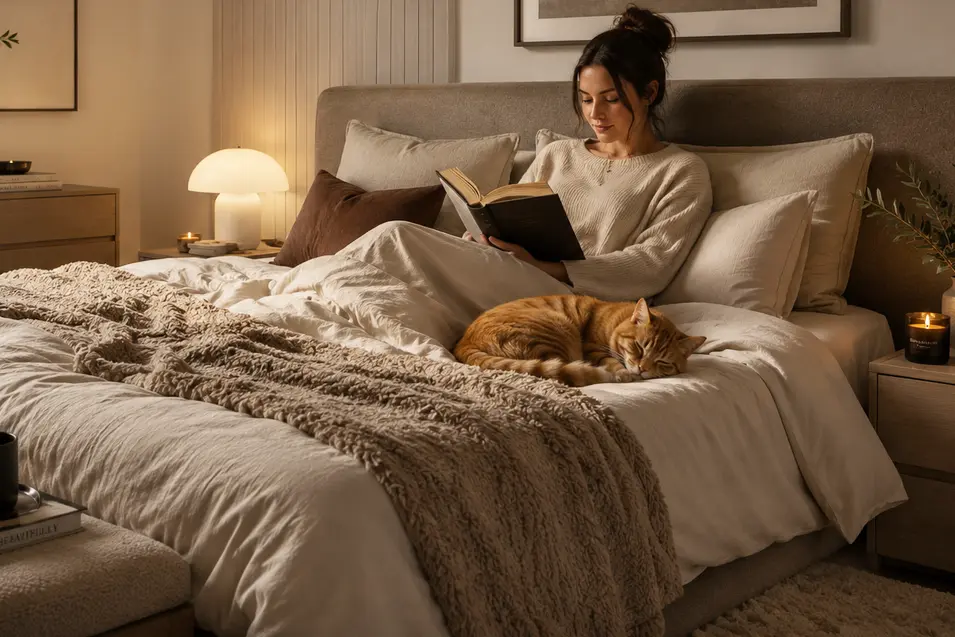
When I moved out of my parents’ house, my mother left my bedroom pretty much alone for about a year.
That made sense.
Moving out isn’t always a clean break. Young adults leave for university, take jobs in other cities, travel, move into questionable first apartments and occasionally discover that adulthood costs considerably more than advertised.
For a while, their old bedroom remains their bedroom.
Then, eventually, something changes.
In my case, I became a commercial diver and fisherman.
My mother responded to this development by decorating my old bedroom with a sailing border.
Apparently works underwater and on commercial fishing boats translated fairly easily into David must really like recreational sailing.
She meant well.
Today, that room is her craft room.
And somewhere between those two versions of the space is something almost every family eventually has to figure out.
When does your kid’s bedroom stop being their bedroom?
And if they’re only using it occasionally, does the room really need to sit untouched for eleven months of the year?
Maybe not.
But that doesn’t mean the answer is throwing everything they own into boxes and announcing that the dog has finally been promoted to firstborn.
There’s a much more useful middle ground.
Turn the bedroom into a pet-friendly flex room.
A room that still says you can come home while also acknowledging that, most of the time, somebody else is living in the house now.
Even if that somebody has four legs.
Moving Away for a Year Isn’t the Same as Moving Out Forever
My son Owen is preparing to leave for New Zealand on a work visa.
He’ll probably be gone for about a year.
Maybe longer.
But there’s an important distinction between leaving home and establishing another permanent home.
If somebody goes to university and expects to return every summer, their childhood bedroom is still functioning as their bedroom.
If your daughter takes a one-year job overseas, she hasn’t necessarily surrendered her territory.
If your son moves into his first apartment across town with a full-time job, furniture, a lease and no apparent intention of returning, that’s a different conversation.
Families know the difference even if there isn’t an official date on the calendar.
The mistake is treating every departure the same way.
You don’t need to preserve a teenager’s bedroom as a museum for twenty years.
You also don’t need to redecorate it before their plane has cleared the runway.
Start With the Question Nobody Asks: How Often Will This Room Actually Be Used?
Suppose your daughter is away at university for eight months of the year.
She’ll be home at Christmas.
Maybe reading week.
Probably summer.
Her room still needs to work as a bedroom.
But does it need to function as an empty bedroom during the other two hundred days?
That’s where the flex-room idea starts to make sense.
Design the room around how it is used most often without eliminating how it occasionally needs to be used.
That principle applies well beyond pets.
A bedroom can become an office that still accommodates a guest.
A sewing room can still contain a bed.
A workout room can still turn back into a bedroom when somebody comes home.
And a room used primarily by the dog or cat doesn’t need to stop being your child’s room.
It simply needs furniture that can change jobs.
The Bed Is Usually the Thing Taking Up the Entire Room
Bedrooms have an obvious problem.
The bed.
A queen mattress occupies roughly thirty-three square feet before you count the frame, nightstands or the circulation space around it.
That’s perfectly reasonable when somebody sleeps there every night.
It’s considerably harder to justify when the bed is used for fourteen nights a year and spends the other 351 patiently occupying the best real estate in the room.
Fortunately, we no longer have to choose between permanent bedroom and no bed at all.
A Murphy bed can disappear against the wall when it isn’t needed.
A cabinet or chest bed can provide a proper sleeping surface without permanently dominating the room.
A good sleeper sofa can create somewhere comfortable to sit during the year and somewhere to sleep when your kid comes home.
A daybed can work particularly well in a smaller room because it functions as seating without pretending the room isn’t still partly a bedroom.
The right answer depends on the size of the room and how frequently your child returns.
But the goal is the same:
Keep the ability to come home without dedicating the entire room to waiting for them.
Don’t Erase the Kid From Their Own Room
This is where a clever redesign can become surprisingly cold.
Your son leaves for university.
Three weeks later he comes home and discovers that every photograph, book, poster and trace of his existence has disappeared.
In its place is a custom Labrador wash station and a framed portrait of Winston wearing a bow tie.
Welcome home.
You don’t need to preserve everything.
There are probably things your child would happily let you throw away if you could get them to answer a text.
But keeping a few meaningful pieces makes an enormous difference.
Leave some books on the shelf.
Keep photographs.
Save a piece of art they actually care about.
Give them a drawer or part of the closet.
If there are objects that genuinely represent them, work those into the room rather than replacing everything with generic guest-room décor.
The room can evolve without communicating that the family has evolved past them.
Then Design the Everyday Room Around the Pet Who Is Actually There
This is where things get interesting.
If the room is empty most of the year, it can become genuinely useful to the animal still living in the house.
Not a novelty “dog bedroom.”
Not a room covered in paw prints and GOOD DOG signs.
And definitely not a miniature human bedroom with a tiny four-poster bed because apparently the dog has inherited a country estate.
Think instead about what the animal actually needs.
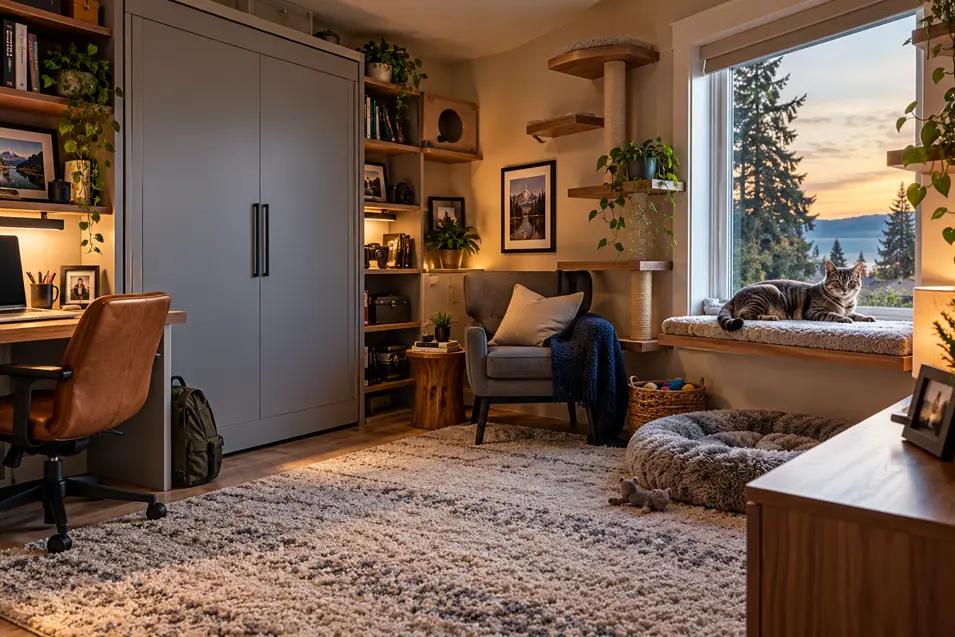
For a cat, a former bedroom can be an exceptional opportunity for vertical territory.
A window perch can turn an unused window into one of the best seats in the house.
Wall-mounted climbing shelves can create routes rather than random platforms.
A tasteful cat tree can become part of the architecture instead of something you apologize for whenever company arrives.
A scratching surface can be incorporated near a place the cat already likes to spend time.
Toy storage can live in a cabinet instead of gradually colonizing the living room.
If the location makes sense and there’s adequate ventilation, the room may even provide a discreet place for a litter box—although nobody wants to discover on Christmas Eve that their childhood bedroom now smells like a poorly managed cat shelter.
Plan that part properly.
Dogs Need Less Stuff Than Pet-Room Photos Would Have You Believe
Dogs generally don’t require an entire room full of specialized furniture.
They require somewhere comfortable to sleep, access to water, storage for the things humans have purchased for them and enough space to move around normally.
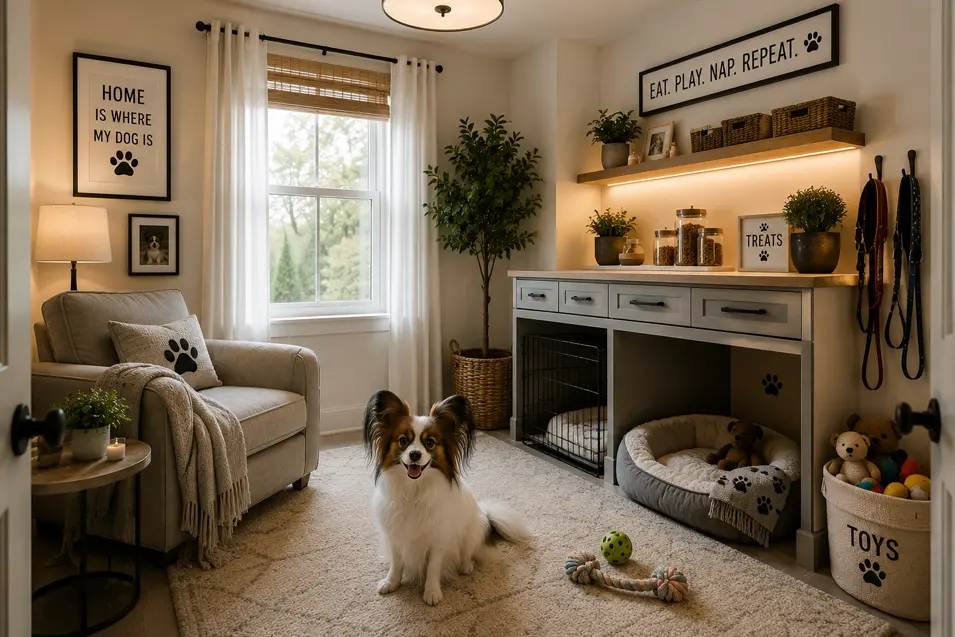
A well-designed dog flex room might contain a substantial dog bed against a wall, where it doesn’t interrupt circulation.
There could be closed storage for toys, grooming supplies, towels and extra bedding.
A reading chair makes sense if someone actually uses it.
If the room overlooks the yard or street and the dog enjoys watching the world, a safe window position can become part of the design.
That’s probably enough.
The objective isn’t to prove how much you love your dog by filling every square foot with dog-related objects.
The best pet-friendly rooms often look like beautiful rooms where somebody happened to remember that an animal lives there.
Make the Pet Features Easy to Move
This matters when your kid comes home.
If Owen is away for a year and Simba spends half her life in his room, that’s fine.
But when he comes home for several weeks, I don’t want to spend two days dismantling a feline amusement park so he has somewhere to put a suitcase.
Portable and reversible features make a flex room actually flexible.
A freestanding cat tree can move.
A dog bed can move.
Toy baskets can move.
A washable rug can stay.
A window perch may be perfectly compatible with both uses.
Wall-mounted cat shelves require a little more commitment, but if they’re designed well they can look architectural rather than temporary.
The room shouldn’t need a renovation every time somebody books a flight home.
Storage Is What Makes the Whole Idea Work
Flex rooms fail when everything belonging to one use has nowhere to go during the other.
The dog bed gets shoved into the hallway.
The cat toys end up on the guest bed.
Your son’s clothes are still occupying every inch of the closet.
Then somebody arrives with a suitcase and the entire system collapses.
Good storage solves most of this.
Closed cabinetry can hold pet supplies without making the room look like the back aisle of a pet store.
Under-bed storage can preserve belongings when a Murphy bed or daybed is being used.
A section of closet can remain permanently available to the person who comes home.
Baskets can hold toys.
Hooks can handle leashes without becoming decorative paw-print nonsense.
The goal is to switch the room from one use to another in minutes rather than hours.
If converting the pet room back into a bedroom requires a pickup truck, you haven’t designed a flex room.
You’ve designed two rooms fighting over the same address.
Think About the Pet Before Choosing the Flooring
If you’re eventually renovating the room anyway, flooring is worth considering.
Carpet feels comfortable and quiet, but it can hold hair, stains and odours.
Hard surfaces are easier to clean, although some can be slippery for dogs, particularly as they age.
A durable floor combined with a large washable rug can offer a useful compromise: easier maintenance with a softer surface for both pets and returning humans.
And because this is still a bedroom sometimes, don’t choose materials solely because they’re indestructible.
Your daughter shouldn’t come home to something that looks like the kennel area at a veterinary clinic.
Pet-friendly and attractive are not opposing ideas.
That’s essentially the reason this website exists.
The Room Can Change Again Later
This is the part people sometimes miss.
A flex room doesn’t have to be the final version.
When I first left home, my room remained my room.
Later it became the vaguely nautical interpretation of my commercial-diving career.
Eventually it became my mother’s craft room.
None of those stages needed to be permanent.
The same can happen with your child’s room.
During university, perhaps it’s 70 percent bedroom and 30 percent pet space.
When they take a job in another city, maybe that reverses.
Once they buy a home, build a life somewhere else and start referring to your house as “Mom and Dad’s,” the room can become whatever the people living there actually need.
Office.
Craft room.
Library.
Guest room.
Pet room.
Or some combination of them.
Homes shouldn’t be frozen at the moment the children turned eighteen.
They should continue changing with the people—and animals—who live in them.
When They Really Have Moved Out, You Can Go Further
There eventually comes a point when your kid hasn’t merely gone away.
They have a home.
Their furniture is there.
Their clothes are there.
Their driver’s licence probably lists another address.
They have started accumulating their own inexplicable collection of kitchen appliances.
At that point, you can stop designing around the possibility that they’ll return permanently.
The room can become much more dedicated to its new purpose.
For a cat, that might mean built-in climbing architecture, integrated window seating or attractive storage designed specifically around litter and supplies.
For a dog, perhaps it becomes a quiet retreat connected to an office or hobby room so the dog can spend time near you.
But even then, most ordinary houses benefit from keeping some ability to accommodate guests.
A room used by the cat 350 days a year can still contain a Murphy bed.
The dog doesn’t need to surrender his entire room because your brother visits twice a year.
He just needs to understand that Uncle Steve has booked it for the weekend.
And Please Don’t Decorate It Around Your Kid’s Career
This advice comes from experience.
If your child becomes a pilot, you do not need airplane wallpaper.
If she becomes a veterinarian, the room doesn’t require animal-print bedding.
If he becomes a commercial diver, apparently there is a risk that somebody will install a sailing border.
Resist.
If you’re keeping elements of your child’s personality in the room, keep things that actually belonged to them or genuinely mean something to them.
Otherwise, let the room grow into its new purpose.
My mother eventually figured this out.
The sailing era ended.
Today the room is her craft room, because that’s what she actually uses it for.
Which is exactly what should happen to a home.
The Bedroom Doesn’t Have to Choose
When children move away, there’s a temptation to think about their bedroom in absolutes.
Keep it exactly as it was.
Or take it back.
But there’s a long period between those two things for many families.
Your child may still need somewhere that feels like home when they return.
At the same time, you may have a perfectly good room sitting empty for most of the year while a cat tree occupies half the living room and the dog’s toys migrate through the rest of the house.
Those problems can solve each other.
Keep the photographs.
Keep some books.
Keep somewhere comfortable for them to sleep.
Give them a little closet space.
Then let the cat have the window.
Let the dog have a proper bed.
Use the room every day instead of preserving it for somebody who sleeps there twice a year.
And when your child eventually establishes a home that is genuinely their own, let the room change again.
That’s what homes do.
They aren’t museums of the families we used to be.
They’re places that keep adapting to the families we are now.
Even when one of those family members is asleep in the window waiting for somebody to come home.