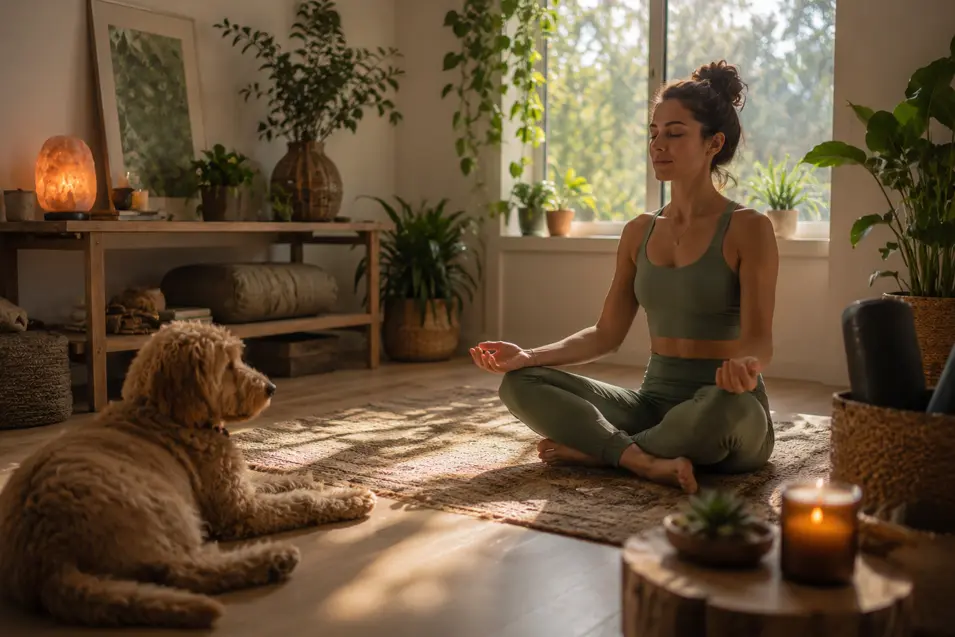
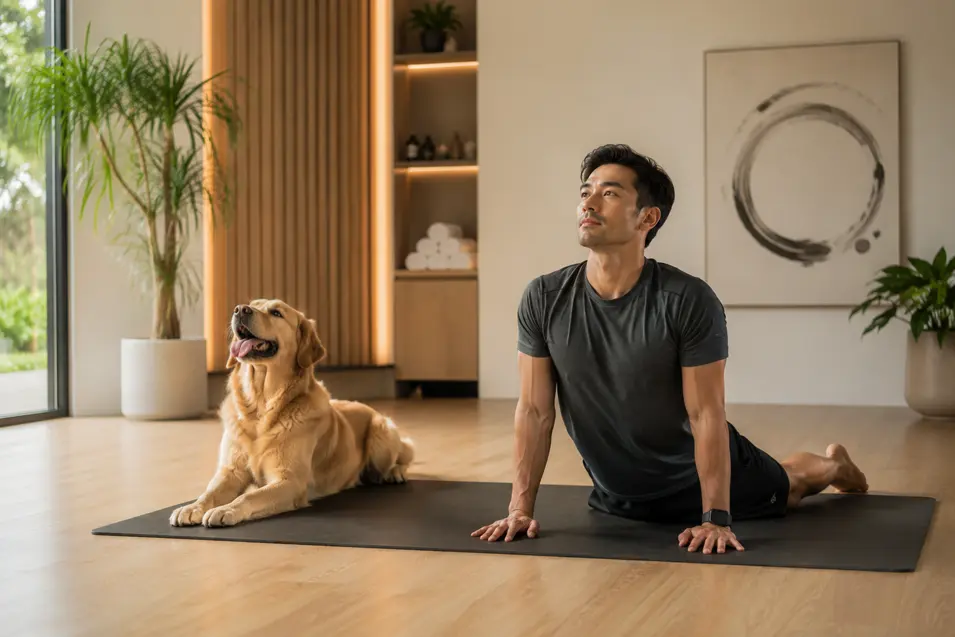
For many dog owners, wellness activities are more enjoyable when shared with a beloved pet. That’s one reason why “doga,” a combination of dog and yoga, has become increasingly popular. While your dog may not master a downward dog pose on command, practicing yoga together can create opportunities for relaxation, mindfulness, and stronger companionship.
Yoga with your dog isn’t about teaching pets complex poses. Instead, it focuses on creating a calm environment where both you and your dog can enjoy movement, stretching, and quality time together.
Whether you’re a seasoned yogi or a complete beginner, incorporating your dog into your practice can be a rewarding experience.
What Is Doga?
Doga is a pet-friendly wellness activity that combines traditional yoga principles with canine companionship. During a doga session, owners perform yoga poses while their dogs relax nearby, participate in gentle stretches, or simply enjoy the peaceful atmosphere.
The goal isn’t perfection. The practice is about slowing down , reducing stress, and strengthening the bondbetween people and their pets.
Benefits of Yoga With Your Dog
Reduces Stress
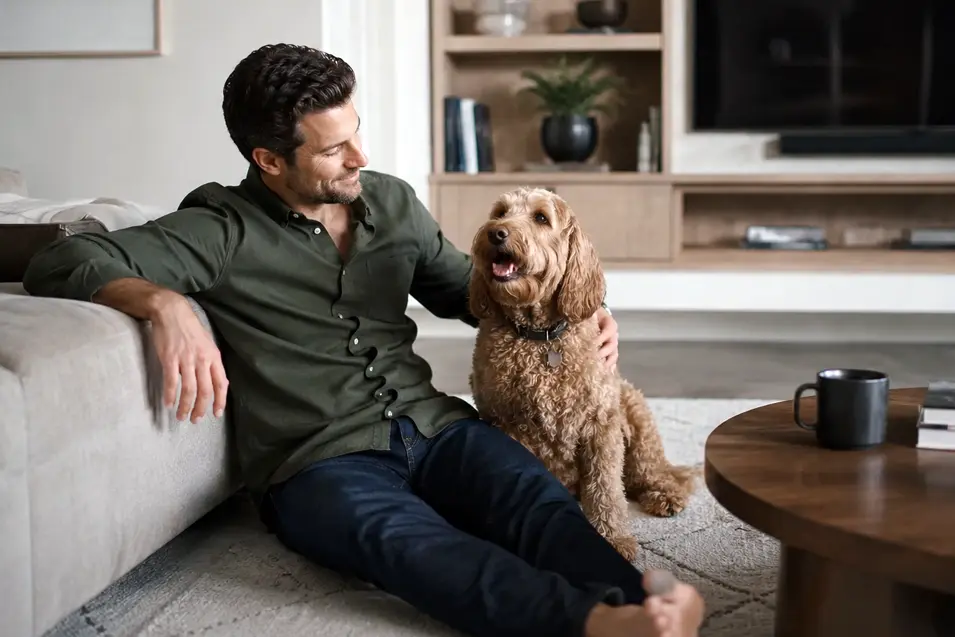
One of the primary reasons people practice yoga is stress reduction. Dogs can enhance that experience by providing comfort, companionship, and a calming presence.
Many dog owners report feeling more relaxed when their pets are nearby. Combining yoga with your dog’s company can help create a peaceful environment that supports emotional well-being.
Strengthens the Human-Animal Bond
Spending focused, uninterrupted time together strengthens trust and companionship. During yoga sessions, dogs receive attention, affection, and positive interaction without the distractions of daily life.
These shared experiences can help deepen the relationship between you and your pet.
Encourages Mindfulness
Dogs naturally live in the present moment. They aren’t worried about tomorrow’s schedule or yesterday’s mistakes.
Observing your dog’s relaxed behavior can serve as a reminder to stay present and focus on your breathing, movements, and surroundings.
Promotes Gentle Exercise
Yoga encourages flexibility, balance, and body awareness. While dogs won’t perform every pose, many enjoy gentle stretching, movement, and relaxation exercises alongside their owners.
Creates Healthy Wellness Habits
Establishing a regular yoga routine can improve consistency in both physical activity and self-care. Dogs often thrive on routines, making them enthusiastic partners in wellness activities.
Preparing for a Doga Session
Before you begin, create an environment that feels safe and comfortable for both you and your dog.
Consider the following:
- Choose a quiet room with minimal distractions
- Use a yoga mat or soft surface
- Ensure your dog has access to water
- Allow your dog to participate voluntarily
- Avoid practicing immediately after meals
- Keep sessions relaxed and pressure-free
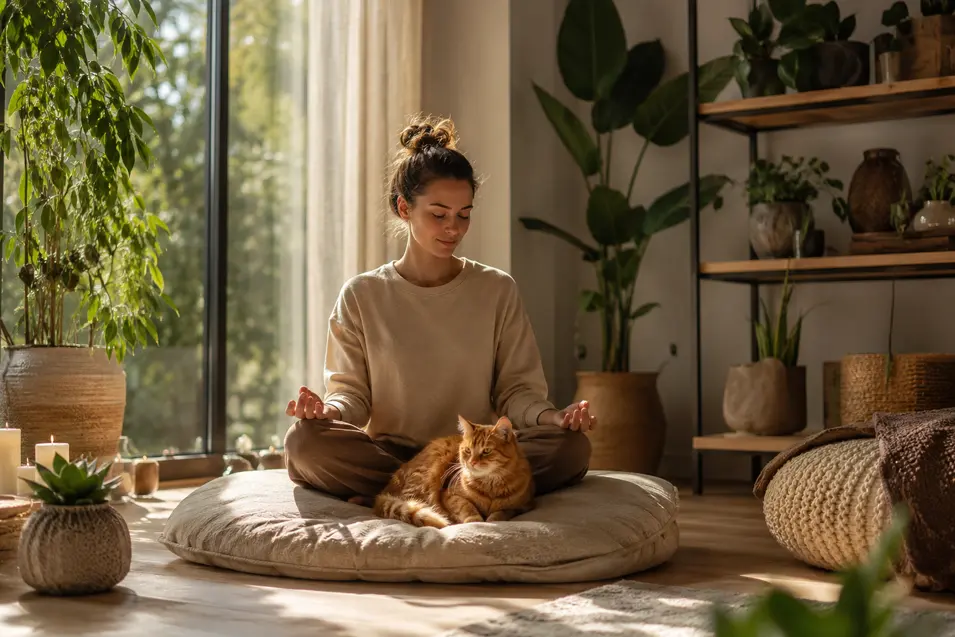
If you’ve created a dedicated wellness room in your home, it can be an ideal setting for yoga and mindfulness activities with your dog. Soft lighting, comfortable flooring, and a calm atmosphere help create a more enjoyable experience for both of you.
Beginner-Friendly Yoga Poses to Practice With Your Dog Nearby
If you’re new to yoga, learning a few basic poses can help you build confidence before inviting your dog to join your wellness routine. The following poses are among the most popular beginner-friendly yoga movements and can be adapted to fit your comfort level.
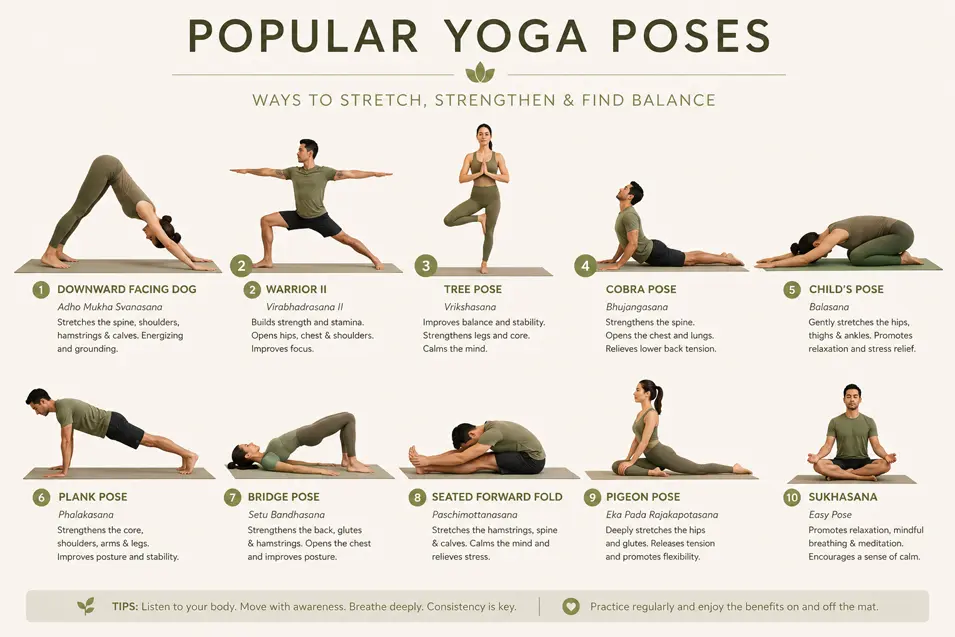
Beginner-Friendly Yoga Poses With Your Dog
Easy Seated Meditation
Begin by sitting comfortably on your yoga mat while your dog rests nearby.
Focus on:
- Deep breathing
- Relaxed posture
- Gentle petting
- Mindful observation
This simple exercise helps both you and your dog settle into a calm state before movement begins.
Child’s Pose
Child’s Pose is a gentle resting position that allows you to relax while remaining close to your dog.
Many dogs naturally become curious and may lie beside you, creating a calming shared experience.
Cat-Cow Stretch
This beginner-friendly movement helps improve spinal mobility and encourages mindful breathing.
Dogs often enjoy observing the movement and may naturally stretch alongside you, particularly after resting.
Seated Forward Fold
A seated forward fold provides a gentle stretch while creating opportunities to connect with your dog through calm interaction and touch.
Legs-Up-the-Wall Pose
This restorative pose encourages relaxation and stress reduction. Many dogs enjoy lying nearby during longer relaxation exercises.
Gentle Stretches for Dogs
While dogs should never be forced into yoga poses, some enjoy light stretching and massage.
Examples include:
- Gentle shoulder rubs
- Neck massages
- Slow body strokes
- Encouraging natural stretches after naps
- Light mobility exercises recommended by a veterinarian
Always allow your dog to control their level of participation.
Safety Tips for Yoga With Your Dog
Never Force a Pose
Your dog should never be pushed, pulled, or positioned into unnatural movements. Yoga should be enjoyable and voluntary.
Watch for Signs of Stress
If your dog appears uncomfortable, anxious, or restless, take a break or end the session.
Potential signs include:
- Excessive panting
- Whining
- Avoidance behavior
- Lip licking
- Yawning unrelated to fatigue
Consider Age and Health
Senior dogs, puppies, and dogs with medical conditions may have limitations. Consult your veterinarian before introducing new physical activities.
Keep Sessions Short
When starting out, sessions of 10 to 20 minutes are often sufficient. As your dog becomes familiar with the routine, you can gradually extend the practice if desired.
Focus on Relaxation
Remember that doga is about connection and mindfulness, not athletic performance. Some dogs may participate actively while others simply nap nearby.
Both outcomes are perfectly acceptable.
Dogs Most Likely to Enjoy Doga
Every dog has a unique personality, but some traits may make participation more enjoyable.
Dogs that often respond well include:
- Calm temperaments
- Highly social breeds
- Dogs that enjoy physical affection
- Older dogs who prefer gentle activities
- Dogs already accustomed to structured routines
More energetic dogs may benefit from a walk or play session before yoga practice.
Building a Wellness Routine With Your Dog
Yoga can become part of a larger wellness routine that benefits both you and your pet. Combining activities such as walking, meditation, relaxation exercises, and mindfulness can help create a healthier, more balanced lifestyle.
The goal isn’t achieving perfect poses. It’s creating opportunities to slow down, reduce stress, and enjoy meaningful time together.
In a world filled with constant distractions, a simple yoga session shared with your dog may be one of the most rewarding wellness habits you develop.