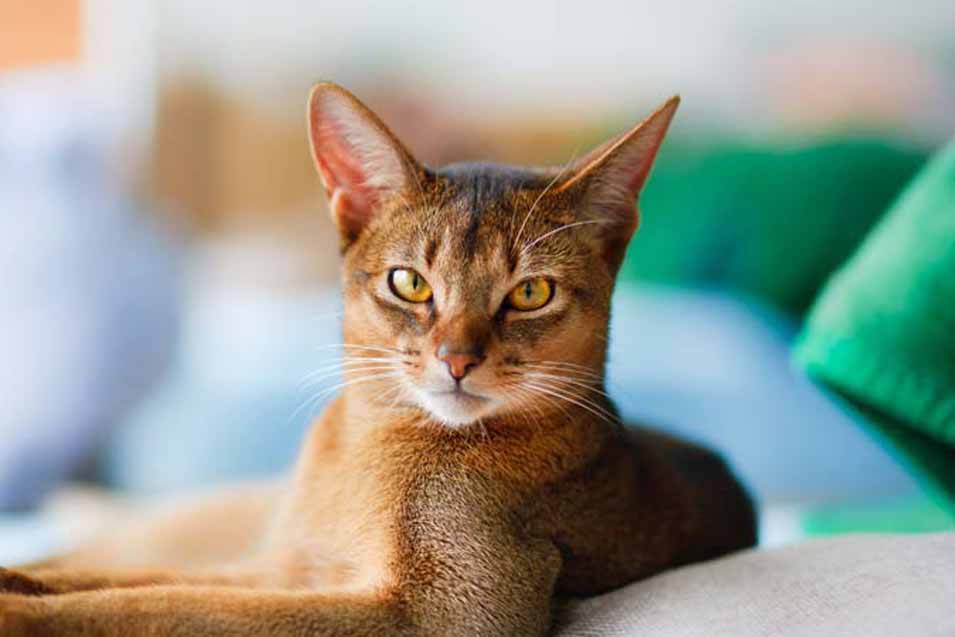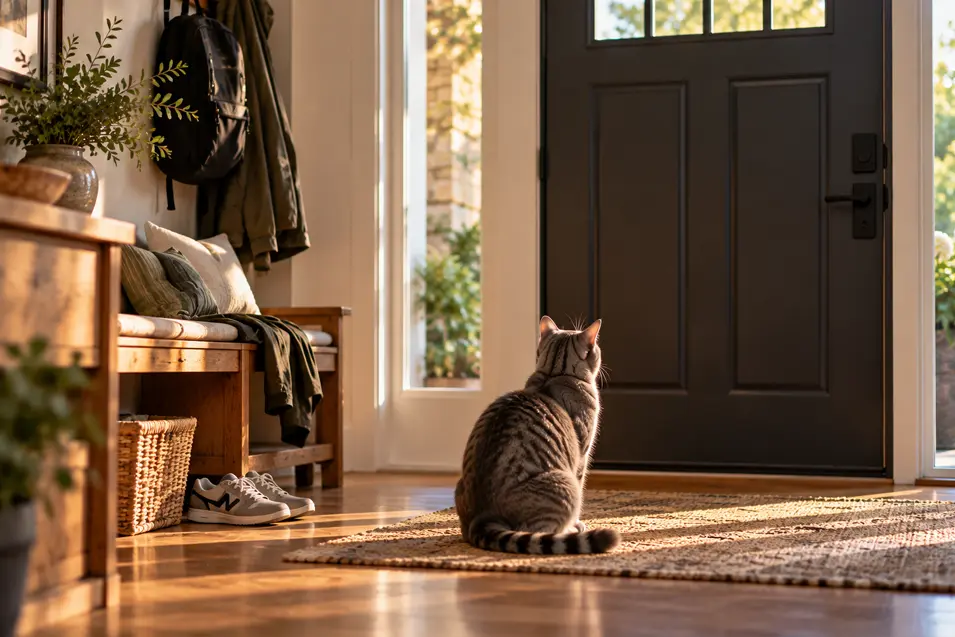
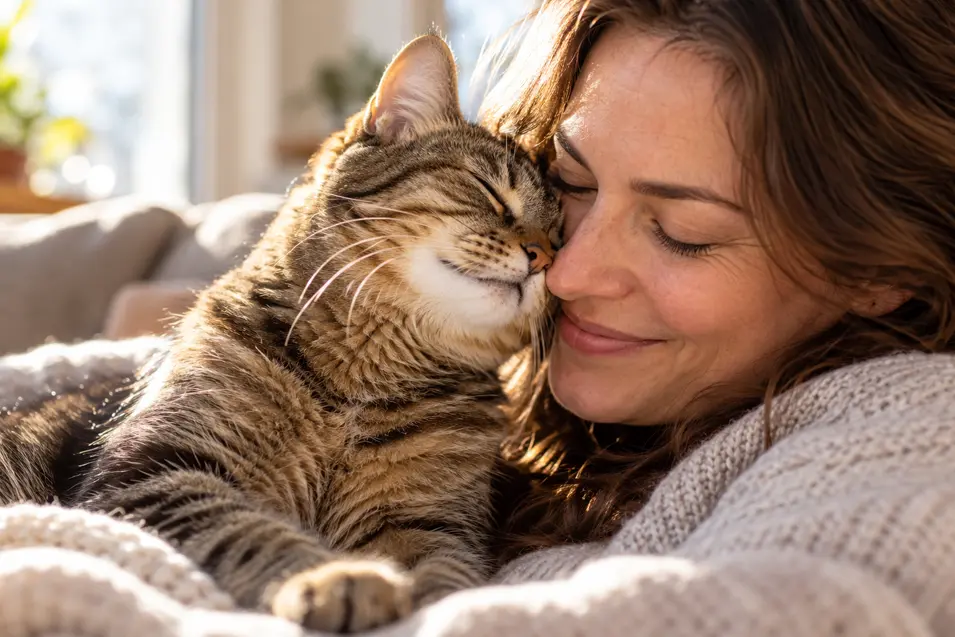
Cats have a remarkable ability to make us feel special simply by deciding to sit beside us. For some, affection comes naturally. They follow their owners around the house, curl up on their laps, and insist on being involved in everything from watching television to folding laundry. Others prefer to maintain a respectful distance, occasionally offering a head bump or allowing a few minutes of petting before wandering off.
But what happens when a normally independent cat suddenly becomes affectionate?
Perhaps your cat has started sleeping beside you every night, following you into the bathroom, or demanding attention whenever you sit down. The change can be delightful, especially if you’ve spent years trying to convince your cat that cuddling is a perfectly acceptable activity.
Before assuming your cat has finally recognized how wonderful you are, however, it’s worth considering what might be behind the change.
Sudden affection can reflect a stronger bond, a change in routine, a need for reassurance, or sometimes an underlying health concern. Understanding the difference begins with knowing what’s normal for your particular cat.
Your Cat May Be Feeling More Secure
Not every affectionate change has a complicated explanation. Sometimes a cat simply becomes more comfortable with its surroundings and the people who share them.
Cats that were initially shy, cautious, or easily startled may gradually develop greater confidence. This is particularly common in adopted cats, although the process can take months or even years.
A cat that once preferred sleeping under the bed might eventually decide that your lap is a much better option. One that previously avoided being picked up may begin approaching you voluntarily for attention.
As trust develops, affectionate behaviours such as rubbing against your legs, slow blinking, purring, and sleeping nearby may become more frequent.
If your cat is eating normally, playing, grooming, and otherwise behaving as usual, increased affection may simply reflect a growing sense of security.
Something in Your Household Has Changed
Cats are creatures of habit, and even relatively small changes in their environment can influence their behaviour.
Perhaps someone in the household has moved away, you’ve started working from home, or your daily schedule has changed. A new pet, unfamiliar visitors, renovations, or rearranged furniture can also affect how secure a cat feels.
Some cats respond to uncertainty by hiding or avoiding interaction. Others become more attached to their favourite person.
A cat that suddenly follows you from room to room may be looking for reassurance during a period of adjustment.
Consider what’s happened in your household over the past few weeks. Changes that seem insignificant to you may be considerably more important to a cat that depends on familiar routines.
Maintaining consistent feeding times, play sessions, and quiet resting areas can help your cat feel secure.
Your Cat Wants More Attention
Sometimes the explanation is refreshingly simple: your cat has discovered that being affectionate gets results.
Cats are remarkably good at learning which behaviours attract human attention.
If rubbing against your legs earns a few scratches behind the ears, that behaviour may become more frequent. If jumping onto your lap results in twenty minutes of uninterrupted attention, your cat may decide it’s worth repeating.
This is especially likely if you’ve recently spent more time at home or started responding more enthusiastically to your cat’s requests for affection.
Boredom can also play a role.
An indoor cat without enough opportunities for play, exploration, and mental stimulation may seek additional interaction with its owner.
Try adding short daily play sessions, puzzle feeders, climbing spaces, or rotating toys. A cat that wants more companionship may appreciate interactive play just as much as cuddling.
Your Cat May Be Seeking Warmth
If your cat becomes noticeably more affectionate when the weather turns colder, body heat may be part of the attraction.
Cats naturally seek comfortable, warm places to rest. A sunny windowsill, a blanket fresh from the dryer, or a human curled up on the sofa can all become desirable sleeping locations.
Your lap offers warmth, softness, and a familiar scent.
This doesn’t mean your cat’s affection is insincere. Cats can enjoy both physical comfort and companionship at the same time.
If your cat becomes especially cuddly during autumn and winter but remains otherwise healthy and active, the seasonal change may help explain the behaviour.
Your Cat Is Getting Older
A cat’s personality and social preferences can evolve throughout its life.
Some cats become calmer and more interested in companionship as they mature. An energetic young cat that once preferred chasing toys may eventually discover the pleasures of spending an afternoon beside its owner.
However, increased clinginess in an older cat deserves a little more attention.
Age-related changes in vision, hearing, mobility, and cognitive function can make some senior cats more dependent on familiar people.
An older cat may follow you more closely because your presence provides reassurance. Increased vocalization, nighttime restlessness, confusion, or changes in sleeping patterns can also accompany age-related medical or cognitive problems.
Don’t automatically dismiss a sudden personality change as a normal part of aging. A veterinary examination can help determine whether something else is contributing.
Your Cat May Be Experiencing Stress or Anxiety
Although cats often respond to stress by withdrawing, some become unusually clingy.
A cat that feels uncertain about its environment may seek proximity to a trusted person. This can happen following a move, the introduction of another animal, a change in household membership, or disruption to familiar routines.
Watch for other signs of stress, including excessive grooming, changes in appetite, hiding, increased vocalization, or litter box problems.
If your cat appears relaxed while cuddling, continues playing normally, and maintains its usual habits, there’s less reason for concern.
If the affection seems desperate or your cat becomes distressed whenever you leave the room, investigate what might be causing the anxiety.
Provide predictable routines, comfortable hiding places, elevated resting areas, and opportunities for independent activity. Avoid forcing interaction when your cat wants space.
Your Cat Could Be in Heat
If you have an unspayed female cat, a sudden increase in affection may be associated with her reproductive cycle.
Cats in heat may become unusually affectionate, rubbing against furniture and people, rolling on the floor, and demanding attention.
They may also vocalize more frequently, become restless, raise their hindquarters, or attempt to escape outdoors.
These behaviours can be quite dramatic, particularly in cats that are normally quiet or independent.
If your cat isn’t spayed and displays these signs, speak with your veterinarian about reproductive health and spaying options.
Could Sudden Affection Mean Your Cat Is Sick?
This is the possibility owners should be aware of without assuming the worst.
Cats are particularly good at concealing discomfort. While many sick cats become withdrawn, others seek additional attention or reassurance.
An affectionate change alone doesn’t establish that something is medically wrong. However, a noticeable shift in personality, especially when accompanied by other symptoms, warrants investigation.
Certain medical conditions, including hyperthyroidism, diabetes, high blood pressure, and cognitive dysfunction, can affect a cat’s activity levels, vocalization, appetite, and social behaviour.
For example, a cat with hyperthyroidism may become unusually restless, vocal, or demanding while also losing weight despite a healthy appetite.
A cat experiencing discomfort may seek more physical contact than usual, although others respond to pain by avoiding touch.
Pay particular attention to changes in:
- Appetite or water consumption
- Weight and body condition
- Litter box habits
- Energy levels and sleeping patterns
- Grooming behaviour
- Vocalization or nighttime restlessness
- Mobility and willingness to jump
If your cat suddenly becomes unusually clingy and displays any of these changes, arrange a veterinary examination. Even without other obvious symptoms, a persistent, unexplained personality change is worth discussing with your veterinarian.
How Should You Respond to a Suddenly Affectionate Cat?
The best response depends on whether your cat appears comfortable and healthy.
If your cat is relaxed, eating normally, playing, and simply choosing to spend more time with you, enjoy the extra companionship.
Let your cat initiate contact and decide when the interaction should end. Some cats love extended petting sessions, while others prefer brief moments of attention.
Pay attention to body language. A relaxed posture, gentle head rubbing, and slow blinking often indicate comfort. Tail lashing, flattened ears, tense muscles, or attempts to move away suggest your cat needs space.
If the increased affection coincides with household changes, offer reassurance through familiar routines and predictable interactions.
And if the behaviour is sudden, persistent, or accompanied by physical or behavioural symptoms, consult your veterinarian rather than assuming your cat is simply becoming friendlier.
Does Becoming More Affectionate Mean Your Cat Loves You More?
It’s tempting to interpret every additional cuddle as proof that your cat’s feelings have grown stronger.
But feline affection isn’t quite that straightforward.
Some cats are naturally demonstrative, while others express attachment through quieter behaviours. A cat that chooses to sleep in the same room, greets you when you arrive home, or sits nearby without demanding attention may be just as attached as one that insists on occupying your lap.
Changes in affection can reflect comfort, routine, learned behaviour, environmental conditions, and physical health.
Your cat doesn’t necessarily love you more today than yesterday simply because it has decided to follow you into the kitchen six times.
It may just be expressing that attachment differently.
Enjoy the Extra Cuddles, but Pay Attention
Living with a cat means accepting that affection often happens on their schedule.
One day, your cat may barely acknowledge your existence. The next, you can’t sit down without acquiring a furry companion.
In many cases, increased affection is a welcome and harmless change. Your cat may feel safer, appreciate your company more, or have discovered that you’re an exceptionally comfortable place to sleep.
The important thing is to consider the bigger picture.
If your cat is healthy, relaxed, and behaving normally in every other respect, there’s usually no reason to discourage the extra affection. But if the change is abrupt, unexplained, or accompanied by other symptoms, it’s worth checking with your veterinarian.
And if everything checks out, enjoy the cuddles.
After all, there’s no guarantee your cat will still be interested tomorrow.