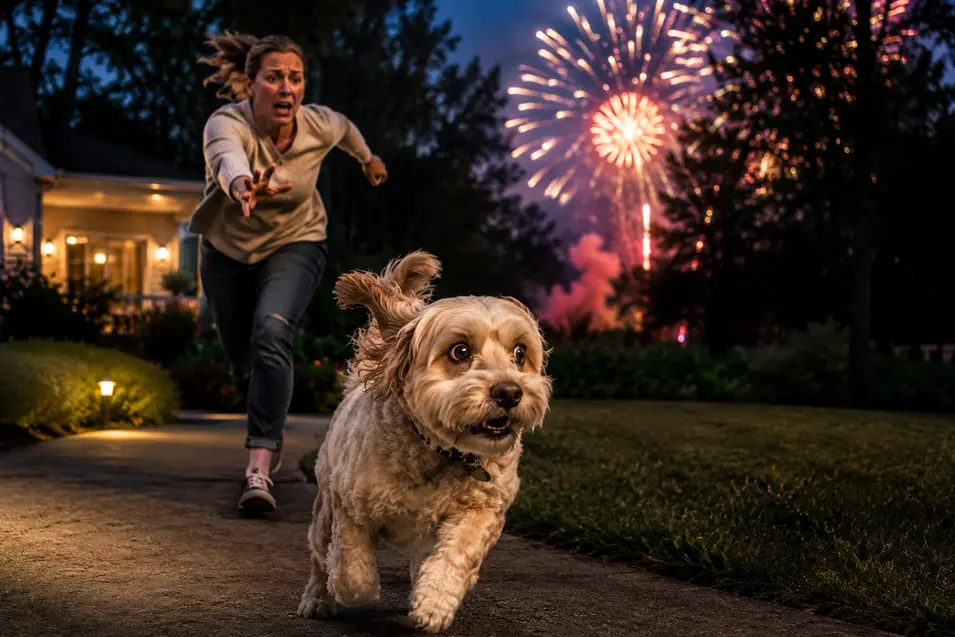
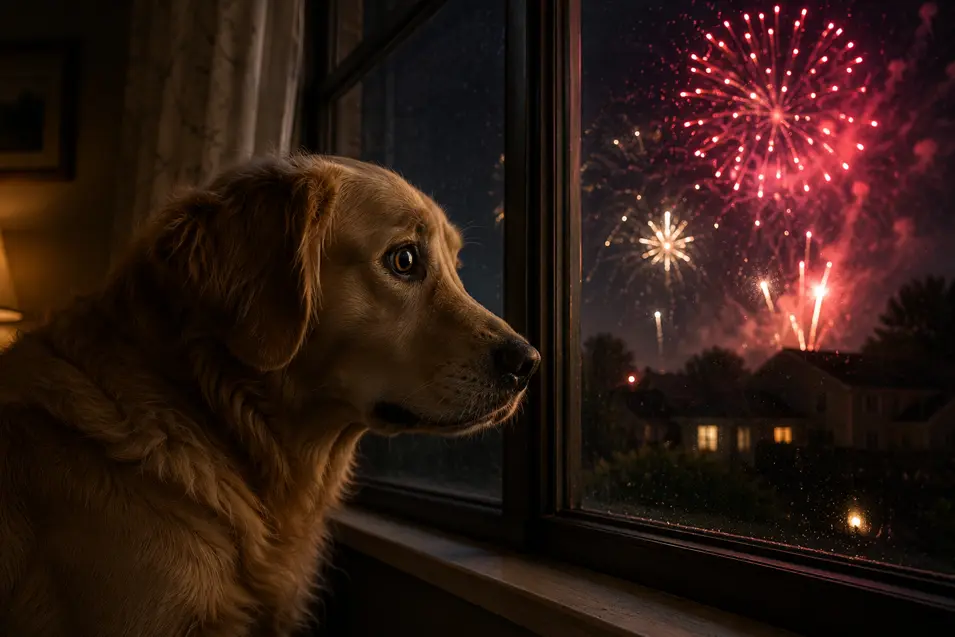
For many people, fireworks are a highlight of summer celebrations. For dogs, however, the loud booms, flashing lights, and unpredictable sounds can be terrifying.
Every Fourth of July, New Year’s Eve, and holiday celebration, veterinarians and animal shelters see an increase in frightened pets, anxiety-related injuries, and lost dogs. While some dogs barely react to fireworks, others shake uncontrollably, hide under furniture, or try desperately to escape.
So why are dogs so afraid of fireworks? The answer lies in their remarkable senses, natural instincts, and how their brains process unexpected events.
Dogs Hear the World Differently
A dog’s hearing is significantly more sensitive than a human’s.
While people hear sounds up to around 20,000 Hz, dogs can detect frequencies approaching 60,000 Hz. They can also hear sounds from much farther away.
What sounds like a distant firework to us may sound much louder and more intense to your dog.
To them, fireworks are not just loud—they’re overwhelming.
Fireworks Are Completely Unpredictable
Dogs are generally comfortable with noises they hear regularly.
Vacuum cleaners, washing machines, lawn mowers, and thunderstorms often become familiar over time.
Fireworks are different because they are:
- Random
- Sudden
- Extremely loud
- Impossible to predict
One explosion may be followed by silence. The next may come seconds later from another direction.
Without any warning or pattern, many dogs remain in a constant state of alertness.
Dogs Don’t Understand What’s Happening
People know fireworks are part of a celebration.
Dogs don’t.
Instead, they experience:
- Bright flashes
- Shock waves
- Loud explosions
- Vibrations through the floor
- Unfamiliar smells from smoke
From a dog’s perspective, these signals can resemble danger.
Their instinct tells them to find safety immediately.
It’s an Evolutionary Survival Response
Fear isn’t a weakness—it’s a survival mechanism.
Long before dogs became our companions, their ancestors relied on detecting danger quickly.
Sudden loud noises often meant:
- Falling trees
- Lightning strikes
- Predators
- Rockslides
- Other environmental threats
The dogs that reacted quickly were more likely to survive and pass along those instincts.
Even though today’s fireworks are harmless celebrations, many dogs still respond as if they’re facing a life-threatening event.
The Fight-or-Flight Response
When fireworks begin, many dogs experience a surge of stress hormones, including adrenaline and cortisol.
Their bodies prepare for survival by:
- Increasing heart rate
- Raising blood pressure
- Heightening alertness
- Tightening muscles
- Preparing to run
This automatic “fight-or-flight” response happens before your dog has time to assess what’s actually happening.
Unfortunately, they cannot reason that the explosions will soon end.
Every Dog Reacts Differently
Some dogs sleep through fireworks.
Others become extremely distressed.
Several factors influence how a dog responds, including:
Breed
Some breeds are naturally more sensitive to sound.
Herding breeds such as Border Collies and Australian Shepherds often have heightened awareness of their surroundings, while other breeds may be more relaxed.
Age
Puppies experiencing fireworks for the first time may react differently than older dogs.
Senior dogs can also become more sensitive as hearing changes or cognitive decline develops.
Personality
Confident, well-socialized dogs generally recover faster than naturally anxious dogs.
Previous Experiences
A frightening experience involving fireworks or other loud noises can create lasting fear.
Dogs often remember traumatic events remarkably well.
Signs Your Dog Has Noise Anxiety
Not every fearful dog reacts the same way.
Common symptoms include:
- Trembling
- Panting
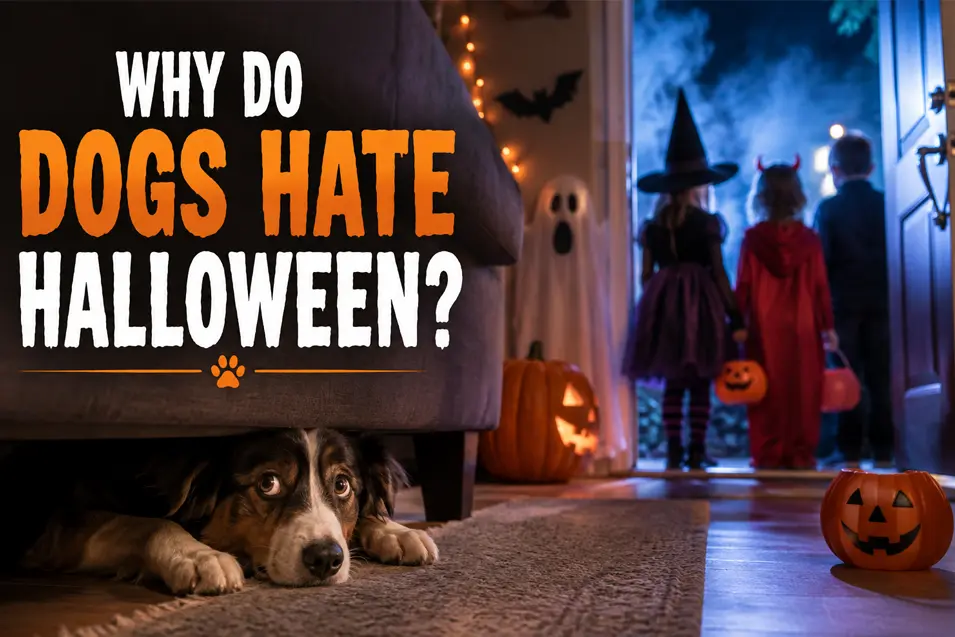
- Hiding under beds or furniture
- Pacing
- Whining
- Barking excessively
- Clinginess
- Drooling
- Refusing food
- Trying to escape
- Digging at doors or windows
Some dogs may appear calm while still experiencing significant stress internally.
Can Dogs Become Less Afraid?
Yes—but it takes patience.
Many dogs benefit from gradual desensitization, where they are slowly introduced to recorded firework sounds at very low volumes while enjoying treats, toys, or playtime.
Over time, they begin associating the sounds with positive experiences instead of fear.
Training should always happen well before fireworks season, not during an active display.
How to Help Your Dog During Fireworks
While you may not eliminate your dog’s fear overnight, you can make celebrations much less stressful.
Helpful strategies include:
- Keep your dog indoors before sunset.
- Close windows, curtains, and blinds.
- Play calming music or white noise.
- Create a quiet “safe room.”
- Offer favorite toys or long-lasting chews.
- Stay calm and relaxed yourself.
- Exercise your dog earlier in the day.
- Ensure ID tags and microchip information are current.
Never punish a frightened dog. Fear is an emotional response—not bad behavior.
When to Talk to Your Veterinarian
If your dog experiences severe anxiety every fireworks season, speak with your veterinarian before the next holiday.
Depending on your dog’s needs, they may recommend:
- Prescription anti-anxiety medication
- Calming supplements
- Pheromone diffusers
- Anxiety wraps
- Referral to a veterinary behaviorist
Early intervention can significantly improve your dog’s quality of life.
Helping Your Dog Feel Safe
Fireworks are exciting for people, but they can be overwhelming for our canine companions. Understanding the science behind noise anxiety helps explain why even the happiest, friendliest dogs may become frightened during celebrations.
By recognizing the signs of stress, preparing your home, and supporting your dog with patience and understanding, you can help them feel safer during fireworks season.
At Pet Friendly House, we believe every celebration should include keeping our four-legged family members safe, comfortable, and loved.
Related Articles
- How to Calm a Dog During Fireworks: 15 Vet-Recommended Tips
- Best Calming Products for Dogs During Fireworks
- How to Create a Safe Room for Dogs During Fireworks
- How to Keep Your Pets Safe During Fourth of July Celebrations