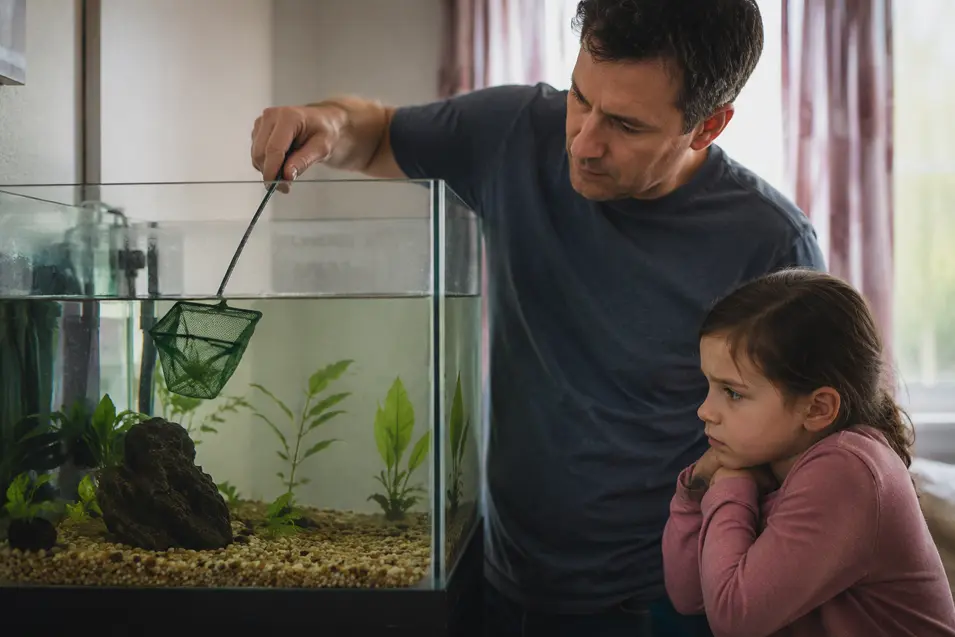
For many aquarium owners, fish are much more than decorations. They are living pets with unique appearances, behaviors, and personalities. Whether you’ve cared for a fish for a few months or many years, losing one can be surprisingly emotional.
For some people, the death of a fish is their first experience with pet loss. For others, it may be the loss of a favorite fish that had become a familiar part of daily life. Regardless of the circumstances, it’s normal to feel sadness when a pet fish dies.
At the same time, aquarium owners must also take practical steps to protect the remaining fish and ensure the health of the aquarium.
Knowing what to do can help you respond calmly, responsibly, and compassionately.
First: Confirm That the Fish Has Died
Fish occasionally appear motionless for extended periods, particularly when they are:
- Sleeping
- Resting
- Recovering from illness
- Experiencing stress
Before taking any action, confirm that the fish has truly died.
Common signs include:
- No gill movement
- Lack of response to nearby activity
- Cloudy eyes
- Loss of body color
- Floating or sinking unnaturally
- Stiffness
If you’re uncertain, observe carefully for several minutes before proceeding.
Remove the Fish Promptly
Once you are certain the fish has died, remove it from the aquarium as soon as possible.
A deceased fish can begin decomposing quickly, which may affect water quality and potentially create problems for other aquarium inhabitants.
Use:
- A fish net
- Disposable gloves if preferred
- A small container for transport
Removing the fish promptly helps maintain a healthy environment for the remaining livestock.
Check the Other Fish
The death of a single fish does not always indicate a larger problem.
Fish may die from:
- Old age
- Genetics
- Stress
- Injury
- Illness
However, it’s important to evaluate the rest of the aquarium.
Observe other fish for signs of:
- Lethargy
- Labored breathing
- Clamped fins
- Loss of appetite
- Unusual swimming behavior
- Visible disease symptoms
If multiple fish appear distressed, further investigation may be necessary.
Test Your Water
Whenever a fish dies unexpectedly, water testing is a good idea.
Check key parameters such as:
- Ammonia
- Nitrite
- Nitrate
- pH
- Temperature
Poor water quality is one of the most common causes of fish health problems.
Testing helps determine whether environmental factors may have contributed to the loss.
Review Recent Changes
If the death was unexpected, think about any recent changes to the aquarium.
Consider:
- New fish additions
- Equipment changes
- Missed maintenance
- Water chemistry fluctuations
- Temperature changes
- Feeding adjustments
Sometimes a seemingly minor change can create stress that affects fish health.
Avoid Panic
One of the most common mistakes new aquarium owners make is reacting too aggressively after losing a fish.
Avoid immediately:
- Replacing all the water
- Adding unnecessary medications
- Rearranging the entire aquarium
- Making multiple major changes at once
Instead, focus on gathering information and identifying potential causes.
Stable conditions are often safer than drastic interventions.
Understanding That Fish Die
Even in well-maintained aquariums, fish eventually die.
Just like other pets, fish have natural lifespans.
Some species live only a few years.
Others may live for decades.
A fish’s death does not automatically mean you did something wrong.
Responsible fishkeeping involves providing proper care while recognizing that loss is a natural part of keeping living animals.
Common Causes of Fish Death
While every situation is unique, common causes include:
Old Age
Many fish simply reach the end of their natural lifespan.
Illness
Fish can develop infections, parasites, and other health conditions despite good care.
Stress
Stress may result from:
- Aggressive tankmates
- Poor water quality
- Frequent environmental changes
- Inadequate habitat conditions
Water Quality Problems
Ammonia, nitrite, and oxygen issues can all affect fish health.
Genetic Factors
Some fish are naturally more vulnerable to health problems due to breeding practices or genetics.
Understanding the cause can help improve future care, but sometimes the exact reason remains unknown.
How to Dispose of a Dead Fish
Many aquarium owners wonder about the most respectful and responsible way to handle a deceased fish.
Common options include:
Burial
Some owners choose to bury the fish in a garden or outdoor area where permitted.
Memorial Gardens
A small plant or flower can serve as a living reminder of the fish.
Local Disposal Guidelines
Follow local regulations regarding animal disposal when applicable.
Avoid Flushing
Many aquarium experts discourage flushing fish down toilets because it can create environmental concerns and is generally not considered the most respectful option.
Helping Children Through the Loss
For many children, the death of a fish may be their first encounter with grief.
Parents can help by:
- Being honest
- Answering questions
- Allowing children to express emotions
- Creating simple memorials
- Reassuring children when appropriate
Avoid minimizing the loss with phrases such as:
- “It was only a fish.”
- “We’ll just buy another one.”
The relationship was real, and the child’s feelings deserve respect.
Creating a Meaningful Goodbye
Many aquarium owners find comfort in acknowledging the fish’s life.
Simple memorial ideas include:
- Sharing favorite memories
- Creating artwork
- Writing a short note
- Taking photographs
- Planting a flower
- Keeping a memory journal
These activities help shift focus from the loss itself toward appreciation for the time spent together.
When to Add New Fish
After losing a fish, some owners immediately want to replace it.
Before adding new livestock:
- Ensure water quality is stable
- Confirm no disease issues are present
- Identify any potential problems
- Allow time for observation
A replacement fish should not be viewed as replacing the one that died.
Instead, it represents a new addition to the aquarium.
Coping with Your Own Feelings
Many fishkeepers feel surprised by how strongly they react to the loss of a fish.
This is completely normal.
Aquarium owners often develop emotional connections through:
- Daily care routines
- Feeding interactions
- Observation
- Long-term ownership
Acknowledging these feelings rather than dismissing them can help make the grieving process healthier.
Remembering Why We Keep Fish
Although loss is difficult, it is also part of the experience of caring for living creatures.
Fish bring:
- Beauty
- Relaxation
- Curiosity
- Learning
- Joy
to our lives.
Focusing on the positive experiences shared with a beloved fish can often provide comfort during difficult moments.
Conclusion
When a pet fish dies, there are both practical and emotional steps to consider. Removing the fish promptly, checking water quality, and observing the rest of the aquarium help protect the health of the remaining livestock. At the same time, it’s important to acknowledge the loss and allow space for grief.
Whether the fish was a recent addition or a longtime companion, the bond you formed was meaningful. Taking time to reflect, remember, and appreciate the role the fish played in your life can help transform a sad moment into one of gratitude and understanding.
Like all pets, fish leave lasting impressions, and their presence is often remembered long after they are gone.
Frequently Asked Questions
How soon should I remove a dead fish from the aquarium?
As soon as you are certain the fish has died. Prompt removal helps maintain water quality and protects other aquarium inhabitants.
Should I test the water after a fish dies?
Yes. Testing ammonia, nitrite, nitrate, pH, and temperature can help identify potential environmental issues.
Is it normal to feel sad when a fish dies?
Absolutely. Many aquarium owners form meaningful attachments to their fish and experience genuine grief when one passes away.
Can a dead fish harm other fish?
If left in the aquarium, decomposition can affect water quality and potentially contribute to health problems for other fish.
Should I immediately replace a fish that dies?
Not necessarily. It’s usually best to first ensure the aquarium is healthy and identify any potential causes before adding new fish.
Related Reading
- Helping Children Cope with the Loss of a Pet Fish
- Meaningful Ways to Remember a Beloved Fish
- Aquariums in Homes with Young Children
- Pet-Friendly Aquarium Homes: Balancing Fish, Cats, Dogs, and Family Life
- Aquariums and Mental Wellness: Creating Calm Spaces at Home
- Aquariums in the Home: Design, Placement, Planning, and Practical Living