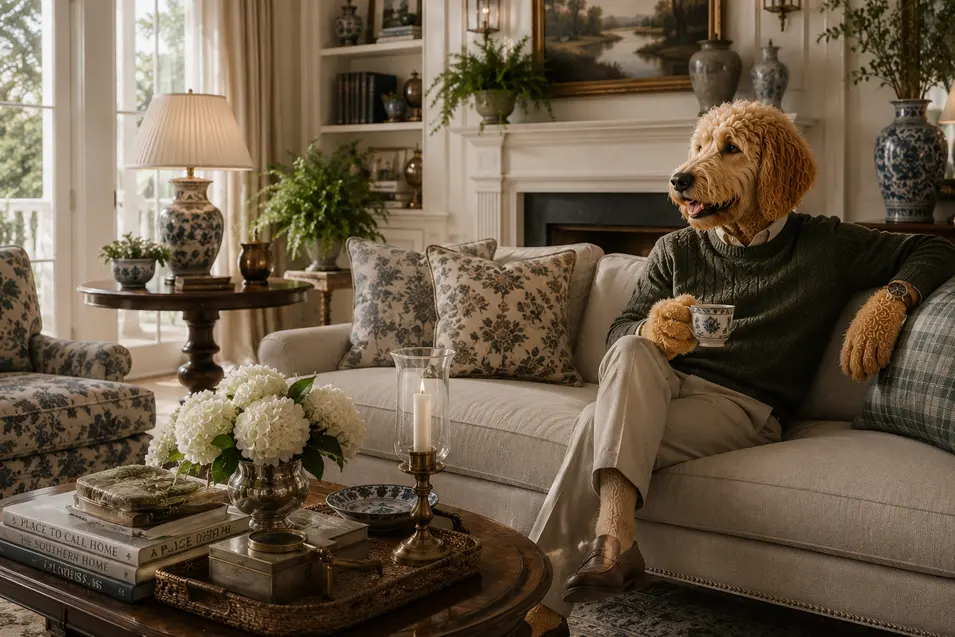
Southern Traditional style embodies the warmth, hospitality, and timeless elegance that have long defined homes throughout the American South. Rooted in history yet designed for comfortable living, this style blends classic furnishings, refined architectural details, and inviting spaces that encourage gathering with family and friends.
Unlike more formal traditional interiors, Southern Traditional design balances sophistication with livability. Rooms are designed to feel welcoming rather than intimidating, creating an atmosphere where comfort and gracious entertaining coexist beautifully.
The result is a home that feels elegant, personal, and deeply connected to a rich architectural and cultural heritage.
The Origins of Southern Traditional Design
Southern Traditional style evolved from a blend of European influences, colonial architecture, and regional adaptations found throughout the Southern United States. Over generations, homeowners incorporated elements from English, French, and classical design traditions while adapting them to the South’s climate and lifestyle.
Large porches, tall ceilings, expansive windows, and comfortable gathering spaces became defining features of Southern homes. Interiors reflected a commitment to hospitality, with formal dining rooms, welcoming living spaces, and furnishings designed to accommodate family and guests alike.
Today, Southern Traditional continues to celebrate these values while incorporating modern comforts and contemporary conveniences.
Key Characteristics of Southern Traditional Style
Several defining features help distinguish Southern Traditional interiors from other traditional decorating styles.
Elegant Yet Comfortable Furnishings
Southern Traditional homes often feature classic furniture silhouettes paired with comfortable upholstery and inviting layouts.
Common furnishings include:
- Roll-arm sofas
- Wingback chairs
- Upholstered dining chairs
- Antique wood tables
- Classic case goods
Comfort is never sacrificed for appearance.
Soft, Welcoming Color Palettes
Color palettes tend to be lighter and brighter than those found in many traditional interiors.
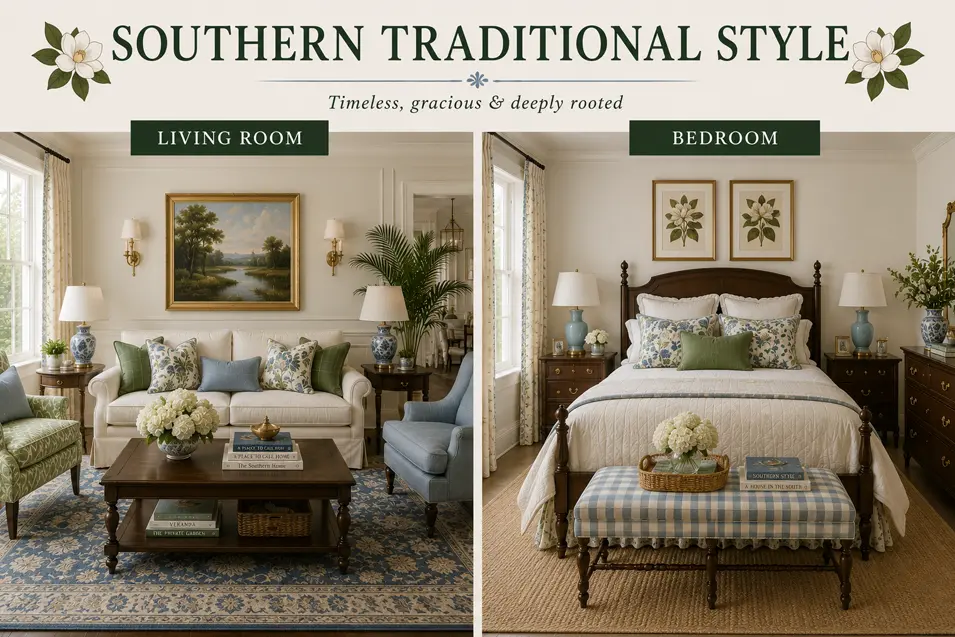
Soft whites, warm creams, pale blues, sage greens, gentle grays, and muted neutrals help create spaces that feel airy and inviting while reflecting the abundant natural light common in Southern homes.
Architectural Character
Southern Traditional interiors frequently showcase:
- Crown molding
- Wainscoting
- Decorative millwork
- Tall ceilings
- French doors
- Built-in cabinetry
These details add elegance and a sense of permanence to the home.
Layered Fabrics and Patterns
Textiles play an important role in Southern design. Linen, cotton, silk, and woven fabrics are commonly layered through curtains, upholstery, pillows, and rugs.
Floral patterns, stripes, checks, and subtle botanical prints often appear throughout the home, adding charm and personality.
Antiques and Heirloom Pieces
Southern Traditional interiors often incorporate antiques, family heirlooms, vintage artwork, and collected treasures that help tell the story of the home.
Rather than feeling like a museum, these pieces contribute warmth, history, and character.
Why Homeowners Love Southern Traditional Design
One reason Southern Traditional remains popular is its ability to feel refined without becoming formal.
The style embraces hospitality, encouraging homeowners to create spaces that are both beautiful and functional. Living rooms invite conversation, dining rooms encourage gatherings, and outdoor spaces extend the home’s welcoming atmosphere.
Many homeowners also appreciate the timeless nature of Southern Traditional design. Its emphasis on craftsmanship, quality materials, and enduring furnishings helps create interiors that age gracefully.
How to Bring Southern Traditional Style Into Your Home
Creating a Southern Traditional interior begins with focusing on comfort and elegance.
Choose classic furnishings with comfortable upholstery and timeless shapes. Incorporate soft color palettes that emphasize light and openness, and layer natural fabrics throughout the space.
Add architectural details where possible, such as molding, paneling, or built-in cabinetry. Antique furniture, vintage artwork, and meaningful decorative objects can help establish the collected-over-time feel that defines the style.
Most importantly, create spaces that encourage gathering and conversation. Hospitality remains at the heart of Southern design.
Southern Traditional vs. Traditional Design
While the two styles share many similarities, Southern Traditional often feels lighter, more relaxed, and more focused on hospitality.
Traditional interiors may emphasize formality, rich wood finishes, and symmetrical arrangements. Southern Traditional softens these elements through lighter color palettes, comfortable furnishings, and an emphasis on welcoming family and guests.
Think of Traditional as classic elegance and Southern Traditional as classic elegance with a warm Southern charm.
Southern Traditional vs. Farmhouse Style
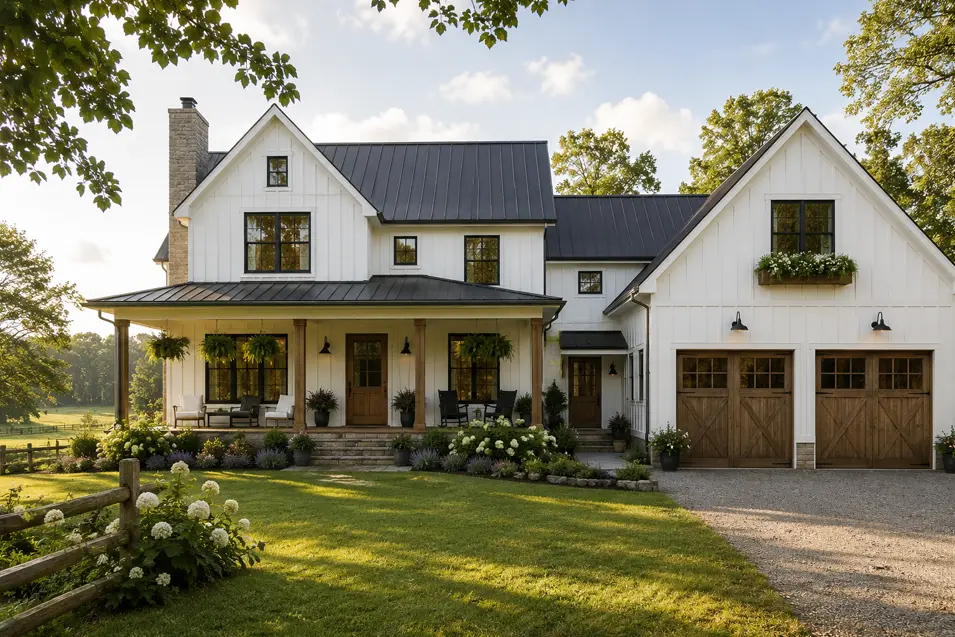
Farmhouse design emphasizes rustic simplicity and rural influences, while Southern Traditional leans more heavily toward classic architecture, refined furnishings, and traditional decorative elements.
Although both styles prioritize comfort, Southern Traditional generally feels more polished and formal.
Is Southern Traditional Style Right for You?
Southern Traditional is ideal for homeowners who appreciate timeless design, gracious hospitality, and interiors that balance beauty with comfort. Its combination of classic furnishings, architectural character, and welcoming spaces creates homes that feel both elegant and approachable.
Whether incorporated through antique furnishings, soft color palettes, or carefully layered textiles, Southern Traditional design offers a timeless approach that celebrates the enduring appeal of Southern living.
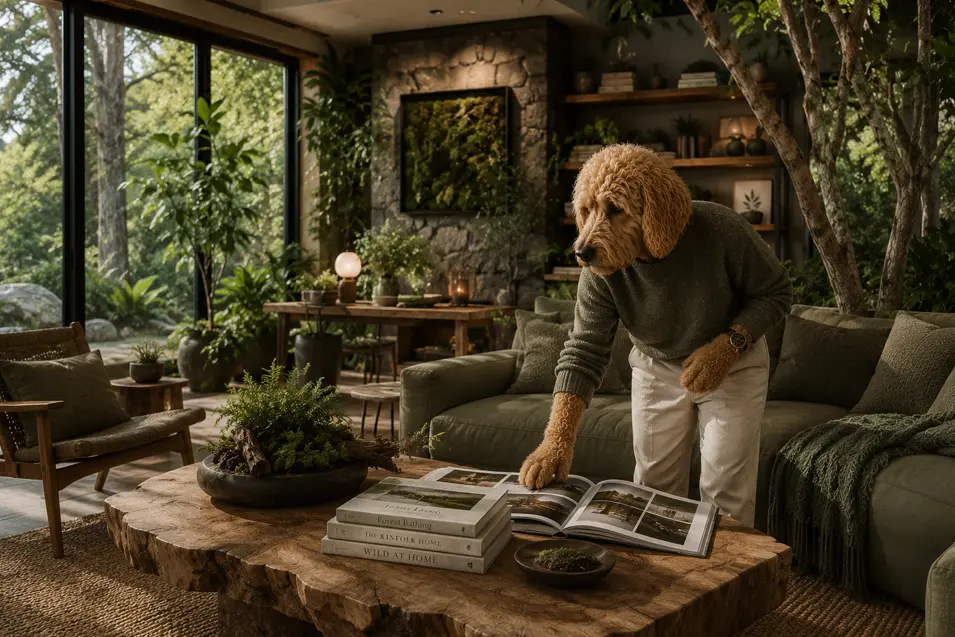
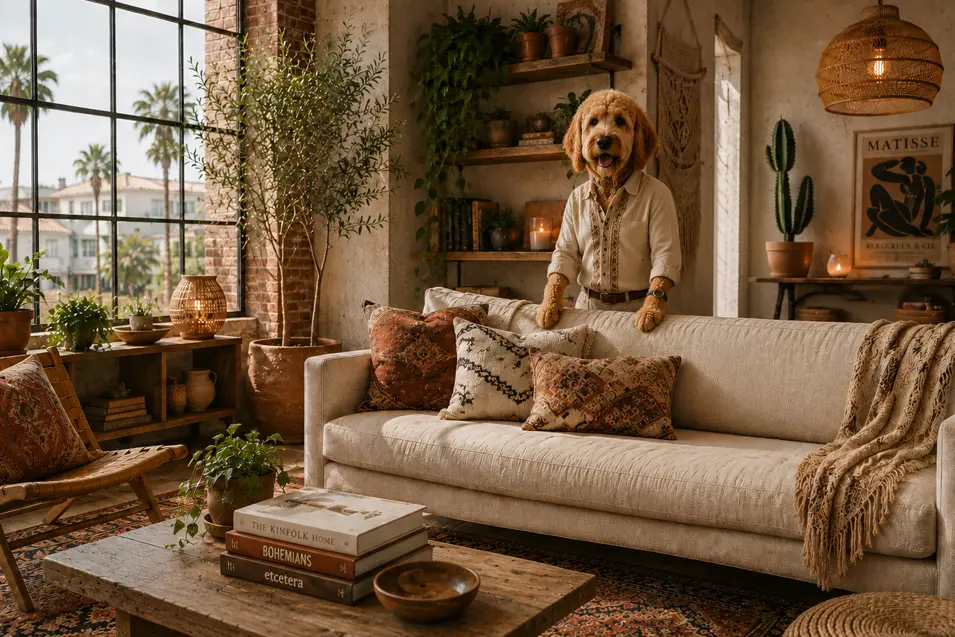
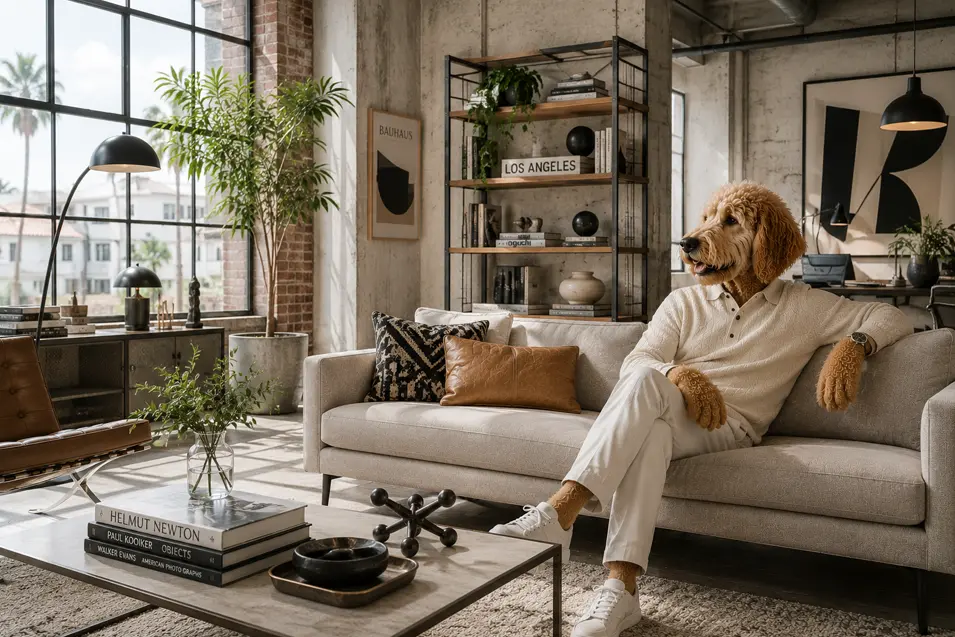
As Scout discovered while relaxing beneath tall ceilings and surrounded by classic furnishings, Southern Traditional style proves that true elegance is not about impressing guests—it’s about making them feel at home.