
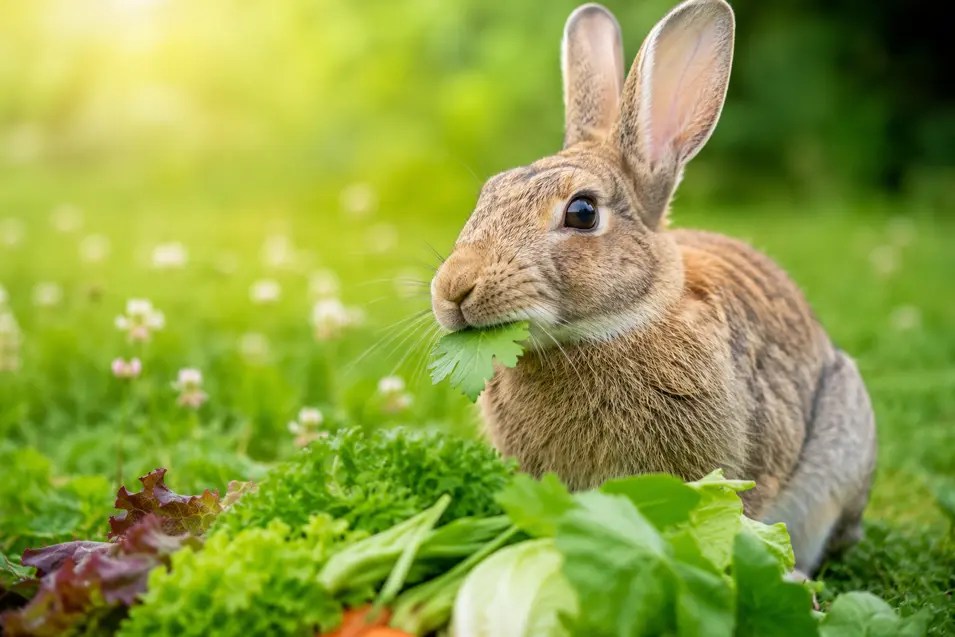
A healthy diet is one of the most important factors in keeping your rabbit happy and thriving. Rabbits have delicate digestive systems that rely on a steady supply of fiber, fresh greens, and clean water. While many fruits and vegetables are safe in moderation, others should only be offered occasionally—or avoided altogether.
This guide covers the basics of a balanced rabbit diet and highlights some of the most popular foods rabbit owners ask about.
The Foundation of Every Rabbit’s Diet
Unlimited Hay
Hay should make up around 80–90% of an adult rabbit’s diet. Timothy hay is the most common choice, although orchard grass and meadow hay are also excellent options.
Hay helps:
- Keep the digestive system moving properly.
- Prevent gastrointestinal stasis.
- Wear down continuously growing teeth.
- Provide essential fiber.
Fresh hay should always be available.
Fresh Water
Rabbits should have access to clean, fresh water at all times. Whether you use a bowl or bottle, check and refill it daily.
Rabbit Pellets
High-quality rabbit pellets can provide additional nutrients but should be fed in moderation. Adult rabbits generally need only a small daily portion, while young rabbits often require more.
Choose pellets that are high in fiber and avoid mixes containing seeds, corn, or dried fruit.
Safe Vegetables for Rabbits
Leafy greens are an important part of a rabbit’s diet. Introduce new vegetables gradually and rotate different varieties throughout the week.
Popular rabbit-safe vegetables include:
- Romaine lettuce
- Green leaf lettuce
- Cilantro
- Parsley
- Bok choy
- Basil
- Mint
- Dill
- Bell peppers
- Kale (in moderation)
- Celery
- Cucumber
- Zucchini
Some vegetables are higher in calcium or oxalates, so variety is key rather than feeding the same greens every day.
Safe Fruits for Rabbits
Fruit is best considered a treat because of its natural sugar content.
Common rabbit-friendly fruits include:
- Bananas
- Strawberries
- Blueberries
- Apples (without seeds)
- Pears
- Raspberries
- Blackberries
- Peaches
- Watermelon (without seeds)
Offer fruit only a few times each week and in small portions.
Flowers Rabbits Can Eat
Many edible flowers are perfectly safe for rabbits when grown without pesticides or chemicals.
Safe flowers include:
- Roses
- Dandelions
- Nasturtiums
- Marigolds
- Pansies
- Hibiscus
- Calendula
Always wash flowers thoroughly before feeding them.
Foods to Avoid
Some foods can upset a rabbit’s digestive system or even be toxic.
Avoid feeding:
- Onions
- Garlic
- Potatoes
- Avocado
- Rhubarb
- Chocolate
- Candy
- Bread
- Crackers
- Processed foods
- Iceberg lettuce
- Nuts and seeds
If you’re ever unsure whether a food is safe, it’s better to research it before offering it to your rabbit.
Introducing New Foods
When trying a new fruit or vegetable:
- Offer only a small amount.
- Watch for changes in droppings or appetite over the next 24 hours.
- If everything remains normal, you can slowly increase the serving size.
- Introduce only one new food at a time.
This makes it much easier to identify any food that doesn’t agree with your rabbit.
Frequently Asked Questions
Can rabbits eat fruit every day?
It’s best to feed fruit only as an occasional treat because it’s naturally high in sugar.
How much hay should rabbits eat?
Hay should always be available and should make up the majority of a rabbit’s daily diet.
Are leafy greens safe every day?
Yes. A variety of leafy greens can be fed daily as part of a balanced diet.
Can rabbits eat flowers?
Many flowers, including roses, are safe if they have not been treated with pesticides or other chemicals.
Learn More About Rabbit Care
Want to learn more about specific rabbit foods and rabbit care? Check out these guides:
Food Guides
- Can Rabbits Eat Roses?
- Can Rabbits Eat Bell Peppers?
- Can Rabbits Eat Kale?
- Can Rabbits Eat Bananas?
- Can Rabbits Eat Strawberries?
Interesting Rabbit Facts
Curious to learn even more about your bunny? You might also enjoy:
Final Thoughts
A healthy rabbit diet is simple once you understand the basics. Unlimited hay, fresh water, quality pellets, and a rotating selection of safe vegetables should make up the foundation of your rabbit’s nutrition. Fruits and flowers can be wonderful treats when offered in moderation.
Whenever you introduce a new food, do so gradually and monitor your rabbit for any digestive changes. With the right diet, your rabbit can enjoy a healthy, active life for many years.