
Mattress companies spend a lot of time testing mattresses.
They measure pressure relief, motion isolation, edge support, temperature regulation and durability. They build sophisticated machines that roll across mattresses thousands of times. They bring in sleep experts. They study foam densities, coil systems and airflow.
All very scientific.
But we noticed one rather significant problem with the testing process.
Nobody asked the dog.
Considering how many dogs spend their nights stretched across mattresses they didn’t purchase, in homes where they contribute very little financially, this seems like a serious oversight.
So we assembled our own panel of independent mattress testers.
Their qualifications are questionable.
Their standards are unreasonable.
And none of them appears particularly concerned about where the humans are supposed to sleep.
Here are the results.
The Labrador — Cooling Test
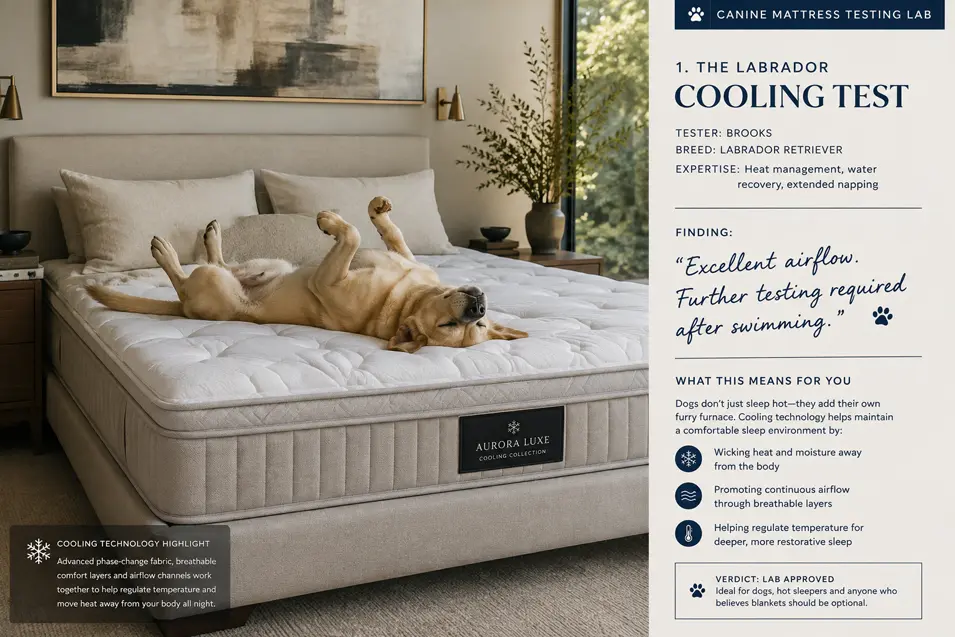
Our Labrador began testing in the traditional manner.
He climbed onto the mattress, turned around three times and collapsed.
Within minutes, he had rolled onto his back with all four legs pointing toward the ceiling, occupying considerably more mattress than should be physically possible.
This was apparently important to the testing methodology.
Finding: Excellent airflow. Further testing required after swimming.
Cooling is actually an interesting consideration for households that share their beds with pets. Add another warm body—particularly one wearing a permanent fur coat—and a comfortable mattress can suddenly feel considerably warmer.
Mattress manufacturers approach this with breathable materials, cooling covers, airflow channels and foams designed to retain less heat.
Our Labrador was unable to comment on the engineering.
He was asleep.
We considered that a positive result.
The Great Dane — Mattress Size Test
There are people who buy king-size mattresses because they enjoy having extra room.
There are also people who buy king-size mattresses because they own a Great Dane.
These are not the same people.
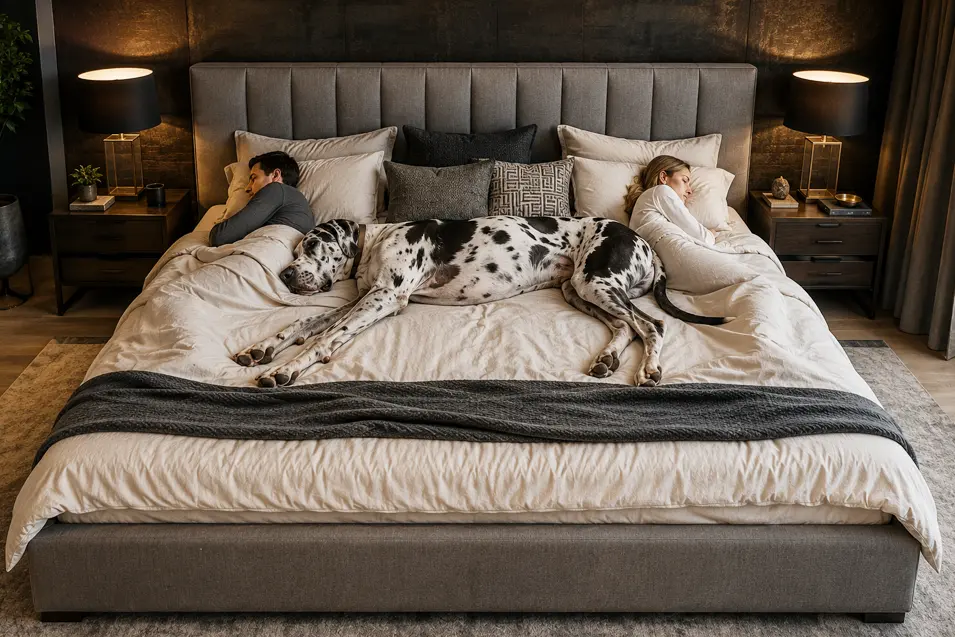
Our test mattress offered an impressive amount of sleeping space until the Great Dane climbed aboard, rotated ninety degrees and stretched horizontally across virtually the entire thing.
Two humans were subsequently assigned narrow strips of mattress along opposite edges.
The Great Dane appeared comfortable.
Finding: King: technically sleeps three, provided two of them don’t require circulation.
Somewhere tonight, a Great Dane is occupying 80% of a king-size bed while contributing absolutely nothing to the mortgage.
Mattress size becomes a surprisingly legitimate consideration when pets regularly sleep with their owners. A queen may seem enormous in a showroom. Add two adults and 120 pounds of dog with absolutely no understanding of personal boundaries and the mathematics changes considerably.
Apparently dogs don’t understand square footage.
They understand acquisition.
The Beagle — Motion Isolation Test
Motion isolation is designed to reduce how much movement travels across a mattress.
Traditionally, this is marketed toward couples.
If one person rolls over, gets out of bed or comes home late, the other person is less likely to be disturbed.
Our Beagle had a stricter testing standard.
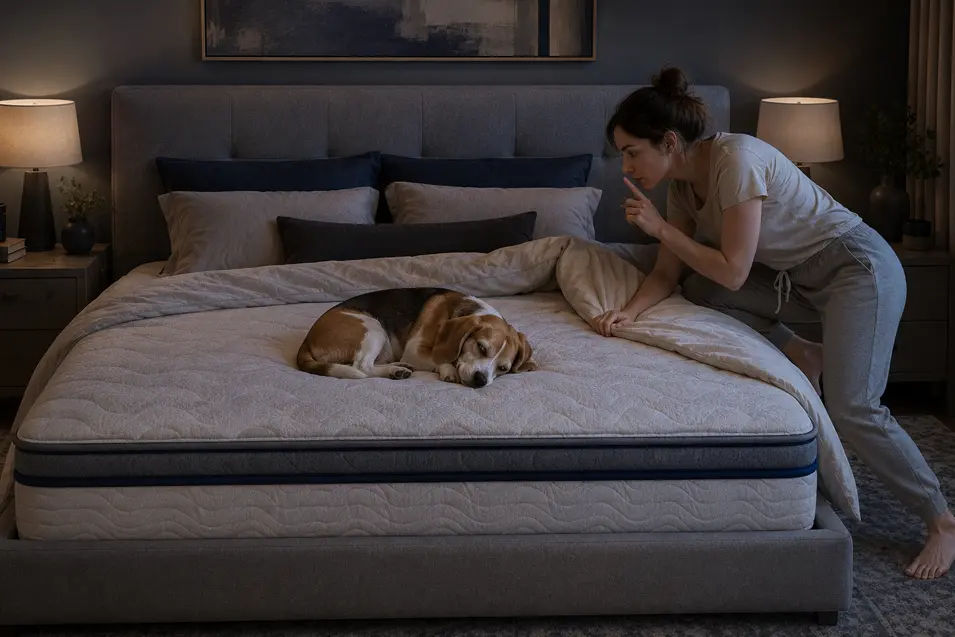
The dog was asleep in the middle of the mattress when a human attempted to carefully climb into bed.
One paw moved.
One ear twitched.
One eye opened.
The human froze.
After several uncomfortable seconds, the eye closed again.
Finding: Human movement detected. Tester opened one eye. Motion isolation rating reduced accordingly.
For pet owners, motion isolation can matter for another reason entirely.
Dogs jump onto beds.
Dogs jump off beds.
Dogs change positions.
Dogs occasionally launch themselves toward the bedroom door at 2:13 a.m. because something somewhere in the neighbourhood may have moved.
A mattress that limits motion transfer can help prevent every canine repositioning exercise from becoming a household event.
Which brings us to an advertising opportunity.
Most mattress companies might say:
Our advanced foam provides superior motion isolation.
Perfectly accurate.
But imagine saying this instead:
He gets out of bed four times every night. You don’t have to.
Same mattress feature.
Very different conversation.
The Maltese— Accessibility Test
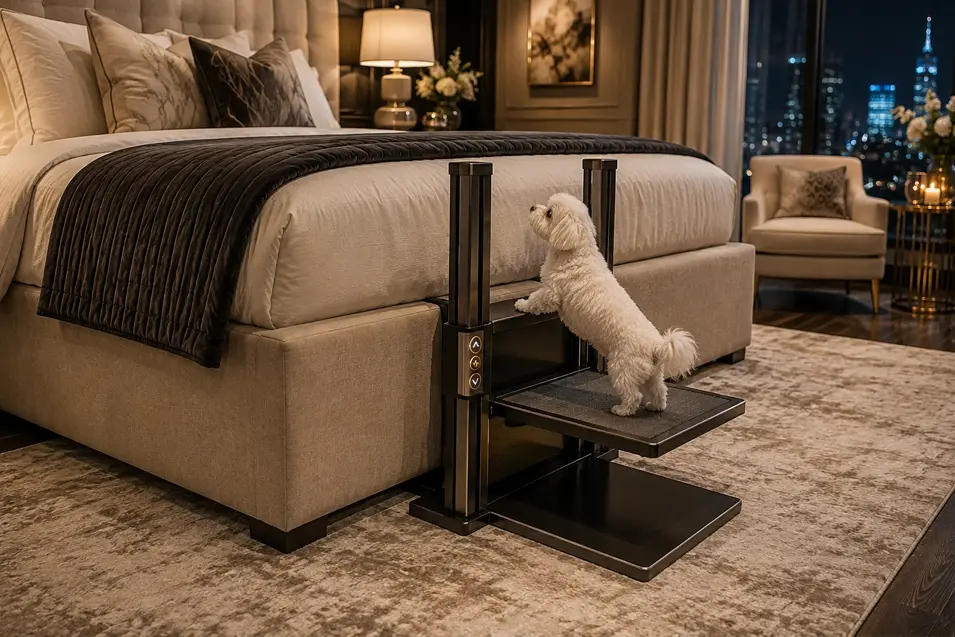
Our Maltese arrived at the bedroom, examined the mattress and immediately identified a significant design flaw.
It was approximately three feet above his head.
The mattress itself was excellent.
Its location was unacceptable.
Finding: Mattress excellent. Delivery altitude unacceptable.
Small dogs, puppies and older dogs can have difficulty getting onto and off high beds. Mattress thickness, bed frames and foundations have all grown considerably over the years, and the finished sleeping surface can be surprisingly high.
Humans tend to evaluate bed height according to how easily we can sit down and stand up.
The Maltese would like the industry to reconsider its methodology.
His proposed solution involved a private elevator.
We have seen the plans.
They are unnecessarily elaborate.
The Greyhound — Pressure Relief Test
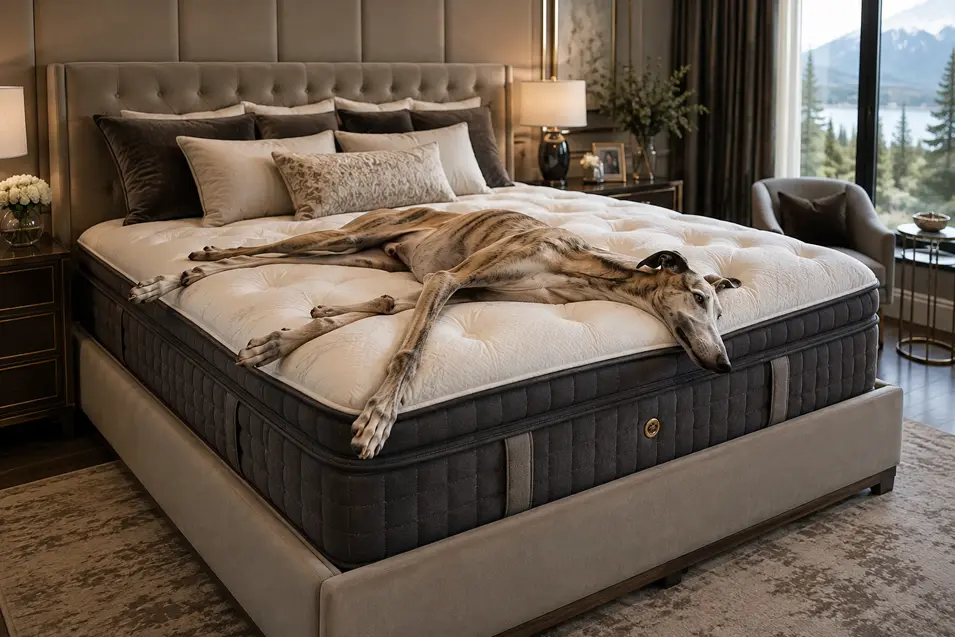
Greyhounds are excellent candidates for testing pressure relief because they appear to consist primarily of legs, ribs and elbows.
Our tester stretched across the mattress and immediately began locating pressure points we weren’t aware a dog possessed.
One elbow here.
Another elbow there.
Several additional elbows apparently stored for emergencies.
Finding: Exceptional pressure relief. Tester located seventeen additional places to put an elbow.
Pressure relief is one of the more important differences between mattresses. Materials and construction determine how weight is distributed and how much pressure develops around areas such as shoulders and hips.
Humans care about this.
Apparently extremely bony dogs do too.
The Greyhound remained in position for three hours, which we are choosing to interpret as a five-star review.
The Husky — Cooling Test, Advanced Division
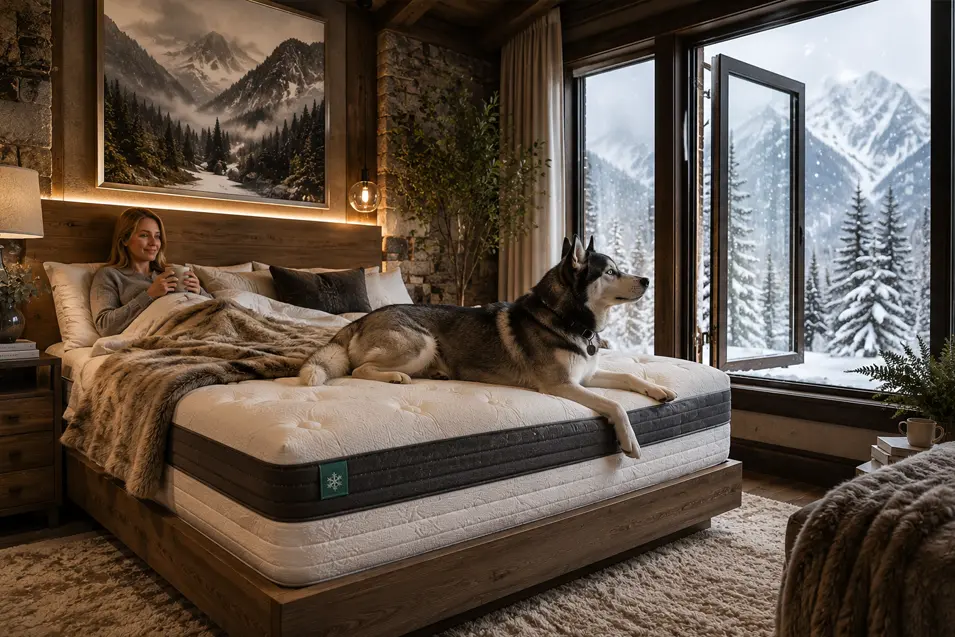
Our Labrador thought the first cooling mattress performed well.
The Husky demanded a second opinion.
Testing took place in a beautiful mountain bedroom during winter.
Snow was falling outside.
The room temperature was comfortable.
The mattress featured modern cooling technology.
The Husky still looked toward the window.
Finding: Acceptable. Tester requested window be opened in January.
There are limits to modern mattress engineering.
Huskies may be one of them.
The Bulldog — Firmness Test
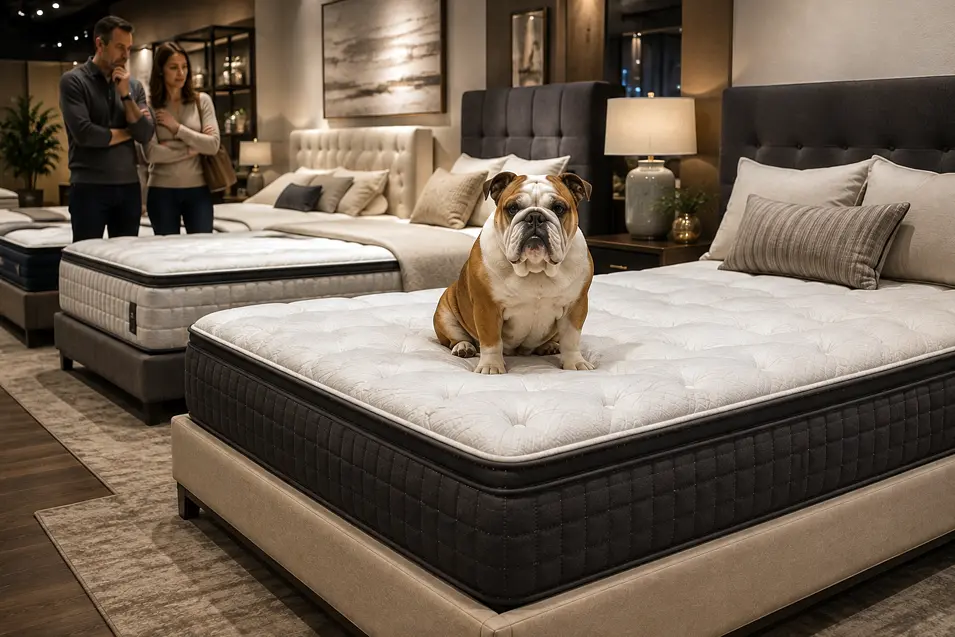
Soft.
Medium.
Medium-firm.
Firm.
Mattress shoppers can spend an extraordinary amount of time debating these options.
Our Bulldog approached the test with greater confidence.
He sat on each mattress.
He stared at us.
He moved to the next.
Eventually he selected one and refused to leave.
Finding: Medium-firm. Excellent sitting. Outstanding judging.
Firmness remains highly personal. Body weight, sleeping position and individual preference all influence what feels comfortable.
Our Bulldog offered no further explanation.
Apparently the decision was final.
The Border Collie — Edge Support Test
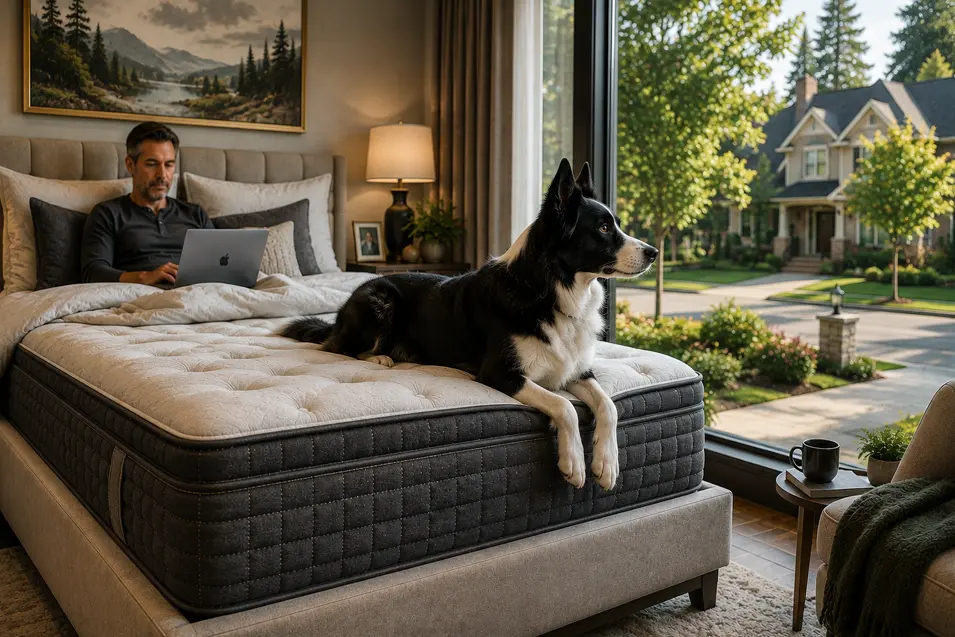
Edge support rarely receives the glamorous advertising campaigns.
It should.
Our Border Collie positioned himself precisely along the edge of the mattress where he could maintain visual contact with the bedroom door, hallway and approximately 40% of the surrounding property.
The mattress edge remained stable throughout the surveillance operation.
Finding: Excellent structural integrity during neighbourhood surveillance.
Strong edge support can make it easier to sit along the side of a mattress and can help more of the mattress surface feel usable.
It can also matter when pets repeatedly climb onto and step off the same area.
Our Border Collie would additionally like manufacturers to consider sightlines to the front sidewalk.
Engineering said they’d look into it.
The Newfoundland — Durability Test
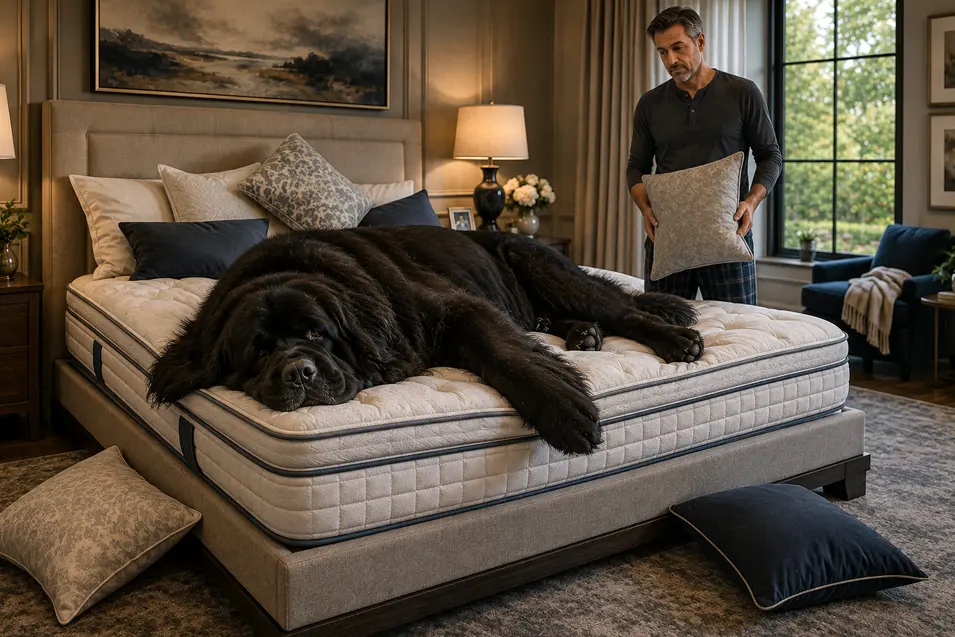
Mattress durability tests often involve sophisticated equipment designed to simulate years of use.
We used a Newfoundland.
The dog climbed onto the mattress.
The mattress survived.
The dog turned around.
The mattress survived.
The dog collapsed dramatically.
The mattress survived.
Finding: Mattress intact. Decorative pillows remain unaccounted for.
Large dogs put additional concentrated weight on mattresses, particularly when climbing on and off in the same locations night after night.
Construction quality matters.
So does accepting that decorative pillows are largely ceremonial objects once a dog lives in the house.
The Chihuahua — Warmth Test

Our Chihuahua considered the mattress acceptable.
The bedding was another matter.
One blanket was provided.
Insufficient.
A second blanket was added.
Still insufficient.
Eventually the tester disappeared entirely beneath a duvet, two blankets and something that may have previously belonged on the foot of the bed.
Finding: Insufficient blankets.
We added another.
Updated finding: Insufficient blankets.
Testing was eventually suspended.
The Human Displacement Test
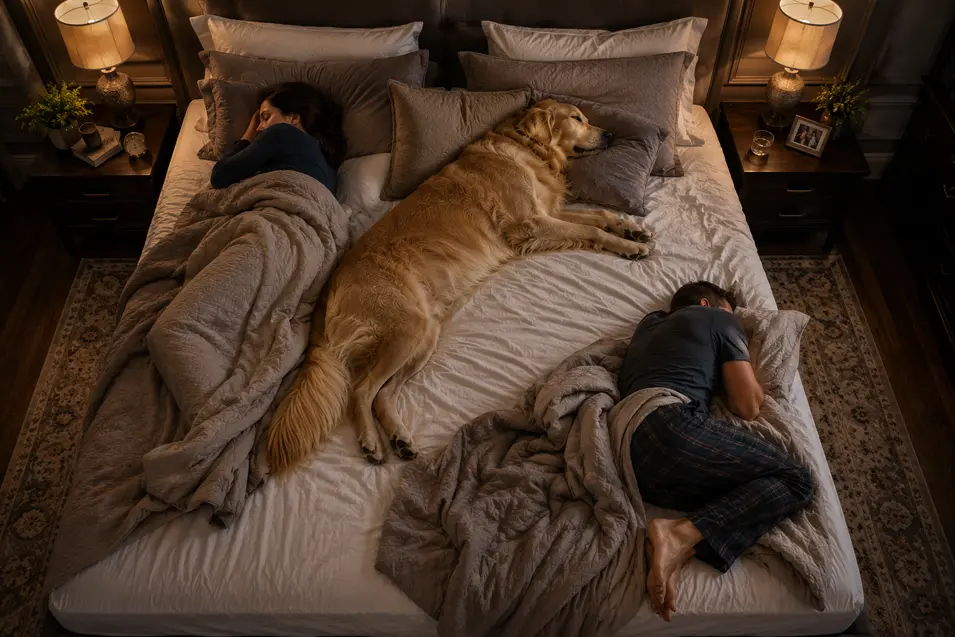
This wasn’t originally part of our testing protocol.
Then we looked at the bed.
Two humans had gone to sleep.
One dog had joined them.
The dog weighed approximately one-third as much as either human yet somehow controlled nearly three-quarters of the usable mattress.
We attempted to understand the geometry.
It cannot be explained using conventional mathematics.
Dogs apparently expand after sunset.
The humans curled themselves into increasingly improbable sleeping positions while a large unused section of mattress remained mysteriously inaccessible beside the dog.
Finding: Mattress capacity is determined less by square footage than by canine ambition.
This may actually be the most useful mattress-size test available to pet owners.
Don’t simply ask how many people sleep in your bed.
Ask how many creatures believe they own it.
The 2:13 A.M. Test
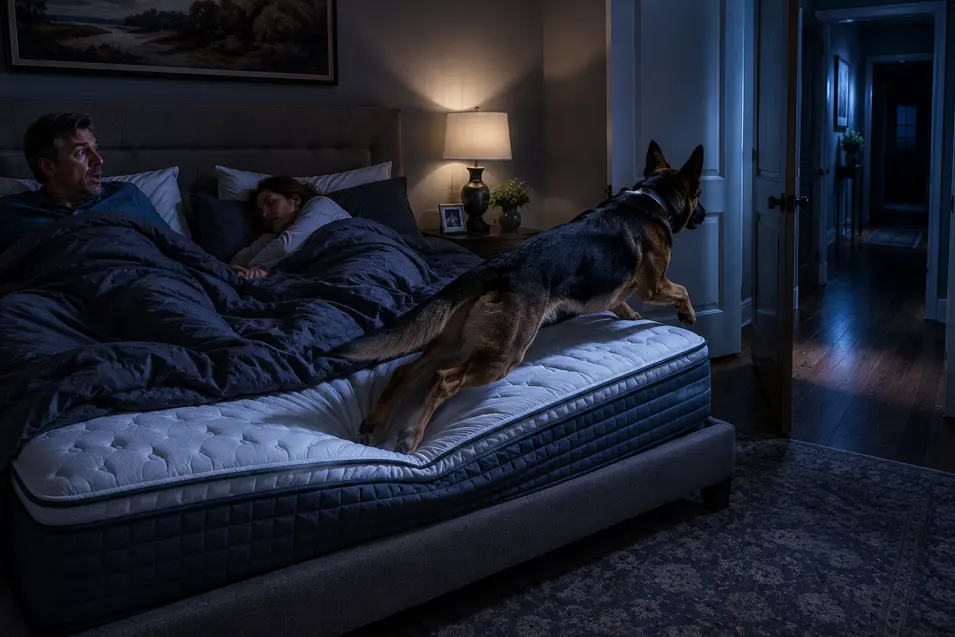
At precisely 2:13 a.m., our tester heard something.
We don’t know what.
Possibly a vehicle.
Possibly another dog.
Possibly a leaf.
The sleeping dog went from completely unconscious to standing upright in approximately three milliseconds.
The dog then launched itself from the mattress and ran toward the hallway.
Motion isolation: suddenly important.
Edge support: extremely important.
Human sleep: over.
Testing concluded at 2:14 a.m.
The Morning-After Test
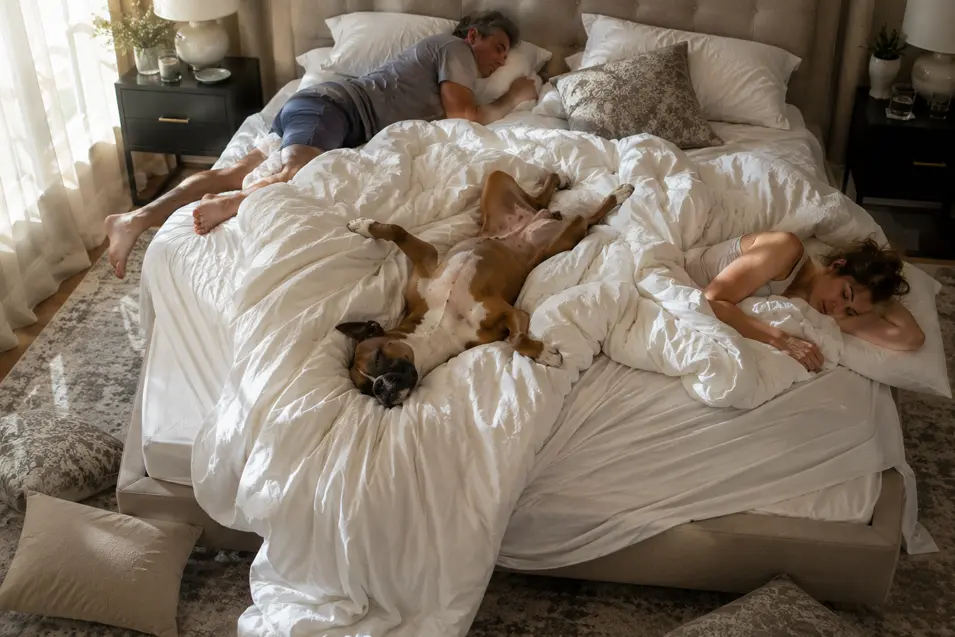
Luxury mattress advertising has taught us what mornings are supposed to look like.
Beautiful sunlight pours through sheer curtains.
A well-rested person stretches beneath immaculate white bedding.
Everything is peaceful.
Our testing produced slightly different results.
One human was sideways.
Another had lost most of the duvet.
Three pillows were on the floor.
The fitted sheet had migrated several inches east.
And the dog was asleep directly in the middle of everything looking extraordinarily comfortable.
Finding: Tester reports an excellent night’s sleep.
At least somebody did.
By the Way, Mattress Industry…
There is a marketing lesson hiding underneath all of this.
Mattress advertising is incredibly competitive, yet much of it speaks remarkably similar language.
Advanced foam.
Superior support.
Cooling technology.
Motion isolation.
Pressure relief.
Save 30% this weekend.
Those things matter.
But pet owners don’t stop being pet owners when they’re shopping for a mattress, pillow or mattress protector.
And sometimes the easiest way to make an ordinary product feature memorable is to put it into a situation people actually recognize.
So we invented a mattress company.
Meet Haven & Rest.
It doesn’t exist.
But perhaps its advertising should.
The $299 Mattress
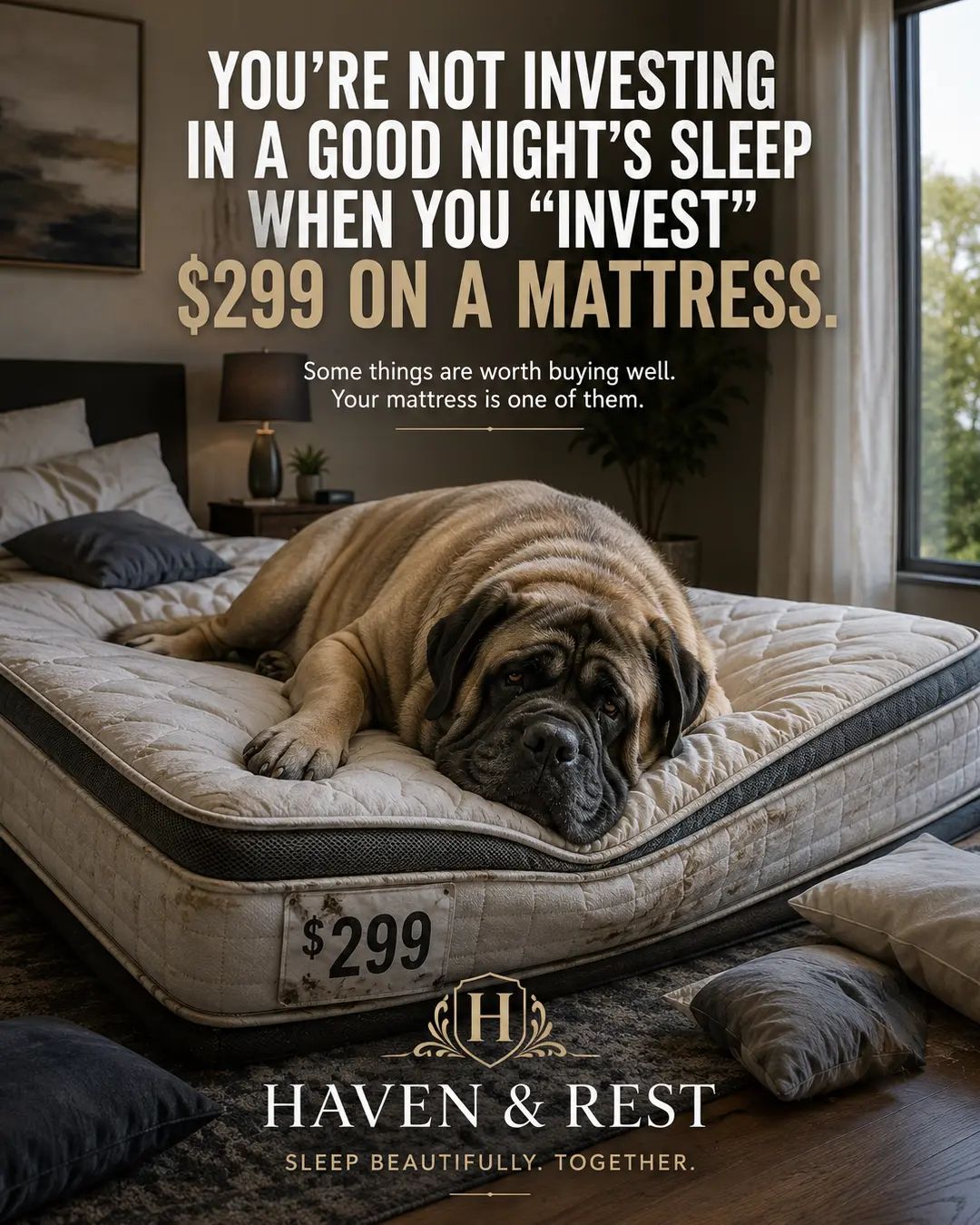
Price is one of the loudest messages in mattress advertising.
Everyone has a deal.
Everyone has a sale.
And somewhere, someone is promising an entire mattress for $299.
So instead of competing over who can make the price sound cheapest, Haven & Rest takes a different approach.
Put an enormous Mastiff on a cheap mattress that’s already surrendering beneath him.
Then say:
YOU’RE NOT INVESTING IN A GOOD NIGHT’S SLEEP WHEN YOU “INVEST” $299 IN A MATTRESS.
Some things are worth buying well.
Your mattress is one of them.
Same category.
Completely different argument.
Instead of making price the hero, you’re making quality the reason to buy.
King Size for a Reason
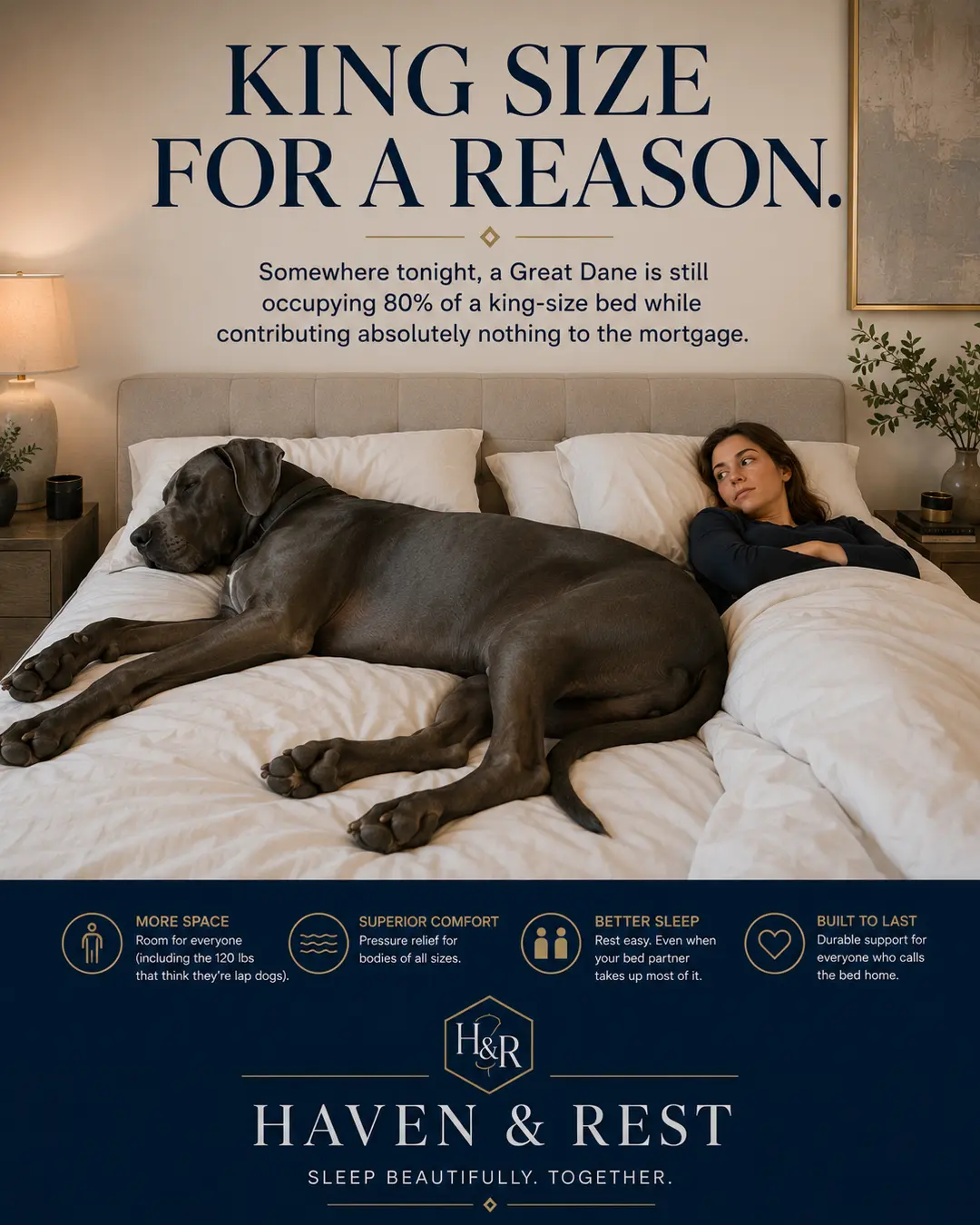
Mattress companies don’t need to explain what a king-size mattress is.
Customers already know it’s bigger.
So maybe don’t sell dimensions.
Sell the reason someone might desperately need those dimensions.
Put a Great Dane across 80% of the mattress and leave one human clinging to what remains.
KING SIZE FOR A REASON.
Somewhere tonight, a Great Dane is still occupying 80% of a king-size bed while contributing absolutely nothing to the mortgage.
Suddenly mattress size isn’t a specification.
It’s somebody’s Tuesday night.
Buy One Pillow. Get One Free.

Promotions don’t necessarily have to change either.
BUY ONE PILLOW. GET ONE FREE.
We’ve all seen it.
But instead of photographing two pillows sitting neatly beside one another, put one beneath a sleeping woman and the other beneath her equally comfortable dog.
Then add:
EVERYONE DESERVES A GREAT PILLOW.
The offer hasn’t changed.
The product hasn’t changed.
The promotion hasn’t changed.
Only the story has.
And now there’s an image people might actually remember.
Protect Your Mattress From Your Best Friend
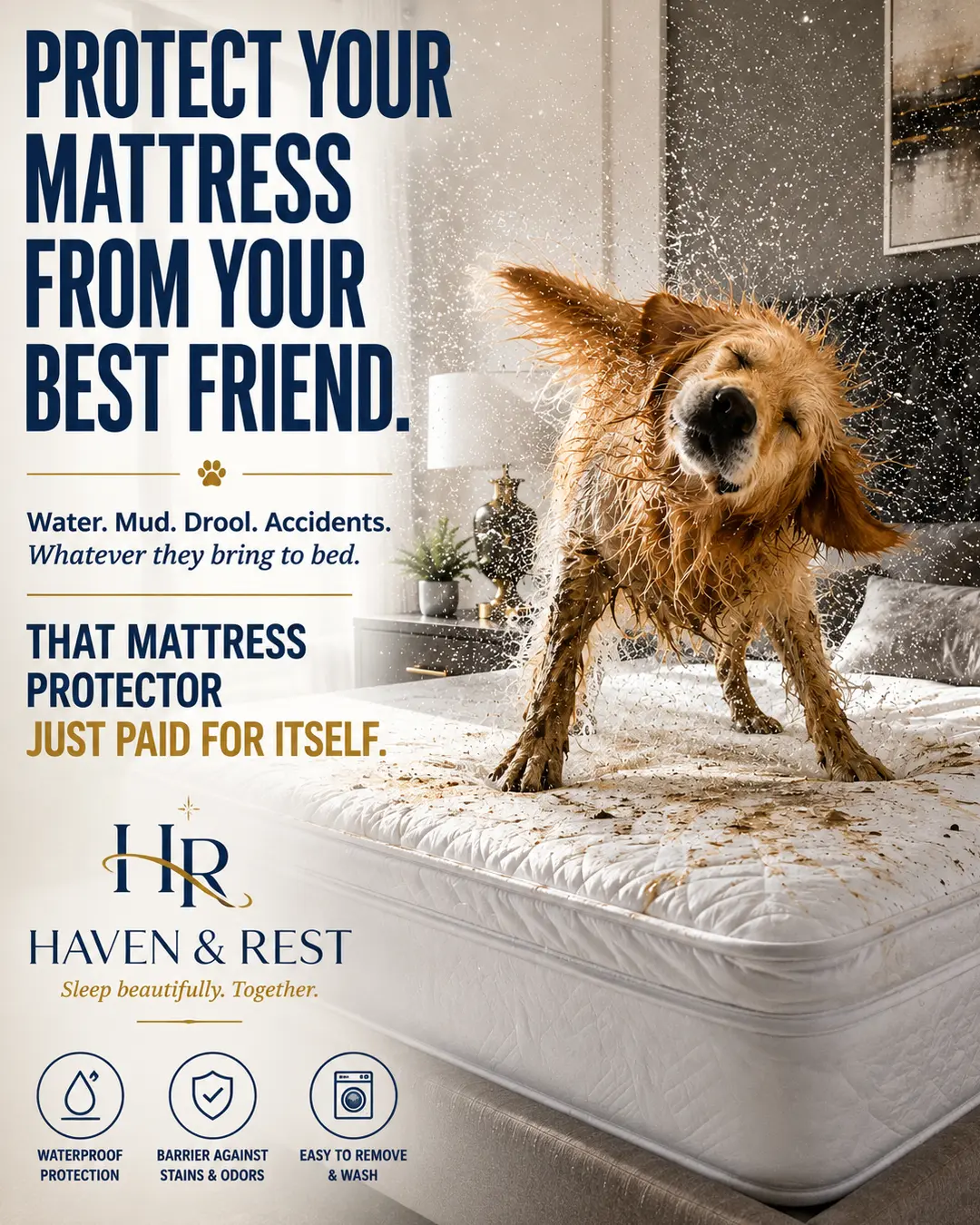
Then there are products whose benefits practically write the advertising for you.
Mattress protectors aren’t particularly exciting.
Until 90 pounds of wet, muddy dog jumps onto your expensive mattress and shakes.
At that exact moment, mattress protection becomes extremely interesting.
PROTECT YOUR MATTRESS FROM YOUR BEST FRIEND.
Water. Mud. Drool. Accidents.
Whatever they bring to bed.
And then the line that suddenly makes a relatively inexpensive accessory feel like an exceptionally sensible purchase:
THAT MATTRESS PROTECTOR JUST PAID FOR ITSELF.
That’s the opportunity.
We’re not changing the products.
We’re not inventing benefits they don’t have.
We’re not abandoning the features mattress companies have spent years engineering.
We’re simply putting those products into the lives of the people—and animals—who actually use them.
A king mattress becomes a Great Dane survival strategy.
A pillow promotion becomes something shared between best friends.
A mattress protector becomes the smartest purchase in the room approximately three seconds after a wet dog arrives.
And a premium mattress becomes something worth buying well.
Same products.
Same features.
Same promotions.
Better stories.
Behind the Joke, Dogs Really Do Change How We Sleep
This entire experiment is ridiculous.
Mostly.
Because if your dog sleeps in your bed, the animal genuinely changes how that mattress is used.
Motion isolation can matter when a dog gets up repeatedly.
Edge support can matter when an animal climbs on and off.
Cooling can matter when another warm body is sharing the bed.
Mattress size certainly matters when a large dog believes “king” describes his position within the household rather than the dimensions of the mattress.
Bed height can matter for small and aging dogs.
Durability matters.
Washable bedding matters.
And after watching a soaking-wet dog shake itself directly on top of a mattress, we feel comfortable adding a good mattress protector rather emphatically to the list.
But perhaps most importantly, the way people actually live matters.
That’s something advertising sometimes forgets.
We’re not simply consumers shopping for specifications.
We’re people living complicated, funny, messy lives in homes shared with families, partners, children and animals.
The products that understand those lives have better stories to tell.
The Final Results
After extensive evaluation, our canine testing panel was unable to select the world’s best mattress.
Apparently firmness, cooling, support and construction are highly personal.
There were disagreements.
The Labrador wanted additional cooling tests.
The Husky still wanted the window opened.
The Chihuahua requested another blanket.
The Great Dane declined to vacate the testing facility.
And nobody has volunteered to retrieve the mattress protector from the laundry room.
But the panel did reach unanimous agreement on one important finding:
Whatever mattress you buy, you’re sleeping on the edge.
More Questionable Advice From the Dachshund
Apparently testing mattresses wasn’t enough.
We also let a Dachshund reconsider furniture design—and he immediately identified several problems with the way humans have been doing things.
Sofas are too high. Beds require unnecessary climbing. Dining tables are poorly proportioned. And naturally, his solution to reaching the mattress involved a private elevator.
See what happens when we ask: What If Dachshunds Designed Furniture?
Spoiler: the humans end up sitting on the floor.