Traditional and modern interior design are two of the most recognizable decorating styles, but they create very different feelings inside a home.
Traditional design is rooted in history, comfort, and classic details. Modern design focuses on simplicity, clean lines, and function. Both styles can be beautiful, but the right choice depends on your personality, lifestyle, and the atmosphere you want to create.
If you’re trying to decide between traditional and modern design, understanding the differences can help you choose a style that feels right for your home.
What Is Traditional Interior Design?
Traditional interior design is inspired by classic European decorating styles. It often features elegant furniture, rich materials, detailed woodwork, and balanced room layouts.
This style is warm, polished, and timeless. Rather than following short-lived trends, traditional interiors rely on familiar design elements that have remained popular for generations.
Common Features of Traditional Design
Traditional interiors often include:
- Rich wood furniture
- Crown molding and decorative trim
- Symmetrical furniture arrangements
- Classic patterns such as florals, damask, plaid, or stripes
- Warm neutral colors
- Elegant lighting
- Layered fabrics and textures
- Antique or vintage-inspired decor
A traditional living room might include a rolled-arm sofa, matching side tables, framed artwork, a patterned area rug, and formal draperies.
What Is Modern Interior Design?
Modern interior design is based on simplicity, function, and clean architectural lines. It avoids excessive decoration and focuses on open spaces, practical furniture, and a streamlined look.
Although people often use the word “modern” to describe anything current, modern design actually refers to a specific style influenced by early-to-mid-20th-century design movements.
Common Features of Modern Design
Modern interiors often include:
- Clean lines
- Open floor plans
- Neutral color palettes
- Minimal clutter
- Simple furniture shapes
- Natural materials
- Large windows
- Functional layouts
- Limited decorative accessories
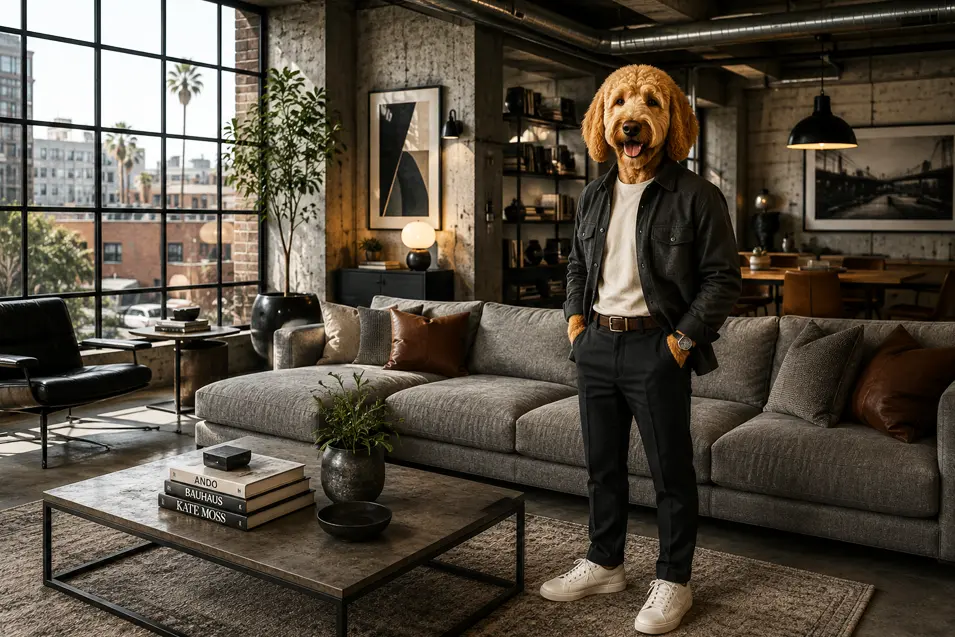
A modern living room might include a low-profile sofa, simple coffee table, neutral walls, large windows, and minimal artwork.
Traditional vs Modern Design: The Main Differences
Traditional and modern interiors differ in several important ways.
Furniture Style
Traditional furniture tends to be more detailed and decorative. Pieces may include curved arms, carved wood, tufted upholstery, or ornate legs.
Modern furniture is usually simpler and more streamlined. It often features straight lines, low profiles, and minimal ornamentation.
Traditional Furniture
Traditional furniture feels formal, classic, and substantial.
Common examples include:
- Wingback chairs
- Rolled-arm sofas
- Carved wood tables
- Upholstered dining chairs
- Antique cabinets
Modern Furniture
Modern furniture feels clean, simple, and functional.
Common examples include:
- Low-profile sofas
- Sleek dining tables
- Platform beds
- Minimalist shelving
- Simple accent chairs
Color Palettes
Traditional design often uses warm, rich, and layered colors. Cream, beige, gold, burgundy, navy, forest green, and deep brown are common choices.
Modern design usually favors a more restrained palette. White, black, gray, beige, and natural wood tones are often used to create a clean and open feeling.
Traditional color schemes tend to feel cozy and elegant, while modern color schemes tend to feel airy and uncluttered.
Layout and Room Arrangement
Traditional rooms often use symmetry. Matching lamps, paired chairs, centered artwork, and balanced furniture arrangements help create a sense of order.
Modern rooms are usually more open and flexible. Instead of formal symmetry, modern spaces focus on flow, function, and simplicity.
In a traditional room, furniture may be arranged around a fireplace or focal point. In a modern room, furniture may be arranged to maximize openness, natural light, and ease of movement.
Materials and Textures
Traditional interiors often include polished wood, velvet, silk, wool, leather, brass, and detailed upholstery. These materials create a sense of warmth and sophistication.
Modern interiors may include wood, glass, metal, concrete, leather, linen, and stone. The materials are usually used in a simpler, more restrained way.
Traditional design layers texture heavily. Modern design uses texture more selectively.
Decorative Details
Traditional design embraces decorative details. Artwork, mirrors, lamps, books, vases, trim, patterned rugs, and window treatments all contribute to the finished look.
Modern design uses fewer accessories. Every item usually has a purpose or strong visual impact.
This does not mean modern interiors are plain. Instead, they rely on shape, proportion, light, and materials rather than heavy decoration.
Which Style Feels Warmer?
Traditional design usually feels warmer because it uses richer colors, layered fabrics, and more decorative elements.
Modern design can feel warm too, but it requires careful use of texture. Wood, soft rugs, comfortable seating, warm lighting, and natural fabrics can prevent modern rooms from feeling too stark.
If you like cozy, familiar spaces, traditional design may appeal to you more. If you prefer calm, open, uncluttered rooms, modern design may be a better fit.
Which Style Is Better for Families and Pets?
Both traditional and modern design can work well for families and pet owners, but each comes with different considerations.
Traditional homes often include durable furniture and layered textiles, which can make rooms feel comfortable and forgiving. However, heavy fabrics and ornate details may collect pet hair or dust.
Modern homes are often easier to clean because they have fewer accessories and simpler surfaces. However, very light colors, sharp furniture edges, or delicate materials may not be ideal for homes with pets or young children.
For pet-friendly homes, consider:
- Stain-resistant upholstery
- Washable rugs
- Durable flooring
- Furniture with easy-to-clean surfaces
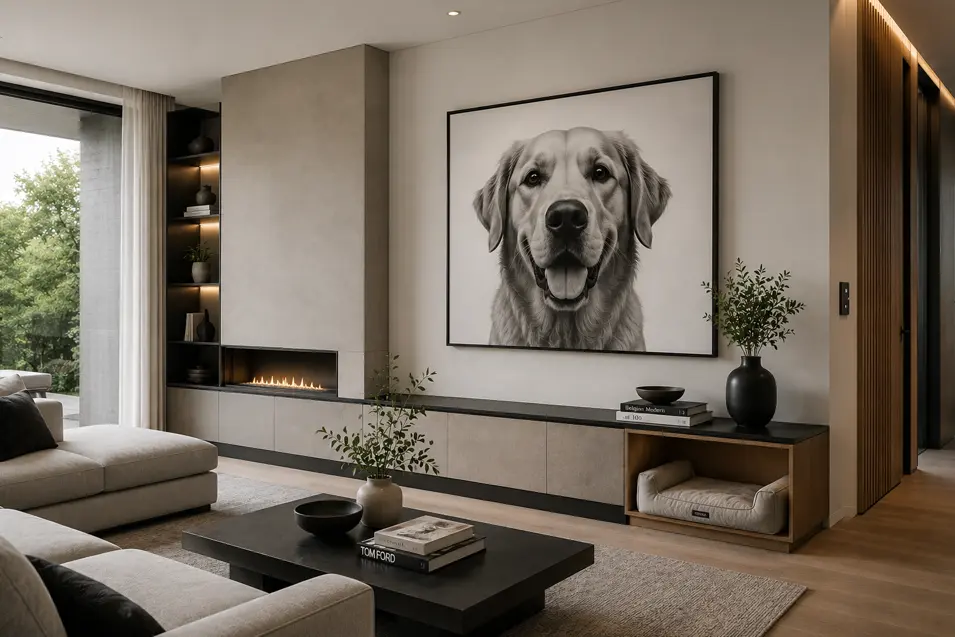
- Built-in pet beds or storage areas
- Avoiding fragile decor at pet level
The best choice is not necessarily traditional or modern, but the version of each style that fits your everyday life.
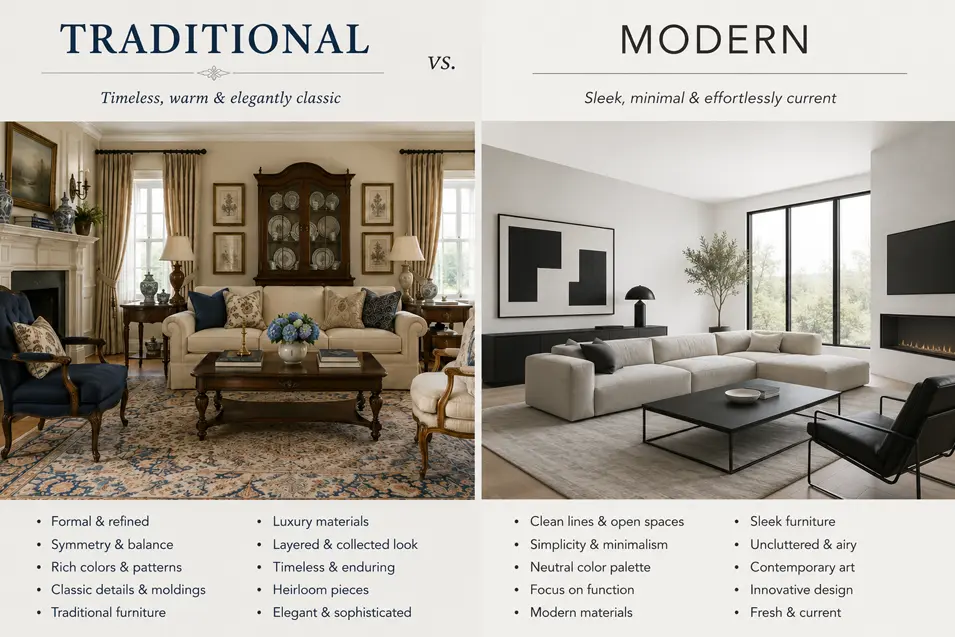
Note: This side-by-side comparison highlights the biggest differences between traditional and modern interior design, including furniture styles, color palettes, room layouts, and decorative elements.
Can You Mix Traditional and Modern Design?
Yes. In fact, many homeowners prefer a blend of traditional and modern elements.
This blended style is often called transitional design. It combines the warmth and elegance of traditional interiors with the clean lines and simplicity of modern design.
A transitional room might include:
- A classic sofa with modern accent chairs
- Traditional wood furniture with simple lighting
- Neutral walls with layered textures
- Clean-lined furniture paired with vintage decor
- Modern art above a traditional console table
Transitional design is popular because it feels timeless, balanced, and comfortable.
How to Choose Between Traditional and Modern Design
When deciding between traditional and modern design, think about how you want your home to feel.
Choose traditional design if you like:
- Classic furniture
- Warm, layered rooms
- Decorative details
- Formal layouts
- Timeless elegance
- Antique or vintage-inspired pieces
Choose modern design if you like:
- Clean lines
- Open spaces
- Minimal clutter
- Neutral colors
- Simple furniture
- Functional layouts
Choose transitional design if you like elements of both.
Traditional vs Modern: Which One Is More Timeless?
Traditional design is timeless because it is rooted in classic decorating principles. It rarely depends on short-term trends.
Modern design can also be timeless when it focuses on simplicity, quality materials, and functional layouts. However, some modern trends may date more quickly if they rely too heavily on trendy finishes or colors.
The most timeless homes usually avoid extremes. A room that is too formal may feel outdated, while a room that is too trendy may lose appeal quickly.
A balanced approach often works best.
Final Thoughts
Traditional and modern interior design offer two very different ways to create a beautiful home.
Traditional design is warm, elegant, and rooted in classic style. Modern design is clean, simple, and focused on function. Neither is better than the other; the right choice depends on your taste, lifestyle, and the way you want your home to feel.
If you love comfort, history, and decorative detail, traditional design may be the right fit. If you prefer open spaces, simplicity, and clean lines, modern design may suit you better.
And if you appreciate both, transitional design may give you the best of each world.