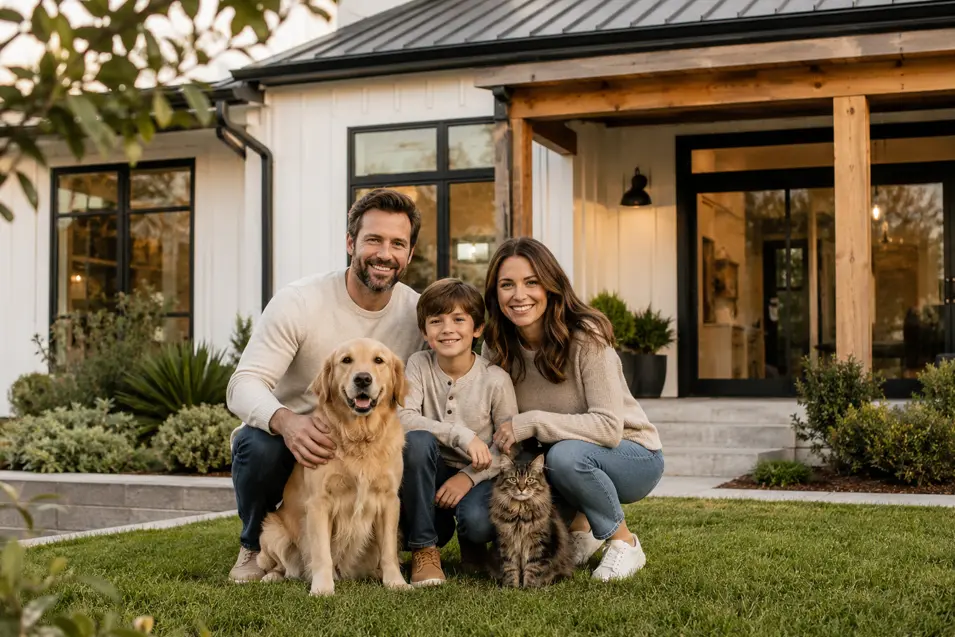
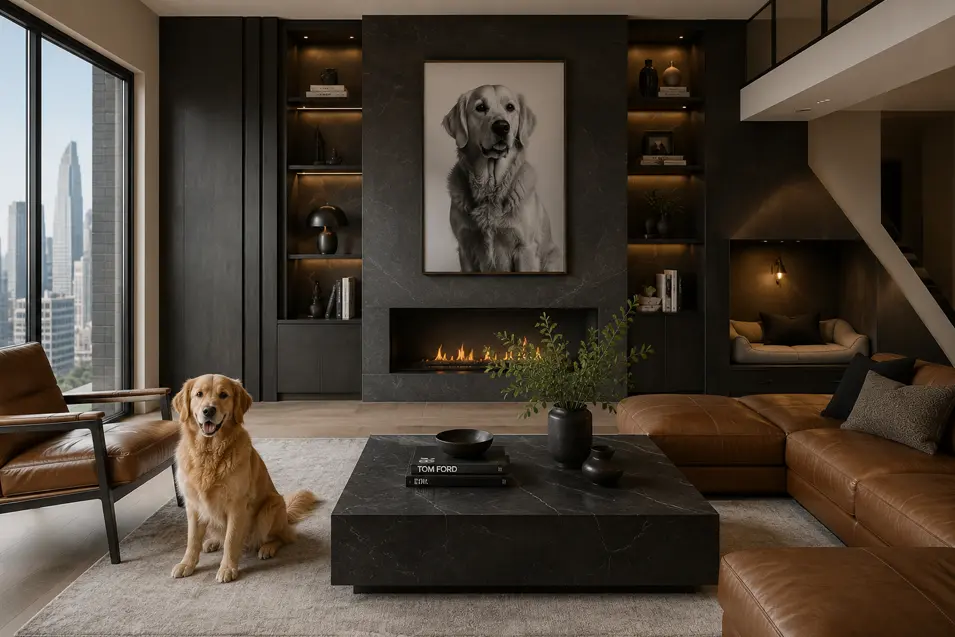
For many dog owners, creating a beautiful home can sometimes feel like a constant balancing act.
You want attractive furniture, stylish décor, and carefully designed spaces, but you also need to accommodate muddy paws, shedding fur, toys scattered throughout the house, and the daily realities of living with a beloved pet.
The good news is that modern interior design no longer requires homeowners to choose between style and practicality. With thoughtful planning, durable materials, and smart design decisions, it’s entirely possible to create a home that works beautifully for both people and dogs.
Whether you’re decorating a new house, renovating an existing space, or simply making a few upgrades, this guide covers everything you need to know about designing a dog-friendly home.
Why Dog-Friendly Design Matters
Dogs are not occasional visitors—they are family members who share your living space every day.
A truly dog-friendly home should:
- Support your dog’s physical health and safety
- Reduce daily cleaning and maintenance
- Protect your furnishings and finishes
- Improve organization
- Create dedicated spaces for your pet
- Maintain a beautiful and cohesive design
The most successful pet-friendly homes are designed with both human and canine needs in mind from the beginning.
Start With Dog-Friendly Flooring
Flooring is one of the most important decisions in any dog-friendly home.
Your floors must withstand:
- Claws
- Dirt
- Water
- Accidents
- Heavy foot traffic
Luxury Vinyl Plank
Luxury vinyl plank flooring has become one of the most popular choices among pet owners.
Benefits include:
- Scratch resistance
- Water resistance
- Easy cleaning
- Excellent durability
- Realistic wood appearance
Tile Flooring
Tile remains one of the most durable options available.
Benefits include:
- Waterproof surface
- Easy maintenance
- Long lifespan
- Resistance to stains and odors
To improve comfort, add area rugs in lounging areas.
Engineered Hardwood
For homeowners who love the look of wood, engineered hardwood often performs better than traditional hardwood.
Choose harder wood species and durable finishes for maximum protection.
Flooring to Avoid
While every home is different, some materials require extra caution:
- Soft hardwoods
- Delicate carpeting
- Highly polished surfaces
- Flooring that becomes slippery when wet
Dogs need secure footing to protect their joints and mobility.
Choose Durable Furniture
Furniture experiences daily wear from dogs.
Selecting pet-friendly materials can dramatically increase the lifespan of your furnishings.
Performance Fabrics
Modern performance fabrics offer:
- Stain resistance
- Moisture resistance
- Easy cleaning
- Durability
Many now feel just as comfortable as traditional upholstery.
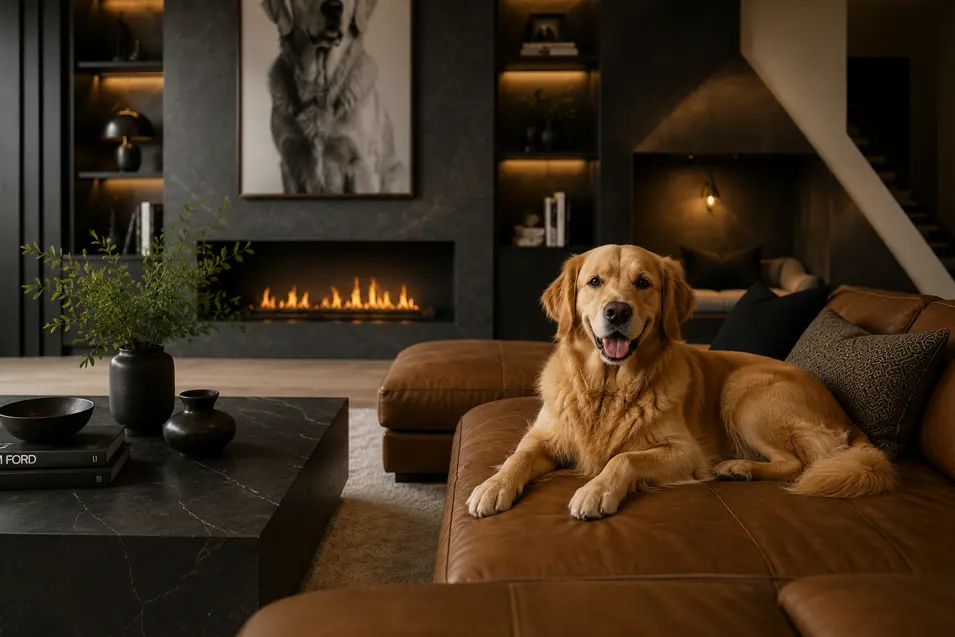
Leather Furniture
Leather is often a good choice for dog owners because it:
- Doesn’t trap pet hair
- Wipes clean easily
- Ages attractively
- Resists odors
Minor scratches often blend into the natural patina over time.
Washable Slipcovers
Removable slipcovers make maintenance significantly easier.
They’re especially useful for:
- Family rooms
- Living rooms
- Homes with multiple pets
Create Dedicated Spaces for Your Dog
One of the biggest mistakes homeowners make is treating pet items as afterthoughts.
Instead, incorporate your dog’s needs directly into the design.
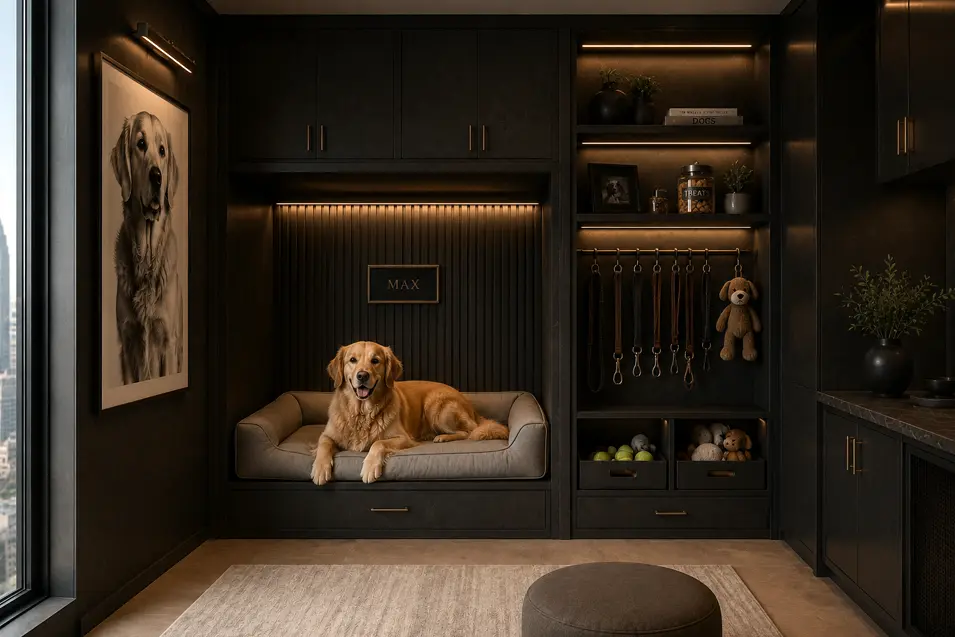
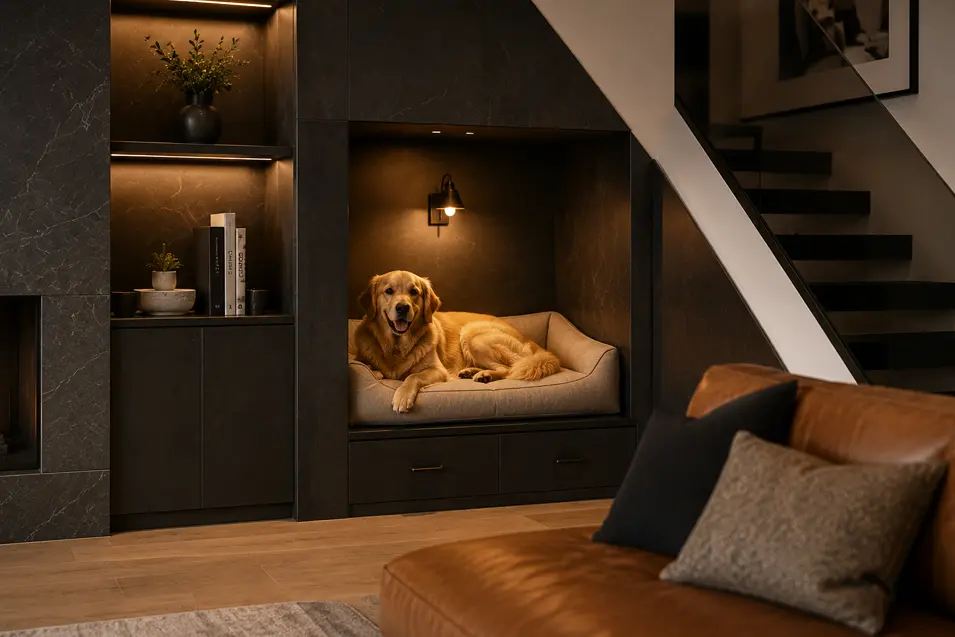
Built-In Dog Beds
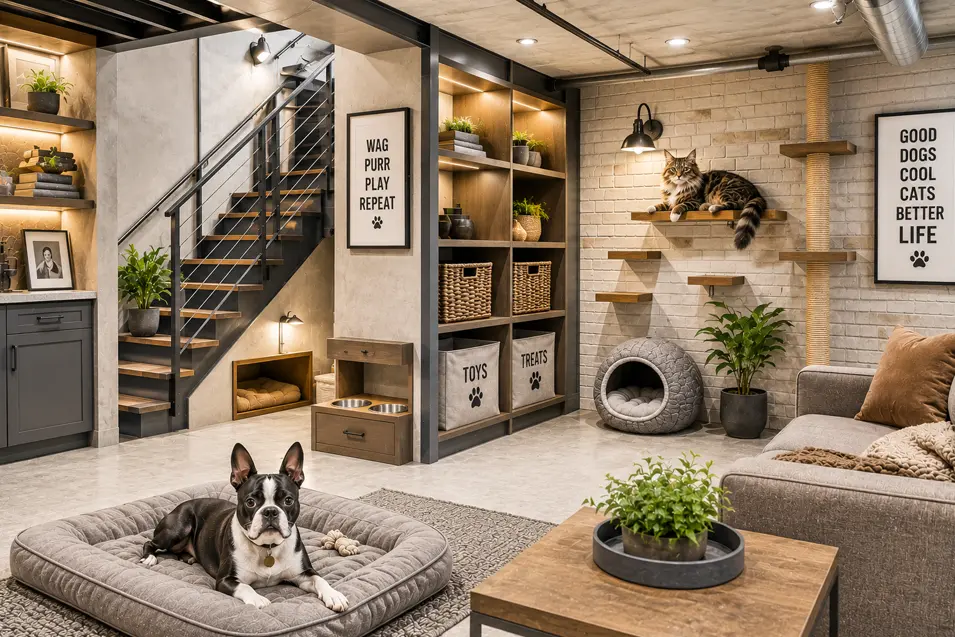
Built-in sleeping areas can be incorporated into:
- Kitchen islands
- Mudrooms
- Laundry rooms
- Cabinetry
- Under-stair spaces
These solutions help reduce clutter while giving your dog a comfortable place to relax.
Quiet Retreat Areas
Dogs benefit from having a designated space where they can rest undisturbed.
Choose locations that offer:
- Reduced noise
- Comfortable temperatures
- Easy access to family members
Feeding Stations
Built-in feeding stations can improve organization and prevent bowls from migrating throughout the house.
Consider:
- Pull-out drawers
- Cabinet-integrated bowls
- Dedicated feeding nooks
Design a Better Entryway
The entryway often becomes mission control for dog owners.
A well-designed entrance can dramatically reduce mess throughout the home.
Include Storage for:
- Leashes
- Harnesses
- Treats
- Waste bags
- Towels
- Outdoor gear
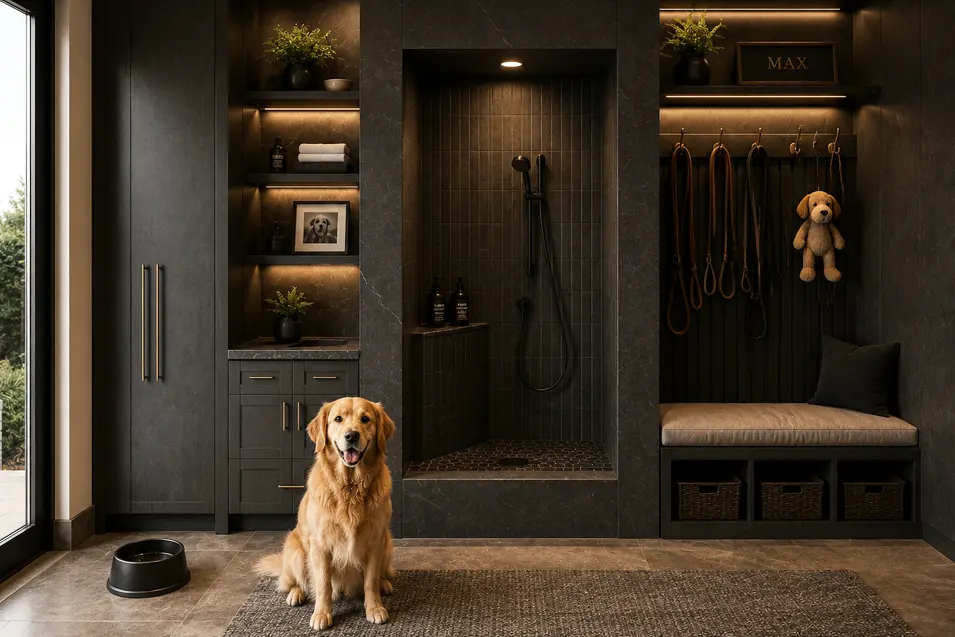
Create a Paw Cleaning Station
Even a simple setup can help contain dirt before it spreads.
Consider:
- Washable mats
- Storage benches
- Easy-access towels
- Durable flooring
Incorporate Smart Storage Solutions
Pet supplies can quickly overwhelm a home if storage isn’t planned properly.
Dedicated storage helps maintain a clean, organized appearance.
Store items such as:
- Toys
- Food
- Treats
- Grooming supplies
- Seasonal gear
- Medications
Built-in cabinetry often provides the most seamless solution.
Choose Pet-Friendly Interior Design Styles
Some design styles naturally accommodate dogs better than others.
Scandinavian Style
Scandinavian interiors emphasize:
- Simplicity
- Functionality
- Practical materials
- Minimal clutter
These qualities make them highly pet-friendly.
Transitional Style
Transitional design balances elegance with everyday comfort.
Its flexibility works well for families and pet owners alike.
Modern Style
Modern interiors often feature:
- Durable surfaces
- Clean lines
- Open layouts
- Easy-to-maintain materials
Farmhouse Style
Farmhouse design embraces comfortable living and durable materials.
It often feels naturally compatible with pet ownership.
Coastal Style
Coastal interiors use relaxed furnishings and practical materials that support active lifestyles.
Select Pet-Safe Houseplants
Many common houseplants can be toxic to dogs.
Before bringing greenery into your home, verify that it is safe for pets.
Popular pet-friendly options include:
- Spider plants
- Areca palms
- Boston ferns
- Calathea varieties
- Prayer plants
Always consult reliable plant safety resources before purchasing.
Design for Easy Cleaning
A dog-friendly home should simplify maintenance.
Look for materials and layouts that support quick cleaning.
Helpful features include:
- Washable rugs
- Durable upholstery
- Hard-surface flooring
- Built-in storage
- Easy-access vacuum storage
The easier your home is to clean, the easier it is to maintain both beauty and comfort.
Dog-Friendly Backyard Design
Outdoor spaces are equally important.
A well-designed yard should provide:
- Secure fencing
- Shade
- Fresh water
- Durable landscaping
- Safe play areas
Consider Pet-Friendly Surfaces
Popular options include:
- Natural grass
- Artificial turf
- Gravel pathways
- Paver patios
Each option offers different benefits depending on your dog’s size and activity level.
Luxury Dog-Friendly Features
For homeowners undertaking renovations or custom builds, luxury pet features continue to grow in popularity.
Popular additions include:
Dog Showers
Dedicated wash stations make bathing easier and reduce mess.
Hidden Kennels
Custom cabinetry can conceal crates while maintaining style.
Built-In Feeding Areas
Integrated feeding stations improve organization and aesthetics.
Custom Sleeping Nooks
Many homeowners now design custom dog retreats directly into their floor plans.
Common Dog-Friendly Design Mistakes
Avoid these common errors:
Prioritizing Appearance Over Function
Beautiful materials that cannot withstand daily life often create frustration.
Ignoring Storage Needs
Pet supplies require dedicated storage.
Choosing Delicate Fabrics
Some fabrics simply do not perform well in pet-friendly environments.
Forgetting About Future Needs
Puppies grow older.
Design choices that support long-term mobility and comfort are often worthwhile investments.
Designing for Senior Dogs
As dogs age, their needs change.
Consider:
- Non-slip flooring
- Easy access to favorite spaces
- Orthopedic beds
- Improved lighting
- Reduced stair use
Small adjustments can greatly improve quality of life.
The Goal: A Home for Everyone
The best dog-friendly homes don’t look like dog-friendly homes.
Instead, they thoughtfully incorporate your pet’s needs into a beautiful, functional design that works for the entire family.
With smart planning, durable materials, and intentional design choices, it’s possible to create spaces that feel stylish, welcoming, and comfortable for both humans and dogs.
Final Thoughts
Designing a dog-friendly home isn’t about sacrificing style—it’s about making smarter design decisions.
From durable flooring and performance fabrics to built-in pet spaces and thoughtful storage solutions, today’s homeowners have more options than ever for creating interiors that support both beauty and practicality.
Whether you live in a modern condo, a cozy cottage, a traditional family home, or a sprawling farmhouse, thoughtful pet-friendly design can improve your daily life while ensuring your dog feels just as at home as you do.