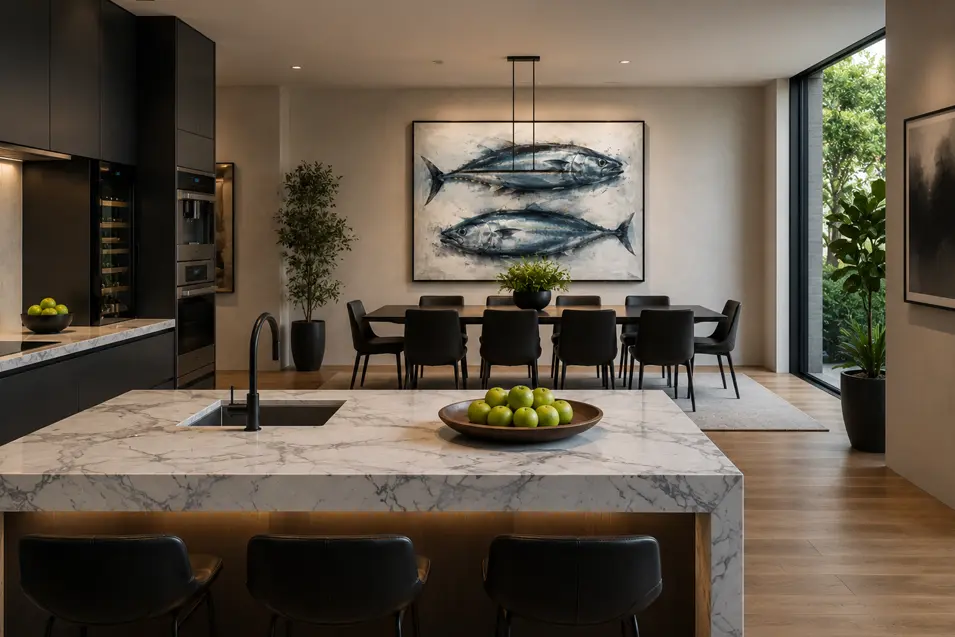
Interior design trends are constantly evolving.
Over the years, we’ve seen the popularity of oversized abstract paintings, botanical prints, black-and-white photography, gallery walls, geometric patterns, and nature-inspired décor. Yet among these changing trends, one artistic category has quietly emerged as one of the most sophisticated and versatile additions to modern homes.
Fish art.
From luxury hotels and contemporary residences to coastal retreats and urban apartments, fish-inspired artwork is appearing in more interiors than ever before. Large koi paintings, underwater photography, coral reef canvases, vintage marine illustrations, and AI-generated aquatic artwork are becoming statement pieces that add movement, elegance, and a calming connection to nature.
Unlike many decorating trends that appear suddenly and disappear just as quickly, fish art reflects several long-term shifts in the way people think about their homes. It combines wellness, biophilic design, personalization, and artistic expression into a decorating style that feels both timeless and contemporary.
The question is no longer whether fish art belongs in interior design.
It is why it has become so popular.
A Shift Toward Nature-Inspired Living
One of the strongest influences on modern interior design is a growing desire to reconnect with nature.
As cities become larger and daily life becomes increasingly digital, homeowners are seeking interiors that feel calmer, healthier, and more restorative. Designers have responded by embracing natural materials, organic textures, indoor plants, abundant natural light, and artwork inspired by the outdoors.
Fish art fits perfectly within this movement.
Unlike dramatic wildlife scenes or busy landscapes, aquatic artwork introduces nature in a more subtle and peaceful way. Water, fish, and underwater environments naturally evoke feelings of tranquility, making them ideal subjects for contemporary interiors.
Rather than dominating a room, fish art complements it.
The Influence of Biophilic Design
Much of fish art’s growing popularity can be traced to biophilic design.
Biophilic design is based on the idea that humans have an innate connection to nature and benefit from incorporating natural elements into the spaces where they live and work.
Designers often introduce this connection through:
- Indoor plants
- Natural wood
- Stone surfaces
- Water features
- Organic textures
- Nature-inspired artwork
Fish art brings several of these ideas together at once.
It reminds us of rivers, oceans, ponds, coral reefs, and flowing water—all environments that many people instinctively associate with relaxation and emotional well-being.
Modern Homes Need Organic Movement
Modern architecture often emphasizes:
- Straight lines
- Large open spaces
- Minimal ornamentation
- Geometric forms
While these qualities create beautiful interiors, they can sometimes feel rigid.
Fish artwork introduces the opposite.
Curved fins.
Flowing water.
Graceful movement.
Organic shapes.
These natural forms soften architectural spaces and help create visual balance.
A single koi swimming diagonally across a large canvas can make an otherwise structured room feel more fluid and inviting.
Statement Pieces Are Bigger Than Ever
Another reason fish art has gained popularity is the growing trend toward oversized artwork.
Rather than filling walls with numerous small decorations, designers increasingly prefer one dramatic focal point.
Large fish-inspired artwork works exceptionally well in this role.
Imagine:
- An eight-foot canvas of a white koi against black water.
- A panoramic coral reef stretching across a dining room wall.
- A gallery-quality underwater photograph featuring a school of tropical fish.
- A dramatic close-up of a betta fish printed on acrylic.
These pieces feel bold without appearing loud.
Their simplicity allows them to dominate a room while maintaining elegance.
The Color Story
Color is another reason aquatic artwork is becoming more common.
Modern homes frequently feature neutral foundations:
- White walls
- Light oak flooring
- Gray upholstery
- Stone countertops
- Black accents
Fish artwork introduces color in a natural, believable way.
The brilliant orange of koi.
The vibrant blues of tangs.
The rich purples of reef fish.
The delicate pinks, greens, and golds found in coral ecosystems.
These colors feel harmonious because they already exist in nature.
Rather than overwhelming a room, they energize it.
Beyond Coastal Homes
There was a time when fish artwork was largely associated with beach cottages and coastal decorating.
That has changed dramatically.
Today’s aquatic artwork appears in:
- Contemporary homes
- Scandinavian interiors
- Luxury apartments
- Modern farmhouses
- Industrial lofts
- Executive offices
- Boutique hotels
- Wellness retreats
Its versatility has allowed it to move beyond themed decorating and become part of mainstream interior design.
Hotels and Hospitality Have Helped Lead the Trend
Luxury hotels have embraced aquatic artwork for years.
Large underwater photographs, abstract ocean paintings, sculptural fish installations, and aquarium-inspired lighting are commonly used to create relaxing, memorable spaces.
These environments influence residential design more than many people realize.
Guests experience the calming atmosphere created by aquatic imagery and later incorporate similar ideas into their own homes.
The hospitality industry has quietly demonstrated how effective fish-inspired design can be.
Aquariums Have Changed the Conversation
The popularity of home aquariums has also influenced interior design.
A beautifully maintained freshwater aquascape or coral reef aquarium is often described as a living work of art.
Homeowners who invest time creating these underwater landscapes frequently extend the aquatic theme throughout the rest of the home.
This may include:
- Reef photography
- Koi paintings
- Fish sculptures
- Coral-inspired décor
- Ocean-themed textiles
- Marine color palettes
Rather than feeling decorative, these pieces become natural extensions of the homeowner’s interests.
AI Is Making Custom Fish Art Accessible
Artificial intelligence has dramatically expanded creative possibilities.
Instead of purchasing mass-produced prints, homeowners can now generate completely original aquatic artwork designed specifically for their homes.
For example, AI can create:
- Minimalist koi paintings
- Scandinavian fish illustrations
- Modern abstract reef art
- Luxury underwater photography
- Black-and-white betta portraits
- Japanese ink wash fish paintings
Artwork can be tailored to match:
- Room size
- Color palette
- Decorating style
- Aspect ratio
- Personal preferences
This level of customization is one reason fish art is likely to continue growing in popularity.
Fish Art Appeals Across Generations
Unlike many decorating trends, aquatic artwork appeals to a remarkably wide audience.
Older homeowners often appreciate traditional koi paintings and vintage marine illustrations.
Younger homeowners embrace minimalist fish art, AI-generated imagery, and modern underwater photography.
Families enjoy colorful reef scenes.
Collectors appreciate limited-edition prints.
Aquarium hobbyists naturally gravitate toward marine artwork.
Few artistic subjects have such broad appeal.
More Than Paintings
Today’s fish-inspired design includes far more than framed artwork.
Popular choices include:
- Acrylic wall panels
- Metal prints
- Glass sculptures
- Ceramic fish
- Mixed-media installations
- Wall murals
- Textured canvases
- LED backlit artwork
- Digital display art
This diversity allows homeowners to incorporate aquatic themes in subtle or dramatic ways.
A Reflection of Wellness
The rise of fish art also reflects changing attitudes toward the home itself.
Homes are no longer viewed simply as places to sleep.
They have become:
- Retreats
- Offices
- Creative spaces
- Wellness environments
- Places for restoration
Artwork now plays an active role in shaping those experiences.
Because water naturally suggests calmness and fish represent graceful movement, aquatic artwork contributes to environments that feel more peaceful and emotionally balanced.
The Future of Fish Art
Fish art is unlikely to remain a niche decorating style.
Several long-term trends suggest its popularity will continue growing:
- Increased interest in biophilic design
- AI-generated custom artwork
- Larger statement pieces
- Wellness-focused interiors
- Luxury aquarium design
- Nature-inspired architecture
- Sustainable decorating
- Personalized home décor
As these movements continue to influence residential design, aquatic artwork will likely become even more diverse and widely appreciated.
More Than a Trend
The most successful design trends are rooted in something timeless.
Fish art succeeds because it isn’t simply fashionable.
It reflects our enduring fascination with water, nature, movement, and beauty.
Whether expressed through an oversized koi painting, a vibrant coral reef photograph, a minimalist fish illustration, or a custom AI-generated masterpiece, aquatic artwork brings qualities into the home that few other subjects can offer.
It creates movement without chaos.
Color without clutter.
Elegance without excess.
Perhaps that is why fish art is finding its place in so many modern homes.
Not because it is trendy.
But because it makes the spaces we live in feel calmer, more beautiful, and more connected to the natural world.
As homeowners continue searching for meaningful ways to personalize their interiors, fish art is proving that sometimes the most inspiring design ideas are found beneath the surface.