The laundry room is often one of the hardest-working spaces in a home. It’s where dirty clothes are cleaned, household supplies are stored, and daily chores are completed. Unfortunately, it’s also one of the most overlooked areas when it comes to pet safety and organization.
Many pet owners focus their attention on pet-proofing kitchens, living rooms, and bedrooms while assuming the laundry room presents few risks. In reality, laundry rooms often contain chemicals, appliances, electrical cords, and storage hazards that can pose serious dangers to curious cats and dogs.
Beyond safety concerns, poor organization and design choices can make laundry rooms less functional for pet owners. By understanding the most common mistakes people make, you can create a safer and more efficient space for both your family and your pets.
Assuming the Laundry Room Is Pet-Safe
One of the biggest mistakes pet owners make is assuming the laundry room doesn’t require the same level of pet-proofing as other parts of the house.
Many laundry rooms contain:
- Detergents
- Bleach
- Fabric softeners
- Electrical equipment
- Cleaning products
- Small choking hazards
Because these dangers often blend into everyday routines, they are easy to overlook.
Treating the laundry room as a potential hazard zone is the first step toward improving safety.
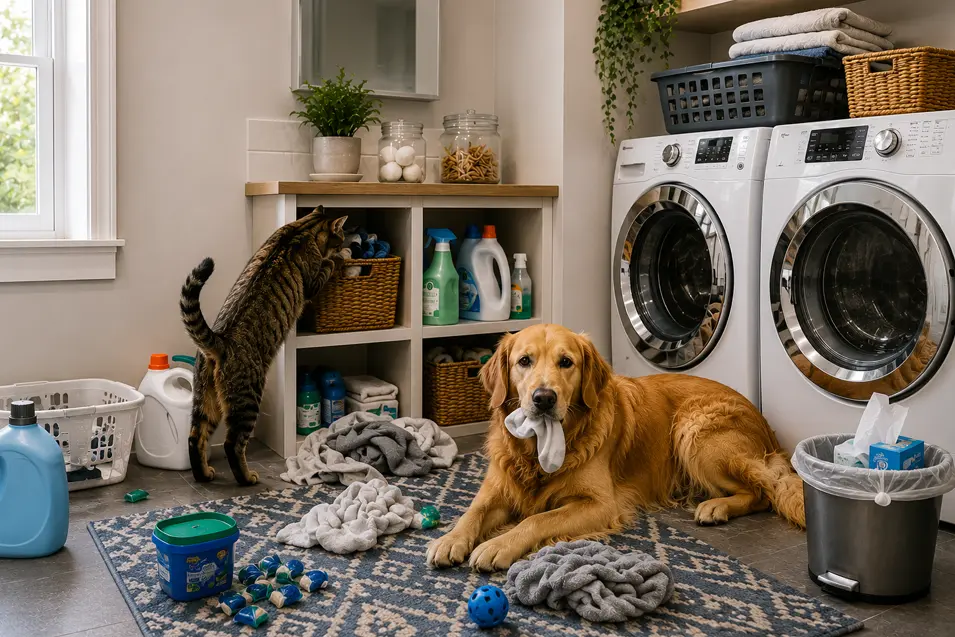
Leaving Detergent Pods Within Reach
Laundry detergent pods have become a common household item, but they can be extremely dangerous for pets.
Their bright colors and soft texture often make them appear toy-like to curious animals.
Potential consequences include:
- Chemical burns
- Mouth irritation
- Vomiting
- Respiratory distress
- Emergency veterinary visits
A common mistake is storing pods on countertops or lower shelves where pets can access them.
Always keep detergents in secure cabinets or elevated storage areas.
Forgetting to Check Washers and Dryers
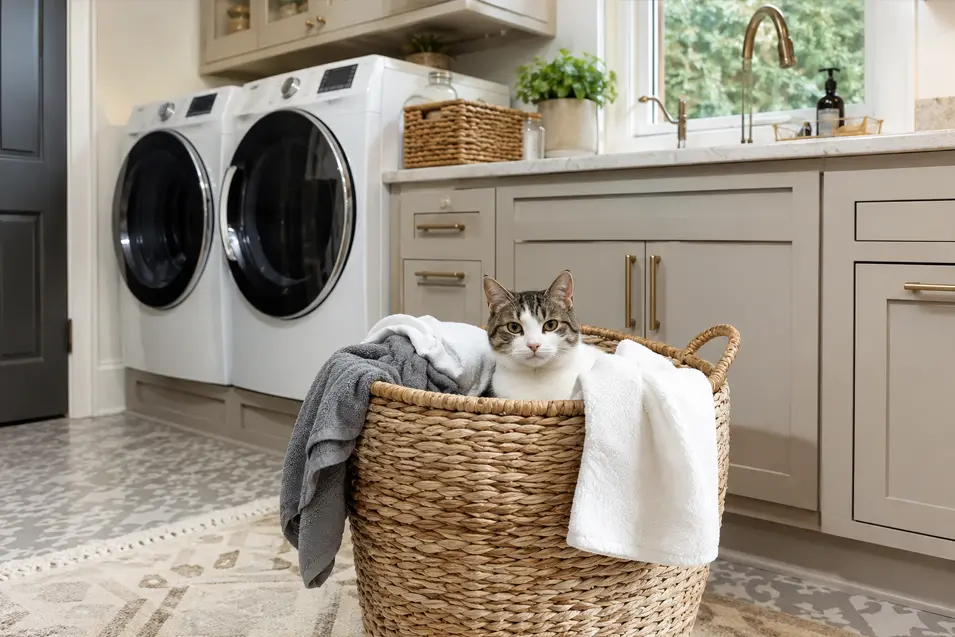
Cats are particularly attracted to enclosed spaces.
An open washer or dryer can look like the perfect place for a nap.
Unfortunately, many pet owners forget to check appliances before use.
This can result in:
- Entrapment
- Serious injury
- Fatal accidents
Develop a habit of checking inside both appliances every time before starting a load.
This simple routine can save a pet’s life.
Storing Chemicals Improperly
Laundry rooms often become storage spaces for a variety of household chemicals.
Common products include:
- Bleach
- Stain removers
- Disinfectants
- Carpet cleaners
- Pest control products
One of the biggest mistakes is storing these items in easily accessible locations.
Better solutions include:
- Locked cabinets
- High shelving
- Enclosed storage systems
Proper storage protects curious pets from accidental exposure.
Allowing Clothing to Accumulate
Piles of dirty laundry may seem harmless, but they can create unexpected problems.
Dogs frequently chew and swallow:
- Socks
- Underwear
- Washcloths
- Small garments
Ingested fabric can cause dangerous intestinal blockages that often require surgery.
Keeping laundry contained in hampers helps reduce risk.
Ignoring Electrical Cord Hazards
Laundry rooms typically contain several electrical connections.
These may include:
- Washer cords
- Dryer cords
- Steamers
- Irons
- Utility equipment
Exposed cords can attract puppies and kittens.
Risks include:
- Electric shock
- Burns
- Fire hazards
Secure cords whenever possible and inspect them regularly for damage.
Using Open Shelving for Hazardous Items
Open shelves are convenient, but they may not be ideal for storing pet-related risks.
Many homeowners place chemicals, detergents, and cleaning supplies on open shelving where pets can reach them.
Cats, in particular, are excellent climbers.
Closed cabinets generally provide a safer alternative for hazardous products.
Overlooking Moisture Problems
Laundry rooms are naturally prone to moisture.
Unfortunately, many homeowners ignore small leaks or humidity issues until they become larger problems.
Excess moisture can contribute to:
- Mold growth
- Mildew
- Poor air quality
- Structural damage
Pets with respiratory sensitivities may be particularly affected.
Regular inspections can help identify moisture problems before they worsen.
Keeping Food and Laundry Products Together
Some laundry rooms double as storage areas for pet food and household supplies.
This arrangement can create unnecessary risks.
Avoid storing pet food near:
- Bleach
- Detergents
- Chemicals
- Pesticides
Cross-contamination can occur more easily than many people realize.
Separate storage areas help maintain both safety and food quality.
Forgetting About Small Choking Hazards
Laundry rooms often contain a surprising number of small objects.
Examples include:
- Buttons
- Coins
- Safety pins
- Sewing supplies
- Packaging materials
Pets may accidentally swallow these items while exploring.
Regular cleaning and organization help minimize risk.
Neglecting Ventilation
Good ventilation is important in every part of the home, but it is especially valuable in laundry rooms.
Poor airflow can contribute to:
- Excess humidity
- Odors
- Mold growth
- Reduced comfort
Helpful improvements include:
- Exhaust fans
- Dehumidifiers
- Open windows when appropriate
- Routine maintenance of dryer vents
A well-ventilated room is healthier for both pets and people.
Leaving Irons and Steamers Accessible
Many pet owners forget that irons and steamers remain hot long after use.
Potential risks include:
- Burns
- Knocked-over equipment
- Electrical hazards
Allow appliances to cool completely before storing them.
Store them in locations that pets cannot access.
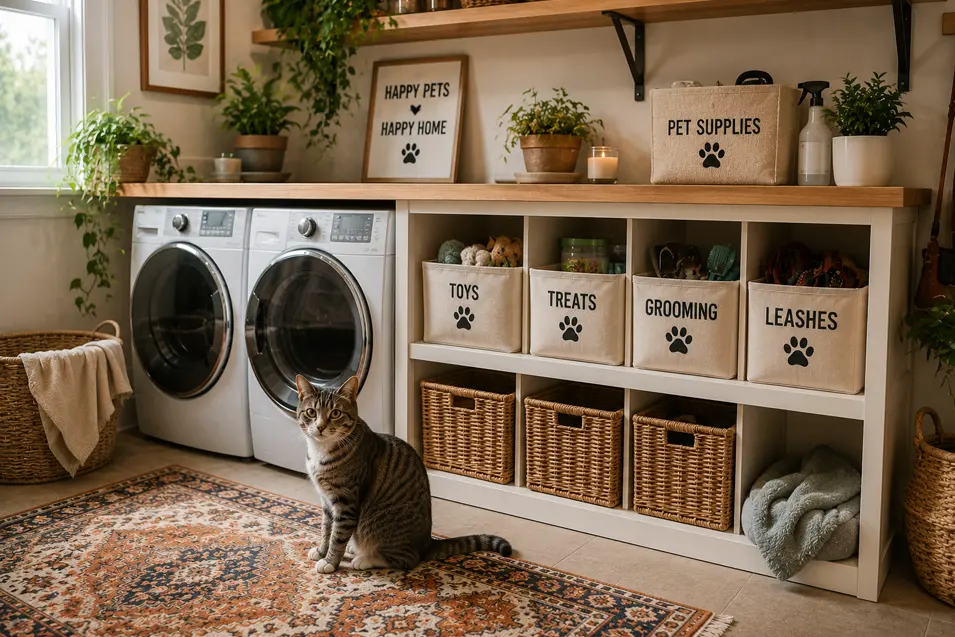
Failing to Organize Pet Supplies
For many households, the laundry room serves as a storage area for pet-related items.
Without proper organization, clutter can build up quickly.
Common items include:
- Food
- Treats
- Leashes
- Grooming tools
- Towels
- Cleaning supplies
Using bins, cabinets, and shelving helps create a safer and more efficient space.
Organization also makes daily pet care routines easier.
Ignoring Pet Comfort
Some laundry rooms are designed solely around chores, with little consideration for pets that spend time there.
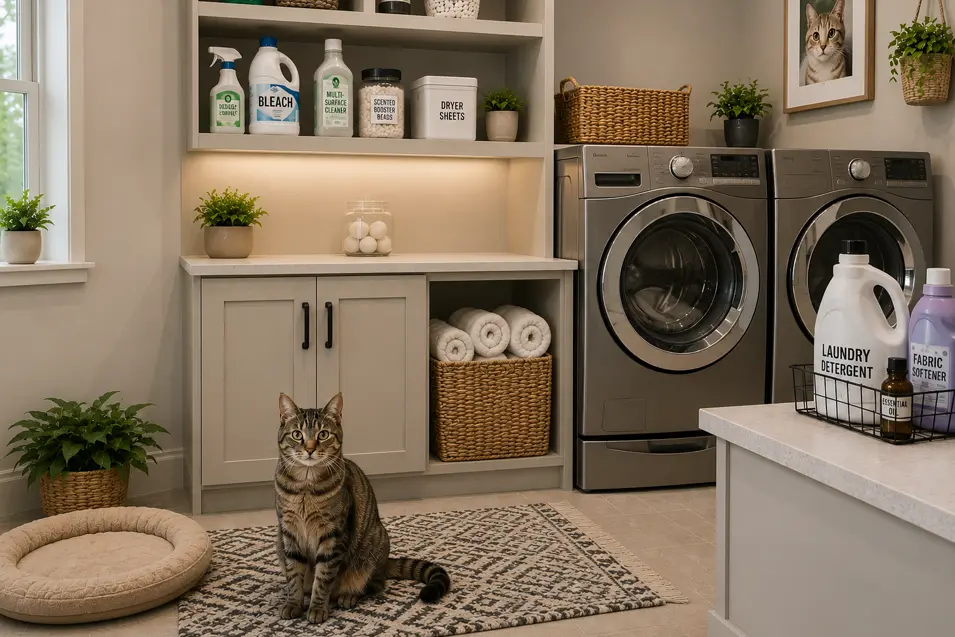
If pets regularly accompany you while doing laundry, consider providing:
- A comfortable bed
- Fresh water
- A quiet resting spot
- Safe toys
Simple additions can make the room more welcoming without compromising functionality.
Treating the Laundry Room as an Afterthought
Perhaps the biggest mistake of all is viewing the laundry room as an unimportant space.
Because it’s often hidden from guests and used primarily for chores, many homeowners neglect its design and safety.
However, laundry rooms frequently contain more hazards than many other rooms in the house.
Giving the space the same attention you would a kitchen or living room can significantly improve safety and organization.
Creating a Safer and More Functional Laundry Room
The laundry room may not be the first place that comes to mind when thinking about pet safety, but it deserves careful consideration. From detergent pods and electrical cords to moisture problems and appliance hazards, this hardworking room contains numerous risks that can affect curious cats and dogs.
Fortunately, most of the biggest mistakes pet owners make are easy to correct. By improving storage, securing chemicals, organizing supplies, managing moisture, and developing safer habits around appliances, you can create a laundry room that works better for everyone.
A well-designed laundry room isn’t just more efficient—it’s also a safer place for the pets who share your home and your daily routines.