For many pet owners, the bedroom is more than just a place to sleep. It’s a shared space where dogs curl up at the foot of the bed, cats claim sunny windowsills, and pets spend hours relaxing alongside their favorite people.
While sharing a bedroom with pets can strengthen bonds and provide comfort, it can also create challenges if the room isn’t designed with both human and animal needs in mind. Unfortunately, many homeowners unknowingly make mistakes that affect cleanliness, comfort, organization, and even sleep quality.
The good news is that most of these issues can be avoided with a little planning and awareness.
Ignoring Pet Hair Management
One of the most common bedroom mistakes is underestimating how much pet hair accumulates in sleeping areas.
Bedrooms often contain:
- Upholstered furniture
- Curtains
- Bedding
- Rugs
- Decorative pillows
These surfaces easily trap fur, dander, and dust.
Without a regular cleaning routine, pet hair can quickly become overwhelming. Choosing washable bedding, vacuuming frequently, and using pet-friendly fabrics can help keep the room looking fresh while reducing allergens.
Choosing the Wrong Bedding
Many pet owners select bedding based solely on appearance without considering how it will perform in a pet-friendly environment.
Dark fabrics may highlight light-colored fur, while delicate materials can snag from claws or become difficult to clean after accidents.
Pet-friendly bedding should ideally be:
- Durable
- Machine washable
- Comfortable
- Resistant to wear
- Easy to maintain
Practical choices often make daily life significantly easier without sacrificing style.
Forgetting About Your Pet’s Sleeping Space
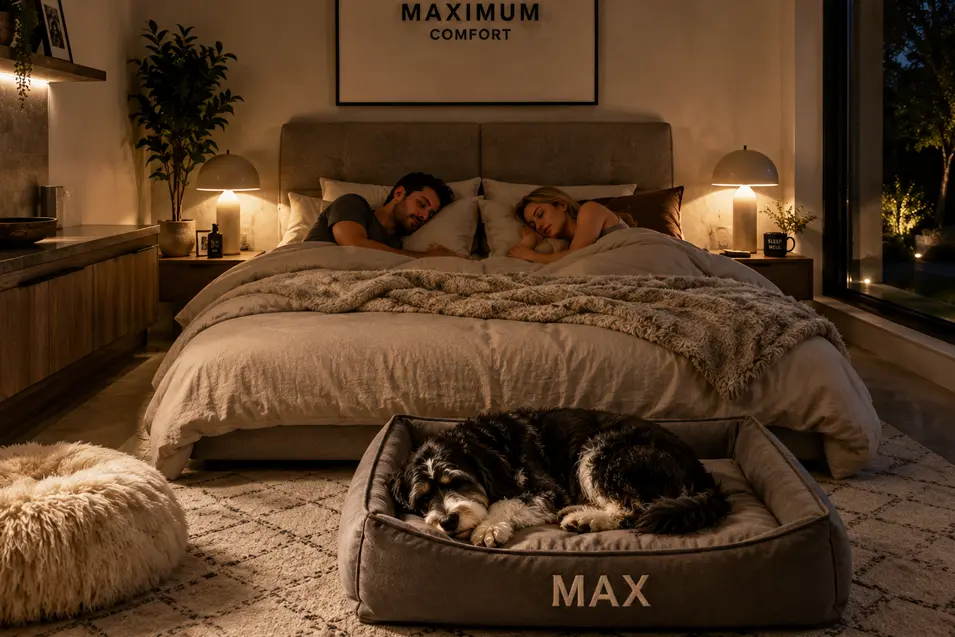
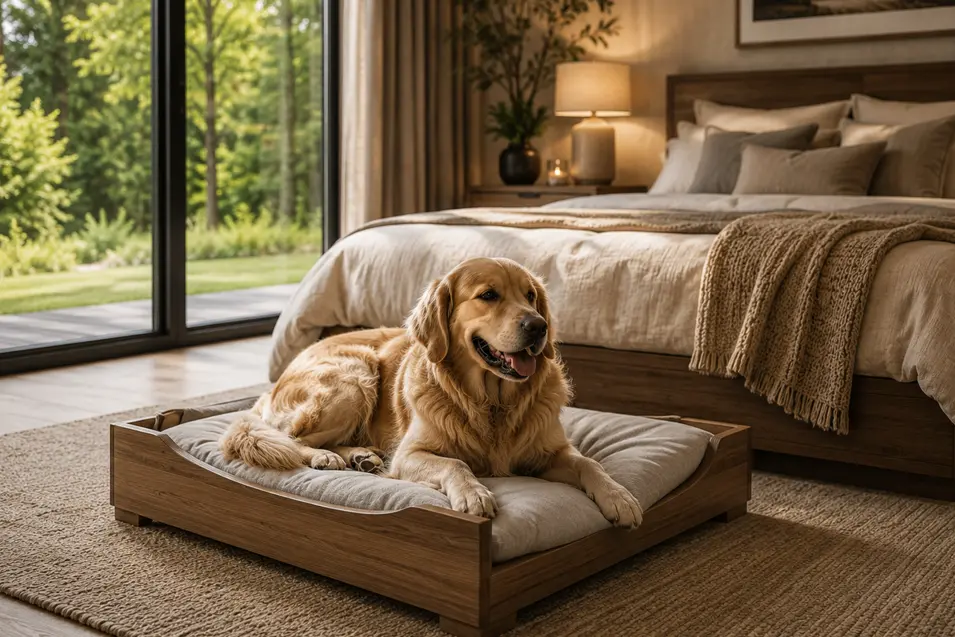
Even if pets are allowed on the bed, they still benefit from having a designated sleeping area of their own.
Many owners assume their dog or cat will simply choose a spot wherever they feel comfortable. However, providing a dedicated bed can create a sense of security and offer an alternative when pets need space.
A thoughtfully placed pet bed can also help reduce competition for sleeping space while giving animals a comfortable retreat within the room.
Placing Pet Beds in Poor Locations
Location matters just as much as the bed itself.
A common mistake is placing pet beds:
- Near drafty windows
- Beside noisy vents
- In busy walkways
- Directly beside bedroom doors
Most pets prefer locations that offer comfort, security, and visibility without constant disruption.
Quiet corners with a clear view of the room often work best.
Overlooking Indoor Air Quality
Bedrooms are enclosed environments where people and pets spend many hours every night.
Pet dander, dust, moisture, and poor ventilation can all contribute to reduced air quality.
Simple improvements may include:
- Regular HVAC filter changes
- Air purifiers
- Routine dusting
- Proper ventilation
- Humidity control
A healthier bedroom benefits both pets and people.
Creating Clutter With Pet Supplies
Pet ownership comes with accessories, and bedrooms can quickly become cluttered if those items lack proper storage.
Common offenders include:
- Toys
- Leashes
- Treat containers
- Grooming supplies
- Pet blankets
- Medication
When these items accumulate on dressers, nightstands, or floors, the room can feel chaotic and disorganized.
Decorative baskets, storage benches, and dedicated pet storage solutions help maintain a cleaner, more relaxing environment.
Ignoring Flooring Considerations
Flooring plays a major role in bedroom comfort and maintenance.
Some pet owners choose materials that look beautiful but are difficult to maintain when exposed to pet hair, accidents, or everyday wear.
The best bedroom flooring often balances:
- Comfort
- Durability
- Easy cleaning
- Noise reduction
Area rugs can add warmth and softness while protecting underlying surfaces.
Not Protecting Furniture
Pets often develop favorite spots within the bedroom.
Whether it’s a reading chair, bench, or upholstered headboard, repeated use can eventually lead to wear and tear.
Protective covers, durable fabrics, and routine maintenance can help preserve furniture without making the room feel overly pet-focused.
The goal is to design for real life rather than constantly worrying about potential damage.
Making the Room Too Stimulating
Bedrooms should support rest and relaxation.
Some pet owners unintentionally create environments filled with distractions, excessive activity, or constant stimulation.
While pets enjoy toys and entertainment, the bedroom should remain one of the calmest spaces in the home.
Limiting clutter and maintaining a peaceful atmosphere benefits everyone who uses the room.
Forgetting That Pets Age Too
A bedroom setup that works perfectly today may not work as well several years from now.
Senior pets often require:
- Easier access to beds
- Non-slip flooring
- Orthopedic bedding
- Better lighting
- Comfortable room temperatures
Planning ahead can help ensure the space remains functional as pets age.
Creating a Bedroom That Works for Everyone
The best bedrooms balance human comfort with pet-friendly practicality.
By paying attention to cleanliness, organization, air quality, flooring, and sleeping arrangements, homeowners can create spaces that feel welcoming without sacrificing style.
Pets are often part of the family, and their presence naturally influences how a room functions. Rather than treating them as obstacles to good design, successful pet owners incorporate their needs into the planning process.
The result is a bedroom that supports better sleep, improved organization, and greater comfort for everyone under the roof—whether they sleep on the bed, beside it, or curled up in their favorite corner.