Choosing the right basement flooring can be challenging, especially when you share your home with pets. Basements often serve as play areas, family rooms, home offices, laundry spaces, or pet-friendly retreats. Unlike other areas of the home, basements face unique challenges such as moisture, fluctuating temperatures, and increased wear and tear.
For pet owners, flooring must withstand muddy paws, accidents, shedding, scratching, and everyday activity while remaining comfortable and attractive. The good news is that modern flooring options offer a variety of solutions designed to balance durability, maintenance, and style.
Whether you’re finishing a basement or replacing existing flooring, understanding the strengths and weaknesses of different materials can help you choose the best option for both your family and your pets.
What Makes Flooring Pet-Friendly?
Not all flooring performs equally well in homes with cats and dogs. Before selecting a material, consider the qualities that matter most.
Pet-friendly flooring should ideally offer:
- Moisture resistance
- Scratch resistance
- Easy cleaning
- Durability
- Comfort underfoot
- Good traction
- Resistance to odors and stains
Basements often require flooring that can handle both pet-related messes and environmental challenges such as humidity and occasional moisture exposure.
Luxury Vinyl Plank Flooring
Luxury vinyl plank (LVP) has become one of the most popular flooring choices for pet owners, and for good reason.
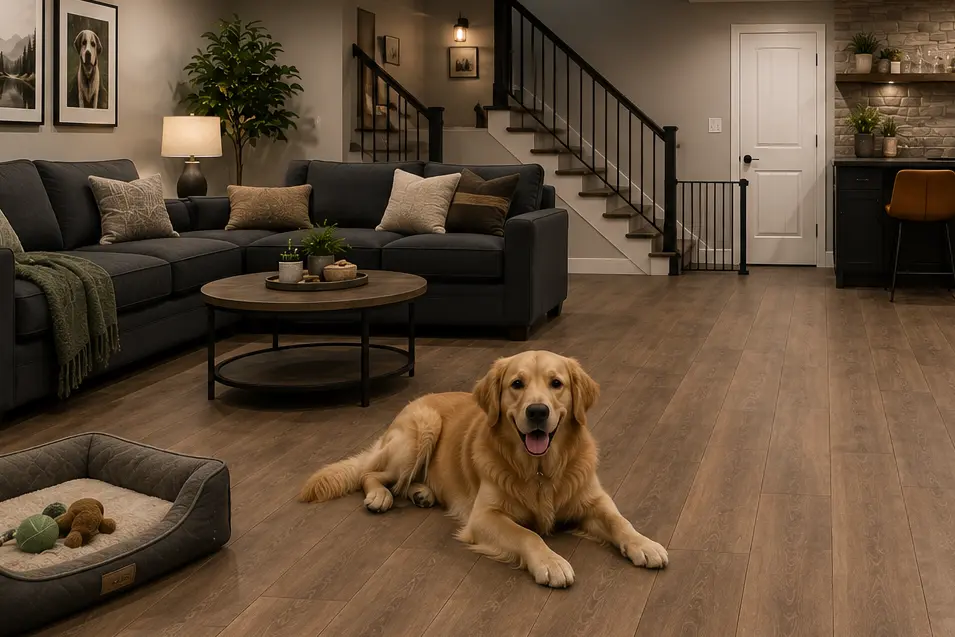
Designed to mimic the appearance of hardwood, LVP offers impressive durability while remaining highly resistant to moisture.
Benefits of luxury vinyl plank:
- Waterproof options available
- Scratch-resistant surfaces
- Easy cleanup of accidents
- Comfortable underfoot
- Realistic wood appearance
- Suitable for finished basements
Many pet owners appreciate that vinyl flooring resists stains and doesn’t absorb odors the way some other materials can.
In most cases, LVP provides one of the best combinations of performance, affordability, and appearance.
Luxury Vinyl Tile
Luxury vinyl tile (LVT) offers many of the same benefits as vinyl plank flooring while providing the appearance of stone or ceramic tile.
Advantages include:
- Excellent moisture resistance
- Easy maintenance
- High durability
- Wide variety of styles
- Comfortable compared to traditional tile
For pet owners seeking a more upscale appearance without sacrificing practicality, luxury vinyl tile is often an excellent choice.
Ceramic and Porcelain Tile
Tile flooring has long been a favorite for pet-friendly homes due to its exceptional durability.
Both ceramic and porcelain tile resist:
- Scratches
- Stains
- Moisture
- Odors
Additional benefits include:
- Easy cleaning
- Long lifespan
- Excellent moisture protection
- Ideal for accident-prone pets
However, tile does have some drawbacks.
The surface can feel cold, especially in basements, and may be less comfortable for older pets with arthritis or joint issues. Area rugs and pet beds can help improve comfort while maintaining the benefits of tile flooring.
Sealed Concrete Flooring
Many unfinished basements already have concrete floors. Rather than covering the concrete entirely, some homeowners choose to seal and finish the existing surface.
Benefits of sealed concrete:
- Extremely durable
- Resistant to scratching
- Easy to clean
- Moisture-resistant when properly sealed
- Cost-effective
Concrete works particularly well for active dogs and multi-pet households.
The primary downside is comfort. Concrete can feel hard and cold, so pet owners often add rugs, mats, or dedicated pet bedding to create more inviting resting areas.
Engineered Hardwood Flooring
While traditional hardwood is generally not recommended for basements due to moisture concerns, engineered hardwood may be a viable option in properly finished spaces.
Advantages include:
- Attractive appearance
- Greater moisture resistance than solid hardwood
- Added home value
- Warm, natural feel
However, engineered hardwood still requires care around pet accidents and standing moisture.
Homes with multiple pets or young puppies may find more durable options better suited to basement conditions.
Rubber Flooring
Rubber flooring is often associated with gyms and playrooms, but it can be an excellent option for pet-friendly basements.
Benefits include:
- Slip resistance
- Cushioning for joints
- Moisture resistance
- Noise reduction
- Easy maintenance
Rubber flooring is particularly beneficial for:
- Senior pets
- Large dogs
- Active play areas
- Training spaces
Its softer surface provides additional comfort while helping reduce the risk of slips and falls.
Pet-Friendly Carpet Options
Many homeowners enjoy the warmth and comfort of carpet, especially in finished basements.
While carpet is often viewed as less practical for pets, newer products have improved significantly.
Look for carpets with:
- Stain-resistant treatments
- Moisture-resistant backing
- Low-pile construction
- Durable synthetic fibers
Popular options include:
- Nylon
- Polyester
- Triexta
These materials tend to resist wear better than natural fibers while making cleanup easier.
However, carpet still requires more maintenance than hard-surface flooring and may retain odors if accidents occur frequently.
Flooring Options to Approach with Caution
Some flooring materials may not perform as well in pet-friendly basements.
Solid Hardwood
Although beautiful, hardwood is vulnerable to:
- Scratches
- Moisture damage
- Staining
- Warping
Basement conditions and pet-related wear can significantly shorten its lifespan.
Laminate Flooring
Modern laminate flooring has improved considerably, but some products remain susceptible to moisture damage.
Standing water from accidents or basement humidity can sometimes cause swelling or edge damage.
Natural Stone
Certain stone surfaces can be attractive but may require regular sealing and maintenance to resist stains and moisture.
Consider Traction and Safety
When selecting basement flooring, many pet owners focus primarily on durability. However, traction is equally important.
Slippery floors can contribute to:
- Falls
- Joint strain
- Mobility issues
- Anxiety in older pets
To improve traction:
- Choose textured flooring surfaces.
- Use area rugs with non-slip backing.
- Add runners in frequently traveled pathways.
- Provide supportive pet beds.
Senior pets and large breeds often benefit significantly from flooring that offers reliable grip.
Managing Moisture in Basement Flooring
Moisture control is critical in any basement, regardless of flooring type.
Before installing new flooring:
- Check for water leaks.
- Address drainage problems.
- Test humidity levels.
- Consider installing a vapor barrier if necessary.
Even the most durable flooring performs better when basement moisture is properly managed.
Balancing Style and Function
Today’s flooring products make it possible to create a basement that is both stylish and pet-friendly.
When evaluating options, ask yourself:
- How active are my pets?
- Do accidents occur frequently?
- Is moisture a concern?
- Do I want a warm or cool surface?
- How much maintenance am I willing to perform?
The answers can help narrow your choices and identify the flooring that best matches your household’s needs.
Choosing the Best Basement Flooring for Your Pets
The ideal basement flooring balances durability, comfort, moisture resistance, and ease of maintenance. For many pet owners, luxury vinyl plank flooring offers the best overall combination of these qualities. However, tile, sealed concrete, rubber flooring, and certain pet-friendly carpets can also perform exceptionally well depending on your goals and lifestyle.
By choosing a flooring material that accommodates both basement conditions and pet-related challenges, you can create a comfortable space that remains attractive and functional for years to come. A well-designed basement benefits the entire family—including the cats and dogs who call it home.