
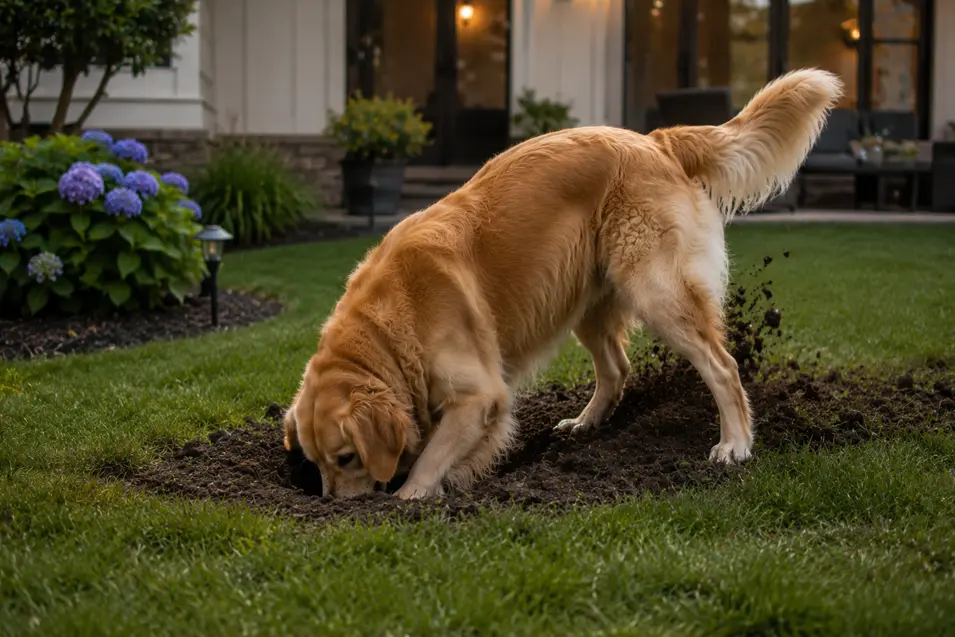
A beautifully maintained yard can quickly become a patchwork of holes when a determined dog decides to start digging. Whether your dog is excavating flower beds, tunneling along the fence line, or creating craters throughout the lawn, digging can be frustrating for even the most patient pet owner.
The good news is that digging is a natural canine behavior. Your dog isn’t trying to ruin your landscaping or create extra work. In most cases, they’re responding to instincts, boredom, environmental conditions, or unmet needs.
The key to stopping unwanted digging isn’t punishment—it’s understanding why your dog is digging in the first place and addressing the underlying cause.
Once you identify the motivation behind the behavior, finding an effective solution becomes much easier.
Why Do Dogs Dig?
Digging is normal behavior for many dogs.
Wild canines dig for numerous reasons, including:
- Finding food
- Creating shelter
- Escaping danger
- Hiding valuables
- Cooling off
- Hunting prey
Modern dogs retain many of these instincts, even if they spend most of their lives in suburban backyards.
Understanding your dog’s motivation is the first step toward solving the problem.
Common Reasons Dogs Dig in the Yard
Boredom
One of the most common reasons dogs dig is simple boredom.
Dogs left alone for long periods often look for ways to entertain themselves.
Digging can become:
- Fun
- Stimulating
- Physically rewarding
The act of digging itself may provide enough entertainment to become a habit.
Signs boredom may be the cause include:
- Multiple holes throughout the yard
- Excessive energy
- Other destructive behaviors
- Digging primarily when left alone
Excess Energy
Many dogs simply aren’t receiving enough exercise.
Breeds developed for work, hunting, herding, or endurance often require significant physical activity each day.
Without adequate exercise, dogs may create their own activities.
Digging is often one of them.
High-energy breeds commonly associated with digging include:
- Border Collies
- Australian Shepherds
- Labrador Retrievers
- German Shepherds
- Belgian Malinois
- Siberian Huskies
Hunting Small Animals
Some dogs dig because they detect movement underground.
Moles, voles, mice, chipmunks, and insects can all attract a dog’s attention.
Signs of prey-driven digging include:
- Concentrated digging in one area
- Digging near trees
- Digging around foundations
- Intense focus on a particular spot
Terriers are especially known for this behavior because many were originally bred to hunt burrowing animals.
Trying to Escape
Some dogs dig near fences because they want to get out.
Escape-driven digging may occur because:
- The dog is lonely
- The dog is anxious
- The dog sees other animals
- The dog wants to explore
Common signs include:
- Holes along fence lines
- Digging near gates
- Repeated attempts in the same location
Dogs that successfully escape often become even more motivated to continue digging.
Cooling Off
During hot weather, dogs sometimes dig shallow holes to access cooler soil beneath the surface.
This behavior is particularly common in:
- Thick-coated breeds
- Dogs living in warm climates
- Dogs without adequate shade
If your dog only digs during hot weather, temperature regulation may be the primary motivation.
Anxiety or Stress
Some dogs dig as a coping mechanism.
Stress-related digging may be associated with:
- Separation anxiety
- Changes in routine
- New pets
- Household disruptions
- Fear and insecurity
Anxious dogs may display additional symptoms such as:
- Pacing
- Excessive barking
- Destructive chewing
- Escape attempts
Hiding Valuables
Dogs occasionally bury:
- Bones
- Toys
- Treats
- Food
This behavior stems from natural food-caching instincts.
While not always destructive, it can create unwanted holes throughout the yard.
Breeds Most Likely to Dig
While any dog can dig, certain breeds are particularly known for it.
These include:
Terriers
Terriers were specifically bred to pursue animals underground.
Popular digging breeds include:
- Jack Russell Terriers
- Rat Terriers
- Cairn Terriers
- Border Terriers
Dachshunds
Originally bred to hunt badgers, Dachshunds often retain strong digging instincts.
Beagles
Their powerful noses frequently lead them to investigate scents beneath the ground.
Siberian Huskies
Huskies are famous for digging, especially during warm weather or when seeking entertainment.
Alaskan Malamutes
These dogs often enjoy digging large holes and may do so for recreation.
Breed tendencies don’t guarantee a dog will dig, but they can make the behavior more likely.
How to Identify the Cause of Digging
The location and timing of digging often provide valuable clues.
Digging Along the Fence
Often indicates:
- Escape attempts
- Frustration
- Desire to reach something outside the yard
Digging Under Trees or Shrubs
May suggest:
- Hunting instincts
- Small animal activity
Digging Multiple Random Holes
Often associated with:
- Boredom
- Excess energy
Digging in Hot Weather
May indicate:
- Temperature regulation
Digging Around Buried Objects
May be related to:
- Scent investigation
- Cached food or toys
Carefully observing patterns can help you target the correct solution.
Increase Physical Exercise
Many digging problems improve dramatically when dogs receive more exercise.
Consider:
- Longer daily walks
- Hiking
- Fetch sessions
- Swimming
- Agility activities
- Structured playtime
Exercise helps reduce excess energy while providing mental stimulation.
For many dogs, a tired dog truly is a better-behaved dog.
Provide More Mental Stimulation
Physical exercise alone isn’t always enough.
Mental stimulation can be equally important.
Try:
- Puzzle toys
- Snuffle mats
- Food-dispensing toys
- Training sessions
- Nose work games
- Obedience practice
A mentally engaged dog is less likely to seek entertainment through digging.
Create a Designated Digging Area
For dogs with strong natural digging instincts, complete elimination may be unrealistic.
Instead, consider giving them an approved place to dig.
How to Create a Digging Zone
Choose an area of the yard where digging is acceptable.
Examples include:
- Sandboxes
- Loose soil areas
- Designated garden sections
Encourage use of the area by:
- Burying toys
- Hiding treats
- Praising digging in the approved location
Over time, many dogs learn where digging is permitted.
Prevent Escape Digging
If your dog is tunneling under fences, additional measures may be necessary.
Options include:
Fence Barriers
Install:
- Wire mesh
- Landscape edging
- Buried fencing
Supervision
Monitor outdoor time until the behavior improves.
Increase Enrichment
Dogs attempting to escape are often seeking stimulation or companionship.
Addressing these needs frequently reduces escape attempts.
Make the Yard More Interesting
Sometimes dogs dig because the yard itself offers little stimulation.
Consider adding:
- Interactive toys
- Obstacle courses
- Play structures
- Rotating enrichment items
A more engaging environment can reduce boredom-driven behaviors.
Improve Comfort During Hot Weather
If heat appears to be contributing to digging:
Provide:
- Shade structures
- Covered patios
- Cooling mats
- Fresh water
- Kiddie pools
Helping your dog stay cool may reduce their need to dig cooling holes.
Why Punishment Usually Doesn’t Work
Many owners react to digging by:
- Yelling
- Scolding
- Rubbing the dog’s nose in the hole
Unfortunately, punishment rarely addresses the root cause.
Most dogs simply learn:
- To dig when you’re not present
- To fear your reaction
Successful behavior modification focuses on:
- Prevention
- Management
- Redirection
- Positive reinforcement
Reward the Behavior You Want
When your dog chooses appropriate activities:
Reward them.
Examples include:
- Playing with toys
- Relaxing calmly
- Using designated digging areas
- Responding to commands
Positive reinforcement helps strengthen desirable behaviors over time.
Common Mistakes Owners Make
Not Providing Enough Exercise
Many digging issues stem directly from unmet exercise needs.
Ignoring Mental Stimulation
Smart dogs need jobs to do.
Leaving Dogs Alone Too Long
Extended periods of isolation can contribute to destructive behaviors.
Inconsistent Rules
Allowing digging in some areas but punishing it elsewhere can confuse dogs.
Focusing Only on the Hole
The hole is the symptom.
The underlying motivation is the real problem.
Frequently Asked Questions
Why does my dog suddenly start digging?
Changes in routine, boredom, increased energy, stress, or environmental factors may trigger new digging behavior.
Can older dogs develop digging habits?
Yes. While digging is more common in younger dogs, older dogs may begin digging due to boredom, discomfort, or environmental changes.
Should I fill in the holes?
Yes, but also address the reason the holes appeared. Otherwise, your dog will likely dig new ones.
Is digging ever normal?
Absolutely. Digging is a natural canine behavior. The goal is to manage inappropriate digging, not eliminate natural instincts entirely.
Will my dog outgrow digging?
Some dogs reduce digging as they mature, but many continue unless the underlying cause is addressed.
Final Thoughts
Digging is one of the most common and misunderstood dog behaviors. While it can be frustrating to discover new holes throughout your yard, your dog is rarely digging out of spite or disobedience. More often, they’re responding to boredom, instincts, excess energy, environmental conditions, or stress.
By identifying the reason behind the behavior and providing appropriate exercise, enrichment, training, and management, most owners can dramatically reduce destructive digging. In some cases, creating an approved digging area may be the most realistic and effective solution.
With patience and consistency, you can protect your yard while still allowing your dog to express their natural behaviors in a healthy and appropriate way.