
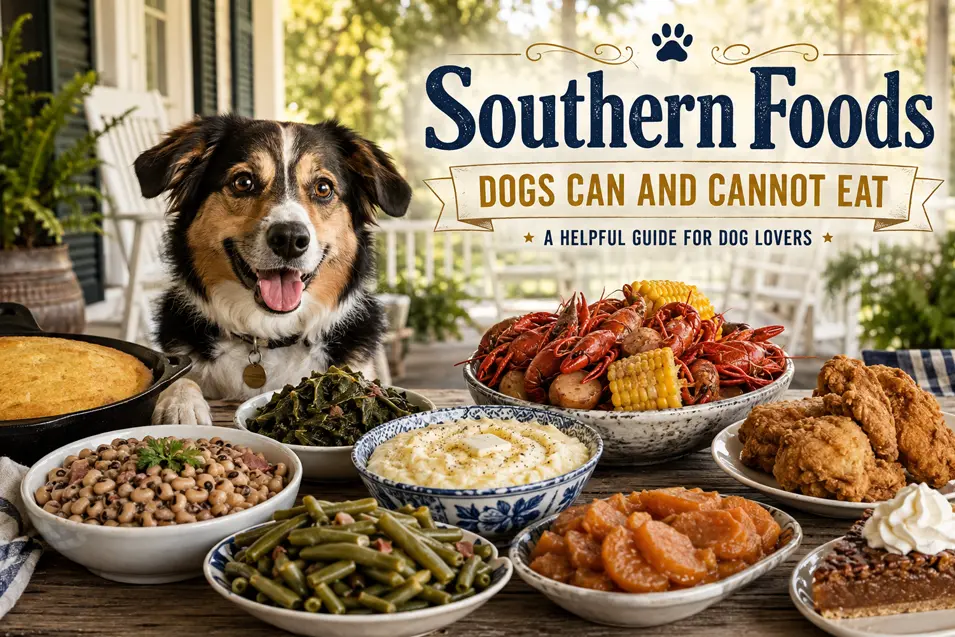
Southern food is famous for big flavors, comforting recipes, and dishes meant to be shared. From bowls of black-eyed peas and creamy grits to crawfish boils, fried chicken, cornbread, and pecan pie, there is no shortage of tempting food on a Southern table.
And if there is a dog nearby, chances are they have noticed.
While some foods associated with Southern cooking can be perfectly fine for dogs in small amounts, others are best kept out of the food bowl. Sometimes the main ingredient is safe, but the traditional recipe is not. Butter, salt, onions, garlic, rich sauces, frying oil, sugar, and seasonings can turn an otherwise dog-friendly ingredient into something dogs should avoid.
Here are some popular Southern foods dogs can and cannot have, along with what you should know before sharing a bite.
Can Dogs Eat Black-Eyed Peas?
Yes, dogs can eat plain, properly cooked black-eyed peas in moderation.
Black-eyed peas are legumes that provide protein, fiber, and several vitamins and minerals. Plain cooked black-eyed peas can therefore be an occasional addition to a dog’s regular diet.
The problem is how they are often prepared.
Southern-style black-eyed peas may be cooked with bacon, ham hocks, sausage, salt, onions, garlic, or other seasonings. These additions can make the finished dish unsuitable for dogs. Onions and garlic are particularly concerning because members of the allium family can be toxic to dogs.
If you want to share black-eyed peas with your dog, set aside a small amount before adding the seasonings and other ingredients.
Verdict: Plain cooked black-eyed peas can be okay in moderation. Skip the traditional seasoned version.
Can Dogs Eat Crawfish or Crayfish?
Dogs can generally eat a small amount of plain, fully cooked crawfish meat if the shell has been completely removed and no seasoning has been added.
However, that is very different from letting your dog participate in a traditional crawfish boil.
Crawfish boils are often heavily seasoned and may contain large amounts of salt along with garlic, onions, spicy seasoning blends, butter, and other ingredients dogs do not need. Crawfish shells can also present choking and digestive hazards and should never intentionally be fed to a dog.
If your dog has never eaten shellfish before, be especially cautious. As with people, individual dogs can react poorly to foods they have not encountered before.
Verdict: A little plain, shell-free cooked crawfish meat may be okay, but seasoned crawfish boils and shells should stay off the dog’s menu.
Can Dogs Eat Cornbread?
A small piece of plain cornbread is unlikely to cause problems for most healthy dogs, provided it contains no dog-toxic ingredients.
That doesn’t make cornbread a particularly useful dog treat, though. Traditional recipes can contain butter, sugar, salt, milk, and other ingredients that add calories without providing much benefit to your dog.
More elaborate cornbread recipes may also contain ingredients such as onions, garlic, jalapeños, cheese, or other additions that make sharing less advisable.
Verdict: A small amount of simple cornbread can be okay occasionally, but it shouldn’t become a regular treat.
Can Dogs Eat Grits?
Plain cooked grits can generally be eaten by dogs in small quantities.
Grits themselves are made from corn, but the bowl served at the table is rarely just corn and water. Butter, cheese, salt, cream, gravy, bacon, and other rich additions are common.
Cheese grits and heavily buttered grits can contain a lot of fat and sodium, while some dogs also have difficulty digesting dairy products.
If you want to give your dog a taste, plain grits prepared with water are the simpler option.
Verdict: Plain grits are generally okay in small amounts. Richly dressed Southern grits are better left to humans.
Can Dogs Eat Okra?
Yes, dogs can eat plain okra in moderation.
Okra contains fiber as well as useful nutrients, and small amounts of plain cooked or raw okra may be suitable for many dogs.
Fried okra is another story.
The breading, frying oil, salt, and seasonings add unnecessary fat and calories. A dog stealing one dropped piece is different from deliberately serving a portion of fried okra.
Pickled okra isn’t an ideal choice either because of its sodium content and potentially problematic seasonings.
Verdict: Plain okra can be dog-friendly. Fried and pickled okra should generally be avoided.
Can Dogs Eat Collard Greens?
Dogs can eat small amounts of plain, cooked collard greens, but traditional Southern collards require more caution.
Collard greens themselves contain vitamins, minerals, and fiber. However, a classic pot of greens may include bacon, ham hocks, salt, onions, garlic, hot sauce, or other ingredients that aren’t appropriate for dogs.
The greens may absorb ingredients from the cooking liquid, so simply picking a few leaves out of a heavily seasoned pot doesn’t necessarily make them plain.
Verdict: Plain cooked collard greens can be offered occasionally. Avoid greens cooked with onions, garlic, lots of salt, or fatty meats.
Can Dogs Eat Sweet Potatoes?
Plain cooked sweet potato is one of the more dog-friendly foods on a Southern table.
Sweet potatoes provide fiber and nutrients, and they are even found in some commercially prepared dog foods and treats.
But sweet potato casserole is not the same thing.
Southern sweet potato dishes can contain substantial amounts of butter and sugar, along with marshmallows, syrups, nuts, and other additions. Candied yams and similar dishes are also far too sugary to make sensible dog treats.
Serve sweet potato cooked and plain, without butter, sugar, salt, or seasoning.
Verdict: Plain cooked sweet potato is generally dog-friendly. Sweet potato casserole and candied versions are not good choices.
Can Dogs Eat Green Beans?
Plain green beans are generally safe for dogs and can make a crunchy, relatively low-calorie treat.
Unfortunately, green bean casserole doesn’t qualify.
The casserole may contain cream-based soup, lots of sodium, fried onions, butter, and other rich ingredients. Onions are particularly important to keep away from dogs.
Fresh, frozen, or cooked green beans without sauces or seasonings are a much better option.
Verdict: Plain green beans get a yes. Green bean casserole gets a no.
Can Dogs Eat Biscuits?
A tiny piece of a plain Southern biscuit is unlikely to hurt most healthy dogs, but biscuits aren’t an ideal dog food.
They tend to contain flour, butter or shortening, salt, and sometimes sugar or dairy. That makes them calorie-dense without offering much nutritional value for a dog.
The extras can be even more problematic. Biscuits covered in sausage gravy, butter, honey, or jam should remain human food.
Verdict: A tiny piece of plain biscuit is generally okay as a rare treat, but there are much better snacks for dogs.
Can Dogs Eat Fried Chicken?
Dogs should not be given Southern fried chicken.
Chicken itself can be a useful source of protein when it is thoroughly cooked, plain, and boneless. Frying it changes the equation by adding breading, oil, salt, and potentially problematic seasonings.
Bones are an additional concern. Cooked chicken bones can splinter and cause choking or injuries to the digestive tract.
If you want your dog to enjoy chicken while everyone else has fried chicken, prepare a separate piece of plain, boneless, skinless chicken.
Verdict: Plain cooked boneless chicken can be dog-friendly. Fried chicken and cooked chicken bones are not.
Can Dogs Eat Mac and Cheese?
Mac and cheese is best kept away from dogs.
While a small accidental bite may not be a problem for many dogs, macaroni and cheese can be high in fat, sodium, and calories. It also contains a significant amount of dairy, which some dogs don’t tolerate particularly well.
Extra-rich Southern recipes may contain multiple cheeses, butter, cream, bacon, and other ingredients that make the dish even less suitable.
Verdict: Skip the mac and cheese and give your dog something simpler.
Can Dogs Eat Hush Puppies?
Hush puppies are not a good treat for dogs.
Although cornmeal itself isn’t inherently dangerous for most dogs, hush puppies are fried and commonly contain salt and seasonings. Recipes may also contain onion, which dogs should not eat.
Their high fat content is another reason not to deliberately share them.
Verdict: Keep the hush puppies on the human side of the table.
Can Dogs Eat Gumbo?
Dogs should not eat traditional gumbo.
There are too many potential problems packed into one pot. Depending on the recipe, gumbo can contain onions, garlic, sausage, salt, spicy seasonings, rich stock, and substantial amounts of fat.
Even if the chicken, seafood, or okra in a particular gumbo would be acceptable to a dog when prepared separately, that doesn’t make the finished dish safe.
Verdict: Gumbo is a human dish. Don’t serve it to your dog.
Can Dogs Eat Jambalaya?
Jambalaya should also stay out of your dog’s bowl.
Rice and plain cooked meats can individually be suitable for dogs, but traditional jambalaya combines them with seasonings and ingredients that may include onions, garlic, sausage, salt, spices, and fatty meats.
Trying to pick out a piece of meat after everything has cooked together isn’t a great workaround because the ingredients and seasonings are incorporated throughout the dish.
Verdict: Skip the jambalaya and offer plain cooked meat or rice separately instead.
Can Dogs Eat Shrimp and Grits?
The individual ingredients tell two different stories.
A dog may be able to eat a little plain, fully cooked shrimp with the shell and tail removed, and plain grits can also be okay in moderation. Traditional shrimp and grits, however, may contain butter, cheese, cream, bacon, salt, garlic, and rich sauces.
If you’d like your dog to have a Southern-inspired taste, reserve a tiny piece of plain cooked shrimp before preparing the human meal.
Verdict: Plain cooked shrimp and plain grits may be okay separately. The finished restaurant-style dish is usually too rich.
Can Dogs Eat Boiled Peanuts?
Boiled peanuts aren’t an ideal choice for dogs, particularly when they are heavily salted.
Plain, unsalted peanuts can be eaten by many dogs in small quantities, provided the shells are removed. Boiled peanuts, however, are commonly prepared in salty brine and may also be flavored with Cajun or other seasonings.
Peanuts are also high in fat, so portions matter even when they are plain.
Never let a dog eat peanut shells.
Verdict: Skip salty boiled peanuts. A few plain, shelled, unsalted peanuts are a better option.
Can Dogs Eat Pimento Cheese?
Pimento cheese is best reserved for people.
Cheese itself isn’t toxic to most dogs, but pimento cheese is typically rich in fat and sodium and may contain mayonnaise and various seasonings. Some recipes include garlic or onion powders, creating an additional reason to avoid sharing it.
Verdict: Don’t make pimento cheese a dog treat.
Can Dogs Eat Pulled Pork?
Plain, thoroughly cooked pork can sometimes be offered to dogs in small amounts if excess fat has been removed.
Southern pulled pork, however, is usually another matter.
Barbecue rubs and sauces may contain lots of salt and sugar as well as garlic and onion. Some sauces may also contain ingredients or sweeteners that aren’t appropriate for dogs. Fatty pieces of pork aren’t a good choice either.
Bones should never be taken from cooked pork and handed to a dog.
Verdict: A small amount of lean, unseasoned cooked pork may be okay. Barbecue pulled pork and cooked bones should be avoided.
Can Dogs Eat Barbecue Ribs?
No. Barbecue ribs aren’t appropriate for dogs.
Besides sugary, salty, and heavily seasoned barbecue sauces and rubs, ribs come with cooked bones that can splinter or become lodged in a dog’s digestive tract.
The meat itself can also be quite fatty.
Don’t assume that letting your dog chew the leftover bone is safer than giving them the entire rib. The bone is one of the biggest reasons to keep the dish away from them.
Verdict: Keep barbecue ribs and their bones away from dogs.
Can Dogs Eat Mashed Potatoes?
Plain cooked potatoes can be eaten by dogs in moderation, but Southern-style mashed potatoes are rarely plain.
Butter, milk, cream, cheese, salt, gravy, and garlic can all transform basic potatoes into a rich side dish that isn’t suitable for sharing.
If you are preparing potatoes and want to save some for your dog, set aside a little plain cooked potato before mashing and seasoning the rest.
Verdict: Plain cooked potato can be okay. Rich, seasoned mashed potatoes should stay on your plate.
Can Dogs Eat Deviled Eggs?
Plain, fully cooked egg can be a good source of protein for many dogs. Deviled eggs, however, contain more than egg.
Typical recipes include mayonnaise, mustard, salt, and seasonings, while variations can add hot sauce, relish, bacon, onions, or other ingredients.
A bite accidentally dropped on the floor is one thing, but there is no reason to deliberately give your dog a deviled egg when a small piece of plain cooked egg is the better option.
Verdict: Share plain cooked egg instead of deviled eggs.
Can Dogs Eat Pecan Pie?
No. Pecan pie is not appropriate for dogs.
It is extremely rich in sugar and fat, and pecans themselves aren’t a good choice for dogs. Nuts can also develop mold, and some molds can produce toxins that are dangerous to dogs.
Pecan pie may contain additional ingredients such as butter, syrups, chocolate, or alcohol depending on the recipe.
Verdict: Keep pecan pie completely off your dog’s dessert menu.
Can Dogs Eat Peach Cobbler?
Plain peach flesh can be enjoyed by many dogs in small amounts, but peach cobbler shouldn’t be shared.
Cobbler adds large quantities of sugar, butter, pastry or biscuit topping, and sometimes other ingredients your dog doesn’t need.
Peach pits are another concern. Dogs should never be allowed to chew or swallow the pit. Besides presenting a choking or intestinal obstruction hazard, peach pits contain compounds that can release cyanide when damaged.
If you want to share the flavor of summer peaches, offer a small piece of fresh, ripe peach flesh with the pit completely removed.
Verdict: Fresh, pit-free peach flesh can be okay. Peach cobbler is not a suitable dog treat.
Can Dogs Eat Banana Pudding?
Banana itself is generally safe for dogs in moderation, but banana pudding and banana bread is better kept for the humans.
The dessert typically contains substantial amounts of sugar and dairy along with cookies or wafers. Some dogs don’t digest dairy well, and the extra sugar and calories provide no real benefit.
A small slice of plain banana is a much simpler way to let your dog join in.
Verdict: Give your dog a piece of banana, not a bowl of banana pudding.
Can Dogs Eat Pralines?
No. Pralines should not be given to dogs.
Traditional Southern pralines are made with large amounts of sugar along with ingredients such as butter, cream, and pecans. They are extremely rich and provide nothing a dog needs nutritionally.
Some specialty versions may contain chocolate or other ingredients that introduce additional risks.
Verdict: Pralines belong firmly in the human treat category.
Southern Foods Dogs Can Eat: The Quick Version
If you want your dog to sample Southern-inspired foods, simplicity is the key.
Some of the better choices include small portions of:
- Plain cooked black-eyed peas
- Plain cooked sweet potato
- Plain green beans
- Plain okra
- Plain cooked collard greens
- Plain grits
- Plain boneless chicken
- Plain cooked shrimp with the shell and tail removed
- Plain cooked egg
- Fresh peach flesh with the pit removed
- Banana
The word plain matters.
Foods that may be safe on their own can become unsuitable once they’re fried, covered in gravy, cooked with onions and garlic, heavily salted, sweetened, or mixed with fatty meats.
Southern Foods Dogs Should Avoid
Some dishes are better treated as human-only foods, including:
- Fried chicken
- Gumbo
- Jambalaya
- Hush puppies
- Mac and cheese
- Green bean casserole
- Sweet potato casserole
- Barbecue ribs
- Seasoned pulled pork
- Pimento cheese
- Pecan pie
- Peach cobbler
- Banana pudding
- Pralines
Dogs should also avoid dishes containing potentially dangerous ingredients such as onions, garlic, chocolate, alcohol, grapes or raisins, and products containing xylitol.
Cooked bones should never be offered as leftovers.
Why Southern Cooking Requires a Little Extra Caution
One of the tricky things about deciding whether a dog can eat a Southern dish is that the main ingredient may sound completely harmless.
Chicken? Dogs can eat properly prepared chicken.
Green beans? Usually fine.
Sweet potatoes? Another dog-friendly food.
Crawfish? Potentially fine when properly cooked, shelled, and served plain.
But fried chicken, green bean casserole, sweet potato casserole, and a heavily seasoned crawfish boil are completely different foods from those individual ingredients.
That’s why it is usually better to ask what’s in the finished dish rather than whether the main ingredient is safe.
When cooking at home, one of the easiest solutions is to reserve a dog-sized portion before seasoning the food. Your dog can get a little plain chicken, sweet potato, green beans, shrimp, or another suitable ingredient while everyone else enjoys the fully dressed Southern version.
What If Your Dog Steals Southern Food?
What to do depends on what your dog ate, how much they consumed, the ingredients in the recipe, and your dog’s size and health.
A stolen bite of plain cornbread is a very different situation from a dog eating a pan of brownies, swallowing cooked rib bones, or getting into a dish containing a significant amount of onion or garlic.
If you know your dog has eaten something potentially toxic, swallowed a bone or other hazardous object, or is showing symptoms such as repeated vomiting, diarrhea, abdominal discomfort, weakness, tremors, difficulty breathing, or unusual behavior, contact your veterinarian or an emergency veterinary clinic promptly.
When possible, keep the recipe, ingredient list, packaging, or an estimate of how much was eaten. That information can help a veterinary professional determine the appropriate next steps.
The Bottom Line
Dogs don’t have to miss out on every flavor associated with Southern cooking, but the safest options usually aren’t the finished dishes sitting on the dinner table.
Plain black-eyed peas, green beans, sweet potatoes, okra, grits, certain cooked meats and seafood, and a few pieces of fresh fruit can all potentially give your dog a taste of Southern ingredients without the butter, sugar, frying oil, salt, sauces, and seasonings found in many traditional recipes.
When in doubt, take the ingredient back to basics: cooked when necessary, plain, appropriately sized, and free from bones, shells, pits, heavy seasoning, and dog-toxic ingredients.
Your dog probably won’t care that their portion didn’t come with gravy.