There is a particular question that can become harder to answer as we get older.
Should I get another pet?
Maybe you’ve always had dogs and the house feels painfully quiet without one. Maybe your cat died after 17 years and you’re beginning to miss having an animal curled up beside you. Perhaps you’ve recently retired and, for the first time in decades, actually have more time for a pet.
Then somebody says it.
“Are you sure you should get another one at your age?”
It’s a reasonable subject to think about. It isn’t always a reasonable conclusion.
Being 70, 75 or 80 doesn’t automatically make someone too old to have another pet. Plenty of people remain active, independent and perfectly capable of providing an animal with an excellent home well into their later years.
The better question isn’t whether you’re too old.
It’s whether the particular animal you’re considering makes sense for the life you have today, the life you’re likely to have several years from now, and the plans you’ve made in case circumstances change.
Start With the Pet’s Likely Lifespan
This is the uncomfortable question, so let’s deal with it first.
How long might this animal live?
A puppy could reasonably be with you for 10, 12, 15 or more years. Some cats live into their late teens or twenties. Certain birds can live for decades.
That doesn’t mean a 75-year-old shouldn’t adopt a puppy.
It means adopting one should include thinking about what life could look like when you’re 85 or 90.
Could you still provide care if your mobility changes? Is there someone who could help with exercise? What happens if you move? Who would take the animal if you died or could no longer care for them?
None of us knows how long we’re going to live.
A 35-year-old pet owner can die unexpectedly too.
Every pet owner should have a backup plan. When adopting an animal later in life, however, it makes sense to give that plan more thought before bringing the pet home.
Don’t Choose Based on Age Alone
Two 75-year-olds can have completely different lives.
One may walk five miles every morning, travel frequently and live in a house with a fenced yard.
Another may have limited mobility, live on the third floor of a building and no longer drive.
Their birth certificates tell you almost nothing about which pet would suit them.
Look instead at your actual circumstances.
How active are you?
How comfortable are you walking a dog?
Can you drive a pet to veterinary appointments?
Do you travel?
Do you have a fenced yard?
Are stairs part of your daily routine?
How much lifting can you comfortably do?
What kind of pet experience do you already have?
The answers matter far more than the number of candles on your birthday cake.
Think About the Animal You’ll Have Five or Ten Years From Now
It’s easy to choose a pet based on your life today.
Try choosing partly for your future life as well.
If you’re 72 and considering a large, energetic puppy, imagine that dog at five years old when you’re 77.
Then imagine the dog at ten when you’re 82.
Would the match still make sense?
Nobody can predict exactly how they’ll age, and you shouldn’t build your entire life around things that may never happen.
But reasonable planning isn’t pessimism.
It’s simply part of making a commitment to another living thing.
Size Matters — But Not in the Way You Might Think
Older adults are often automatically told to get a small dog.
That’s far too simplistic.
A 12-pound terrier bouncing around someone’s feet and pulling unpredictably may be more difficult for that person than a calm, well-trained 55-pound dog.
Small dogs can also be easier to trip over because they’re harder to see.
On the other hand, a very large dog can present obvious challenges.
Could you safely control a 90-pound dog if they suddenly lunged toward another animal?
Could you help them into a vehicle if they were injured?
What happens when a large dog becomes elderly and needs assistance getting up or navigating stairs?
The right size is the size you can comfortably and safely manage.
Temperament and training matter just as much.
Energy Level May Matter More Than Size
A dog’s exercise needs can determine whether the relationship remains manageable.
A high-energy working breed may require considerable daily activity, training and mental stimulation.
That can be wonderful if you’re active and enjoy spending hours outside.
It can become difficult if your mobility changes.
A calmer adult dog may fit far more easily into a quieter lifestyle.
Again, this isn’t about deciding what an older person is “allowed” to own.
It’s about honestly matching the animal to the life available to them.
Puppies Are Wonderful — and a Lot of Work
There are plenty of people in their 70s who are completely capable of raising a puppy.
But it’s worth remembering what puppies actually involve.
House training.
Middle-of-the-night bathroom trips.
Chewing.
Training.
Veterinary appointments.
Socialization.
Pulling on the leash before training takes hold.
Occasional chaos.
And a surprising amount of bending down to pick up things that shouldn’t be in a puppy’s mouth.
If that sounds fun, wonderful.
If it sounds exhausting, don’t assume the alternative is having no dog.
An Adult Dog Can Be an Excellent Choice
Adult dogs are often overlooked by people who instinctively begin their search with puppies.
There can be real advantages to adopting an adult.
Their full size is known.
Their temperament is easier to assess.
Their energy level is more apparent.
Many are already house-trained.
You may also be able to find a dog with experience living in a home.
A reputable rescue, shelter, breeder or rehoming organization may be able to help identify a dog whose personality and activity level fit your household.
The goal isn’t simply to find a dog.
It’s to find your dog.
Don’t Overlook Senior Pets
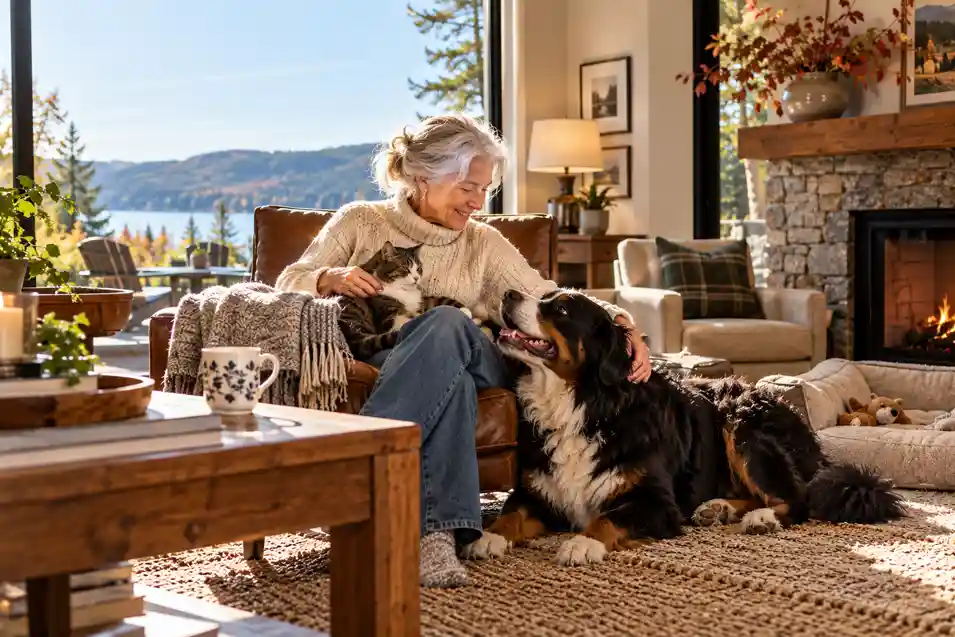
There can be something particularly lovely about an older person adopting an older animal.
A senior dog may not need hours of vigorous exercise. An older cat may be perfectly content with a sunny window, comfortable bed and somebody nearby.
Their pace may fit yours beautifully.
But senior pets aren’t automatically easier.
They may require more veterinary care, medications or assistance with mobility. Their remaining lifespan may also be shorter, which can mean facing another loss sooner than you’d like.
Adopt a senior animal because the match makes sense, not because you think it’s the only responsible option at your age.
Cats Can Be Easier in Some Ways — Not Effortless
For someone who finds daily dog walking increasingly difficult, a cat may be an attractive alternative.
There are obvious advantages.
No daily walks.
No standing outside during a snowstorm waiting for someone to find exactly the right blade of grass.
Cats can also adapt extremely well to smaller homes.
But cats still require physical care.
Litter needs to be carried, poured and scooped. Veterinary trips require getting the cat into a carrier and transporting them. Food, enrichment, grooming and medical care still matter.
Think about where the litter box will go.
A box in the basement may be fine today, but will you want to carry heavy litter down those stairs five years from now?
Pet choice and home design are connected.
Think About Grooming
That gorgeous long-haired dog may require substantially more physical maintenance than a short-coated dog.
Some breeds need professional grooming every few weeks.
Others require regular brushing at home.
Nails need trimming.
Ears need cleaning.
Cats can sometimes need grooming assistance as they age.
None of these requirements necessarily rule out a particular pet.
They simply need to be part of the decision.
If you’re happy to pay a groomer, a grooming-intensive breed may still be perfectly practical.
Consider the Cost of Help
One of the smartest ways to keep pet ownership manageable later in life is being willing to outsource some tasks.
A dog walker can provide exercise.
A groomer can handle bathing, brushing and nail care.
A pet sitter can help when you travel.
A mobile veterinarian may be available in some communities.
Dog daycare may suit certain dogs.
Before adopting, consider whether your budget could comfortably absorb some of these services if you eventually need them.
You may never use them.
Knowing they’re financially possible gives you more options if circumstances change.
Transportation Matters
Pets occasionally need to go somewhere.
Usually it’s routine: veterinary appointments, grooming or boarding.
Sometimes it’s an emergency.
If you no longer drive someday, how would the animal get to the veterinarian?
Could a family member help?
Does your community have pet-friendly transportation?
Could you use a mobile veterinarian for some care?
For larger dogs, think about whether you could physically help the animal into a vehicle if necessary.
Transportation is easy to overlook until you suddenly need it.
Think About Your Housing
If you expect to remain in your current home for many years, consider how well it suits the pet you’re thinking about.
A fenced yard can make dog ownership much easier.
Direct outdoor access reduces the need for every bathroom break to become a formal walk.
Stairs may become difficult for both people and pets.
Condo and apartment rules may restrict animal size, breed or number.
Also think about what might happen if you eventually move.
Would the type of animal you’re considering make finding another suitable home more difficult?
Again, you don’t need to plan your entire life around a hypothetical future move.
But it’s worth putting the question on the table.
Be Honest About Travel
Retirement can finally provide the freedom to travel.
A new pet can change that freedom considerably.
Dogs may require boarding, pet sitters or travel arrangements. Cats also need reliable care while you’re away.
If your dream is to spend three months every winter somewhere warm, think about how a pet fits into that plan before adopting one.
Maybe the pet travels with you.
Maybe you have an excellent sitter.
Maybe family is happy to help.
Or perhaps this isn’t the right moment to make a 15-year commitment.
There isn’t a universally correct answer.
There is only the answer that fits your life.
Have a Real Backup Person
This may be the most important part of the entire decision.
Don’t settle for:
“Oh, one of the kids would take her.”
Ask.
Choose a specific person and have the conversation.
If something happened to me and I couldn’t care for this dog anymore, would you genuinely be willing to take her?
The answer may surprise you.
Someone can love your dog very much and still not be able to take them because of housing restrictions, existing pets, allergies, children, finances or lifestyle.
Knowing that now is much better than having your family discover it during a crisis.
Have a Second Plan Too
Life changes for backup caregivers as well.
Your first-choice person might move overseas, develop health problems, have a child with allergies or adopt animals that aren’t compatible with yours.
Ideally, have a second option.
That might be another family member, friend, breeder, rescue organization or other arrangement appropriate to the animal.
The important thing is that your plan exists outside your imagination.
Put the Plan in Writing
Write down who should care for the pet if you can’t.
Include veterinary contact information, medications, feeding instructions, behavioural information and anything else someone would need to know.
Make sure the appropriate people know where that information is.
Depending on your circumstances, you may also want to discuss your pet with the professional preparing your estate documents and ask about appropriate ways to provide financially for their future care.
The details will depend on where you live and your individual situation.
The goal is simple:
Don’t leave everyone guessing.
Make Sure the Backup Person Can Actually Manage Your Pet
This is particularly important with large, powerful or behaviourally complicated animals.
Your daughter may adore your 100-pound dog.
Can she safely handle him?
Will her landlord allow him?
Does he get along with her existing dog?
Would her work schedule allow her to provide the care he needs?
A backup plan needs to work in reality, not just on paper.
You Might Decide the Answer Is “Not Right Now”
Thinking through all of this doesn’t guarantee you’ll decide to get another pet.
You may realize that you’re planning extensive travel.
You may decide the financial commitment feels uncomfortable.
Perhaps your housing situation is likely to change.
Maybe you’re simply enjoying the freedom that comes after decades of pet ownership.
That’s okay.
Loving animals doesn’t require owning one.
You can foster, volunteer, pet-sit for friends or simply enjoy the animals already in your life.
Choosing not to adopt another pet can be every bit as thoughtful as choosing to bring one home.
You Might Also Decide the Answer Is Absolutely Yes
And that’s okay too.
Maybe you’re 78, walk every morning, have a fenced yard, an excellent veterinarian, enough money to comfortably provide care and a daughter who has already enthusiastically agreed to take the dog if necessary.
Why shouldn’t you have another dog?
Maybe you’re 82 and an affectionate seven-year-old cat needs exactly the quiet home and companionship you can provide.
That could be an extraordinary gift to both of you.
Age by itself shouldn’t eliminate years of companionship, laughter, routine and love.
It should simply encourage a little more planning.
Don’t Ask Whether You’re Too Old
There isn’t an age at which a person automatically becomes unsuitable for pet ownership.
Instead, ask better questions.
Does this particular animal fit my life?
Can I meet their physical and emotional needs?
Can I afford their care?
Does my home work for them?
What might become difficult as both of us age?
Can I pay for help if I need it?
Who will care for them if I temporarily can’t?
And who will give them a home if one day I’m no longer here?
If you can answer those questions thoughtfully, the number on your driver’s licence may be one of the least interesting things about the decision.
Getting another pet in your 70s or 80s isn’t about pretending that age doesn’t matter.
It’s about recognizing that age isn’t the only thing that matters.
Choose an animal whose needs fit your life.
Plan honestly for the years ahead.
Put a genuine backup plan in place.
Then, if the match makes sense, there may still be an awful lot of life — and love — left to share.