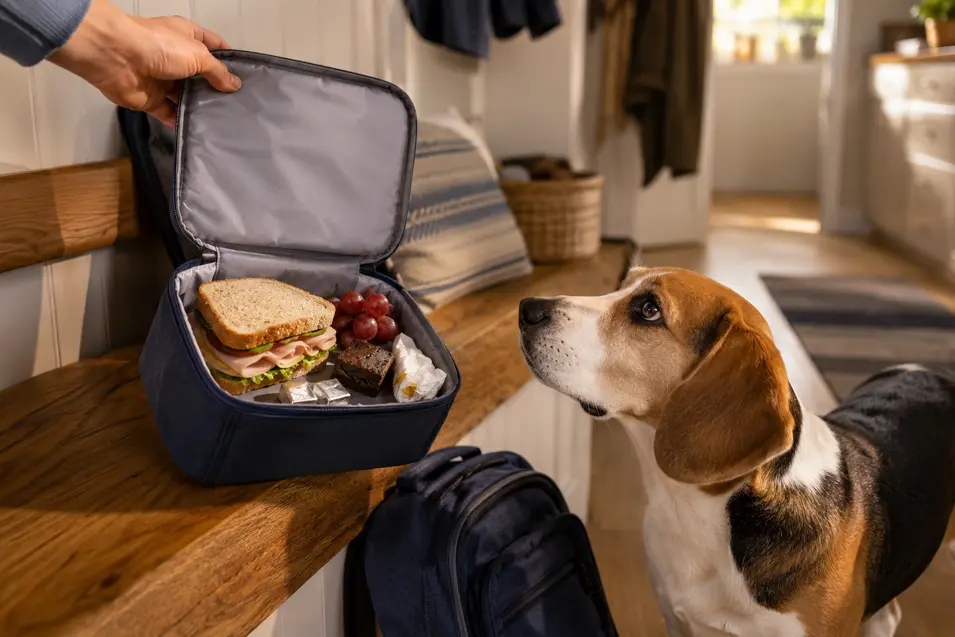
A school lunch can be surprisingly tempting to a dog.
Backpacks may contain sandwiches, granola bars, fruit, baked goods and half-finished snacks. After school, those bags are often dropped beside the door, left on the floor or opened while the dog waits nearby for something to fall.
Most dogs will not distinguish between a safe piece of carrot and a potentially dangerous package of raisins. They simply smell food and investigate.
Some lunchbox foods are toxic to dogs. Others are not poisonous but may still cause digestive problems, choking or an intestinal blockage. Even the wrappers can become dangerous once they smell like lunch.
Teaching children how to store and unpack their school bags can help keep the family dog safe throughout the school year.
Grapes and Raisins
Grapes and raisins are common additions to school lunches. They may also appear in trail mix, oatmeal cookies, granola, breads and snack bars.
Both fresh grapes and dried grapes can cause kidney injury in dogs. The exact amount that causes poisoning is unpredictable, and one dog may become seriously ill after eating an amount that did not appear to affect another.
Do not assume that one raisin is automatically safe because the dog is large or has eaten raisins before without an obvious problem.
Possible signs may include:
- Vomiting
- Diarrhea
- Loss of appetite
- Lethargy
- Abdominal discomfort
- Increased thirst or urination
- Reduced or absent urination as kidney injury progresses
If your dog eats grapes, raisins or a food containing them, contact a veterinarian or animal poison control service immediately. Do not wait for symptoms to appear. Merck Veterinary Manual notes that there is no reliably safe dose that applies to every dog.
Chocolate and Cocoa
Chocolate cookies, brownies, chocolate-covered granola bars, pudding cups and leftover birthday treats can all find their way into backpacks.
Chocolate contains theobromine and caffeine, compounds dogs process differently from people. The risk depends on the dog’s size, the amount eaten and the type of chocolate.
Dark chocolate, baking chocolate and cocoa powder generally contain higher concentrations than milk chocolate, but any chocolate ingestion should be taken seriously. Chocolate products may also contain raisins, macadamia nuts or xylitol, creating more than one concern.
Signs of chocolate poisoning may include:
- Vomiting or diarrhea
- Restlessness
- Excessive thirst
- Rapid breathing
- Increased heart rate
- Tremors
- Seizures
Contact your veterinarian promptly with the dog’s weight, the type of chocolate, the amount that may be missing and the approximate time it was eaten. Save the wrapper because it can help identify the product and cocoa content.
The Merck Veterinary Manual explains that the concentration of theobromine and caffeine varies considerably among chocolate products, making the package information important.
Sugar-Free Gum and Products Containing Xylitol
Sugar-free gum may be one of the most dangerous items commonly found in a child’s backpack.
Some gum, mints, candies, baked goods and other reduced-sugar products contain xylitol. This sweetener may also appear on an ingredient list as birch sugar, wood sugar or birch bark extract.
Xylitol can cause a rapid, severe drop in a dog’s blood sugar and may also cause liver injury. According to the U.S. Food and Drug Administration, signs can begin very quickly.
Possible signs include:
- Vomiting
- Weakness
- Reduced activity
- Difficulty walking
- Trembling
- Collapse
- Seizures
If your dog may have eaten gum or another product containing xylitol, treat it as an emergency. Call your veterinarian, an emergency animal hospital or an animal poison control service immediately.
Do not wait for the dog to appear sick.
Parents should regularly remind children never to leave gum in an open backpack, coat pocket, bedroom or bedside table. A curious dog may chew through packaging to reach it.
Onion, Garlic, Chives and Leeks
Onion and garlic may be hidden inside foods that do not seem dangerous.
Sandwich fillings, flavoured cream cheese, soup, pizza, pasta, meatballs, sauces, dips and seasoned leftovers may contain members of the Allium family, including onion, garlic, chives and leeks.
These ingredients can damage a dog’s red blood cells. Raw, cooked, dehydrated and powdered forms can all be harmful, and concentrated seasonings can be particularly concerning.
Unlike some poisonings, signs may not appear immediately. A dog may seem normal for several days before developing symptoms associated with anemia.
Watch for:
- Weakness or unusual fatigue
- Loss of appetite
- Pale gums
- Rapid breathing
- Increased heart rate
- Dark or reddish urine
- Collapse
The Merck Veterinary Manual advises that both cooked and concentrated forms can cause poisoning in dogs and cats.
If a dog eats a large amount of onion or garlic, a concentrated powder or an unknown quantity of seasoned food, contact a veterinarian for advice.
Macadamia Nuts
Macadamia nuts may appear in cookies, trail mix, granola, baked goods and chocolate.
Dogs that eat macadamia nuts may develop vomiting, weakness, tremors, difficulty walking, depression or an increased body temperature. Signs often begin within several hours.
Chocolate-covered macadamia nuts create an additional risk because the dog has been exposed to both substances.
Contact your veterinarian if your dog eats macadamia nuts, even if they appear normal at first. Keep the product packaging and estimate how much is missing.
The Merck Veterinary Manual reports that dogs are the species in which this particular syndrome has been recognized.
Coffee, Tea and Energy Products
Older students may carry coffee, tea, energy drinks, chocolate-covered coffee beans or caffeinated snack products.
Caffeine can cause restlessness, abnormal heart rhythms, tremors, seizures and other serious effects in dogs. Coffee grounds and beans can be particularly concentrated.
Keep reusable cups, drink containers and caffeinated snacks out of the dog’s reach. Do not allow dogs to drink from abandoned cups, even if only a small amount remains.
If a dog consumes coffee grounds, an energy product or a substantial amount of a caffeinated drink, contact a veterinarian promptly.
High-Fat Lunch Foods
Not every dangerous lunch food is poisonous.
Greasy pizza, sausages, bacon, fried foods, rich cheese, buttery baked goods and fatty meat trimmings may cause vomiting or diarrhea. In some dogs, a large amount of rich food can contribute to pancreatitis, a painful and potentially serious inflammation of the pancreas.
Signs can include:
Dogs that have previously had pancreatitis or digestive problems may be particularly vulnerable to rich foods.
Cornell University’s College of Veterinary Medicine recommends being conservative with fatty table foods and treats.
A stolen bite of plain sandwich meat may not create an emergency in every dog, but an entire lunch containing several rich foods can be a different situation. Contact your veterinarian if your dog eats a large amount or begins showing symptoms.
Cooked Bones
Chicken wings, drumsticks, ribs and other bone-in leftovers do not belong in a dog’s bowl.
Cooked bones can splinter, become lodged in the throat or injure the mouth and digestive tract. Larger pieces can contribute to an intestinal blockage.
A dog that steals a cooked bone should not automatically be encouraged to vomit, as sharp material may cause additional injury on the way back up. Call your veterinarian for instructions.
Seek urgent care if the dog is choking, repeatedly gagging, having difficulty breathing, vomiting, showing abdominal pain or unable to pass stool.
Fruit Pits, Corn Cobs and Wooden Skewers
Some lunch items create mechanical rather than toxic hazards.
Peach, plum and avocado pits may be large enough to cause choking or an intestinal blockage. Corn cobs are particularly difficult for dogs to digest and can become lodged in the gastrointestinal tract.
Wooden cocktail picks or skewers used for fruit, cheese or meat can puncture the mouth, throat, stomach or intestines if swallowed.
Do not leave these items in an open lunch container or accessible garbage bin. If your dog swallows a pit, corn cob or wooden skewer, contact a veterinarian immediately rather than waiting to see whether it passes.
Wrappers, Bags and Containers
A dog may swallow the packaging along with the food.
Plastic wrap, sandwich bags, foil, cupcake liners, wax paper and snack wrappers can smell strongly of food. Once swallowed, they may cause choking or a gastrointestinal obstruction.
Dogs can also become trapped in food bags while trying to reach crumbs. Keep empty chip, cereal and snack bags away from pets and dispose of them securely.
Signs of a possible intestinal blockage include:
- Repeated vomiting
- Loss of appetite
- Abdominal pain
- Lethargy
- Diarrhea
- Straining to defecate
- Producing little or no stool
A gastrointestinal obstruction may require emergency treatment or surgery. Cornell University College of Veterinary Medicine advises contacting a veterinarian promptly when foreign-body ingestion is suspected.
Do not pull on plastic, string or other material protruding from a dog’s mouth or rectum. Call a veterinarian for guidance.
Mouldy Food and Forgotten Lunches
The sandwich that returns home on Friday may still be hiding in the backpack on Monday.
Old meat, dairy products and other forgotten foods can cause stomach upset. Mouldy foods may present additional risks, while spoiled packaging can make the entire backpack attractive to a dog.
Create a routine in which lunchboxes are emptied as soon as children come home. Leftovers should go directly into the refrigerator or a dog-proof garbage container.
Wash reusable containers regularly and check side pockets for forgotten snacks.
Teach Children Not to Share Without Asking
Children often share food because they love their dog. They may not realize that a raisin cookie, piece of sugar-free gum or bite of an onion-seasoned sandwich could be dangerous.
Make the rule simple: never give the dog food from a lunchbox without asking an adult.
Avoid frightening children or making them feel guilty if an accident occurs. A child who believes they will be punished may hide the evidence, wasting valuable time.
Instead, teach children to tell an adult immediately if:
- The dog ate something from a lunch
- Food is missing from a backpack
- A wrapper has been chewed
- The dog swallowed gum
- They are unsure whether a food was safe
Quick, honest information can help a veterinarian make better decisions.
Make Backpacks and Lunchboxes Dog-Proof
A zipped backpack on the floor is not necessarily secure. Determined dogs can open zippers, tear fabric or chew through insulated lunch bags.
Safer storage options include:
- A high shelf
- A closed cupboard
- A wall hook the dog cannot reach
- A mudroom behind a closed door
- A lidded storage bench with a secure closure
Be careful with backpacks hung on the backs of chairs. Larger dogs may pull them down, while smaller dogs may climb onto furniture to reach them.
If your dog is known to search bags, store all backpacks out of reach—even when you believe they are empty.
What to Do if Your Dog Eats Something Dangerous
If your dog eats a potentially toxic food or swallows packaging:
- Move the dog away from the remaining food.
- Identify what was eaten.
- Save the package and ingredient list.
- Estimate the amount missing.
- Note when the exposure may have happened.
- Call your veterinarian, an emergency animal hospital or an animal poison control service immediately.
Do not wait for symptoms when grapes, raisins, xylitol or a substantial amount of chocolate may be involved.
Do not attempt to make your dog vomit or give a home remedy unless a veterinary professional specifically instructs you to do so. The safest response depends on the substance, timing and dog’s condition.
If the dog is collapsing, having seizures, struggling to breathe or choking, go to an emergency veterinary hospital immediately.
A Safer After-School Routine
The easiest way to prevent a lunchbox emergency is to make unpacking part of the school-day routine.
Backpacks go on a high hook. Lunchboxes go directly to the kitchen. Leftovers are refrigerated or discarded in a secure container. Wrappers are thrown away, and children tell an adult if anything spilled or went missing.
It takes only a minute, but it keeps grapes, chocolate, gum and food-covered packaging away from an opportunistic dog.
The school day may be over when the backpack lands by the door. For the family dog, that is often when the most interesting part of lunch begins.