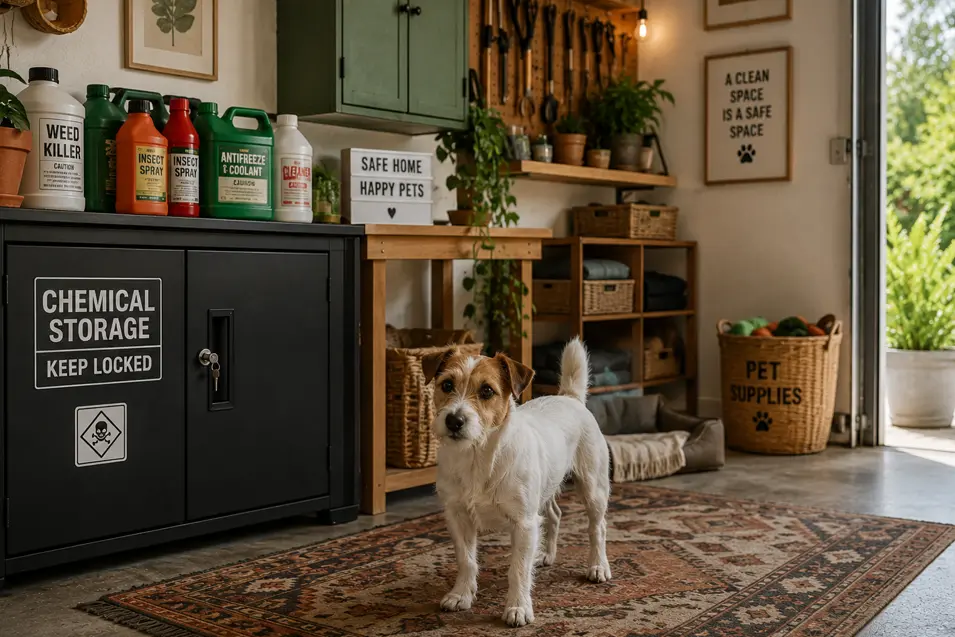
Most homes contain a variety of chemicals used for cleaning, maintenance, lawn care, automotive work, and home improvement projects. While these products serve important purposes, they can also present serious dangers to pets if not stored properly.
Dogs and cats are naturally curious and often investigate unfamiliar objects through smell, taste, and touch. Unfortunately, many household chemicals contain ingredients that can cause illness, injury, or even death if swallowed, inhaled, or absorbed through the skin. A leaking container, an unsecured cabinet, or a spilled product may seem like a minor issue to humans, but it can quickly become a veterinary emergency for a pet.
Fortunately, most chemical-related accidents are preventable. By understanding common hazards and adopting safe storage practices, pet owners can significantly reduce the risks while maintaining a clean, functional home.
Why Chemical Storage Matters
Many household chemicals are designed to be powerful.
Products formulated to kill weeds, remove stains, dissolve grease, eliminate pests, or clean surfaces often contain ingredients that can be harmful to animals. Because pets are much smaller than humans, even a small amount of exposure can sometimes lead to serious health problems.
Common dangers include:
- Poisoning
- Chemical burns
- Respiratory irritation
- Eye injuries
- Skin irritation
- Internal organ damage
Safe storage serves as the first and most effective line of defense against accidental exposure.
Common Household Chemicals That Can Harm Pets
Pet owners are often surprised by the number of potentially hazardous products found around the home.
Examples include:
Cleaning Products
- All-purpose cleaners
- Bleach
- Disinfectants
- Glass cleaners
- Toilet bowl cleaners
- Floor-cleaning solutions
Laundry Products
- Detergent pods
- Liquid detergents
- Fabric softeners
- Stain removers
Lawn and Garden Chemicals
- Fertilizers
- Herbicides
- Insecticides
- Fungicides
Automotive Products
- Antifreeze
- Motor oil
- Brake fluid
- Windshield washer fluid
Home Improvement Supplies
- Paints
- Solvents
- Adhesives
- Paint thinners
- Wood treatments
Each category requires careful handling and secure storage.
Store Chemicals in Closed Cabinets
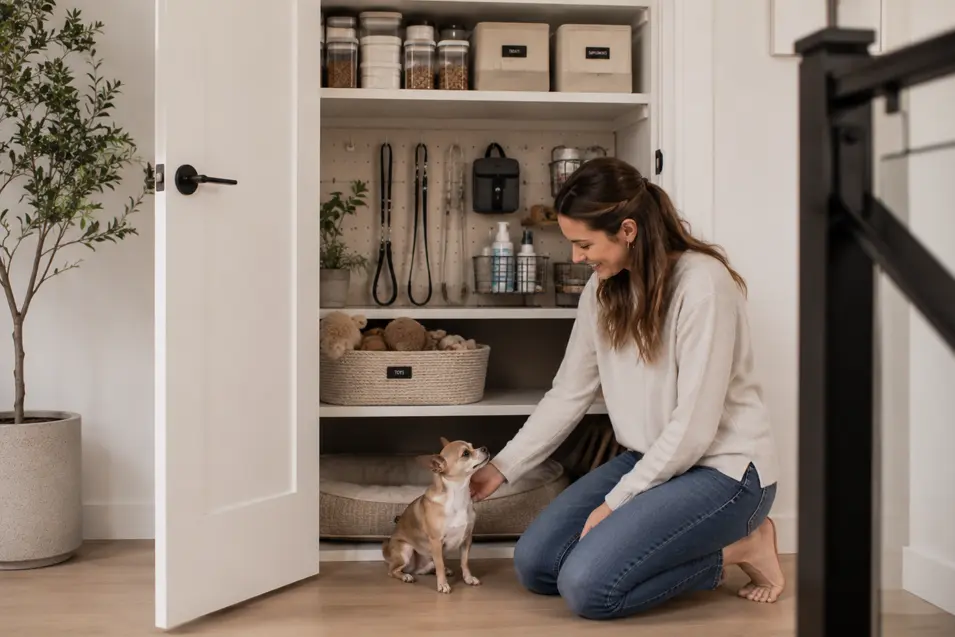
One of the simplest safety improvements involves keeping chemicals inside closed cabinets rather than on open shelves.
Open storage makes products easier for pets to access, especially in homes with curious cats or large dogs capable of reaching countertops and shelving.
Whenever possible:
- Use enclosed cabinets
- Keep cabinet doors closed
- Store products above floor level
- Avoid open shelving for hazardous materials
A physical barrier significantly reduces the chance of accidental exposure.
Consider Lockable Storage
For households with particularly curious pets, lockable storage may provide additional peace of mind.
Some dogs learn to open cabinet doors, while cats are known for reaching places owners assume are inaccessible.
Lockable cabinets are particularly useful for storing:
- Pesticides
- Fertilizers
- Automotive chemicals
- Concentrated cleaning products
- Pool supplies
Adding locks may seem unnecessary until an accident occurs. Prevention is always easier than treatment.
Keep Chemicals in Original Containers
Transferring chemicals into alternative containers can create confusion and increase risk.
Original packaging provides important information, including:
- Usage instructions
- Hazard warnings
- First-aid guidance
- Emergency contact information
- Proper storage recommendations
Original containers are also designed to minimize leaks and accidental exposure.
Never store chemicals in food or beverage containers, which can increase the likelihood of accidental ingestion.
Avoid Floor-Level Storage
Many homeowners place large containers of chemicals directly on garage or laundry room floors.
Unfortunately, this makes them easily accessible to pets.
Dogs may chew containers, while cats may investigate leaks or spills. Even sealed containers can become damaged over time if exposed to moisture, temperature fluctuations, or physical impacts.
Whenever possible, store chemicals:
- On elevated shelves
- Inside cabinets
- In utility closets
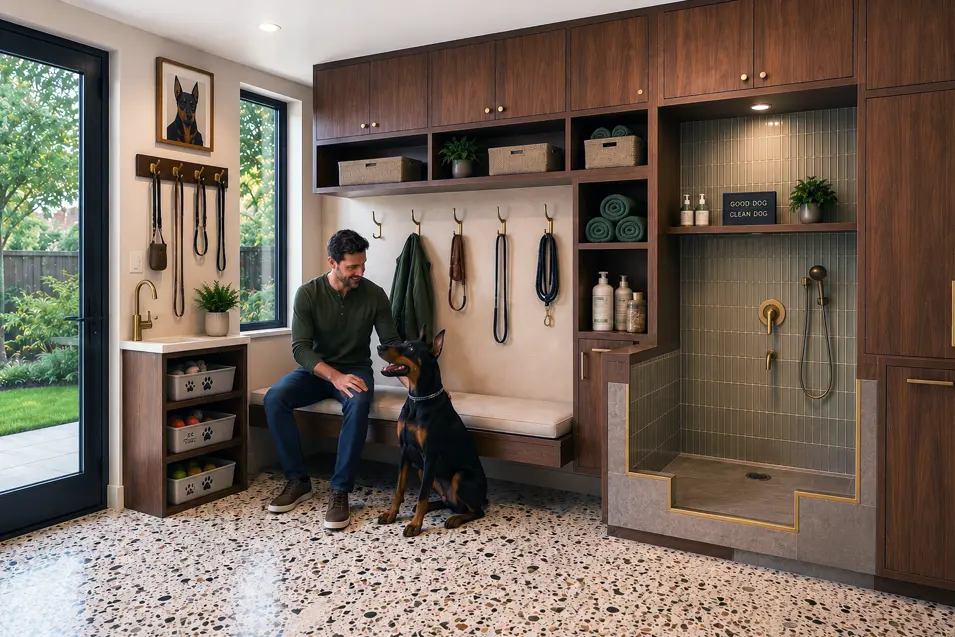
- In designated storage systems
Keeping hazardous products off the floor adds an important layer of protection.
Inspect Containers Regularly
Storage isn’t just about location.
Over time, containers may develop cracks, leaks, or damaged seals. Chemicals can also degrade if stored improperly.
Periodically inspect products for:
- Leaks
- Corrosion
- Damaged lids
- Faded labels
- Expired products
Promptly replace damaged containers and safely dispose of products that are no longer usable.
Clean Spills Immediately
Even properly stored chemicals can become dangerous when spills occur.
Pets may be attracted to unusual smells or may walk through spilled substances and later ingest them while grooming.
If a spill occurs:
- Remove pets from the area.
- Follow manufacturer cleanup instructions.
- Dispose of contaminated materials safely.
- Ensure the area is completely clean and dry before allowing pets to return.
Never assume a small spill is harmless.
Be Mindful During Use
Many chemical exposures occur while products are actively being used rather than while they are being stored.
Pets may walk across freshly treated lawns, lick cleaned surfaces, or investigate containers left unattended during projects.
To reduce risks:
- Keep pets away from work areas.
- Follow product directions carefully.
- Allow surfaces to dry completely.
- Use adequate ventilation.
- Return products to storage immediately after use.
Simple habits can prevent many common accidents.
Create Separate Storage Zones
Organization can improve both convenience and safety.
Consider grouping products by category:
Cleaning Supplies
Store household cleaners together.
Lawn and Garden Products
Keep fertilizers and pesticides in a dedicated location.
Automotive Chemicals
Store vehicle-related products separately from household supplies.
Home Improvement Materials
Organize paints, solvents, and adhesives in a designated area.
Proper organization makes products easier to locate while reducing the likelihood of mistakes.
Watch for Hidden Risks
Some dangers are less obvious than others.
Used rags soaked with chemicals, empty containers, and partially used products may still contain hazardous residues.
Pets can be exposed through:
- Chewing discarded containers
- Licking contaminated surfaces
- Contact with treated materials
Dispose of waste materials properly and avoid leaving project supplies unattended.
Know the Signs of Chemical Exposure
Even with careful storage, accidents can happen.
Potential warning signs include:
- Excessive drooling
- Vomiting
- Diarrhea
- Difficulty breathing
- Tremors
- Lethargy
- Pawing at the mouth
- Eye irritation
- Loss of coordination
If you suspect your pet has been exposed to a chemical, contact your veterinarian immediately. Having the product label available can help veterinary professionals determine the most appropriate treatment.
Consider Pet-Safe Alternatives
Whenever possible, choose products designed with safety in mind.
Many manufacturers now offer:
- Pet-friendly cleaners
- Low-toxicity pest control products
- Natural lawn-care solutions
- Environmentally conscious alternatives
While these products should still be stored securely, they may reduce the risks associated with accidental exposure.
The Bottom Line
Safe chemical storage is one of the most important responsibilities of pet ownership. Household cleaners, lawn chemicals, automotive fluids, and home improvement products can all pose significant dangers when pets gain access to them.
By storing chemicals in secure cabinets, keeping products in original containers, cleaning spills immediately, and maintaining organized storage systems, pet owners can dramatically reduce the likelihood of accidents. A few simple precautions can help ensure that your home remains both functional and safe for every member of the family—including the four-legged ones.