Every November 11, Canadians pause to remember the men and women who served, sacrificed, and gave their lives in times of war.
We wear red poppies, gather at memorials, and observe moments of silence to honour their courage.
But alongside many of those soldiers were other loyal companions whose contributions are sometimes overlooked.
Dogs.
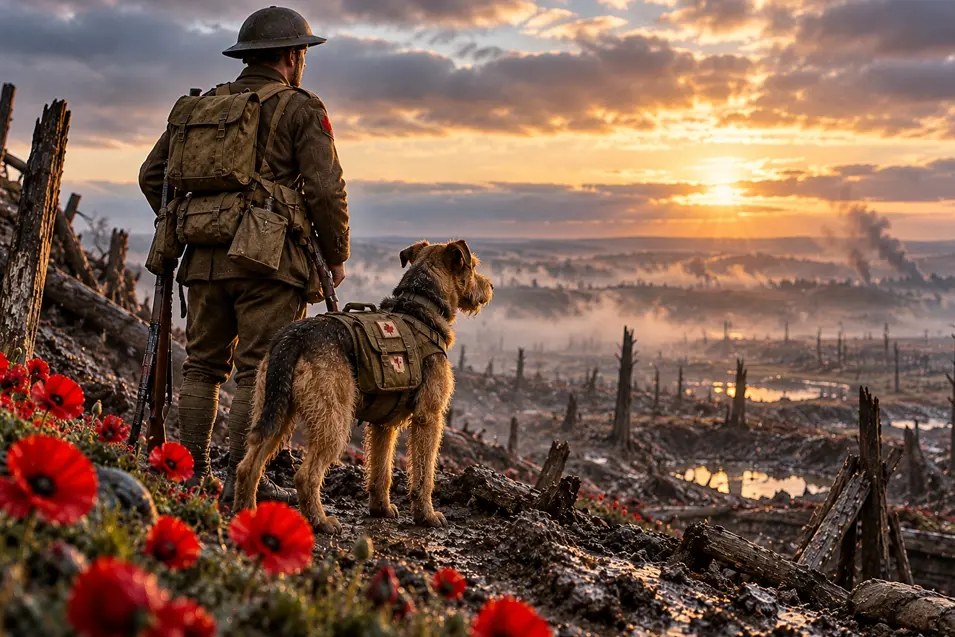
They carried messages through dangerous territory, searched for wounded soldiers, stood guard, and offered companionship in circumstances most of us can scarcely imagine.
On Remembrance Day, we remember the people who served our country, and we can also honour the remarkable animals who stood beside them.
The Dogs Who Served in the First World War
During the First World War, dogs performed important duties on the battlefield.
Messenger dogs carried communications when other methods failed. Medical dogs helped locate wounded soldiers, while sentry dogs alerted troops to approaching danger.
Some dogs served as military mascots, bringing moments of comfort and familiarity to soldiers living in the trenches.
For men far from home, the companionship of a dog could provide a small reminder of the ordinary lives they had left behind.
The Dogs of Vimy Ridge
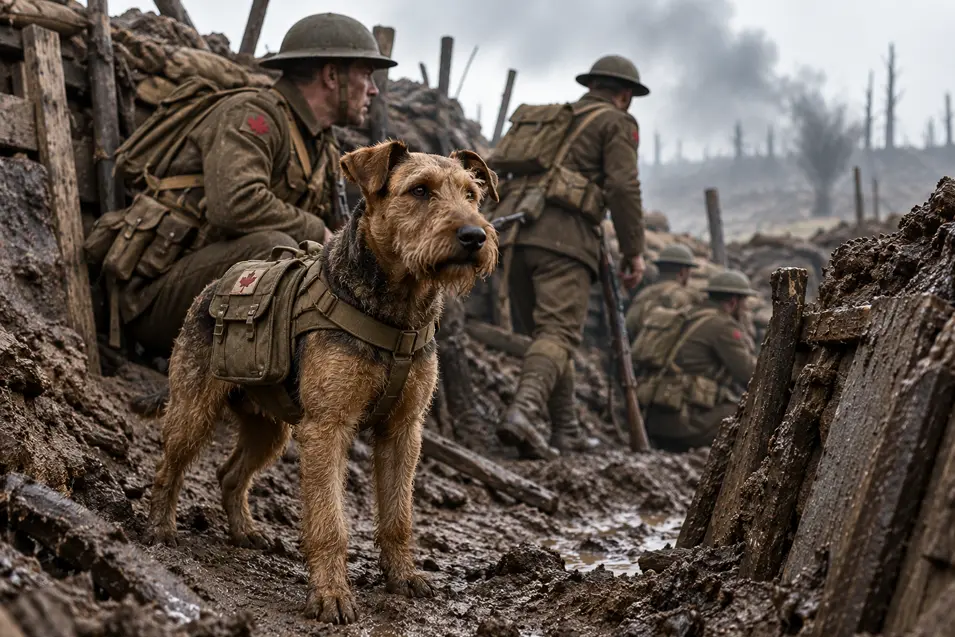
One remarkable story comes from the Battle of Vimy Ridge in April 1917.
Two Airedale Terriers named Wolf and Prince served as messenger dogs with British forces supporting the Canadian attack.
When telephone communications failed and battlefield smoke made visual signals impossible, the dogs helped carry news of the Canadian advance back to headquarters.
Their story reminds us that animals sometimes performed vital tasks under extraordinarily dangerous conditions.
Another dog, Paddy, a Beagle-cross, served as the mascot of the 4th Canadian Field Ambulance, a unit associated with the fighting at Vimy Ridge.
These dogs were not simply figures in the background of military history. They were part of the lives and experiences of the soldiers around them.
From the Battlefields to Modern Military Service
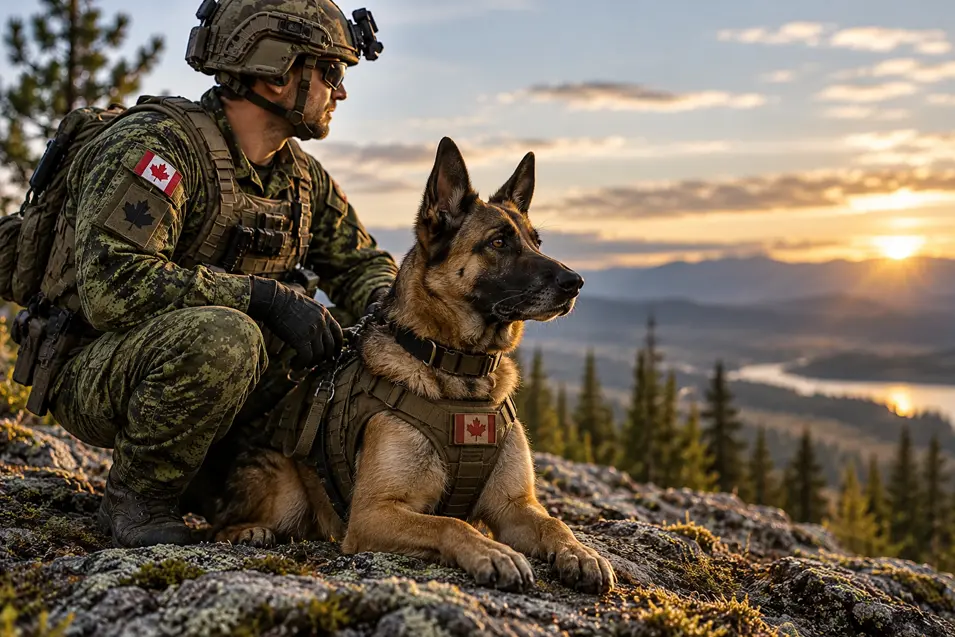
The role of military dogs continued long after the First World War.
During the Second World War, dogs served as guards, messengers, and search animals. Some were even trained to parachute alongside military personnel.
In more recent conflicts, military working dogs have helped detect explosives and other threats, protecting the lives of service members and civilians.
Their remarkable senses, training, and close relationships with their handlers have made them valuable partners in dangerous environments.
But their contribution has never been limited to the work they perform.
For many soldiers, a dog has also represented loyalty, companionship, and trust in situations where those qualities matter enormously.
Canada’s Memorial to Animals in War
In Ottawa’s Confederation Park stands a memorial honouring animals who served alongside people during wartime.
The Animals in War Dedication, unveiled in 2012, recognizes the contributions of dogs, horses, mules, and other animals.
A life-sized bronze statue of a medical service dog stands at the memorial, wearing a replica of the medical backpack used by dogs during the First World War.
Footprints of animals are embedded in the surrounding pavement, symbolizing the marks they left on military history.
It is a quiet but powerful reminder that the sacrifices of war extended beyond the soldiers themselves.
Remembering Them on November 11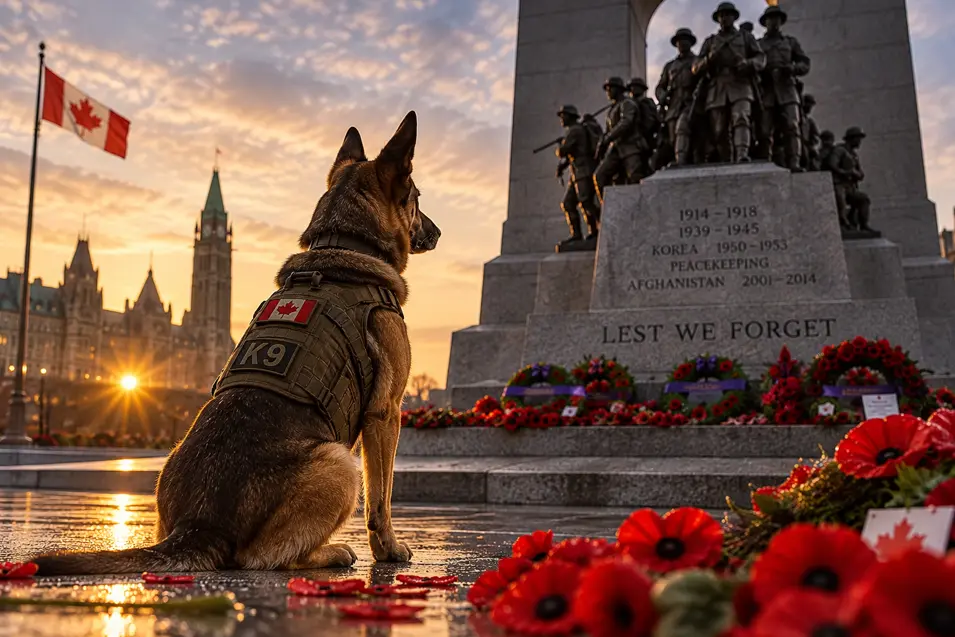
The red poppy has become Canada’s enduring symbol of remembrance, inspired in part by Lieutenant-Colonel John McCrae’s famous poem In Flanders Fields.
Every November 11, we honour those who served, those who returned home forever changed, and those who never came home at all.
We can also take a moment to remember the animals who shared their journeys.
The messenger dogs who ran through dangerous territory. The medical dogs who searched for the wounded. The loyal companions who brought comfort during some of history’s darkest days.
They did not understand the causes of war or the reasons they were sent into danger.
They simply did what they had been trained to do, often displaying extraordinary loyalty and courage.
This Remembrance Day, as we honour Canada’s veterans and fallen, let us also remember the faithful animals who served beside them.
Lest we forget.