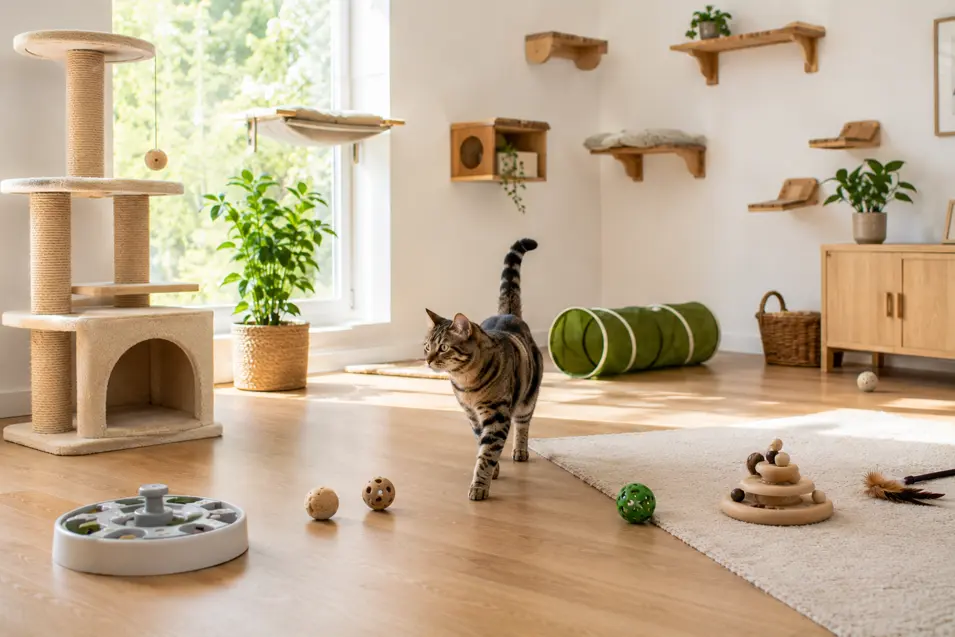
Many cat owners focus on what they feed their cats, but how food is provided can be just as important. In the wild, cats spend a significant portion of their day hunting, stalking, and working to obtain food. Indoor cats, however, often receive meals in a bowl that can be consumed in just a few minutes.
While convenient, this feeding method removes much of the mental and physical activity naturally associated with eating. Puzzle feeders help bridge that gap by encouraging cats to work for their food in a safe and rewarding way.
For many indoor cats, puzzle feeders provide valuable enrichment that supports both physical and mental well-being.
What Is a Puzzle Feeder?
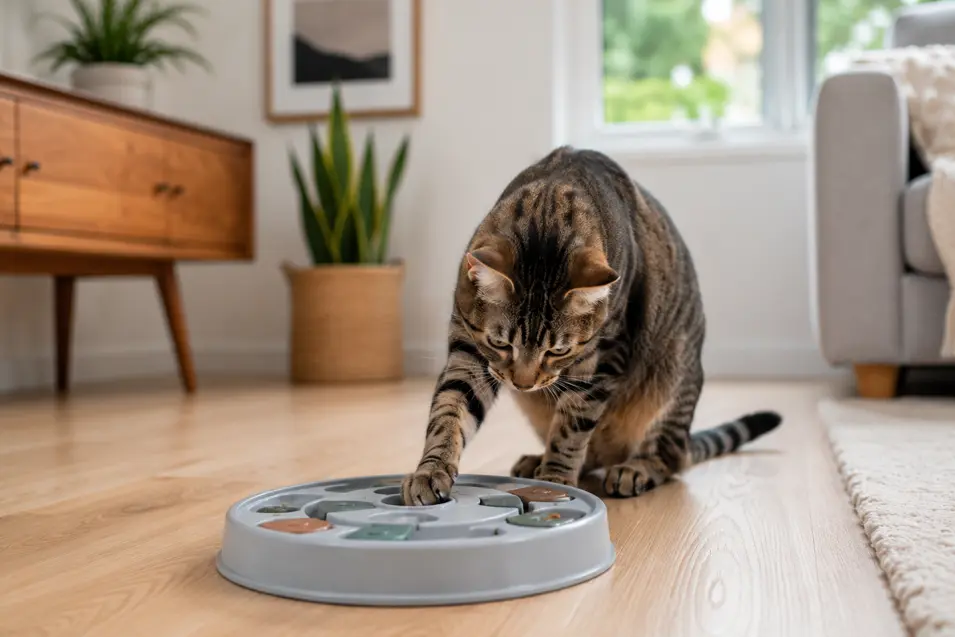
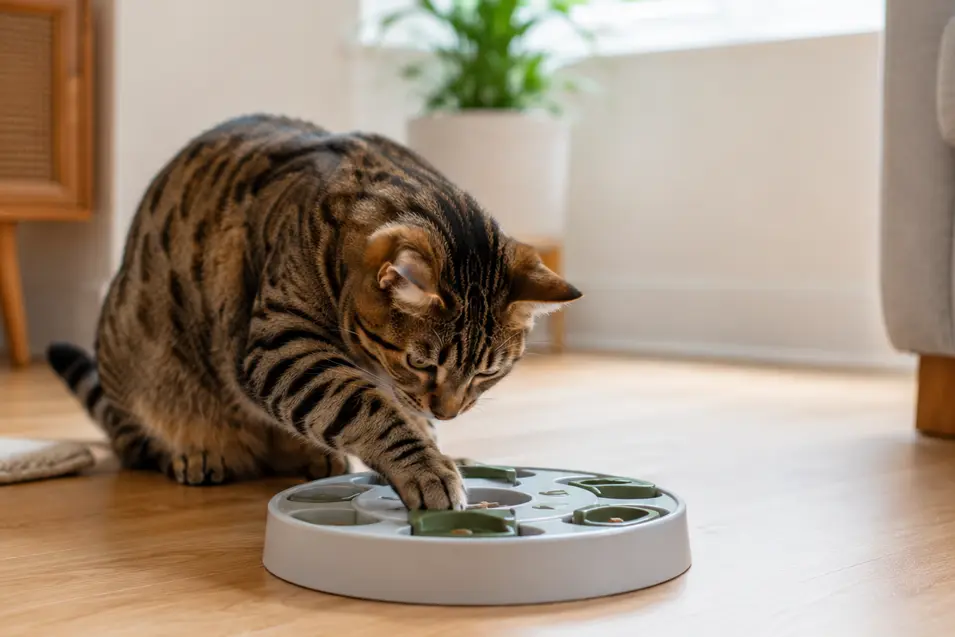
A puzzle feeder is a feeding device that requires a cat to solve a challenge in order to access food or treats.
Depending on the design, cats may need to:
- Bat objects with their paws
- Move sliders
- Rotate compartments
- Roll feeding toys
- Retrieve kibble from hidden spaces
The goal is to encourage problem-solving and mimic aspects of natural hunting behavior.
Why Cats Benefit from Food-Based Enrichment
In nature, obtaining food requires effort.
Wild and feral cats spend time:
- Searching for prey
- Stalking
- Pouncing
- Solving challenges
- Exploring territory
Indoor cats often miss these opportunities.
Food enrichment helps satisfy some of these natural instincts while making mealtime more engaging.
Benefit #1: Provides Mental Stimulation
Puzzle feeders challenge a cat’s brain.
To access food, cats must learn patterns, solve simple problems, and experiment with different approaches.
Mental stimulation can help:
- Reduce boredom
- Improve confidence
- Encourage curiosity
- Support cognitive health
Many cats quickly become enthusiastic puzzle-solvers.
Benefit #2: Slows Fast Eating
Some cats eat so quickly that they experience digestive discomfort or vomiting shortly after meals.
Puzzle feeders naturally slow the eating process by requiring cats to work for each piece of food.
This often results in:
- More controlled eating
- Better digestion
- Reduced gulping
For fast eaters, puzzle feeders can be especially helpful.
Benefit #3: Encourages Physical Activity
Many food puzzles require movement.
Cats may need to:
- Chase rolling feeders
- Reach into compartments
- Bat toys across the floor
- Move between feeding stations
These small activities contribute to daily exercise and increased calorie expenditure.
Benefit #4: Helps Prevent Boredom
Boredom is one of the most common challenges facing indoor cats.
Puzzle feeders provide an activity that combines:
- Exploration
- Problem-solving
- Reward
Because food is involved, many cats remain highly motivated to participate.
Benefit #5: Supports Weight Management
Overeating and inactivity often contribute to obesity in indoor cats.
Puzzle feeders can help by:
- Slowing food consumption
- Increasing activity
- Extending mealtime
- Encouraging movement throughout the day
When combined with portion control, food puzzles can support healthy weight management.
Types of Puzzle Feeders
Rolling Feeders
These toys dispense food as cats push or roll them.
Benefits include:
- Increased activity
- Easy introduction to food puzzles
- Suitable for beginners
Stationary Puzzle Feeders
These feeders contain compartments, tunnels, or obstacles that cats must navigate.
They often provide greater mental challenges.
DIY Puzzle Feeders
Simple food puzzles can be created using household items such as:
- Cardboard boxes
- Toilet paper rolls
- Egg cartons
DIY options are inexpensive and easy to customize.
Advanced Puzzle Systems
Some commercial feeders feature multiple difficulty levels and adjustable challenges.
These are ideal for experienced puzzle-solving cats.
Introducing a Puzzle Feeder
Not all cats immediately understand food puzzles.
Start slowly.
Helpful Tips
- Begin with simple puzzles
- Use favorite treats
- Demonstrate how the feeder works
- Gradually increase difficulty
- Be patient
Most cats learn quickly once they associate the puzzle with food rewards.
Common Mistakes to Avoid
Making It Too Difficult
A puzzle that is too challenging can lead to frustration.
Start easy and build confidence.
Changing Everything at Once
Introduce puzzles gradually rather than replacing all food bowls immediately.
Ignoring Your Cat’s Preferences
Some cats prefer paw-based puzzles, while others enjoy rolling feeders.
Experiment to discover what works best.
Combining Puzzle Feeders with Other Enrichment
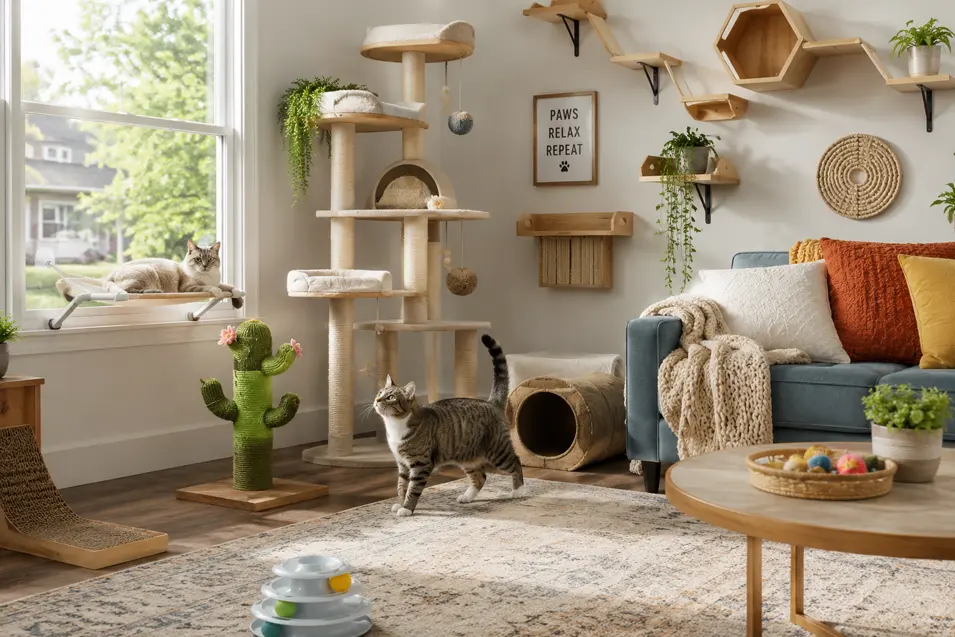
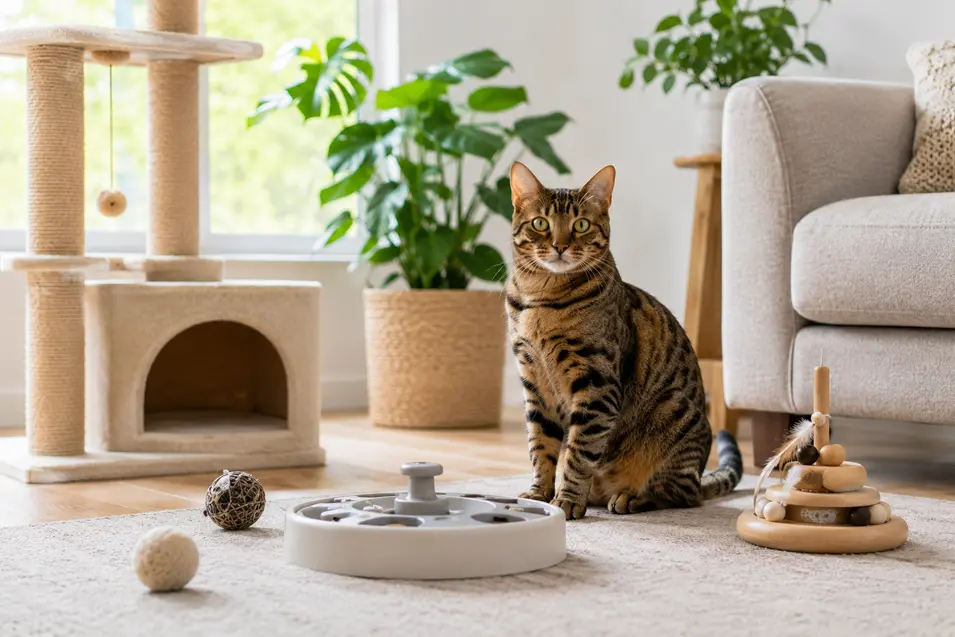
Puzzle feeders work best as part of a larger enrichment plan.
Other valuable enrichment activities include:
- Interactive play
- Cat trees
- Window perches
- Catios
- Scratching posts
- Cat-safe plants
A variety of enrichment experiences helps keep indoor cats engaged and fulfilled.
Are Puzzle Feeders Worth It?
For many cats, the answer is yes.
Puzzle feeders transform mealtime from a passive activity into an engaging experience that encourages problem-solving, movement, and natural behaviors. They can help reduce boredom, slow eating, support healthy weight management, and improve overall quality of life.
Whether you purchase a commercial feeder or create a simple DIY version at home, food puzzles are one of the easiest ways to enrich your cat’s daily routine.
Related Reading
Looking for more ways to enrich your cat’s environment?
Explore these helpful guides:
- Indoor Cat Enrichment: Keeping Indoor Cats Happy, Healthy, and Active
- Signs Your Indoor Cat Is Bored (and How to Help)
- Catio Ideas: Creating a Safe Outdoor Space for Indoor Cats
- How to Build a DIY Catio: Step-by-Step Guide for Cat Owners
These resources can help you create a more stimulating, active, and rewarding environment for your indoor cat.