For many pet owners, few things are more frightening than realizing a beloved dog or cat has escaped from the house. While front doors and backyard gates often receive the most attention, garage doors are frequently overlooked as potential escape routes.
The garage serves as a transition space between the home and the outdoors, making it one of the most common locations for accidental pet escapes. Whether it’s a cat darting outside when the garage door opens or a dog slipping past while a vehicle is being unloaded, these incidents can happen in seconds.
Fortunately, most garage-related escapes are preventable. By understanding why pets are drawn to open garage doors and implementing a few simple safety measures, homeowners can significantly reduce the risk of losing a pet.
Why Garage Doors Are a Common Escape Route
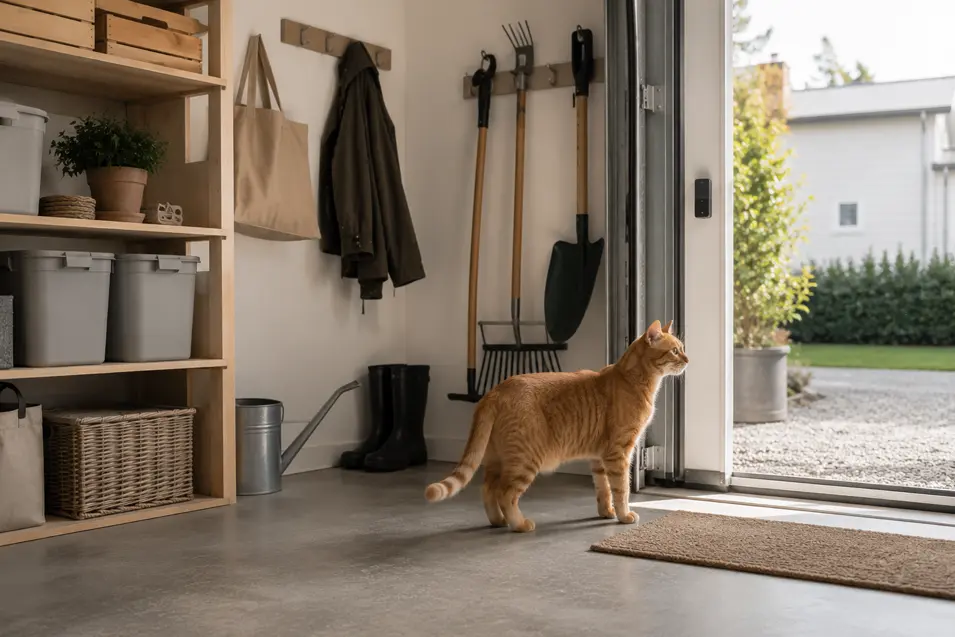
Garage doors create unique challenges because they provide a large opening directly to the outside world.
Unlike standard doors, garage doors often remain open for extended periods while:
- Vehicles are parked
- Groceries are unloaded
- Yard work is completed
- Household projects are underway
- Children play nearby
During these moments, pets may see an opportunity to explore.
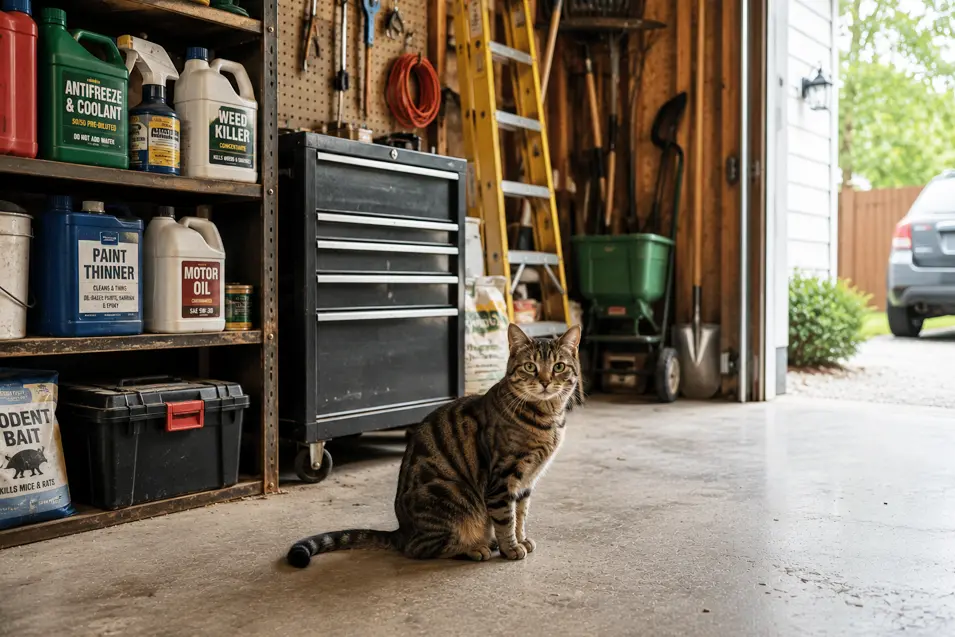
Dogs may become excited by activity outside, while cats often view an open garage door as an invitation to investigate unfamiliar sights, sounds, and smells.
Because the opening is so large, pets can slip through quickly and often without being noticed.
Understanding Why Pets Escape
Most pets don’t intentionally run away.
Instead, they are usually responding to natural instincts and curiosity.
Common reasons include:
- Chasing wildlife
- Exploring new environments
- Following scents
- Seeking stimulation
- Responding to loud noises
- Looking for family members
Cats are especially prone to exploring unfamiliar territory, while dogs may bolt after squirrels, rabbits, or other moving animals.
Understanding these motivations can help owners anticipate and prevent escape opportunities.
Keep the Garage Door Closed Whenever Possible
The simplest and most effective prevention strategy is also the easiest.
Keep the garage door closed whenever it isn’t actively being used.
While this may seem obvious, many homeowners leave garage doors open for convenience while working outdoors or completing household tasks.
Unfortunately, an unattended open garage creates an ideal escape opportunity.
Developing the habit of closing the garage door immediately after entering or exiting can dramatically reduce risk.
Create a Pet-Free Buffer Zone
One of the most effective ways to prevent escapes is by creating separation between pets and the garage door.
This can be accomplished using:
- Baby gates
- Interior doors
- Pet barriers
- Exercise pens
These barriers create a secondary line of defense if the garage door is opened unexpectedly.
For homes with indoor cats, a simple gate or closed interior door may prevent access to the garage entirely when supervision isn’t possible.
Train Dogs to Wait
Training can be an extremely valuable tool for preventing escapes.
Teaching dogs commands such as:
- Wait
- Stay
- Place
- Back
can help create safer interactions around garage doors.
Practice rewarding your dog for remaining calm and stationary while the garage door opens and closes.
Consistent training can significantly reduce the likelihood of a dog rushing toward an open exit.
Be Extra Careful During Busy Times
Many escapes occur during periods of distraction.
Examples include:
- Bringing groceries inside
- Loading vehicles
- Moving furniture
- Hosting guests
- Completing home projects
During these activities, attention is often focused elsewhere, making it easier for pets to slip outside unnoticed.
If you anticipate frequent garage door use, temporarily confine pets to another room or secure area until the activity is complete.
Install a Self-Closing Interior Door
If your home connects directly to the garage, a self-closing interior door can provide an additional layer of protection.
This feature helps ensure that the door between the garage and living space doesn’t remain accidentally open.
Even if a pet enters the garage, there is still a barrier preventing immediate access to the outdoors.
For households with particularly adventurous pets, this simple upgrade can provide valuable peace of mind.
Use Visual Reminders
Sometimes the greatest risk comes from human forgetfulness.
A reminder near the garage door can encourage family members to check for pets before opening it.
Simple reminders might include:
- Door decals
- Notes near light switches
- Family safety checklists
These prompts can be especially helpful in households with children.
Monitor Cats Carefully
Cats present unique challenges because they are often quieter and more agile than dogs.
Many cats can slip through a partially open door before owners even realize they’re nearby.
To reduce risk:
- Check the garage before opening the door.
- Know your cat’s favorite hiding places.
- Avoid leaving garage doors open unnecessarily.
- Consider restricting garage access entirely.
Cats that spend most of their lives indoors may be especially vulnerable if they escape into unfamiliar surroundings.
Consider Technology-Based Solutions
Modern technology can help improve pet safety.
Some homeowners use:
- Garage door sensors
- Security cameras
- Smart garage door systems
- Motion detection devices
These tools can provide alerts when doors remain open or allow homeowners to monitor garage activity remotely.
While technology should not replace supervision, it can provide an additional layer of awareness.
Ensure Proper Identification
Even with the best prevention efforts, accidents can happen.
Every pet should have:
- Identification tags
- Current contact information
- A registered microchip
Microchips dramatically increase the likelihood of reunification if a lost pet is found.
Keeping registration information current is just as important as having the chip itself.
Create a Safe Garage Environment
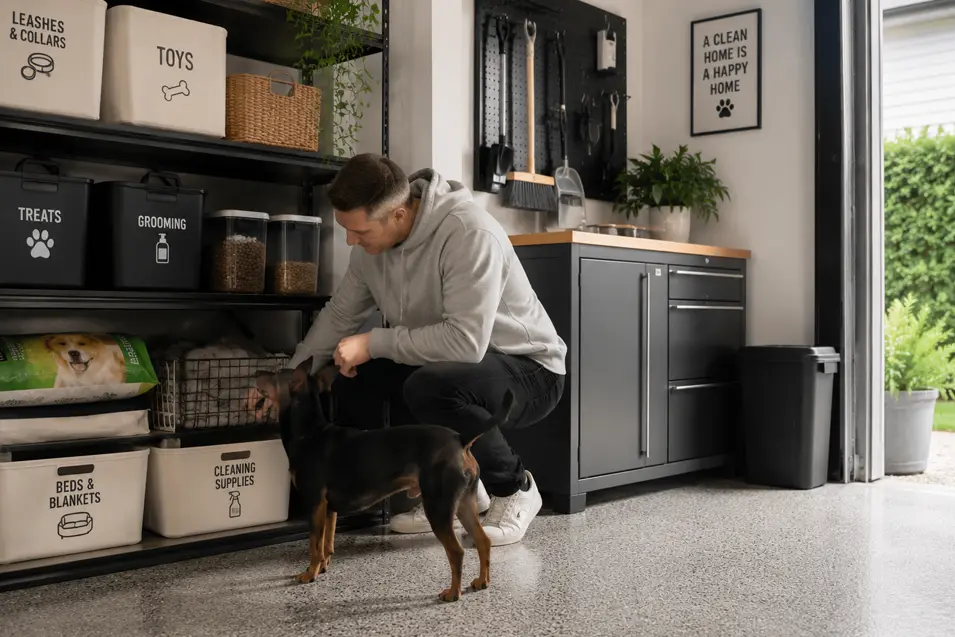
A well-organized garage supports overall pet safety.
Reducing clutter makes it easier to:
- Spot pets quickly
- Monitor movement
- Identify hazards
- Prevent hiding opportunities
Good organization also improves visibility around doors and access points, making accidental escapes less likely.
Teach Family Members Escape Prevention
Consistency is important.
Everyone in the household should understand:
- The importance of keeping garage doors closed
- How pets typically escape
- Safe entry and exit procedures
- Emergency plans if a pet gets outside
When all family members follow the same safety practices, escape prevention becomes much more effective.
What to Do If a Pet Escapes
If your pet slips through the garage door:
- Remain calm.
- Avoid chasing the pet.
- Call them using a familiar voice.
- Use treats or favorite toys.
- Alert neighbors if necessary.
- Check nearby hiding spots immediately.
Panic often causes pets to run farther, while calm behavior increases the chances of a quick recovery.
The Bottom Line
Garage doors are one of the most overlooked escape routes in pet-friendly homes. Their large openings, frequent use, and connection to outdoor spaces create opportunities for curious dogs and cats to slip outside before owners realize what has happened.
Fortunately, simple precautions such as keeping garage doors closed, using barriers, practicing training, and maintaining awareness can dramatically reduce the risk. By treating the garage as an important part of your home’s pet safety plan, you can help ensure that your furry family members remain secure, protected, and right where they belong.