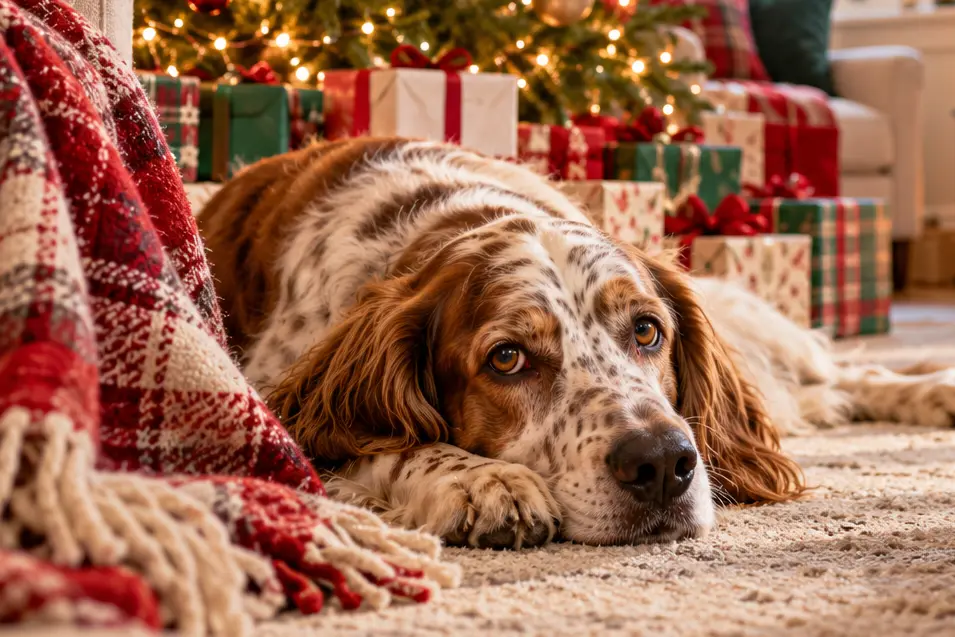
Christmas is one of the most exciting times of the year. The decorations come out, the house fills with wonderful smells, family and friends arrive, and suddenly everything feels a little more magical.
For our dogs, however, Christmas can be a very different experience.
One day, the living room looks perfectly normal. The next, there’s an enormous tree standing in the corner, strange objects hanging from its branches, wrapped presents scattered across the floor, and visitors coming and going at all hours.
Then there’s the food.
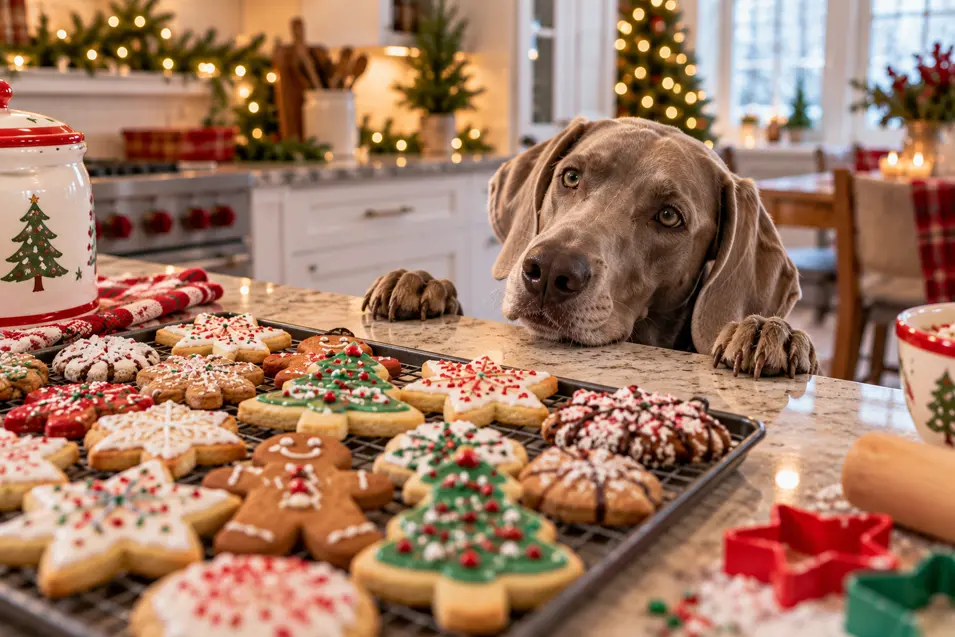
Turkey, ham, cookies, chocolates, and Christmas desserts seem to appear everywhere. For a dog with a good nose and an adventurous appetite, the holidays can be one enormous temptation.
Preparing your dog for Christmas means more than keeping dangerous foods out of reach. It’s about creating a safe, comfortable, and enjoyable holiday experience for every member of the family, including those with four legs.
Whether you’re celebrating your puppy’s first Christmas or spending another wonderful holiday with an older dog, this complete guide will help you plan ahead.
1. Make Your Christmas Tree Safe for Dogs
For many families, decorating the Christmas tree marks the official beginning of the holiday season.
For dogs, it’s a fascinating new addition to the living room.
There’s an unfamiliar smell, branches to investigate, decorations dangling at nose level, and perhaps a collection of presents underneath.
Some dogs ignore the tree entirely. Others seem determined to inspect every inch of it.
Are Christmas Trees Poisonous to Dogs?
Most commonly used Christmas trees, including fir, pine, and spruce, are not considered highly toxic to dogs. However, their needles and natural oils can irritate the mouth and digestive system.
Swallowing sharp needles can also cause injury or digestive problems.
Artificial trees eliminate some concerns associated with real trees, but they introduce others, including plastic needles, detachable branches, and decorations that can be swallowed.
Whichever type you choose, make sure the tree is stable and securely positioned.
A large dog brushing against a poorly secured tree can send the entire thing crashing to the floor.
For more information, read Are Christmas Trees Poisonous to Cats and Dogs?.
Keep Christmas Tree Water Covered
If you have a real Christmas tree, don’t forget about the water in the stand.
Dogs may be tempted to drink from it, especially if their own water bowl is in another room.
Tree water can collect dirt, needles, bacteria, and other contaminants. Preservatives or additives placed in the water may introduce additional risks.
The safest approach is to use plain water, keep the stand covered, and make sure your dog always has access to fresh drinking water.
Learn more in Christmas Tree Water: Is It Safe for Dogs?.
2. Choose Christmas Decorations Carefully
Christmas decorations are beautiful, but some of the most traditional holiday decorations can be surprisingly dangerous for pets.
A curious dog doesn’t necessarily understand the difference between a shiny ornament and a toy.
The Dangers of Christmas Tinsel
Tinsel is particularly tempting because it moves, sparkles, and hangs from tree branches.
Unfortunately, swallowing strands of tinsel can cause serious digestive problems, including intestinal obstruction or injury.
If your dog swallows tinsel, contact your veterinarian promptly. Never pull visible strands from your dog’s mouth or rectum.
Find out more in The Dangers of Christmas Tinsel for Dogs.
Christmas Ornaments That Can Harm Dogs
Glass ornaments can shatter into sharp pieces, while small decorations may become choking hazards.
Salt-dough ornaments are another concern. Their high salt content can cause serious poisoning if consumed.
Edible ornaments made from chocolate, candy, or cookies can also encourage dogs to investigate the Christmas tree.
Try placing fragile decorations higher up and choosing sturdy, non-edible ornaments for lower branches.
For a closer look at specific hazards, see Christmas Ornaments That Are Dangerous for Dogs.
Keep Christmas Lights and Electrical Cords Secure
Twinkling lights make Christmas feel magical, but electrical cords can attract puppies and dogs that enjoy chewing.
Chewing a plugged-in cord can cause electrical burns, shocks, and potentially life-threatening injuries.
Secure loose cables, inspect lights for damage, and prevent access to exposed wires.
Battery-powered decorations also require care because swallowed batteries can cause severe injuries.
Read Are Christmas Lights Dangerous for Dogs? for more safety advice.
3. Watch Out for Christmas Plants
Christmas greenery adds colour and warmth to a home, but not every festive plant is suitable for households with pets.
Poinsettias are often described as extremely poisonous, although their actual toxicity is generally much lower than many people believe.
They can still cause irritation, drooling, vomiting, or diarrhea if chewed.
Mistletoe and certain varieties of holly may cause more serious problems, depending on the species and amount consumed.
Keep holiday plants out of reach, clean up fallen leaves and berries, and identify the exact plant if your dog eats any part of it.
For more information, visit Are Poinsettias Harmful to Dogs?.
4. Know Which Christmas Foods Are Dangerous for Dogs
Christmas dinner is one of the highlights of the season.
Unfortunately, many traditional holiday foods are unsuitable for dogs, and some are genuinely toxic.
It’s easy to imagine that a little food from the dinner table is harmless, but the ingredients and preparation methods matter enormously.
Chocolate and Christmas Sweets
Chocolate contains theobromine and caffeine, which are toxic to dogs.
Dark chocolate and baking chocolate are particularly dangerous.
Keep chocolate Santas, truffles, boxed chocolates, and chocolate desserts away from pets.
If your dog gets into the chocolate supply, don’t wait for symptoms to appear.
Our article Dog Ate Chocolate? What You Need to Know explains the risks and what to do next.
Christmas Ham and Turkey
Plain, fully cooked, boneless turkey meat can be an occasional treat for many healthy dogs.
However, turkey skin, fatty trimmings, seasoned meat, and cooked bones should be avoided.
Cooked bones can splinter or cause choking and intestinal injuries.
Christmas ham presents different concerns. It’s usually high in salt and may contain fatty portions, sugary glazes, and seasonings.
For more detail, read:
Christmas Cakes, Cookies, and Desserts
Traditional Christmas desserts often contain ingredients that dogs shouldn’t eat.
Raisins and currants, commonly found in fruitcake and Christmas pudding, can cause sudden kidney injury.
Chocolate, macadamia nuts, and the sugar substitute xylitol are additional concerns in holiday baking.
Even treats without toxic ingredients can be too rich, sugary, or fatty for dogs.
If you’re planning a holiday baking session, these guides explain what to avoid:
- Can Dogs Eat Christmas Cookies?
- Can Dogs Have Shortbread Cookies?
- Is Gingerbread Safe for Pets?
- Can Dogs Have Fruit Cake?
- Can Dogs Have Candy Canes?
Candy canes deserve particular attention because sugar-free varieties may contain xylitol, which can be life-threatening to dogs.
A Complete Christmas Food Safety Checklist
Other foods to watch include onions, garlic, stuffing, gravy, alcohol, raw yeast dough, and macadamia nuts.
Rich leftovers may also trigger pancreatitis in susceptible dogs.
For a broader overview, bookmark Christmas Foods Dogs Should Never Eat.
It’s a useful resource to share with family members before everyone gathers around the Christmas dinner table.
5. Prepare Your Dog for Christmas Visitors
Christmas often means a house full of people.
Relatives arrive, children run around, conversations get louder, and familiar routines disappear.
Some dogs absolutely love the attention.
Others find the noise and activity overwhelming.
Even friendly, sociable dogs can become tired or stressed after several hours of entertaining.
Give Your Dog a Quiet Place to Retreat
Before guests arrive, prepare a comfortable area where your dog can relax.
This might be a bedroom, a quiet corner of the house, or a familiar crate if your dog already enjoys using one.
Include their bed, fresh water, and a favourite toy.
Make sure visitors understand that this is your dog’s private space.
Children should be taught not to disturb a dog that is sleeping, eating, or resting.
Set Ground Rules for Guests
Let visitors know whether your dog is allowed on furniture, how they should greet your dog, and which foods must never be shared.
Keep doors and gates secure, particularly when guests are arriving or leaving.
An excited or frightened dog can slip through an open door surprisingly quickly.
For more ideas, see Preparing Your Dog for Christmas Visitors and Crowds.
6. Help Your Dog Stay Calm During Christmas
Dogs thrive on familiarity.
They learn when meals are served, when walks happen, and when the household normally settles down for the evening.
Christmas can disrupt all of those routines.
There may be late nights, unfamiliar visitors, loud music, children playing, and constant activity.
For some dogs, the excitement is enjoyable. For others, it becomes stressful.
Watch for signs such as pacing, excessive panting, trembling, hiding, lip licking, or unusually clingy behaviour.
Try to maintain regular feeding, exercise, and sleeping schedules whenever possible.
Short walks, quiet breaks, and familiar activities can help your dog decompress.
Never force a nervous dog to participate in Christmas activities.
Our guide to How to Keep Your Dog Calm During Christmas offers additional ways to make the holidays more comfortable.
7. Don’t Assume Every Dog Wants to Meet Santa Claus
Taking your dog to meet Santa can produce a wonderful Christmas photograph.
But not every dog enjoys the experience.
Imagine being approached by a stranger wearing a large red suit, a white beard, and an unfamiliar hat, possibly in a noisy shopping centre filled with other people and animals.
Some dogs will happily investigate Santa.
Others may become frightened.
If your dog seems uncomfortable, don’t force them to sit beside Santa or pose for a photograph.
A relaxed photo at home beside the Christmas tree may be a much happier experience.
Find out why these reactions happen in Why Some Dogs Are Afraid of Santa Claus.
8. Make Christmas Stockings Special for Your Dog
Christmas stockings aren’t just for children.
A stocking filled with carefully selected treats and toys can be a fun way to include your dog in the celebration.
Consider adding a favourite chew, a durable toy, a puzzle feeder, or a few dog-safe treats.
Choose items appropriate for your dog’s size, chewing habits, and dietary needs.
Avoid small toys that can be swallowed, decorations that may come loose, and human sweets.
And remember that the stocking itself, along with ribbons and packaging, shouldn’t become something your dog chews or eats.
Looking for inspiration? Visit Christmas Stockings for Dogs: What to Put Inside.
9. Enjoy Christmas Traditions With Your Dog
Keeping your dog safe doesn’t mean excluding them from the fun.
In fact, some of the nicest Christmas memories involve simple activities that everyone can enjoy together.
You might take your dog along when choosing a Christmas tree at a dog-friendly location, enjoy a winter walk to see neighbourhood Christmas lights, or spend a quiet evening watching holiday movies.
Other ideas include taking family photographs, making dog-friendly Christmas treats, visiting a festive outdoor market that welcomes dogs, or wrapping a special toy for Christmas morning.
The important thing is choosing activities your dog genuinely enjoys.
A nervous dog doesn’t need to attend a crowded holiday parade, just as an older dog doesn’t need an exhausting winter adventure.
Sometimes the best Christmas tradition is simply spending a quiet evening together.
Explore more ideas in Christmas Traditions You Can Share With Your Dog.
10. Plan Ahead If You’re Travelling With Your Dog
Christmas is one of the busiest travel periods of the year.
Whether you’re driving across town for dinner or heading away for several days, travelling with a dog requires a little extra planning.
Before leaving home, make sure your dog’s identification information is current.
Pack their regular food, medication, water, bowls, leash, bedding, and any other essentials.
If you’re driving, use an appropriate pet restraint or secured carrier.
Plan for bathroom breaks, exercise, and opportunities to drink water.
Avoid leaving your dog unattended in a vehicle, particularly during extreme temperatures.
If you’re staying with family or friends, ask about other pets, sleeping arrangements, and any areas of the home that might be unsafe.
For a more detailed checklist, read How to Travel With Your Dog at Christmas.
11. Think Carefully Before Giving a Puppy for Christmas
Few Christmas surprises seem more heartwarming than a puppy appearing beneath the tree.
But bringing a puppy into someone’s life is a major responsibility, not simply a festive gesture.
Puppies need veterinary care, training, socialization, exercise, and attention long after Christmas is over.
The holiday season can also be a challenging time to introduce a young dog to a new home.
There may be visitors, travel plans, disrupted schedules, and countless distractions.
A puppy can make a wonderful addition to a family when everyone is prepared and committed.
However, giving a puppy as an unexpected gift is rarely a good idea.
Before making that decision, read Should I Give a Puppy as a Christmas Gift?.
12. Prepare for Christmas Morning
Christmas morning brings its own collection of potential hazards.
There’s wrapping paper everywhere, ribbons scattered across the floor, boxes being opened, and new toys appearing throughout the house.
For a curious dog, all of this can be irresistible.
Keep an eye on ribbons, string, plastic packaging, and small toy components.
Swallowed ribbons and string can cause serious intestinal injuries, while batteries from electronic toys can be extremely dangerous if chewed or swallowed.
Collect discarded wrapping materials as presents are opened rather than allowing everything to pile up.
If your dog becomes overly excited, give them a short break in a quiet room.
And if you’re giving your dog a Christmas present, supervise them while they investigate their new toy.
13. Know What to Do in a Christmas Pet Emergency
Even with careful planning, accidents can happen.
A dog might steal a chocolate from a gift box, swallow part of an ornament, or discover a plate of unattended leftovers.
If you suspect your dog has eaten something dangerous, identify the item and estimate how much was consumed.
Keep packaging or ingredient information if available.
Contact your veterinarian or an emergency veterinary clinic promptly.
For potentially toxic substances, you can also contact the ASPCA Animal Poison Control Center at 888-426-4435 or Pet Poison Helpline at 855-764-7661. Fees may apply.
Do not induce vomiting or give home remedies unless a veterinary professional instructs you to do so.
It’s also worth checking the location and holiday hours of your nearest emergency veterinary clinic before Christmas Day.
Having that information ready can save valuable time.
Your Dog’s Christmas Safety Checklist
Before the celebrations begin, take a few minutes to make sure your home is ready.
Secure the Christmas tree so it cannot tip over.
Cover the Christmas tree water stand.
Keep tinsel, fragile ornaments, and electrical cords out of reach.
Move potentially harmful Christmas plants away from pets.
Store chocolate, raisins, candy, and Christmas desserts securely.
Remind guests not to feed your dog table scraps.
Prepare a quiet space where your dog can rest.
Maintain regular feeding, walking, and sleeping routines.
Choose safe Christmas toys and treats.
Secure ribbons, wrapping paper, batteries, and packaging.
Update your dog’s identification and travel supplies if necessary.
Keep your veterinarian’s emergency contact information handy.
Making Christmas Wonderful for Your Dog
Christmas doesn’t have to be perfect to be memorable.
The turkey might take longer than expected. Someone may forget to buy batteries. The Christmas lights might stop working, and the living room could look like a wrapping paper factory exploded by lunchtime.
Your dog probably won’t care about any of that.
They’ll be interested in the smells coming from the kitchen, the familiar people gathering around, the possibility of an extra treat, and the excitement of having everyone home.
What matters most is making sure they can enjoy those moments safely.
By planning ahead, keeping dangerous foods and decorations out of reach, respecting your dog’s need for rest, and including them in suitable family traditions, you can create a Christmas that’s enjoyable for everyone.
After all, Christmas is about spending time with the ones we love. And for many of us, that includes a dog curled up beside the tree, perfectly content just to be part of the family.