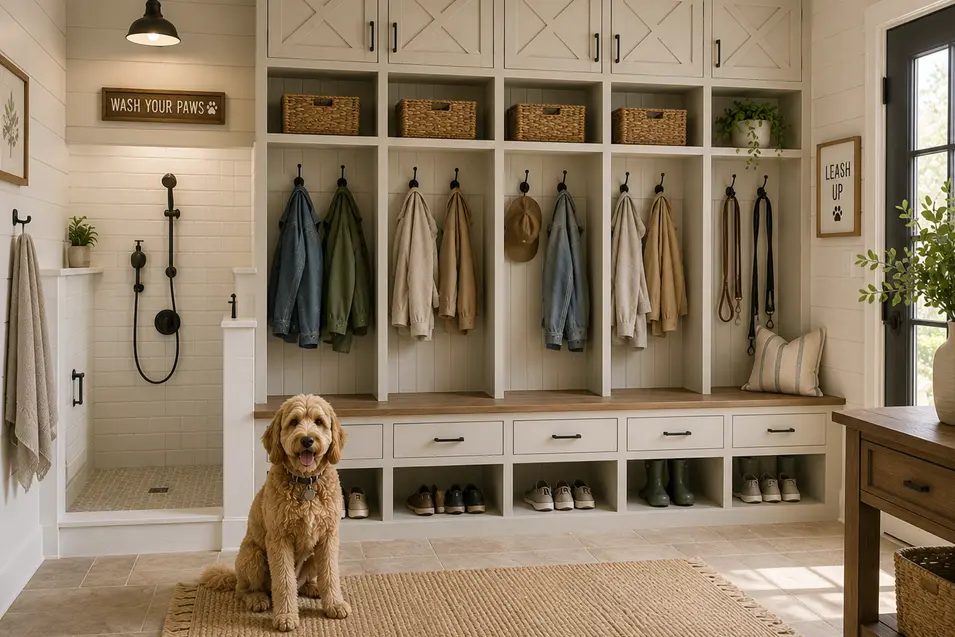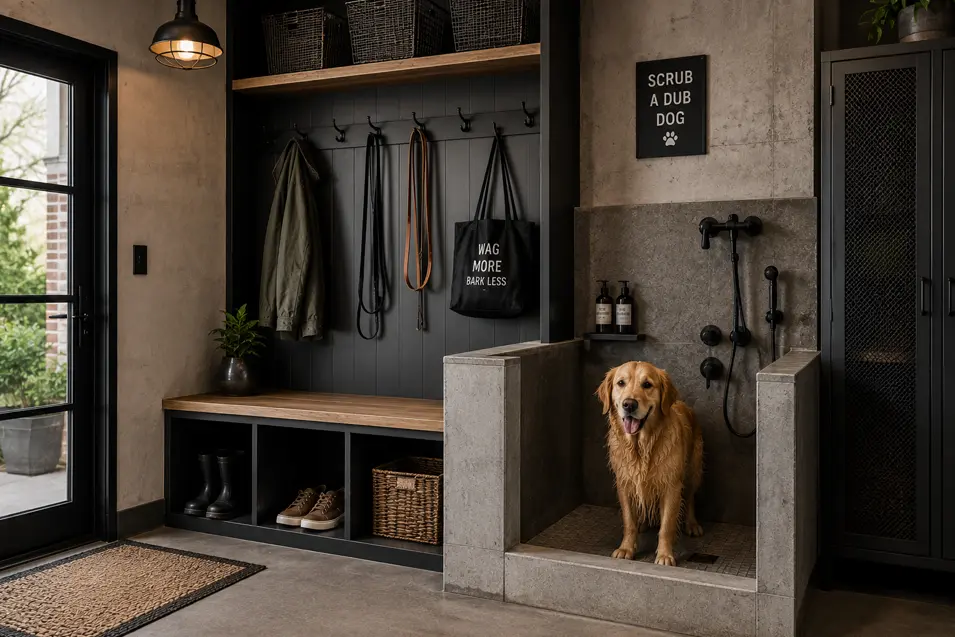
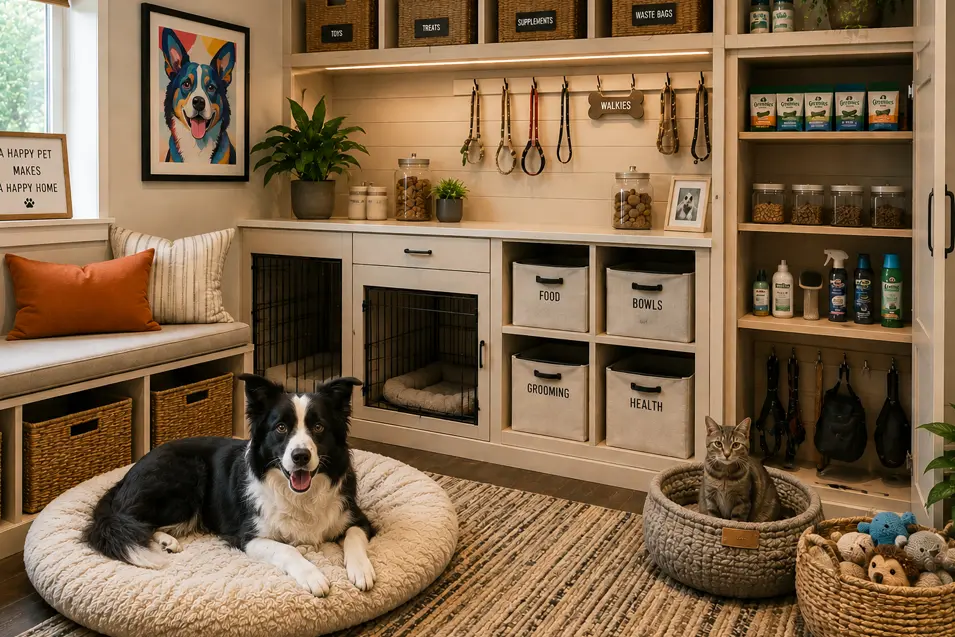
Creating a dedicated pet room is one of the best ways to keep your home organized while providing cats and dogs with a comfortable space of their own. However, even the most thoughtfully designed pet room can quickly become cluttered without adequate storage.
Pet ownership comes with a surprising amount of equipment. Food bags, treats, toys, leashes, grooming supplies, medications, bedding, seasonal gear, and cleaning products all need a place to live. Without proper organization, these items can quickly overwhelm a room and make daily routines more difficult.
Fortunately, smart storage solutions can help maximize space, reduce clutter, and create a more functional environment for both pets and people. Whether you’re working with a dedicated pet room, a spare bedroom, a mudroom, or a small corner of your home, these storage ideas can help keep everything organized and easily accessible.
Why Pet Room Storage Matters
Good storage does more than improve appearance.
An organized pet room can help:
- Simplify daily routines
- Reduce clutter
- Improve safety
- Protect supplies from damage
- Make cleaning easier
- Create a calmer environment
When everything has a designated place, feeding, grooming, walking, and playtime become much more efficient.
Organization also helps prevent misplaced medications, forgotten supplies, and unnecessary duplicate purchases.
Use Cabinets for Hidden Storage
Cabinets are one of the most versatile storage options available.
They help keep supplies organized while maintaining a clean appearance.
Cabinets are ideal for storing:
- Pet food
- Treats
- Medications
- Grooming products
- Cleaning supplies
- Seasonal accessories
Closed storage also prevents curious pets from accessing items that may be unsafe if chewed or consumed.
For households with dogs, secure cabinet doors can help prevent unauthorized snack raids.
Install Open Shelving
Open shelves provide quick access to frequently used items.
Popular uses include:
- Toy storage
- Decorative baskets
- Towels
- Grooming supplies
- Display items
Shelves make it easy to see what supplies you have while maximizing vertical space.
Combining open shelving with decorative storage containers can create a practical yet attractive design.
Store Pet Food in Airtight Containers
Large food bags can be difficult to manage and often create clutter.
Airtight containers help:
- Preserve freshness
- Prevent pests
- Reduce odors
- Improve organization
Look for containers that are:
- Easy to clean
- Clearly labeled
- Durable
- Sized appropriately for your pet’s food supply
Many pet owners keep food containers inside cabinets for an even cleaner appearance.
Create a Toy Organization System
Pet toys tend to accumulate quickly.
Without a storage plan, they often end up scattered throughout the room.
Toy storage options include:
- Baskets
- Storage bins
- Decorative crates
- Open cubbies
- Storage benches
Some owners organize toys by category, such as:
- Chew toys
- Puzzle toys
- Fetch toys
- Cat toys
Rotating toys periodically can reduce clutter while keeping pets interested.
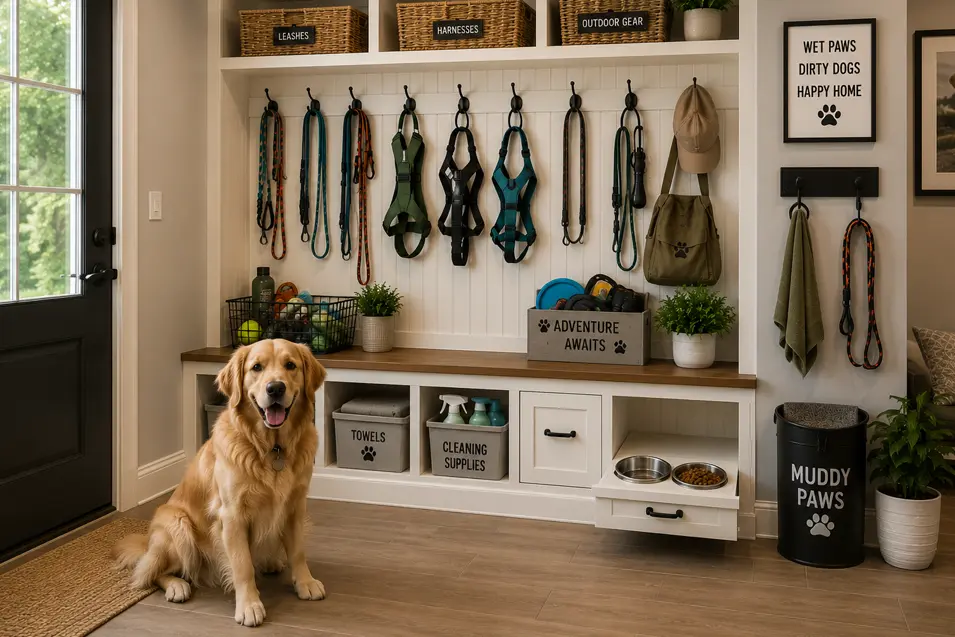
Add Wall Hooks for Everyday Essentials
Wall hooks are an inexpensive way to maximize storage space.
Useful items to hang include:
- Leashes
- Harnesses
- Collars
- Waste bag dispensers
- Pet jackets
- Towels
Position hooks near entrances or feeding areas to simplify daily routines.
For multi-pet households, assigning specific hooks to each pet can improve organization.
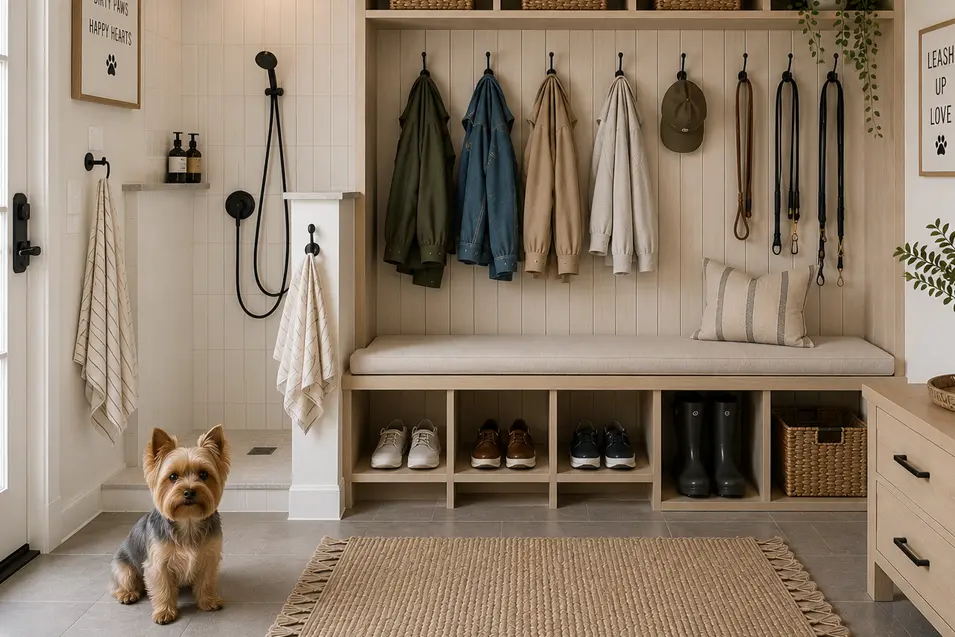
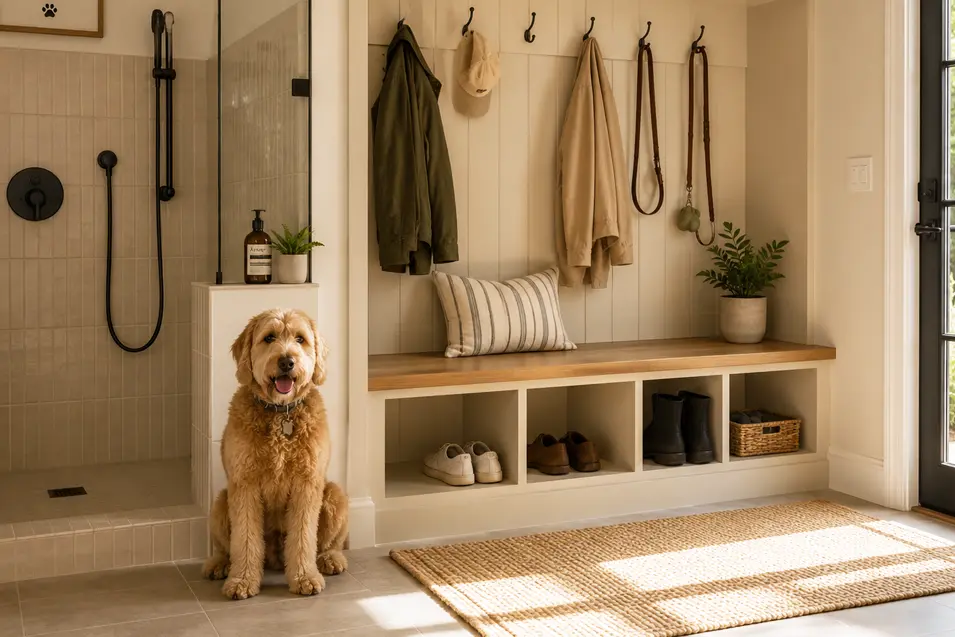
Incorporate Storage Benches
Storage benches combine seating and organization in a single piece of furniture.
They work particularly well in:
- Pet rooms
- Mudrooms
- Entryways
- Laundry rooms
Storage benches can hold:
- Toys
- Blankets
- Seasonal gear
- Grooming supplies
They also provide a convenient place to sit while putting on harnesses or cleaning paws.
Use Decorative Baskets
Decorative baskets offer flexible storage while complementing home décor.
Great uses include:
- Toy storage
- Blanket storage
- Small accessory organization
- Temporary item collection
Choose baskets that are:
- Durable
- Easy to clean
- Large enough for intended contents
Woven baskets, fabric bins, and wire baskets all work well depending on your design style.
Create a Grooming Supply Station
Grooming products can easily become scattered throughout the house.
A dedicated grooming storage area keeps everything together.
Store items such as:
- Brushes
- Combs
- Nail clippers
- Shampoos
- Towels
- Pet wipes
Drawer organizers and labeled containers can help maintain order.
Having grooming supplies readily available encourages regular maintenance.
Design a Medication and Health Supply Area
Pet medications and health-related supplies deserve special attention.
Consider storing:
- Prescription medications
- Flea and tick preventatives
- Supplements
- First-aid supplies
- Veterinary records
Store medications securely and away from pets.
Clearly labeled containers can help prevent confusion and ensure important items remain accessible when needed.
Utilize Vertical Space
Many pet rooms have unused wall space that can be converted into valuable storage.
Vertical storage solutions include:
- Floating shelves
- Wall cabinets
- Pegboards
- Hanging organizers
These options help maximize storage without consuming valuable floor space.
This is especially useful in smaller pet rooms.
Organize Seasonal Pet Gear
Pets often require different equipment throughout the year.
Seasonal items may include:
- Winter coats
- Booties
- Cooling vests
- Travel gear
- Holiday accessories
Designating a specific storage area for seasonal supplies helps reduce clutter and makes items easier to locate when needed.
Storage bins labeled by season can simplify organization.
Add a Cleaning Supply Center
Pet rooms inevitably require regular cleaning.
Keeping supplies nearby makes maintenance easier.
Consider storing:
- Pet-safe cleaners
- Paper towels
- Vacuum attachments
- Lint rollers
- Odor-control products
A dedicated cleaning station encourages quick cleanup and helps maintain a healthier environment.
Create Separate Zones for Different Categories
One of the best organizational strategies is grouping similar items together.
Example zones may include:
Feeding Zone
- Food
- Treats
- Bowls
Walking Zone
- Leashes
- Harnesses
- Waste bags
Grooming Zone
- Brushes
- Shampoos
- Towels
Play Zone
- Toys
- Puzzle feeders
- Enrichment items
Categorized storage makes daily routines faster and more efficient.
Plan for Future Growth
Pet supply collections often expand over time.
When designing storage systems, leave room for:
- New toys
- Additional pets
- Larger food containers
- Extra bedding
- Future equipment
Flexible storage solutions are easier to adapt as needs change.
Planning ahead can prevent the need for major reorganization later.
Creating a More Organized Pet Room
The best pet rooms balance comfort, functionality, and organization. By incorporating cabinets, shelving, storage benches, baskets, wall hooks, and dedicated supply zones, you can create a space that supports both your pets’ needs and your household routines.
An organized pet room makes feeding, grooming, training, and playtime more convenient while helping reduce clutter throughout the rest of the home. Whether you have a large dedicated pet room or a small pet corner, thoughtful storage solutions can make a significant difference.
The ultimate goal is simple: create a space where everything has a place, daily routines run smoothly, and both pets and people can enjoy a cleaner, more comfortable environment.