Pets bring companionship, entertainment, and plenty of love into a home. They also bring muddy paws, pet hair, scratches, occasional accidents, and daily wear that can take a toll on flooring. For homeowners with dogs or cats, choosing the right flooring material is one of the most important decisions when building, remodeling, or updating a home.
Not all flooring performs equally when pets are involved. Some materials handle moisture, scratches, and heavy traffic exceptionally well, while others may require more maintenance or show signs of wear more quickly. The best choice depends on your lifestyle, your pets, and your priorities.
Understanding the advantages and disadvantages of popular flooring options can help you select a surface that remains attractive, durable, and easy to maintain for years to come.
What Makes Flooring Pet-Friendly?
Before comparing materials, it’s helpful to understand the characteristics that matter most in a pet-friendly home.
Ideal flooring should offer:
- Scratch resistance
- Water resistance
- Easy cleaning
- Durability
- Stain resistance
- Good traction
- Comfort for pets
No flooring material is perfect, but some come much closer than others when balancing these important factors.
Luxury Vinyl Plank (LVP)
Luxury vinyl plank has become one of the most popular flooring choices for pet owners in recent years.
Designed to mimic the appearance of hardwood, stone, or tile, modern LVP offers impressive durability and moisture resistance.
Pros
- Waterproof or highly water resistant
- Excellent scratch resistance
- Easy to clean
- Comfortable underfoot
- Available in many styles
- Affordable compared to hardwood
Cons
- Lower-quality products may wear more quickly
- Can be damaged by extremely sharp objects
- May not add as much resale value as natural materials
For many households with pets, luxury vinyl plank provides one of the best overall combinations of durability, appearance, and value.
Porcelain Tile
Porcelain tile is often considered one of the toughest flooring materials available.
It performs exceptionally well in homes with dogs, cats, and high levels of foot traffic.
Pros
- Waterproof
- Extremely durable
- Highly scratch resistant
- Easy to clean
- Long lifespan
- Resistant to stains and odors
Cons
- Can feel cold underfoot
- Hard surface may be uncomfortable for some pets
- More expensive installation
- Grout requires periodic maintenance
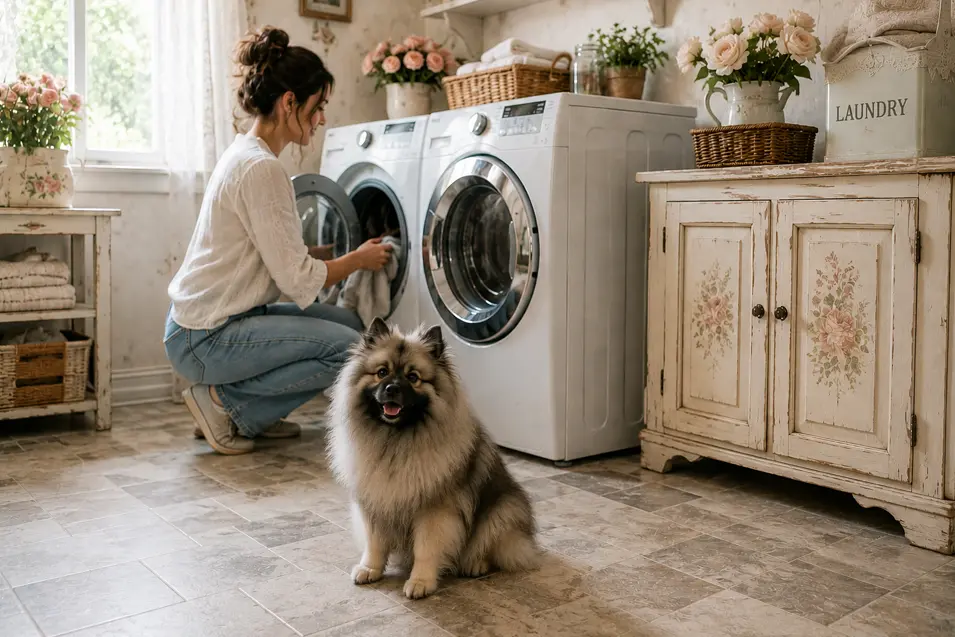
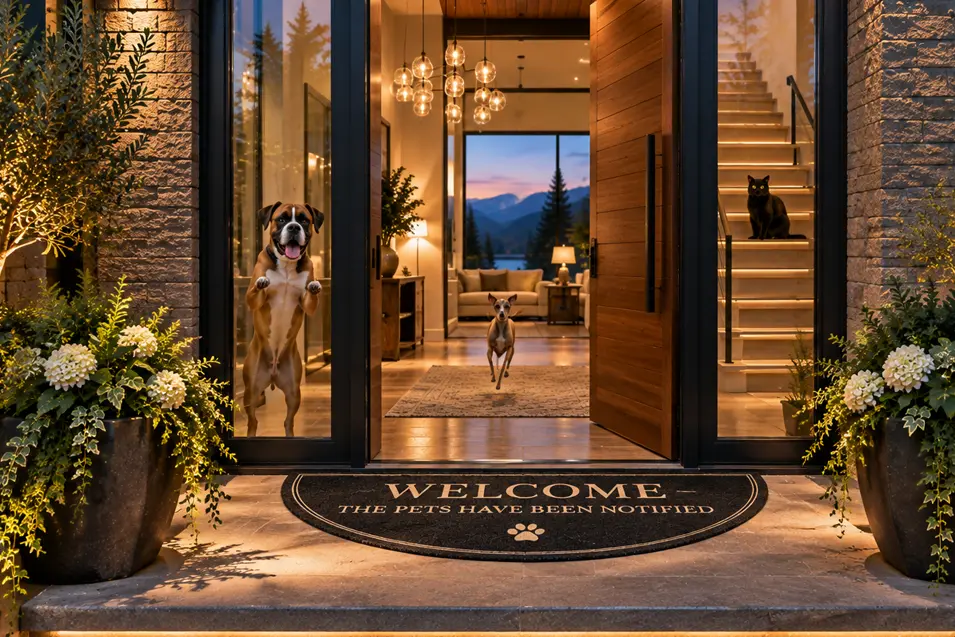
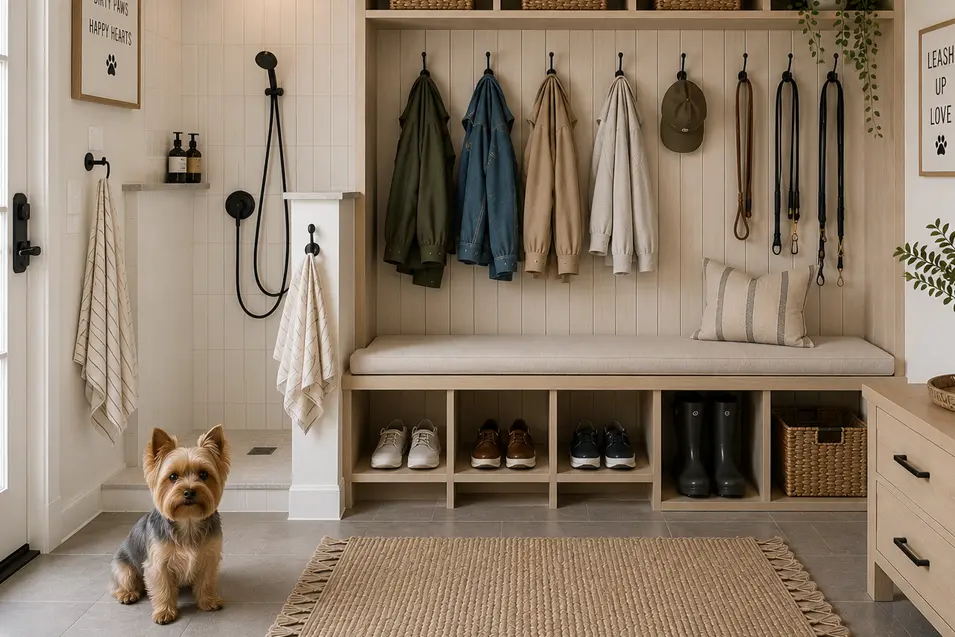
Porcelain tile is especially popular in entryways, kitchens, mudrooms, laundry rooms, and pet washing areas.
Ceramic Tile
Ceramic tile offers many of the same advantages as porcelain at a slightly lower cost.
Pros
- Water resistant
- Durable
- Easy maintenance
- Available in countless styles
- Resistant to pet accidents
Cons
- Less durable than porcelain
- Hard surface
- Grout can become stained
- Cold during winter months
For many homeowners, ceramic tile provides an attractive balance between performance and affordability.
Hardwood Flooring
Hardwood remains one of the most desired flooring options because of its timeless beauty and warmth.
However, pet owners should carefully consider the maintenance requirements.
Pros
- Beautiful appearance
- Increases home value
- Can be refinished
- Long lifespan with proper care
Cons
- Susceptible to scratches
- Vulnerable to moisture damage
- Pet accidents can cause staining
- Requires ongoing maintenance
Hardwood can still work in pet-friendly homes, particularly when harder species such as oak, maple, or hickory are selected.
Area rugs and regular nail trimming can help reduce wear.
Engineered Hardwood
Engineered hardwood offers the appearance of real wood with improved dimensional stability.
Pros
- Real wood surface
- More moisture resistant than solid hardwood
- Attractive appearance
- Available in various styles
Cons
- Can still scratch
- Moisture remains a concern
- Limited refinishing options
For homeowners who love the look of wood, engineered hardwood may offer a reasonable compromise.
Laminate Flooring
Modern laminate flooring has improved significantly over the years.
Many products offer attractive wood-like appearances at a lower cost than hardwood.
Pros
- Affordable
- Scratch resistant
- Easy maintenance
- Wide variety of styles
Cons
- Water can damage seams
- Slippery for some pets
- Difficult to repair once damaged
- Lower-quality products may wear quickly
Waterproof laminate products generally perform better in pet-friendly households than traditional laminate flooring.
Carpet
Carpet remains a popular flooring choice in bedrooms and living areas, but it presents unique challenges for pet owners.
Pros
- Soft and comfortable
- Warm underfoot
- Provides traction
- Reduces noise
Cons
- Traps pet hair
- Holds odors
- Stains easily
- Difficult to clean after accidents
- May require frequent replacement
While carpet can work in some households, it typically requires more maintenance than hard-surface flooring.
Sealed Concrete
Concrete flooring is increasingly popular in modern and industrial-style homes.
When properly sealed, it offers exceptional durability.
Pros
- Extremely durable
- Water resistant
- Scratch resistant
- Easy cleaning
- Long lifespan
Cons
- Hard surface
- Can feel cold
- Limited comfort
- May require area rugs
Concrete is particularly well suited for garages, basements, mudrooms, and pet care areas.
Natural Stone Flooring
Materials such as slate, travertine, and limestone provide unique visual appeal.
Pros
- Attractive appearance
- Durable
- Long lifespan
- Natural variation and character
Cons
- Expensive
- Requires sealing
- Some stones scratch more easily
- Can be cold and hard
Stone flooring works well in upscale homes but often requires more maintenance than porcelain tile.
Which Flooring Is Best for Dogs?
For most dog owners, the top choices include:
- Luxury vinyl plank
- Porcelain tile
- Ceramic tile
- Waterproof laminate
- Engineered hardwood
These materials generally provide the best balance of durability, comfort, and ease of maintenance.
Which Flooring Is Best for Cats?
Cats are often less demanding on flooring than large dogs because they typically cause fewer scratches and track in less dirt.
Popular options include:
- Luxury vinyl plank
- Tile
- Hardwood
- Engineered hardwood
- Laminate
The primary concerns for cat owners tend to be litter tracking, hair cleanup, and occasional accidents.
Don’t Forget About Traction
Many homeowners focus on durability while overlooking traction.
Slippery floors can create problems for:
- Puppies
- Senior pets
- Large dogs
- Pets with joint issues
Textured flooring surfaces and strategically placed rugs can improve stability while helping pets move comfortably throughout the home.
Balancing Beauty and Practicality
The best flooring choice depends on your specific household.
Consider factors such as:
- Number of pets
- Size of pets
- Activity level
- Climate
- Budget
- Maintenance preferences
A flooring material that works perfectly for one household may not be ideal for another.
The goal is finding a balance between appearance, durability, comfort, and long-term maintenance.
The Bottom Line
Choosing pet-friendly flooring involves more than simply selecting a material that looks attractive. Dogs and cats place unique demands on flooring, making durability, moisture resistance, scratch resistance, and ease of cleaning important considerations.
Luxury vinyl plank, porcelain tile, ceramic tile, and waterproof laminate consistently rank among the most practical choices for pet owners. Hardwood and engineered hardwood can also work well with proper care, while carpet typically requires the most maintenance.
By understanding the strengths and weaknesses of each material, homeowners can select flooring that supports both their design goals and the realities of life with pets. The right flooring can help create a beautiful home that stands up to years of paws, playtime, and everyday adventures.