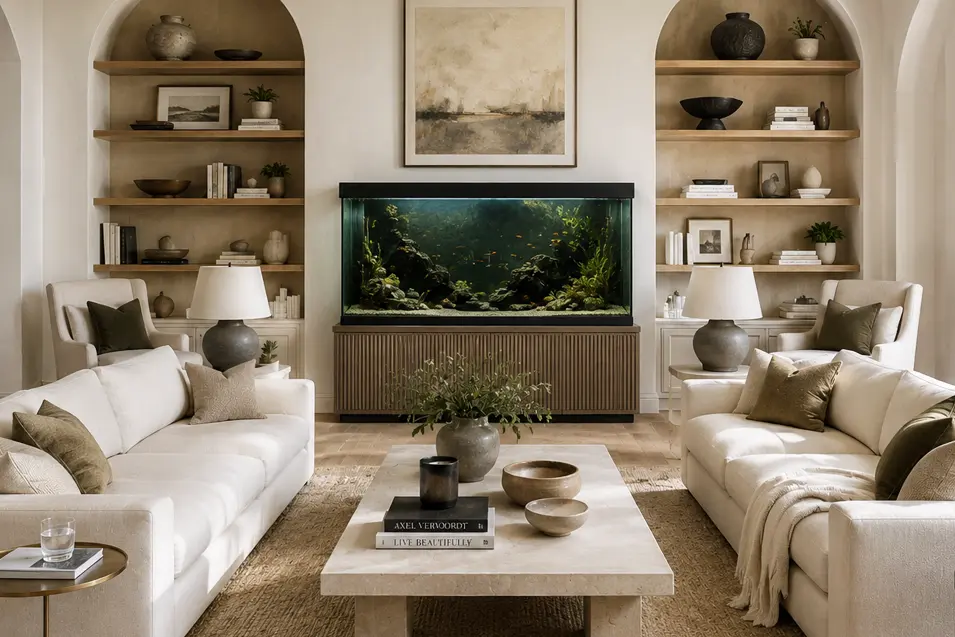
For many families, a home is shared by more than just people.
Cats lounge on windowsills. Dogs greet visitors at the door. Fish glide through carefully maintained aquariums. Children move between activities, homework, and family time.
Creating a home that accommodates multiple pets can be both rewarding and challenging. Each animal has unique needs, behaviors, and safety considerations. Fish require stable aquatic environments, cats are naturally curious hunters, dogs investigate anything new, and children often want to interact with every pet in the house.
Fortunately, with thoughtful planning and realistic expectations, aquariums can coexist successfully with cats, dogs, and busy family life. The key is designing a home environment that protects fish, accommodates other pets, and allows everyone to enjoy the benefits of living alongside animals.
Why Multi-Pet Homes Are Increasingly Common
Many animal lovers enjoy the companionship that different pets provide.
Each animal contributes something unique.
For example:
- Fish offer beauty and relaxation.
- Cats provide affection and entertainment.
- Dogs encourage activity and companionship.
Together, they create a dynamic and engaging household environment.
Aquariums fit naturally into many pet-friendly homes because they offer a different type of pet experience—one centered on observation, care, and appreciation of aquatic life.
Understanding Different Animal Behaviors
The first step toward a successful pet-friendly aquarium home is understanding how different pets naturally behave.
Fish
Fish depend entirely on their environment.
They require:
- Stable water quality
- Appropriate temperatures
- Low stress levels
- Consistent care
Unlike cats and dogs, fish cannot remove themselves from stressful situations.
Cats
Cats are often fascinated by aquariums because they are attracted to movement.
Common cat behaviors include:
- Watching fish
- Sitting near the tank
- Jumping onto nearby furniture
- Investigating aquarium lids
Most cats simply enjoy observing fish, but some require additional supervision.
Dogs
Dogs are generally curious about:
- Aquarium activity
- Feeding routines
- Water movement
- Family attention around the tank
Most dogs pose little direct threat to fish but may accidentally interact with aquarium equipment or furniture.
Children
Children often find aquariums captivating.
They may want to:
- Feed fish
- Watch fish closely
- Help with maintenance
- Learn about aquatic life
Proper guidance helps ensure safe interactions.
Choosing the Right Aquarium Location
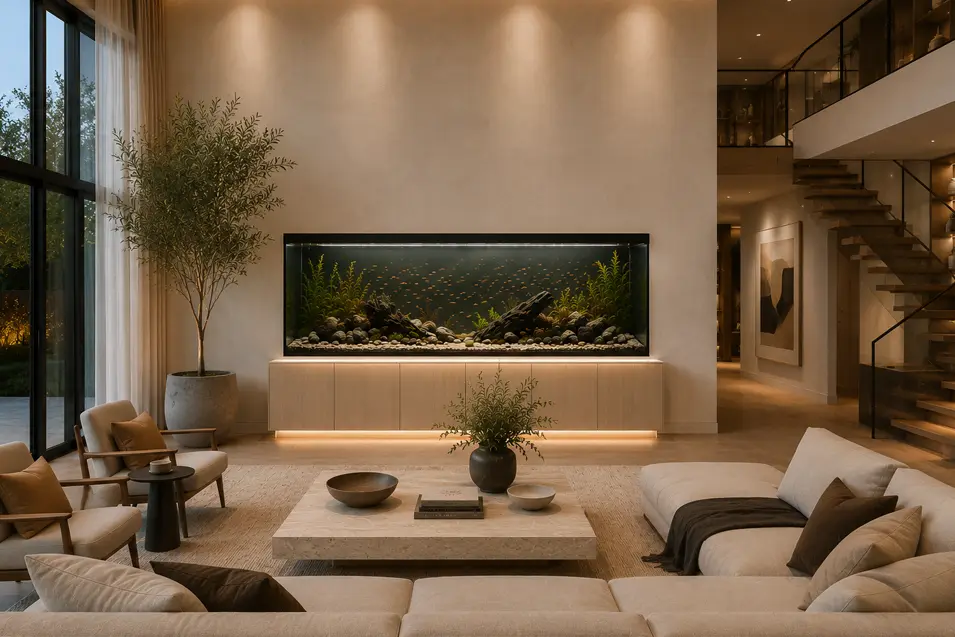
Placement is one of the most important decisions in a pet-friendly home.
The aquarium should be:
- Easily visible
- Safe from heavy traffic
- Accessible for maintenance
- Stable and secure
Avoid locations where:
- Pets regularly run or play
- Furniture may be bumped frequently
- Doors slam nearby
- Children engage in rough play
A thoughtful location helps reduce risks for everyone.
Secure Aquarium Stands Matter
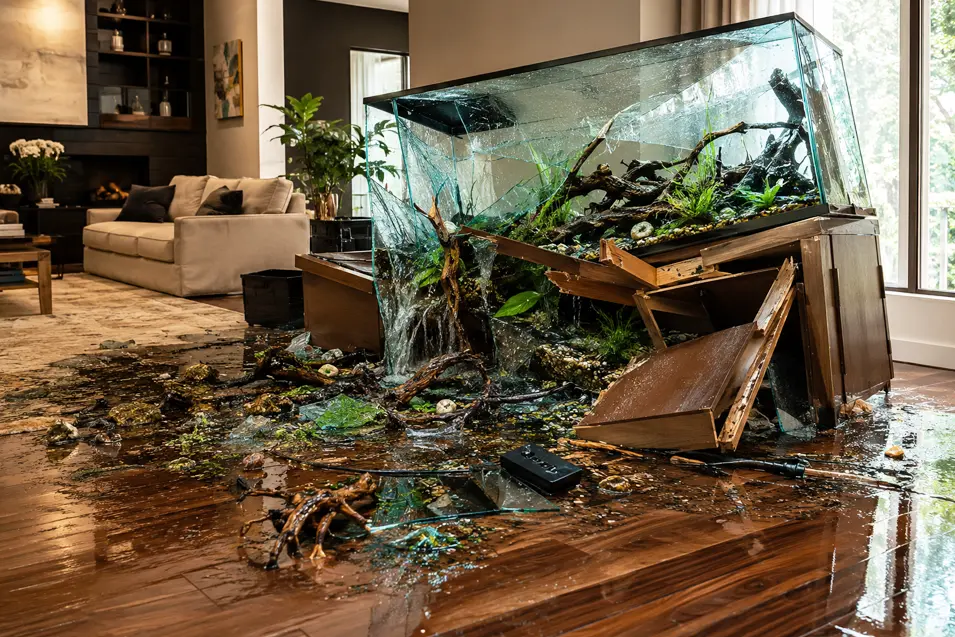
Aquariums are heavy.
A fully loaded aquarium can weigh hundreds or even thousands of pounds.
A quality stand should:
- Support the tank properly
- Resist tipping
- Remain level
- Handle accidental bumps
This is especially important in homes with:
- Large dogs
- Active children
- Multiple pets
Safety begins with a stable foundation.
Use a Secure Lid
One of the simplest ways to protect both fish and other pets is by using a secure aquarium lid.
Benefits include:
- Preventing fish from jumping out
- Reducing evaporation
- Limiting contamination
- Preventing curious paws from entering the water
Lids are particularly important in homes with cats.
Even well-behaved cats may occasionally investigate an open aquarium.
Creating Safe Observation Spaces
Many pets enjoy watching fish.
Rather than discouraging all interaction, it can be helpful to create designated viewing areas.
Examples include:
- Cat trees near the aquarium
- Window perches adjacent to the tank
- Dog beds positioned nearby
These locations allow pets to enjoy the aquarium without directly interfering with it.
Teaching Children Aquarium Etiquette
Children often need guidance when interacting with aquariums.
Important lessons include:
- Avoid tapping on the glass
- Keep hands out of the water
- Feed fish only when supervised
- Respect fish as living animals
These habits help reduce stress on fish while teaching responsibility and empathy.
Managing Aquarium Equipment Safely
Aquariums require equipment that should be protected from pets and children.
Examples include:
- Electrical cords
- Filters
- Air pumps
- Heaters
- Water conditioners
Secure storage and organized cable management help reduce risks.
Many aquarium owners use enclosed cabinets to keep equipment safely out of reach.
Reducing Stress for Fish
A peaceful environment benefits aquarium inhabitants.
Fish can become stressed by:
- Excessive tapping
- Constant disturbances
- Sudden movements
- Repeated attempts to chase or startle them
Providing hiding places such as:
- Plants
- Driftwood
- Caves
- Rock formations
helps fish feel secure within the aquarium.
Family Involvement in Aquarium Care
One advantage of aquariums is that they can become a shared family activity.
Family members can participate in:
- Feeding routines
- Water testing
- Fish observation
- Maintenance schedules
Children often enjoy helping with age-appropriate tasks while learning about biology and responsibility.
Balancing Attention Between Pets
In multi-pet households, it is important that no animal is neglected.
Aquariums sometimes receive intense attention during setup and stocking.
Similarly, new puppies or kittens may become the household focus.
Maintaining balance ensures that:
- Fish receive consistent care
- Cats remain enriched
- Dogs receive exercise
- Family members stay engaged
Successful pet ownership involves meeting the needs of every animal in the home.
Benefits of a Pet-Friendly Aquarium Home
When properly managed, aquariums provide unique benefits within family environments.
They offer:
- Relaxation
- Educational opportunities
- Visual interest
- Shared experiences
- Connection with nature
Many families find that fish become just as much a part of household life as traditional pets.
The aquarium often serves as a gathering point where people and animals alike spend time observing aquatic life.
Planning for Long-Term Success
The most successful pet-friendly aquarium homes are built around thoughtful planning rather than constant correction.
Key principles include:
- Safe placement
- Stable furniture
- Secure lids
- Organized equipment
- Family education
When these foundations are in place, daily life becomes easier and more enjoyable.
Creating Harmony Among Different Pets
No two households are exactly alike.
Some cats ignore aquariums entirely.
Some dogs become fascinated by feeding time.
Some children spend hours observing fish.
The goal is not eliminating interaction but creating healthy boundaries that keep everyone safe.
With patience and consistency, most households can successfully integrate fish, cats, dogs, and family life into a harmonious living environment.
Conclusion
A pet-friendly aquarium home is entirely achievable with thoughtful planning and attention to safety. By understanding the natural behaviors of fish, cats, dogs, and children, families can create environments where every member of the household thrives.
Secure aquarium setups, proper supervision, organized equipment, and family involvement all contribute to long-term success. The result is a home filled with opportunities for learning, relaxation, companionship, and connection with the natural world.
For many families, aquariums become much more than a hobby—they become an integral part of a vibrant, multi-pet household.
Frequently Asked Questions
Can fish, cats, and dogs safely live in the same home?
Yes. With proper planning, secure aquarium setups, and reasonable supervision, fish, cats, and dogs can coexist successfully.
Are cats dangerous to aquarium fish?
Most cats simply enjoy watching fish. Secure lids and stable aquarium placement help prevent problems.
How can I protect aquarium equipment from pets?
Use organized cable management, enclosed cabinets, and secure storage for aquarium supplies and electrical components.
Should children help care for aquarium fish?
Yes. Age-appropriate tasks such as feeding, observation, and simple maintenance can help teach responsibility and respect for animals.
What is the most important safety feature in a pet-friendly aquarium home?
A secure aquarium stand and lid are among the most important elements for protecting fish, pets, and family members.
Related Reading
- Keeping Aquariums Safe Around Cats and Dogs
- Why Do Cats Love Watching Fish?
- Aquariums in Homes with Young Children
- Low-Maintenance Aquarium Setups for Busy Families
- Aquariums and Mental Wellness: Creating Calm Spaces at Home
- Aquariums in the Home: Design, Placement, Planning, and Practical Living