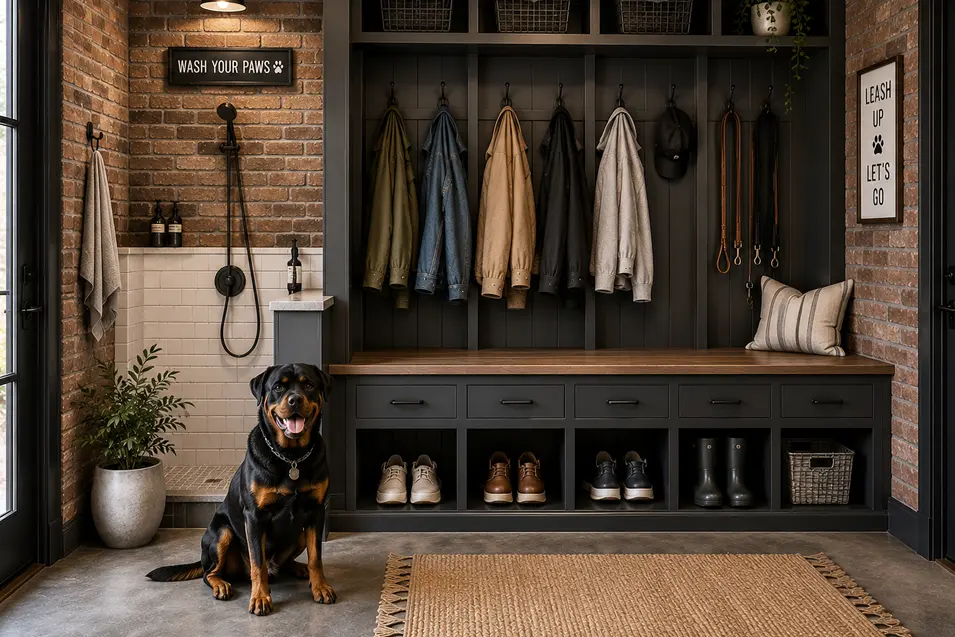
If you’re a pet owner, you’ve probably experienced the frustration of searching for a leash while your dog waits impatiently by the door. Perhaps waste bags have disappeared, a favorite harness is buried under a pile of shoes, or muddy towels are nowhere to be found after a rainy walk.
The front door serves as command central for many pet-related activities. Walks, training sessions, trips to the park, backyard playtime, and daily adventures all begin and end at the entrance. Without an organized system, pet gear can quickly become scattered throughout the house, creating clutter and making everyday routines more stressful than they need to be.
Fortunately, with a few thoughtful storage solutions, homeowners can create a dedicated pet gear station near the front door that keeps everything organized, accessible, and ready to use. Whether you have a spacious mudroom or a small entryway, smart organization can simplify life for both pets and people.
Why Front Door Organization Matters
The front entrance is one of the busiest areas in any pet-friendly home.
Common pet items that often accumulate near the door include:
- Leashes
- Harnesses
- Collars
- Waste bags
- Dog jackets
- Towels
- Portable water bottles
- Treats
- Training equipment
- Outdoor toys
Without designated storage, these items tend to migrate throughout the house, making them difficult to find when needed.
An organized entryway helps streamline daily routines while reducing clutter and frustration.
Start by Identifying Your Essentials
Before investing in storage solutions, evaluate the items you use most frequently.
Ask yourself:
- What do I grab before every walk?
- Which items are used daily?
- What gear is only needed seasonally?
- Which supplies create the most clutter?
For many dog owners, the essentials include:
- Leashes
- Harnesses
- Waste bags
- Treats
- Towels
Cats that use outdoor enclosures, travel carriers, or supervised outdoor gear may also have dedicated supplies that benefit from convenient storage.
Understanding your needs helps determine the best organizational system.
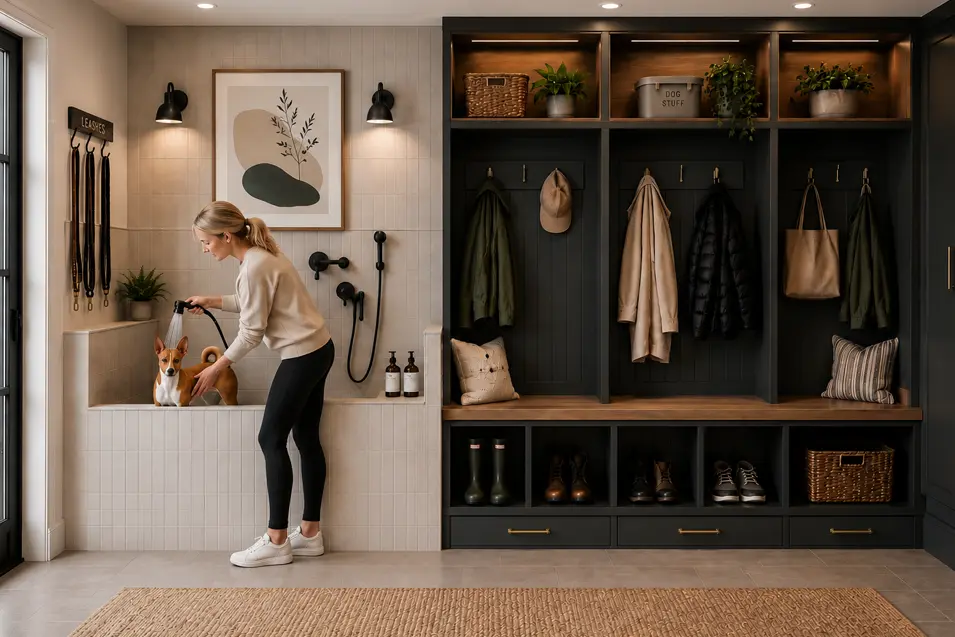
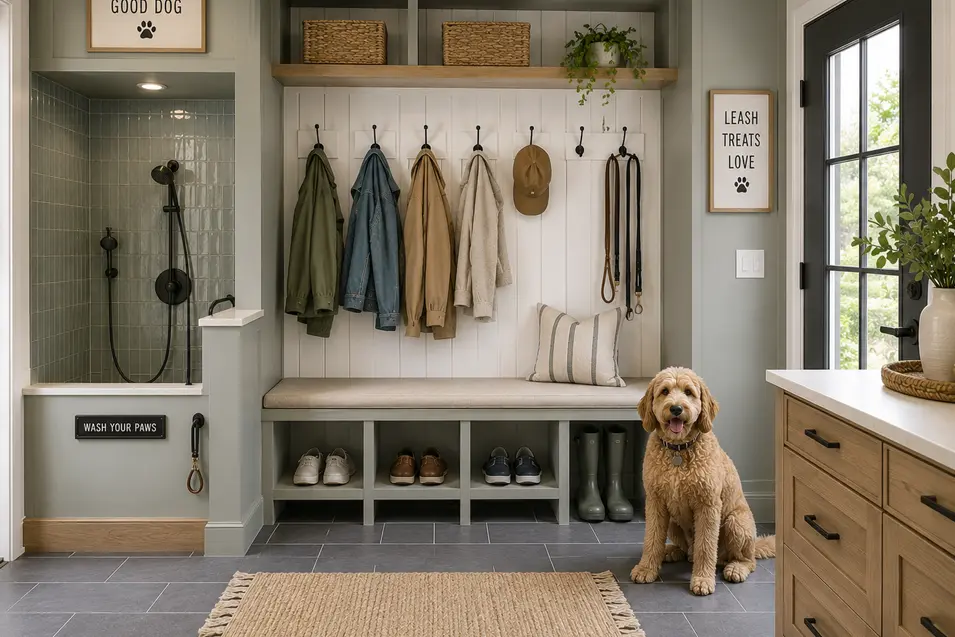
Install Wall Hooks
Hooks are one of the simplest and most effective storage tools for pet owners.
Mounted near the front door, hooks provide convenient access to:
- Leashes
- Harnesses
- Collars
- Dog jackets
- Reflective gear
Keeping these items visible and easy to reach can significantly reduce the stress of preparing for walks.
For households with multiple pets, consider assigning individual hooks to each animal.
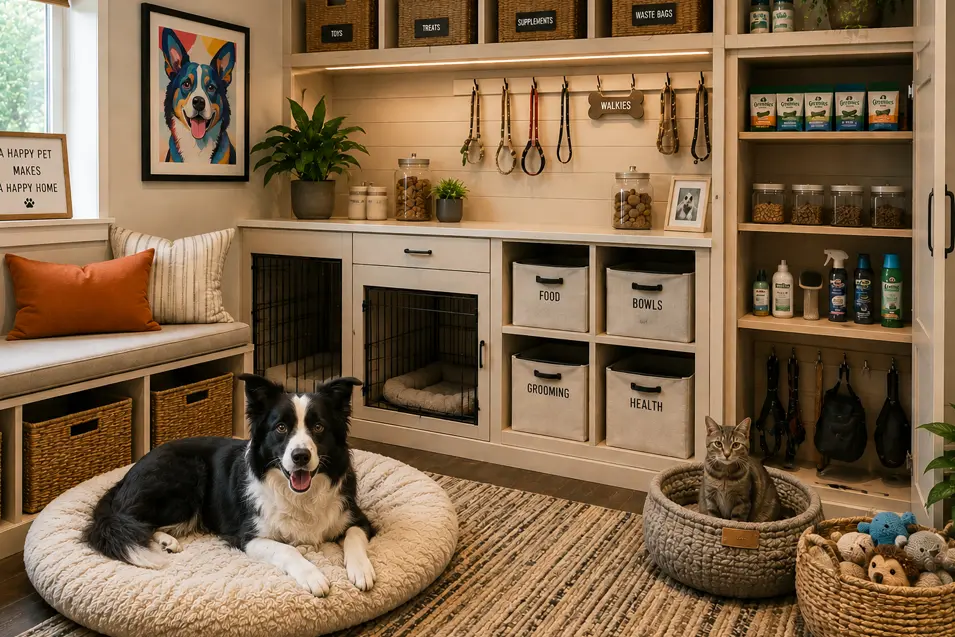
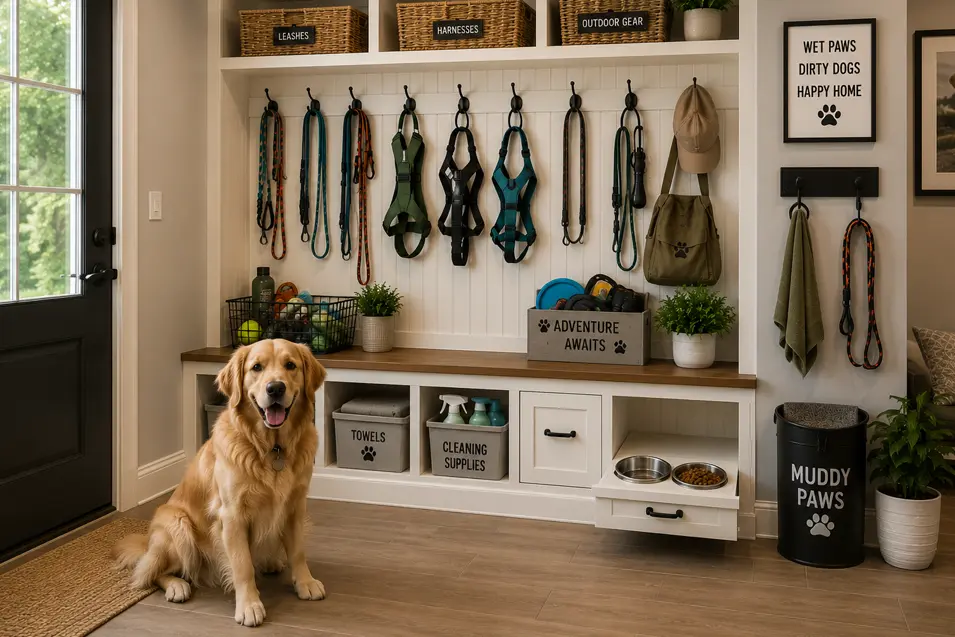
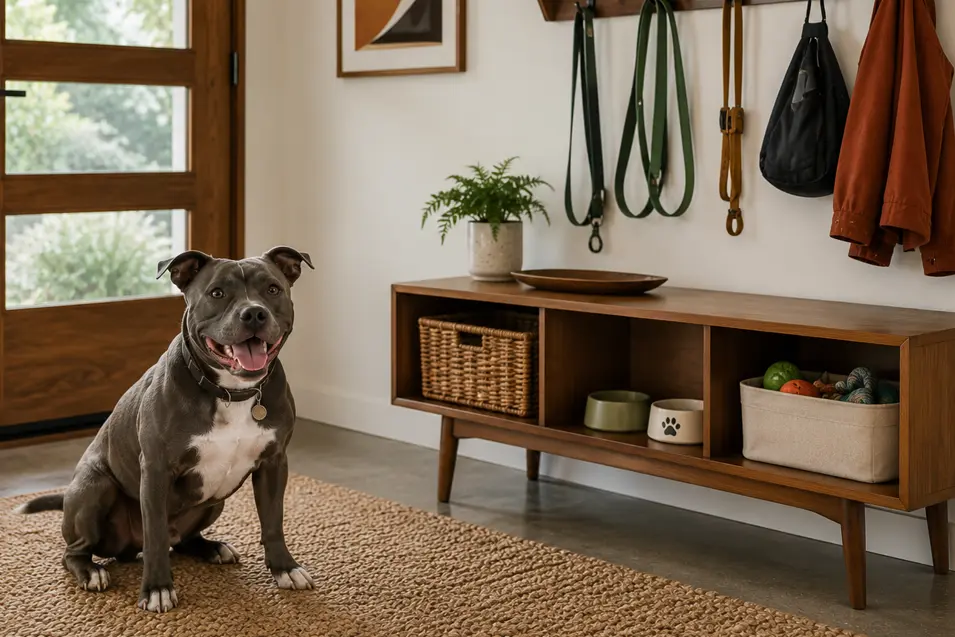
Create a Dedicated Pet Gear Station
One of the most practical upgrades is a designated pet station.
This can be as simple as a small cabinet or as elaborate as custom built-in storage.
A pet gear station may include:
- Hooks
- Drawers
- Baskets
- Shelves
- Closed storage compartments
Having one central location for pet supplies makes daily routines more efficient and prevents items from becoming scattered throughout the home.
Use Baskets for Small Accessories
Small pet items often createthe most clutter.
Storage baskets work well for organizing:
- Waste bag rolls
- Treats
- Toys
- Flashlights
- Training tools
- Pet wipes
Clearly labeled baskets make it easier for family members to locate and return items after use.
Decorative baskets can also complement the overall design of the entryway.
Incorporate Closed Storage
Open storage can look attractive, but closed storage often provides better functionality for pet owners.
Cabinets, drawers, and storage benches help:
- Reduce visual clutter
- Protect supplies from dust
- Prevent pets from accessing treats
- Create a cleaner appearance
Closed storage is particularly useful for items that are not used every day.
Store Towels Near the Door
Rainy walks, muddy paws, and snowy conditions make towels an essential part of pet ownership.
Keeping clean towels near the entrance allows for quick cleanup before pets move through the rest of the house.
Storage options include:
- Baskets
- Cabinets
- Shelving
- Storage benches
Many homeowners dedicate an entire drawer or shelf to pet towels and cleanup supplies.
Create a Waste Bag Refill Station
Few things are more frustrating than discovering you’re out of waste bags just before a walk.
A designated refill station helps ensure you always have extras available.
Store:
- Backup waste bag rolls
- Portable dispensers
- Cleanup supplies
Keeping these items together makes it easy to restock before heading out the door.
Add Storage for Seasonal Gear
Pets often require different equipment throughout the year.
Examples include:
Winter
- Boots
- Paw protection products
- Reflective jackets
- Cold-weather coats
Spring
- Rain gear
- Extra towels
- Mud-cleaning supplies
Summer
- Cooling products
- Travel water bottles
- Hiking equipment
Fall
- Reflective accessories
- Outdoor activity gear
Seasonal storage bins or upper shelves can help keep less frequently used items organized.
Include a Cleaning Supply Area
A well-organized pet station should also prepare you for unexpected messes.
Consider keeping:
- Pet-safe wipes
- Stain removers
- Paper towels
- Small cleaning cloths
- Paw-cleaning products
Having these supplies nearby allows for quick action when accidents occur.
Use a Storage Bench
Storage benches are ideal for pet-friendly entryways because they combine multiple functions.
They provide:
- Seating for putting on shoes
- Hidden storage
- A place to organize pet supplies
Many homeowners use bench compartments to store:
- Toys
- Towels
- Seasonal gear
- Walking accessories
This approach maximizes storage without consuming additional space.
Keep Frequently Used Items at Eye Level
Organization works best when storage reflects actual habits.
Items used daily should be easy to access, while less frequently used supplies can be stored higher or deeper within cabinets.
Examples of items to keep readily available include:
- Leashes
- Harnesses
- Waste bags
- Treats
- Towels
Convenience encourages consistency and helps maintain organization over time.
Don’t Forget About Safety
Organization should improve safety as well as convenience.
Avoid storing:
- Medications
- Flea treatments
- Cleaning chemicals
- Small choking hazards
where pets can access them.
Keep potentially hazardous items secured in cabinets or elevated storage areas.
Maintaining the System
Even the best storage solutions require occasional maintenance.
Every few months:
- Remove unused items
- Discard damaged gear
- Wash towels
- Restock supplies
- Reorganize storage areas
Regular upkeep prevents clutter from returning and keeps the system functioning efficiently.
The Bottom Line
Organizing pet gear near the front door is one of the simplest ways to make daily life with pets easier. By creating designated storage areas for leashes, harnesses, waste bags, towels, toys, and seasonal accessories, homeowners can reduce clutter while improving convenience and efficiency.
Whether you have a large mudroom or a compact entryway, thoughtful organization helps ensure that everything you need is ready when it’s time for a walk, an outdoor adventure, or a quick trip outside. A well-planned pet gear station can transform a chaotic entrance into a functional, pet-friendly space that benefits the entire household.