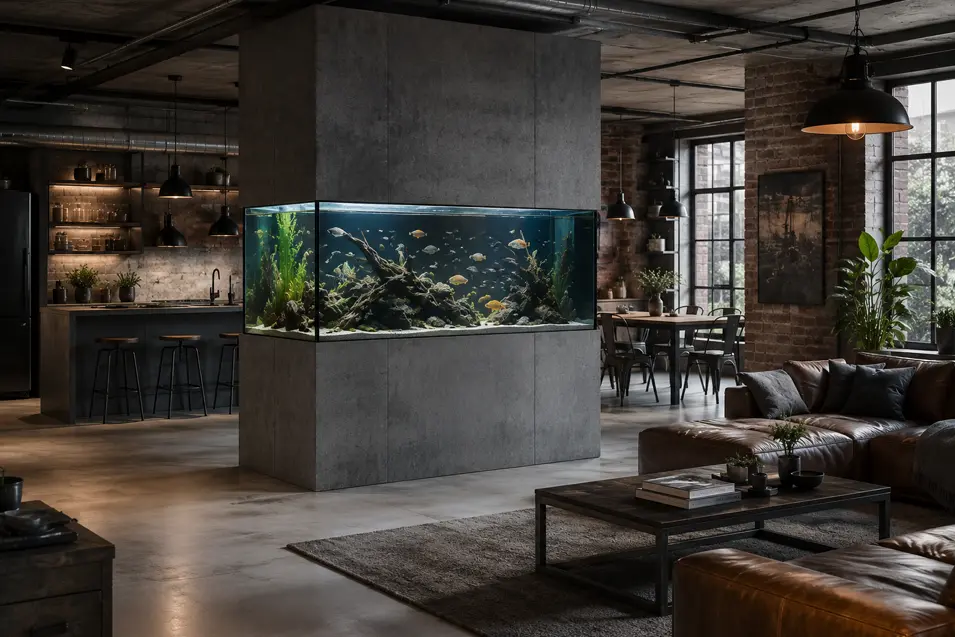
Open concept homes have become one of the most popular architectural styles in modern residential design. By removing unnecessary walls and creating flowing spaces between kitchens, dining rooms, and living areas, homeowners enjoy brighter interiors, better sightlines, and a greater sense of spaciousness.
While these layouts offer tremendous design flexibility, they can also create challenges when it comes to placing large decorative elements. Aquariums, in particular, require thoughtful positioning to ensure they enhance the space without disrupting traffic flow, natural light, or room functionality.
Fortunately, aquariums and open concept homes often work exceptionally well together. A carefully placed aquarium can help define living areas, create stunning focal points, and introduce a living connection to nature without sacrificing the openness that makes these homes so appealing.
Why Aquariums Work Well in Open Concept Homes
Traditional floor plans often limit aquarium placement to a single wall or designated room.
Open concept homes provide far more opportunities.
Because sightlines extend across multiple living areas, a strategically placed aquarium can become visible from:
- The kitchen
- The dining room
- The living room
- Entryways
- Home offices
This increased visibility allows homeowners to enjoy their aquarium from multiple locations throughout the day.
Instead of serving a single room, the aquarium becomes a feature that enhances the entire living space.
The Aquarium as a Focal Point
Every successful room design benefits from a focal point.
In open concept homes, creating focal points can be more challenging because large spaces often lack architectural anchors such as fireplaces or feature walls.
An aquarium can solve this problem beautifully.
The movement of fish, the color of aquatic plants, and the dynamic nature of underwater environments naturally draw attention.
Unlike static décor, aquariums create ongoing visual interest and encourage people to pause and engage with the space.
When positioned thoughtfully, an aquarium can become the centerpiece that ties multiple areas of the home together.
Using Aquariums to Define Spaces
One challenge in open floor plans is establishing clear distinctions between functional areas.
Without walls, the transition between rooms can sometimes feel undefined.
Aquariums can help create subtle separation without sacrificing openness.
For example, an aquarium may help distinguish:
- The living room from the dining room
- The kitchen from the family room
- An entryway from the main living space
- A home office from shared areas
Unlike traditional partitions, aquariums maintain visibility and allow light to flow freely throughout the home.
Room Divider Aquariums in Open Floor Plans
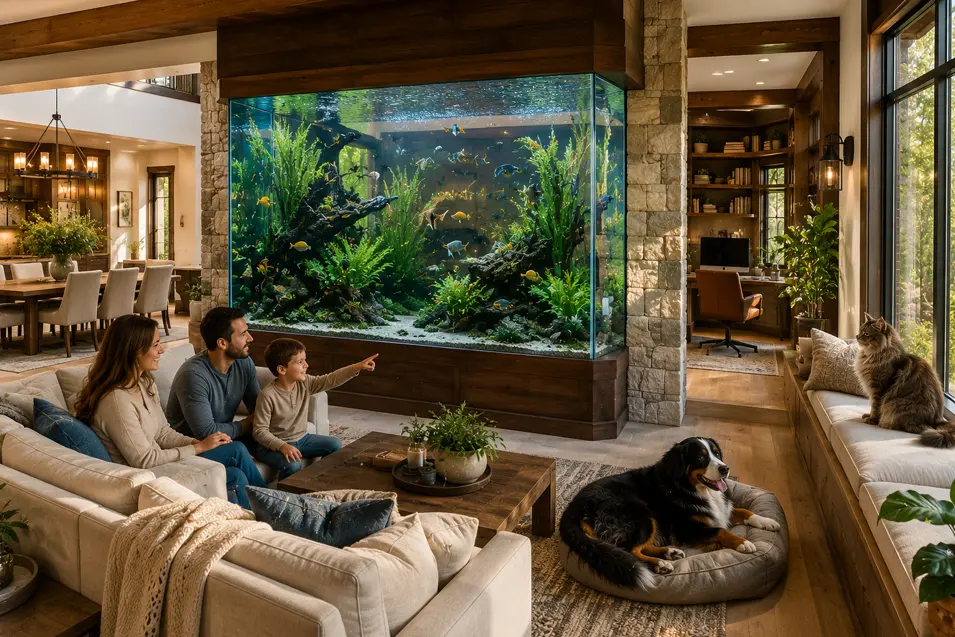
One of the most effective solutions for open concept layouts is the room divider aquarium.
These aquariums function as transparent partitions that create organization while preserving openness.
Benefits include:
- Defining activity zones
- Preserving sightlines
- Maintaining natural light flow
- Creating visual interest from multiple angles
Room divider aquariums are especially popular between:
- Kitchens and family rooms
- Dining areas and living rooms
- Great rooms and entertainment spaces
Because they can be viewed from multiple sides, they often become the centerpiece of the home’s design.
Best Locations for Aquariums in Open Concept Homes
Successful placement depends on visibility, practicality, and aesthetics.
Along a Primary Sightline
One effective approach is placing the aquarium where it is visible immediately upon entering the space.
This creates an impressive first impression and establishes the aquarium as a defining feature of the home.
Between Functional Areas
Positioning an aquarium between activity zones allows it to serve both decorative and organizational purposes.
These placements often feel natural because they contribute to the room’s structure without creating barriers.
Adjacent to Seating Areas
Aquariums are most enjoyable when they can be observed comfortably.
Placing the aquarium near:
- Sofas
- Reading chairs
- Dining tables
encourages interaction and appreciation.
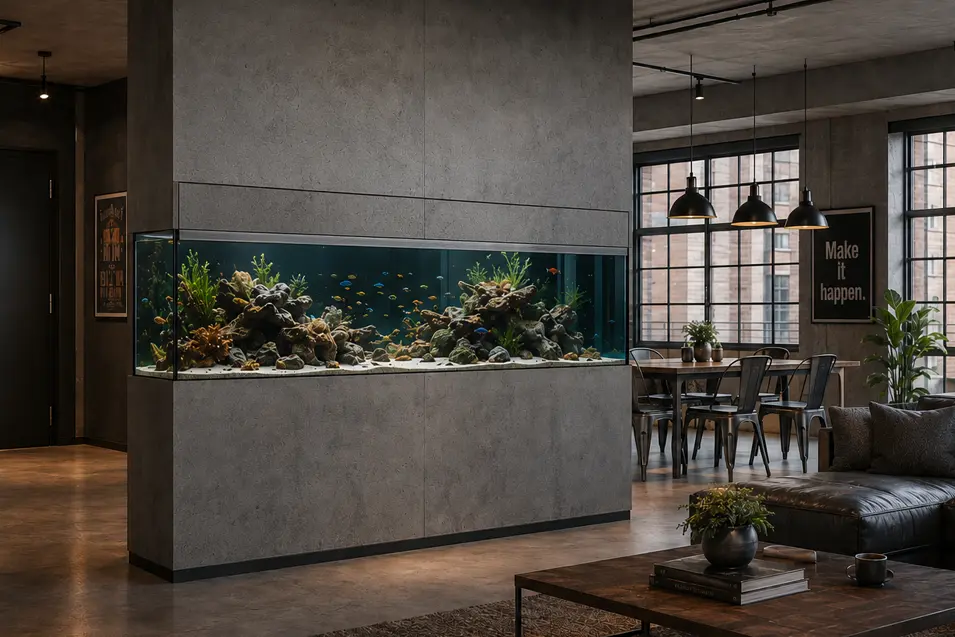
Against a Feature Wall
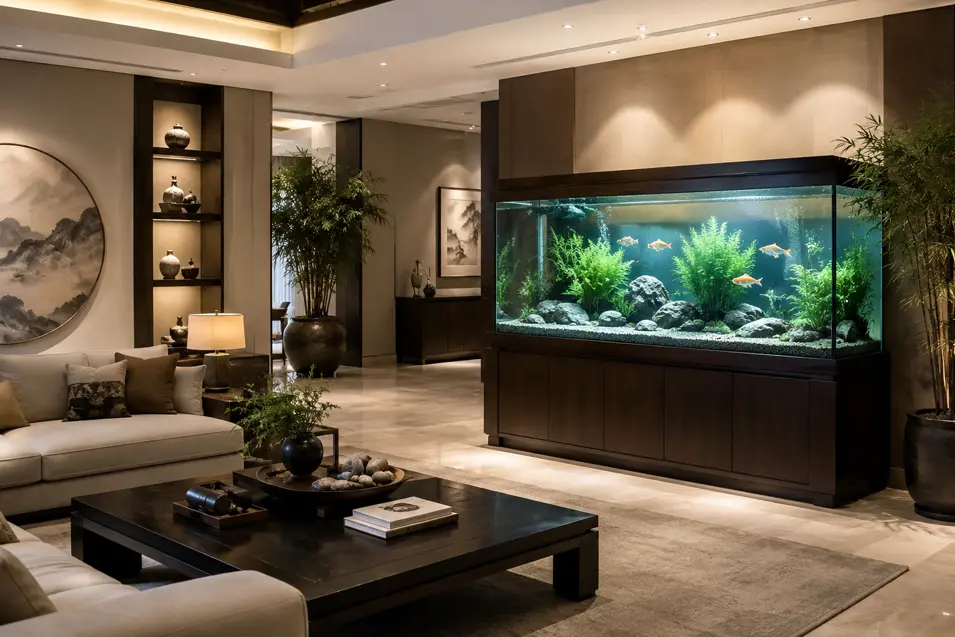
In some homes, a large aquarium positioned against a carefully designed wall can create a dramatic focal point without interrupting traffic flow.
This approach works particularly well for built-in installations.
Avoiding Common Placement Mistakes
Open concept homes offer flexibility, but certain placement decisions can create problems.
Blocking Traffic Flow
Large aquariums should never interfere with natural movement through the home.
Consider:
- Walkways
- Doorways
- Kitchen work zones
- Gathering areas
The aquarium should enhance circulation rather than obstruct it.
Ignoring Natural Light
Open floor plans often feature large windows and abundant natural light.
While bright interiors are desirable, direct sunlight can cause:
- Excessive algae growth
- Temperature fluctuations
- Increased maintenance
Aquariums should be positioned to avoid prolonged direct sun exposure.
Creating Visual Clutter
Open concept homes rely on visual simplicity.
Avoid overcrowding the aquarium area with excessive furniture, decorations, or unrelated focal points.
Allow the aquarium room to breathe.
Aquarium Size Considerations
The size of the aquarium should match the scale of the home.
Small aquariums can sometimes feel lost within large open spaces.
Larger aquariums often perform better visually because they:
- Anchor the room
- Create stronger focal points
- Balance expansive layouts
That doesn’t necessarily mean bigger is always better.
The goal is proportionality.
An aquarium should feel substantial enough to command attention without overwhelming the room.
Built-In vs. Freestanding Aquariums
Both installation styles can work beautifully in open concept homes.
Built-In Aquariums
Built-in systems offer:
- Seamless integration
- Architectural appeal
- Hidden equipment
- Strong visual impact
They are often ideal for custom homes and major renovations.
Freestanding Aquariums
Freestanding aquariums provide:
- Greater flexibility
- Lower installation costs
- Easier upgrades
- Simplified maintenance
Many homeowners find they offer the best balance between design and practicality.
Designing the Room Around the Aquarium
The most successful aquarium installations are considered during the overall design process.
Think about:
- Furniture placement
- Lighting
- Viewing angles
- Traffic patterns
- Future renovations
Rather than fitting an aquarium into a completed room, aim to incorporate it into the design vision from the beginning.
This approach creates a more cohesive and intentional result.
Lighting Considerations
Aquarium lighting can contribute significantly to a room’s atmosphere.
Modern LED systems allow homeowners to create:
- Daytime brightness
- Evening ambiance
- Accent lighting effects
- Seasonal displays
At night, a well-lit aquarium often becomes the most captivating feature in the room.
Many homeowners find the gentle glow enhances relaxation and creates a warm, welcoming environment.
Creating Balance in Large Spaces
Large open rooms can sometimes feel empty or disconnected.
Aquariums help introduce:
- Visual weight
- Natural texture
- Color
- Movement
This balance can make large spaces feel more comfortable and inviting without adding unnecessary clutter.
The aquarium becomes a focal point that helps unify the overall design.
Conclusion
Open concept homes provide exceptional opportunities for aquarium placement. Their expansive sightlines, flexible layouts, and emphasis on shared living spaces make them ideal environments for showcasing aquatic displays.
Whether used as a focal point, a room divider, or an architectural feature, an aquarium can enhance both the beauty and functionality of an open floor plan. By carefully considering visibility, traffic flow, lighting, and room organization, homeowners can create a display that feels fully integrated into the space.
When thoughtfully planned, an aquarium doesn’t simply occupy an open concept home—it helps define and elevate it.
Frequently Asked Questions
Where should an aquarium be placed in an open concept home?
Aquariums work best where they are visible from multiple areas while avoiding direct sunlight, heavy traffic routes, and major walkways.
Are room divider aquariums good for open floor plans?
Yes. Room divider aquariums are one of the most popular options because they help define spaces while maintaining openness and natural light flow.
What size aquarium works best in large open rooms?
Medium to large aquariums often work best because they provide enough visual presence to balance expansive spaces.
Can a freestanding aquarium work in an open concept home?
Absolutely. Freestanding aquariums offer flexibility and can serve as focal points without requiring structural modifications.
How do I prevent an aquarium from looking out of place?
Consider the aquarium during the overall room design process. Coordinating furniture placement, lighting, and sightlines helps the aquarium feel integrated rather than added later.
Related Reading
- Aquariums in the Home: Design, Placement, Planning, and Practical Living
- 7 Best Places to Put an Aquarium for Beauty, Relaxation, and Healthy Fish
- Room Divider Aquariums: Beautiful Living Spaces with Fish
- Aquariums as Statement Pieces in Home Design
- How to Design a Living Room Around a Large Aquarium
- Built-In Aquariums vs. Freestanding Aquariums: Pros and Cons