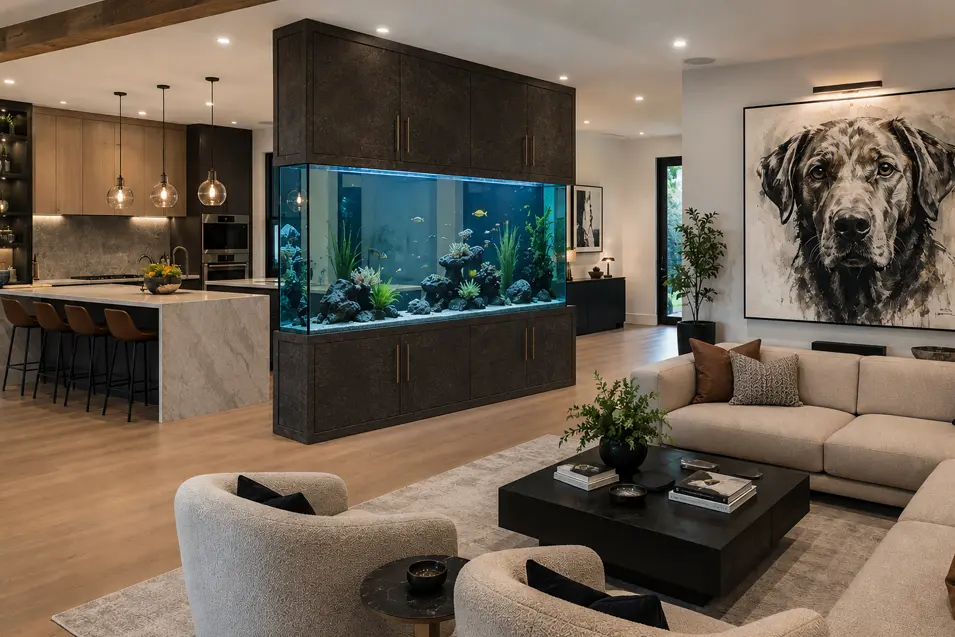
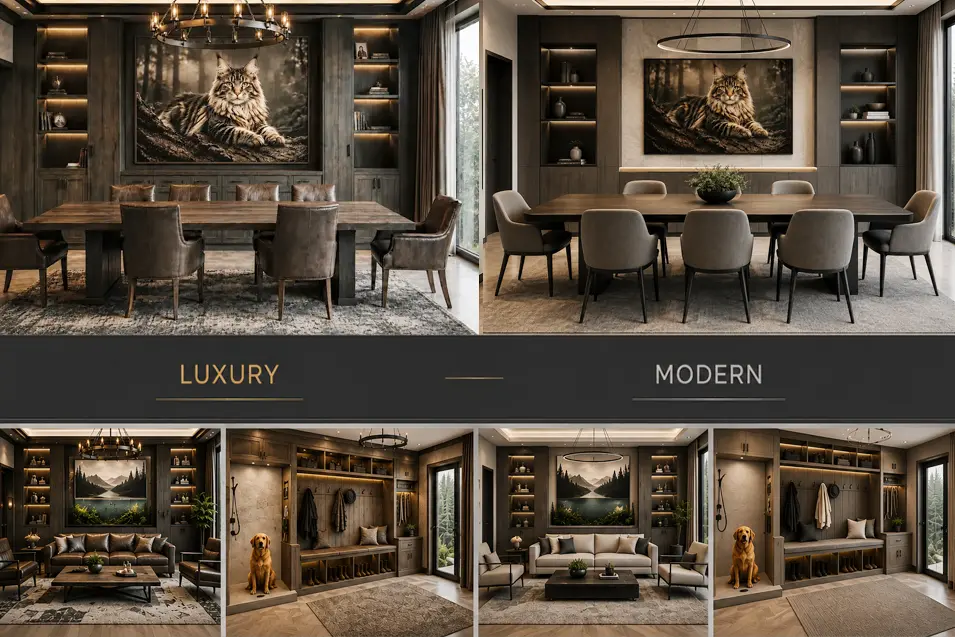
When most people browse interior design websites, they are often comparing completely different homes.
One living room might belong to a mountain retreat. Another might be part of a sleek urban penthouse. A third may sit inside a suburban farmhouse. Different architecture, different budgets, different room dimensions, and different lifestyles all influence the final result.
But what happens when only one thing changes?
What if the room itself stays exactly the same?
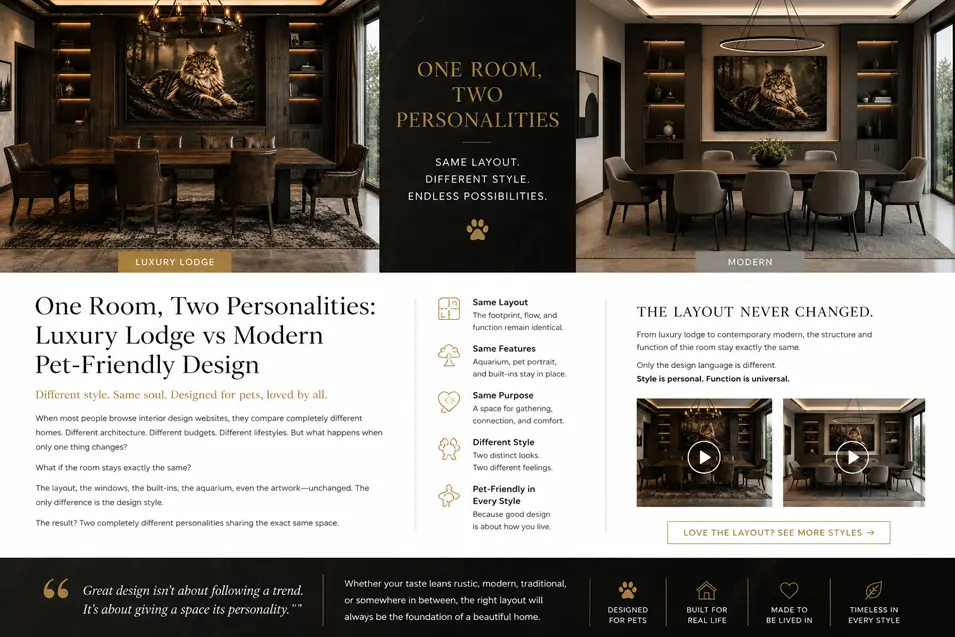
The walls remain in the same place. The windows don’t move. The built-in cabinetry stays where it is. The aquarium remains the focal point. Even the artwork hangs in the same location.
The only thing that changes is the design language.
The result is a fascinating reminder that style and function are not the same thing.
The Layout Never Changed
At first glance, the two rooms appear completely different.
One feels like a luxurious mountain retreat. Rich wood tones, leather furniture, warm lighting, and dramatic textures create an atmosphere that feels intimate and timeless.
The other feels refined, modern, and architectural. Lighter upholstery, cleaner lines, minimalist accessories, and simplified forms create a calm, contemporary environment.
Yet beneath those differences lies the exact same room.
The aquarium occupies the same wall.
The built-in cabinetry remains unchanged.
The windows frame the same views.
The furniture serves the same purpose.
The room functions identically.
Only its personality has changed.
The Luxury Lodge Approach
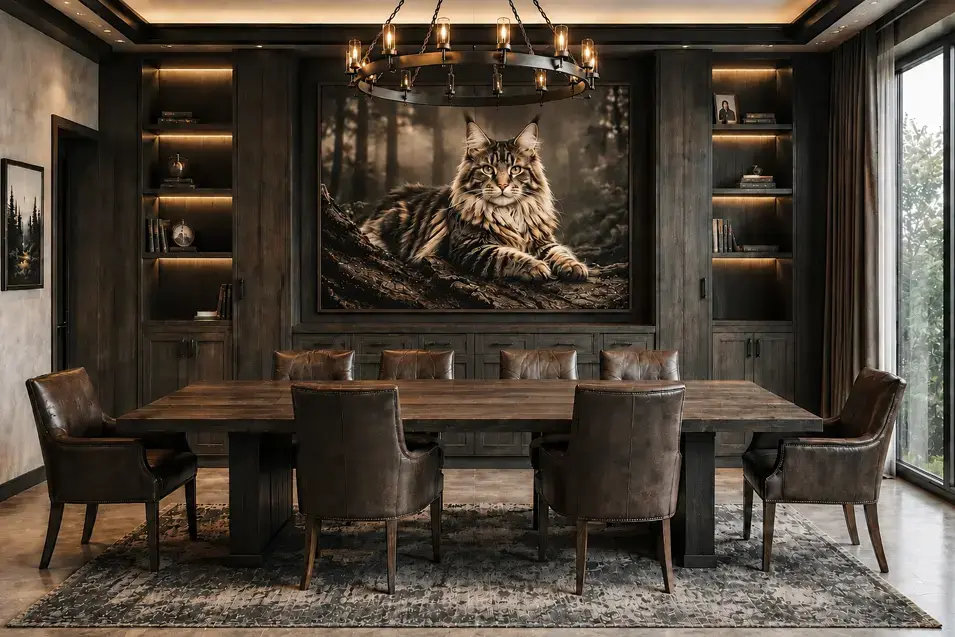
The luxury lodge style embraces warmth, comfort, and natural materials.
Dark wood cabinetry creates depth and richness. Leather seating introduces texture and durability. Layered lighting adds warmth throughout the room, while carefully selected artwork reinforces the connection to nature.
The aquarium feels perfectly at home within this environment. It becomes an extension of the outdoors, bringing living elements inside while complementing the earthy palette surrounding it.
This style appeals to homeowners who want their spaces to feel welcoming, substantial, and connected to nature.
The room invites guests to sit down, relax, and stay awhile.
The Contemporary Modern Approach
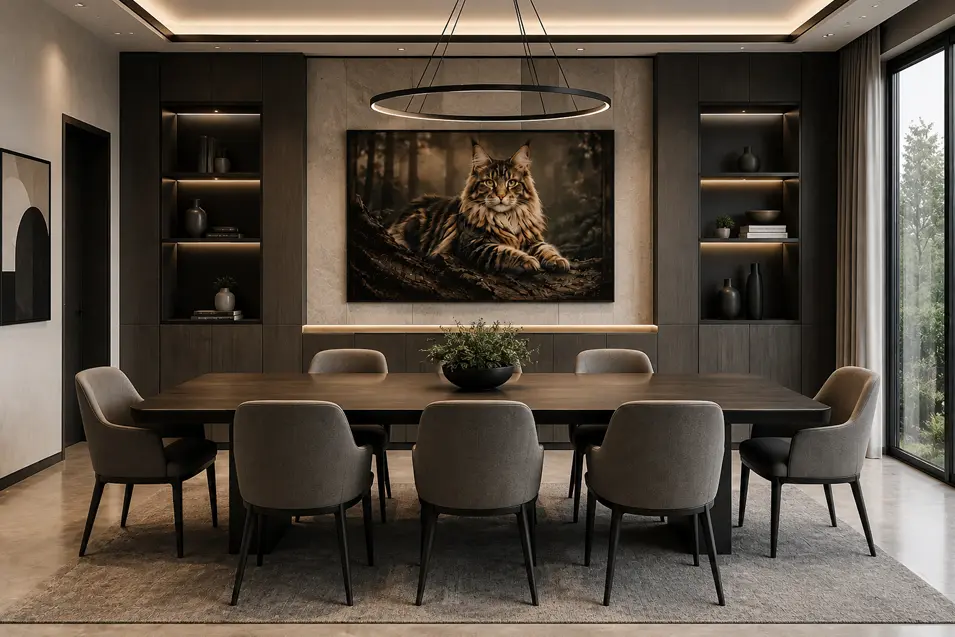
The contemporary version demonstrates how dramatically a room can change without altering its structure.
The heavy leather furniture is replaced by cleaner silhouettes and lighter upholstery. Decorative elements become more restrained. Lighting becomes simpler and more sculptural.
The overall effect feels calm and sophisticated.
The aquarium remains the centerpiece, but the room now resembles a gallery space where every object has been intentionally selected.
Rather than emphasizing rustic comfort, the modern design emphasizes openness, simplicity, and visualbalance.
Yet despite these differences, the room still fulfills the same purpose.
It remains a place for gathering, conversation, relaxation, and connection.
Pet-Friendly Design Isn’t a Style
One of the most interesting lessons from this comparison has nothing to do with furniture or color palettes.
It is the realization that pet-friendly design is not actually a decorating style.
Many homeowners assume pet-friendly spaces must look rustic, casual, or heavily themed. They imagine visible dog beds, oversized cat trees, and pet accessories that dominate the room.
In reality, thoughtful pet-friendly design can exist within virtually any aesthetic.
The aquarium remains equally successful in both versions of the room.
A pet portrait can feel at home in either setting.
Built-in pet spaces, feeding stations, and animal-focused features can be incorporated into traditional, modern, industrial, farmhouse, Scandinavian, or contemporary interiors.
Good design adapts.
What Really Creates Style?
The comparison also reveals something many homeowners overlook.
Style is often created through relatively small decisions.
The architecture remained constant.
The layout remained constant.
The functionality remained constant.
What changed were the materials, finishes, furnishings, lighting, and accessories.
The luxury lodge version feels entirely different from the contemporary version, yet neither required rebuilding the room itself.
This can be encouraging for homeowners who love their home’s layout but feel dissatisfied with its appearance.
Often, changing the personality of a room is far easier than changing the room itself.
Which One Would You Choose?
There is no universally correct answer.
Some people will always gravitate toward the warmth of wood, leather, and traditional craftsmanship.
Others will prefer the simplicity and restraint of contemporary design.
The beauty of great architecture is that it can support both.
The same room can tell completely different stories depending on the design choices layered upon it.
The Bigger Lesson
Perhaps the most valuable takeaway is that good design begins with understanding how a space functions.
The layout worked before the style was applied.
The aquarium worked before the furniture was selected.
The room’s purpose remained unchanged regardless of the aesthetic direction chosen.
Whether your taste leans toward mountain lodge luxury, contemporary minimalism, Scandinavian simplicity, industrial design, or modern farmhouse comfort, the principles remain the same.
Create spaces that support the way you live.
Then choose the style that reflects who you are.
Because in the end, great design isn’t about following a trend.
It’s about giving a space its personality.