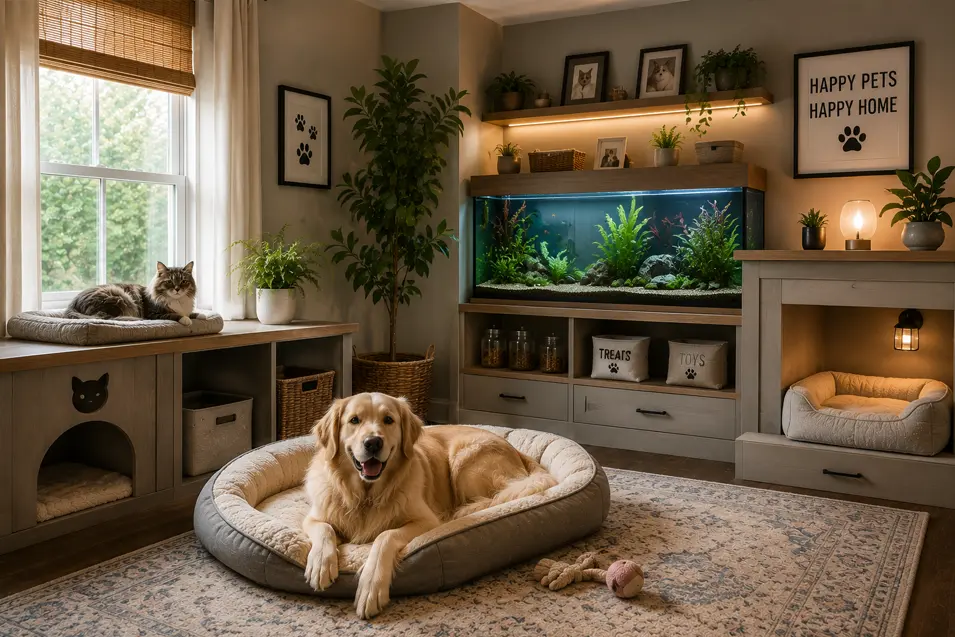
Living with multiple pets can be incredibly rewarding. Whether you share your home with several dogs, a group of cats, or a combination of both, a well-designed pet space can make daily life easier while helping your animals feel comfortable and secure. However, creating a room that works for multiple pets requires more planning than designing a space for a single animal.
Different pets often have different personalities, activity levels, sleeping preferences, and feeding needs. A successful multi-pet room balances these requirements while minimizing competition, reducing stress, and promoting harmony throughout the household.
From sleeping arrangements and feeding stations to enrichment opportunities and storage solutions, here are some practical ideas for creating a multi-pet room that works for everyone.
Why Create a Multi-Pet Room?
A dedicated pet room helps centralize many aspects of pet care while providing animals with a predictable environment.
Benefits may include:
- Better organization
- Reduced household clutter
- Easier feeding routines
- More efficient cleaning
- Dedicated enrichment opportunities
- Improved resource management
For households with multiple animals, a shared pet room can also help establish routines and reduce conflicts over valuable resources.
Start with Durable Flooring
The more pets you have, the more wear and tear your flooring will experience.
The ideal flooring should be:
- Scratch resistant
- Moisture resistant
- Easy to clean
- Comfortable underfoot
- Durable enough for heavy use
Popular flooring choices include:
- Luxury vinyl plank flooring
- Porcelain tile
- Ceramic tile
- Rubber flooring
- Sealed concrete
Adding washable rugs can increase comfort while improving traction for older pets.
Durable flooring helps simplify maintenance and prolong the life of the room.
Create Separate Sleeping Areas
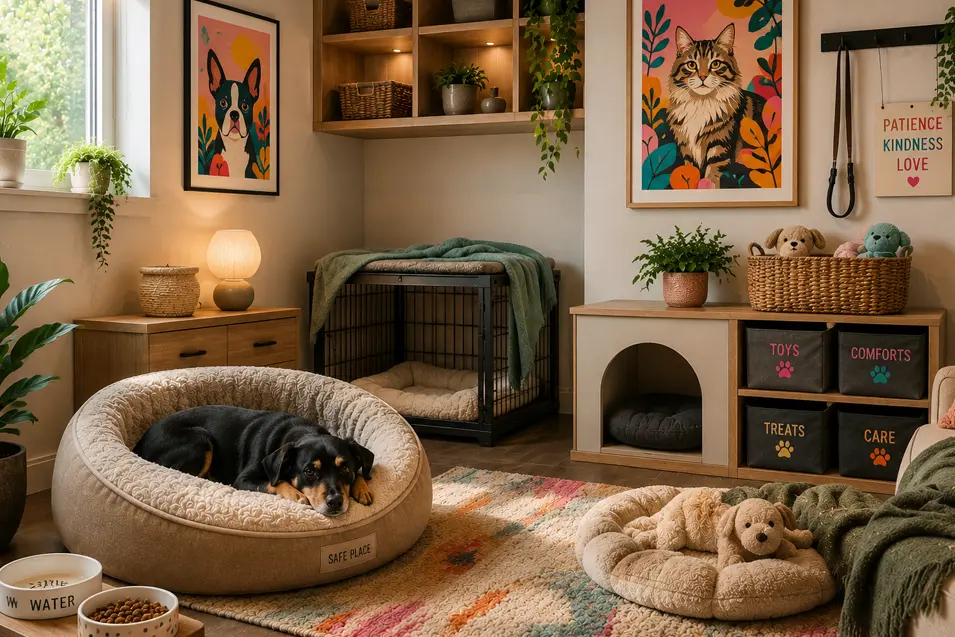
One of the most important design principles in a multi-pet room is providing enough resting spaces.
Even pets that get along well often appreciate having their own place to relax.
Consider including:
- Individual pet beds
- Elevated cat beds
- Cozy hideaways
- Crates for dogs
- Window perches
Providing more sleeping spaces than pets can help reduce competition and allow animals to choose where they feel most comfortable.
Design Multiple Feeding Stations
Food can be a major source of tension in multi-pet households.
Separate feeding areas help:
- Prevent food guarding
- Reduce stress
- Accommodate special diets
- Create calmer mealtimes
Feeding station ideas include:
- Opposite corners of the room
- Elevated feeding shelves for cats
- Individual feeding cubbies
- Separate feeding schedules when necessary
Position feeding stations far enough apart that pets can eat comfortably without feeling threatened.
Include Vertical Space for Cats
If cats are part of the household, vertical space becomes especially important.
Cats naturally seek elevated areas for:
- Resting
- Observation
- Security
- Escaping social pressure
Cat-friendly additions include:
- Wall-mounted shelves
- Cat trees
- Window perches
- Climbing systems
- Elevated beds
Vertical spaces allow cats to move through the room without constantly interacting with dogs or other pets.
Create Quiet Retreat Areas
Not every pet wants constant social interaction.
A successful multi-pet room should provide opportunities for privacy.
Retreat options may include:
- Covered beds
- Crates
- Cat hideaways
- Furniture with enclosed sleeping spaces
- Quiet room corners
These areas allow pets to withdraw when they need downtime.
Having access to personal space can reduce anxiety and improve overall harmony.
Add Enrichment for Different Species
Different pets enjoy different forms of stimulation.
A multi-pet room should offer a variety of enrichment options.
For dogs:
- Puzzle toys
- Snuffle mats
- Chew stations
- Treat-dispensing toys
For cats:
- Interactive toys
- Scratching posts
- Climbing structures
- Window viewing stations
Providing species-specific enrichment helps satisfy natural instincts and reduce boredom.
Incorporate Smart Storage Solutions
Multiple pets often mean double—or triple—the supplies.
Storage should accommodate:
- Food
- Treats
- Toys
- Leashes
- Harnesses
- Grooming supplies
- Medications
- Bedding
Helpful storage solutions include:
- Built-in cabinets
- Storage benches
- Wall-mounted organizers
- Decorative baskets
- Shelving systems
Keeping supplies organized helps maintain a cleaner and more functional room.
Design a Shared Play Area
Many pets enjoy interacting with one another through play.
A dedicated play zone can encourage healthy activity.
Consider including:
- Open floor space
- Soft mats
- Interactive toys
- Rotating enrichment items
Ensure the area is large enough to allow pets to move comfortably without feeling crowded.
Supervised play sessions can help strengthen positive relationships among household pets.
Make Water Easily Accessible
Hydration is important, especially in households with multiple animals.
Consider providing:
- Multiple water bowls
- Pet fountains
- Elevated water stations
- Spill-resistant containers
Having several water sources reduces competition and ensures all pets can drink comfortably.
This is particularly important in larger households.
Plan for Grooming and Cleanup
More pets typically mean more shedding, dirt, and maintenance.
A multi-pet room can benefit from a dedicated cleanup area.
Useful additions include:
- Storage for grooming tools
- Towels
- Pet-safe wipes
- Vacuum attachments
- Cleaning supplies
Keeping these items nearby makes routine maintenance more convenient.
Use Pet-Friendly Furniture
Furniture in a multi-pet room should be chosen carefully.
Look for materials that are:
- Durable
- Easy to clean
- Scratch resistant
- Comfortable
Popular choices include:
- Performance fabrics
- Microfiber
- Leather
- Washable covers
Pet-friendly furniture helps maintain the room’s appearance despite daily use.
Ensure Good Ventilation
Multiple pets can contribute to increased odors, humidity, and airborne hair.
Good airflow helps:
- Improve air quality
- Reduce odors
- Maintain comfort
- Support cleanliness
Consider:
- Ceiling fans
- Open windows with secure screens
- Air purifiers
- Dehumidifiers if needed
A comfortable environment benefits both pets and people.
Prioritize Safety
A room shared by several animals should be carefully pet-proofed.
Remove or secure:
- Electrical cords
- Toxic plants
- Medications
- Cleaning chemicals
- Small choking hazards
- Sharp objects
Regular inspections help identify potential issues before they become accidents.
Safety should remain a top priority regardless of the number of pets.
Allow Flexibility as Needs Change
Pets’ needs evolve over time.
Puppies mature, senior pets develop mobility challenges, and household dynamics can shift.
Flexible room designs make it easier to:
- Rearrange furniture
- Add storage
- Create new feeding areas
- Accommodate future pets
Planning for adaptability helps ensure the room remains functional for years to come.
Creating a Space Everyone Can Enjoy
Designing a multi-pet room is about more than fitting several animals into one space. The goal is to create an environment that supports comfort, safety, enrichment, and harmony for every pet in the household.
By incorporating separate sleeping areas, multiple feeding stations, species-specific enrichment, smart storage solutions, and thoughtful safety measures, you can build a room that meets a wide variety of needs. Whether you share your home with two pets or ten, a well-designed multi-pet room can simplify daily routines while helping every animal feel secure, comfortable, and valued.
When done well, a multi-pet room becomes more than a shared space—it becomes a place where every member of your furry family can thrive.