Canada’s Atlantic coast is home to some of the country’s most recognizable architecture. Weathered fishing stages perched above the water, iconic lighthouses standing against the fog, bustling wharves, and colourful seaside villages have defined Maritime life for generations. Built to withstand salt air, powerful storms, and the demands of life on the ocean, these structures have become enduring symbols of craftsmanship, resilience, and community.
This collection reimagines those landmarks as sculptural luxury cat trees. Rather than copying real buildings, each design draws inspiration from the character and spirit of Maritime architecture while incorporating thoughtful features cats naturally enjoy, including elevated perches, cozy sleeping lofts, scratching surfaces, climbing routes, and sheltered hideaways.
Photographed as though they belong in beautifully designed coastal homes overlooking the Atlantic, every piece celebrates the warmth of handcrafted woodworking and the timeless charm of Canada’s East Coast. Whether you have memories of visiting Nova Scotia, Prince Edward Island, New Brunswick, or Newfoundland and Labrador, these imaginative designs capture the feeling of life by the sea through furniture created for our feline companions.
The Lighthouse
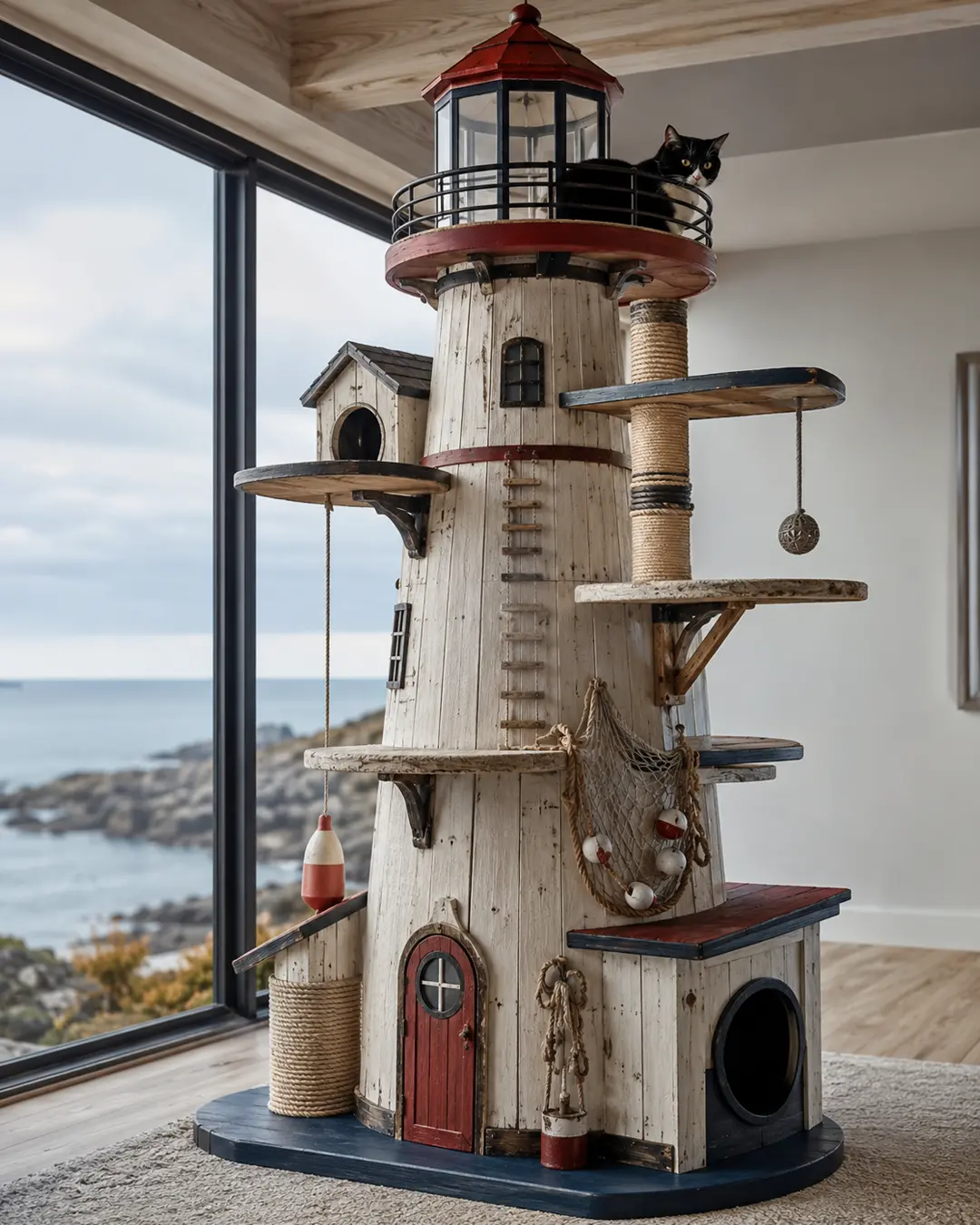
Guiding the Way
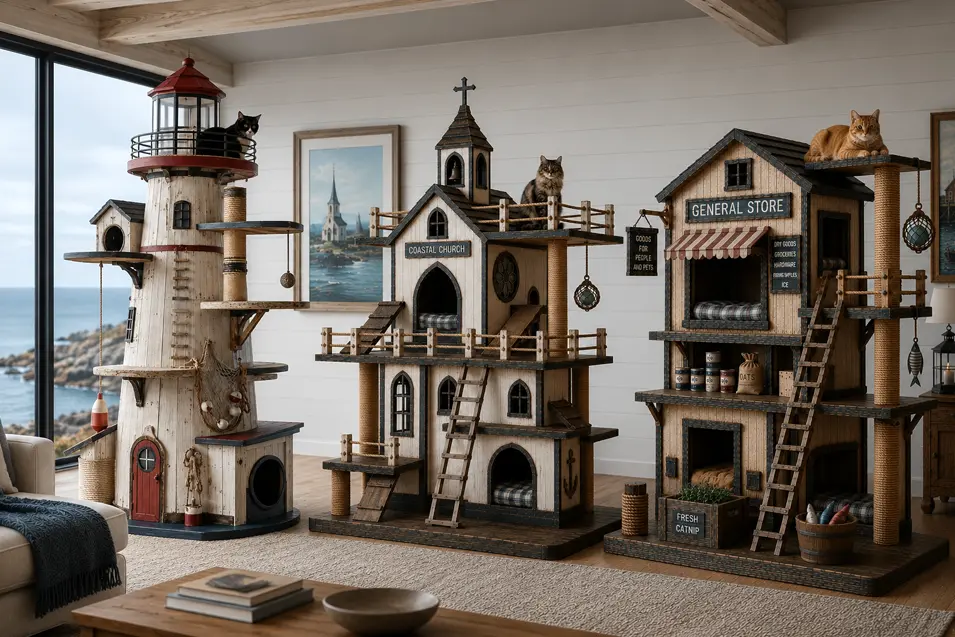
Standing proudly above the shoreline, the lighthouse has long served as a symbol of safety and hope for sailors returning home. This sculptural cat tree captures that familiar silhouette with weathered wood, layered platforms, and a lantern-inspired lookout that becomes the highest perch in the design.
Cats naturally seek elevated spaces where they can survey their surroundings, making the lighthouse’s viewing platform the perfect resting place. Lower levels provide cozy retreats, climbing routes, and scratching surfaces, combining practical feline enrichment with timeless Maritime character. Soft coastal colours and handcrafted detailing allow the piece to feel equally at home in a modern interior or a traditional seaside cottage.
Lobster Wharf
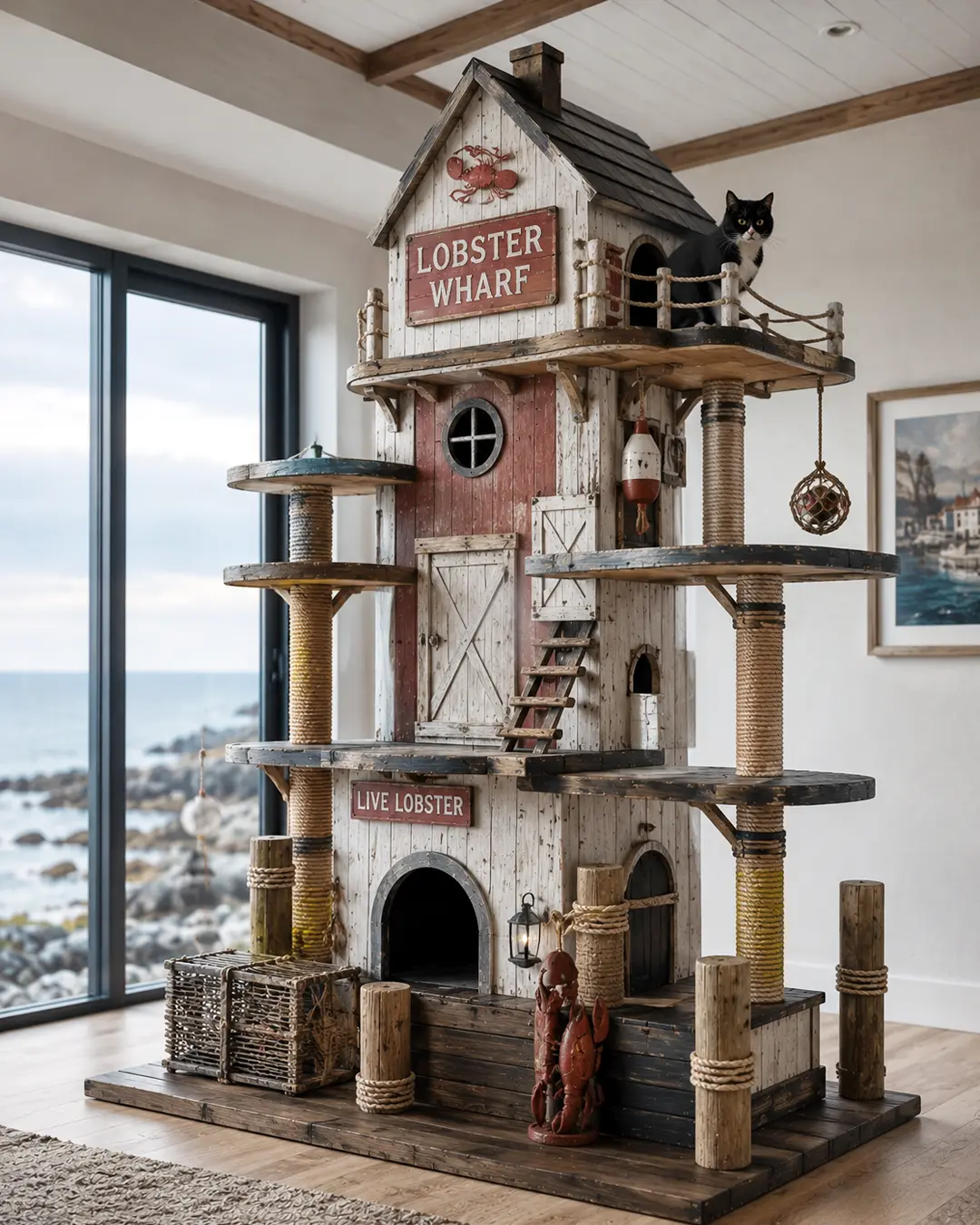
Where the Day’s Catch Comes Ashore
For generations, lobster wharves have been the heartbeat of Maritime fishing communities. Before sunrise, fishermen head out into the Atlantic, returning hours later to weathered wooden docks where traps are stacked, ropes are coiled, and the day’s catch is unloaded. These working wharves are as much a symbol of Canada’s East Coast as the lighthouses that guide boats safely home.
Inspired by those iconic waterfront buildings, this sculptural cat tree transforms the traditional lobster wharf into a luxurious playground for adventurous felines. Weathered cedar siding, oversized timber posts, hand-painted signage, and carefully aged finishes capture the character of a hardworking coastal building that has stood against decades of salt spray and Atlantic storms.
Multiple climbing routes lead cats naturally from the main floor to elevated observation decks, while sheltered sleeping lofts recreate the cozy feel of a loft tucked beneath the roof of an old wharf building. Rope-wrapped scratching columns echo the heavy dock lines found throughout Maritime harbours, and wide viewing platforms give cats the perfect place to survey their surroundings just as a harbour master might watch fishing boats returning to port.
Photographed inside a bright oceanfront home with sweeping coastal views, the design feels equally at home as functional cat furniture and as a handcrafted piece of Maritime-inspired décor. It celebrates the craftsmanship, history, and enduring spirit of Canada’s lobster fishing communities while creating an imaginative retreat built entirely for curious cats.
Fishing Shed
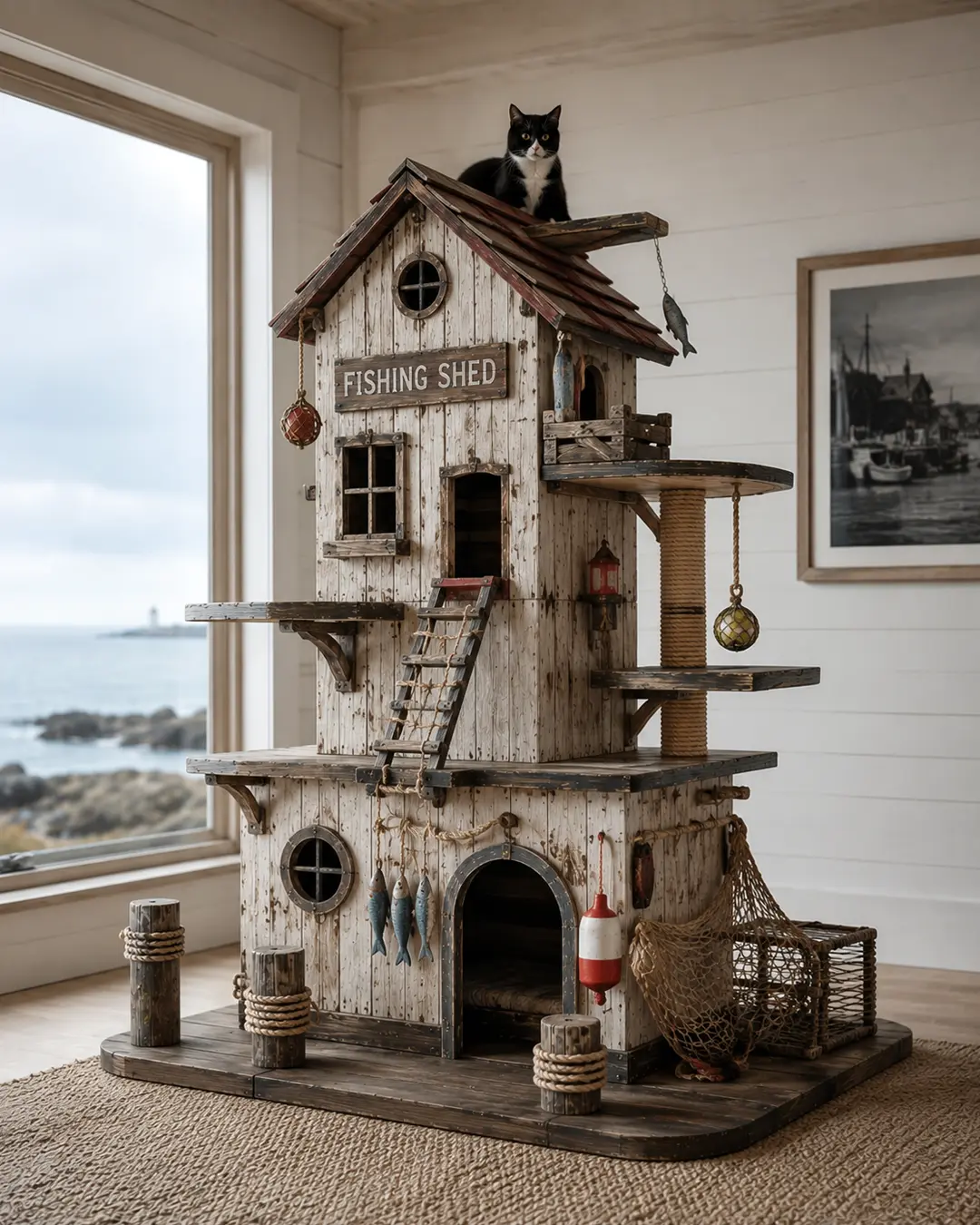
Built for the Work of the Sea
Scattered along Canada’s Atlantic coastline, weathered fishing sheds have served as the backbone of countless coastal communities for generations. Standing just above the shoreline, these practical wooden buildings stored nets, traps, ropes, buoys, and the equipment that kept fishing families working through every season. Their simple construction, worn timber siding, and salt-weathered character have become an enduring part of Maritime life.
This sculptural luxury cat tree draws inspiration from those hardworking structures while transforming them into a thoughtfully designed home for adventurous cats. Handcrafted from distressed wood with authentic coastal detailing, the design features elevated observation decks, climbing platforms, rope-wrapped scratching posts, and sheltered sleeping spaces tucked safely inside the building. Decorative fishing nets, weathered buoys, hanging tackle, and handcrafted trim celebrate the unmistakable atmosphere of a traditional East Coast fishing village without overwhelming the clean architectural lines.
The layout encourages natural feline behaviour. Wide platforms provide comfortable places to pause between climbs, while the upper balcony and rooftop perch offer commanding views of the room below. Multiple routes allow cats to explore at their own pace, moving naturally between levels before settling into one of the cozy sleeping retreats hidden within the structure.
Photographed inside a bright coastal home overlooking the Atlantic, the Fishing Shed blends functional pet furniture with timeless Maritime craftsmanship. More than a cat tree, it becomes a celebration of Canada’s fishing heritage—capturing the quiet beauty, resilience, and honest simplicity of life along the East Coast while offering cats a place to climb, explore, rest, and watch over their own little harbour.
Boathouse
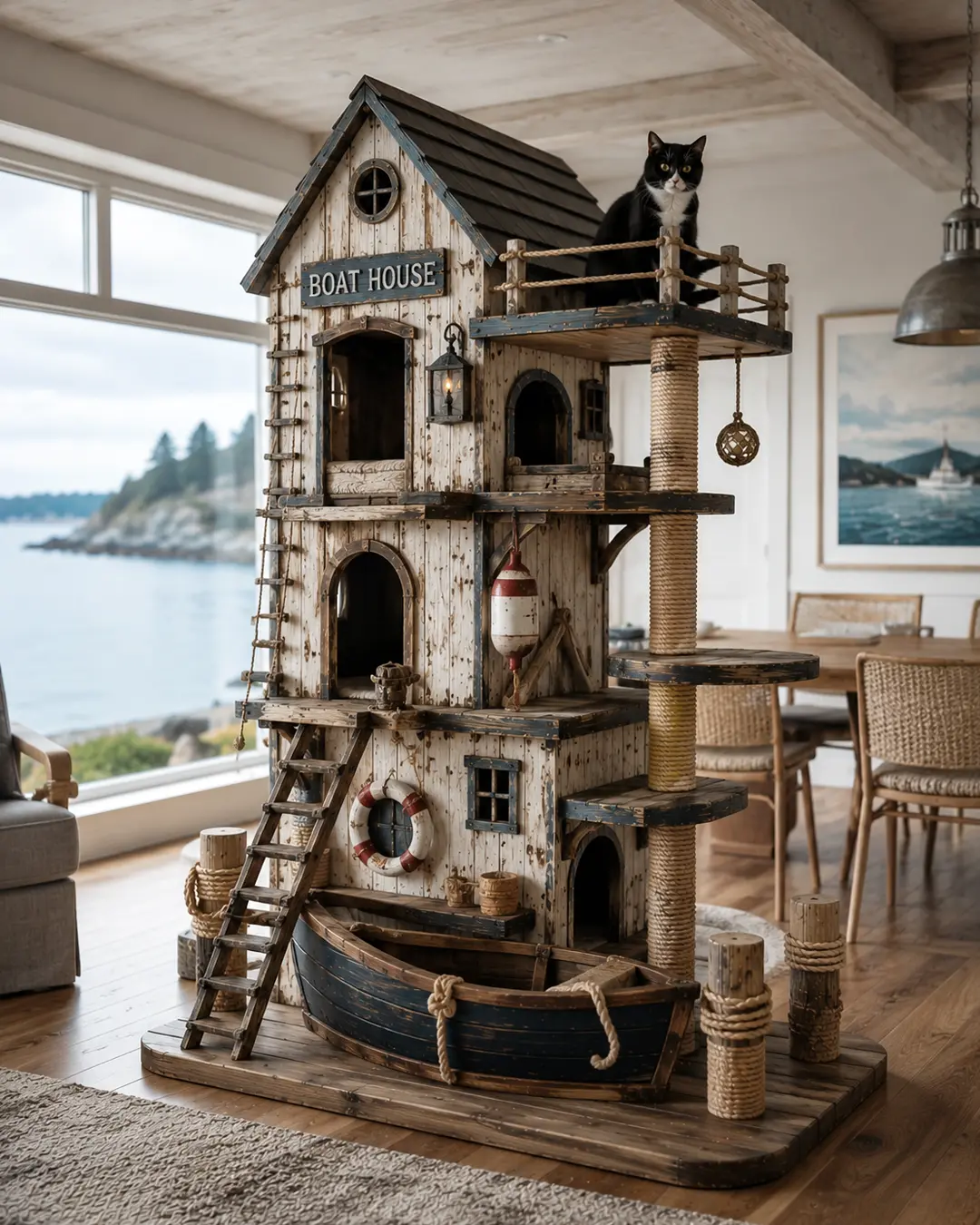
Where Every Journey Begins
Along Canada’s Atlantic coastline, the boathouse has always been more than a place to store a vessel. It is where fishing boats are repaired after long days on the water, where oars are hung to dry, nets are mended, and generations of families prepare for another sunrise on the sea. Built from sturdy timber and designed to withstand salt air and coastal weather, these humble structures reflect the resourcefulness and craftsmanship that define Maritime life.
Inspired by those waterfront buildings, this sculptural luxury cat tree transforms the classic boathouse into a beautifully handcrafted retreat designed entirely for cats. Weathered wood siding, rope railings, handcrafted ladders, nautical lanterns, and authentic dockside details recreate the warmth and character of a traditional seaside workshop. The small wooden dory resting at the base pays tribute to the iconic boats that have carried fishermen through Atlantic waters for centuries, grounding the design in Maritime history while adding a playful architectural element.
Every level has been thoughtfully planned to encourage natural feline behaviour. Cats can climb from the lower sleeping quarters through wide platforms and elevated walkways before reaching the spacious upper lookout overlooking the room. Sheltered hideaways offer quiet places to nap, while multiple scratching posts and generous perches provide opportunities to climb, stretch, observe, and explore. Rather than feeling like separate pieces, the pathways flow naturally together, creating a cat tree that is as functional as it is sculptural.
Set inside a contemporary coastal home with sweeping ocean views, the Boathouse feels like an heirloom handcrafted by generations of Maritime woodworkers. It celebrates the quiet beauty of Canada’s Atlantic shoreline while reimagining one of its most familiar waterfront buildings as an elegant piece of furniture that both cats and their owners can appreciate.
Fog Bell Tower
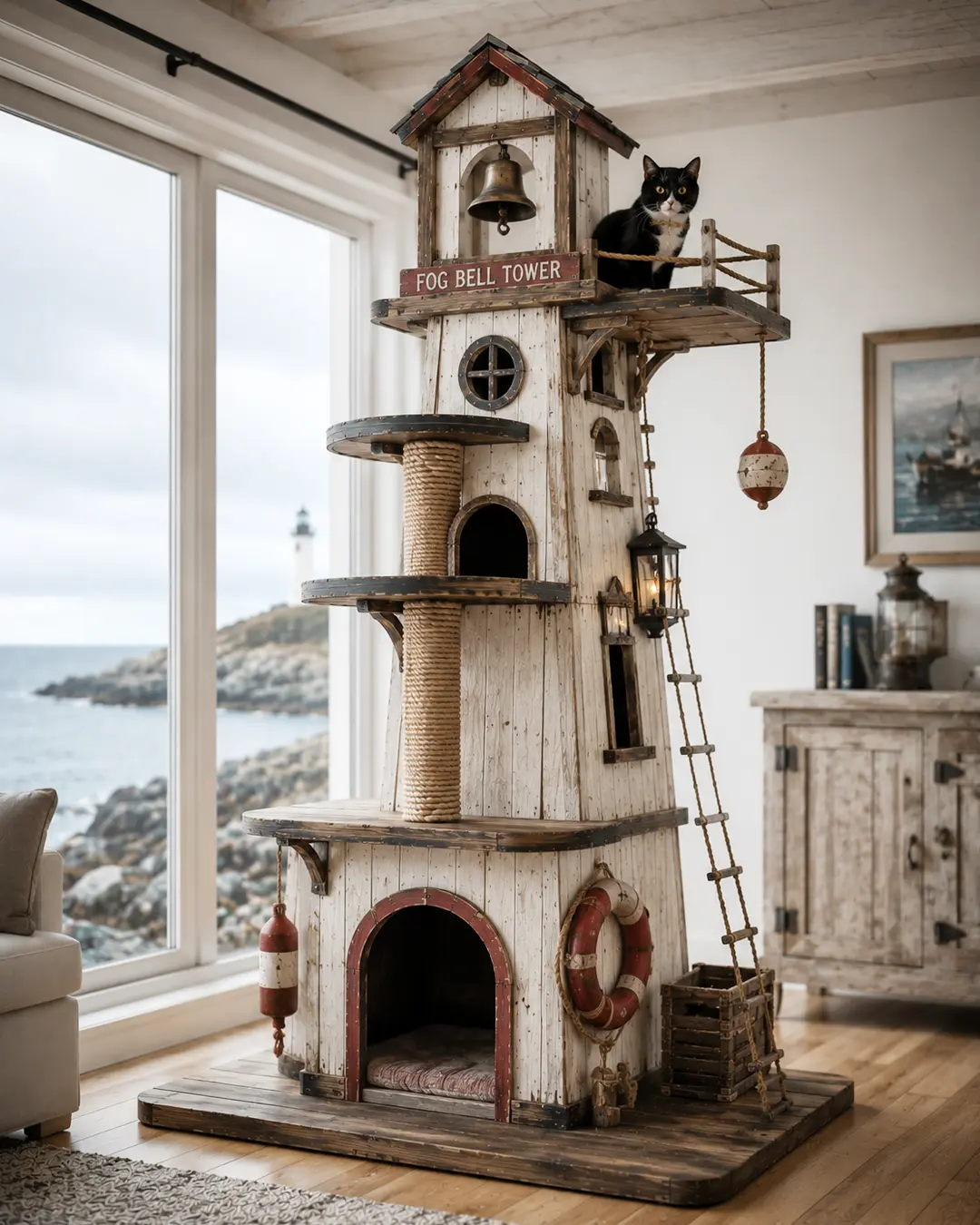
Guiding Sailors Through the Mist
Long before radar and GPS transformed navigation, Canada’s Atlantic coastline relied on more than lighthouses to guide ships safely home. When thick fog rolled across the ocean and lighthouse beams disappeared into the mist, fog bells became a lifeline. Mounted in sturdy wooden towers along rocky shorelines, their deep, steady toll echoed across the water, warning sailors of hidden reefs and helping fishing boats find their bearings during some of the region’s most challenging weather.
Inspired by these historic coastal landmarks, this sculptural luxury cat tree reimagines the classic fog bell tower as an elegant retreat for adventurous felines. Rising high above its surroundings, the design features weathered timber cladding, hand-finished architectural details, and a fully enclosed bell tower crowned by an authentic bronze bell. Every element reflects the craftsmanship of traditional Maritime carpentry while celebrating one of the Atlantic coast’s lesser-known navigational icons.
Designed with both beauty and functionality in mind, the tower offers cats a natural climbing journey from the spacious lower hideaway to elevated observation platforms and finally to the panoramic lookout beneath the bell. Wide resting shelves provide comfortable places to pause along the way, while integrated scratching columns, cozy sleeping nooks, and thoughtfully positioned entrances encourage exploration without compromising the clean architectural form. Every route has been designed to feel intuitive, allowing curious cats to move through the structure as naturally as sailors once climbed these towers to maintain the warning bell.
Set within a light-filled coastal home overlooking the Atlantic Ocean, the Fog Bell Tower becomes more than a piece of cat furniture—it becomes a tribute to Canada’s rich maritime heritage. Blending historical inspiration with contemporary craftsmanship, it captures the quiet romance of foggy mornings, rugged coastlines, and the enduring structures that have protected generations of sailors along the East Coast.
Captain’s Cottage
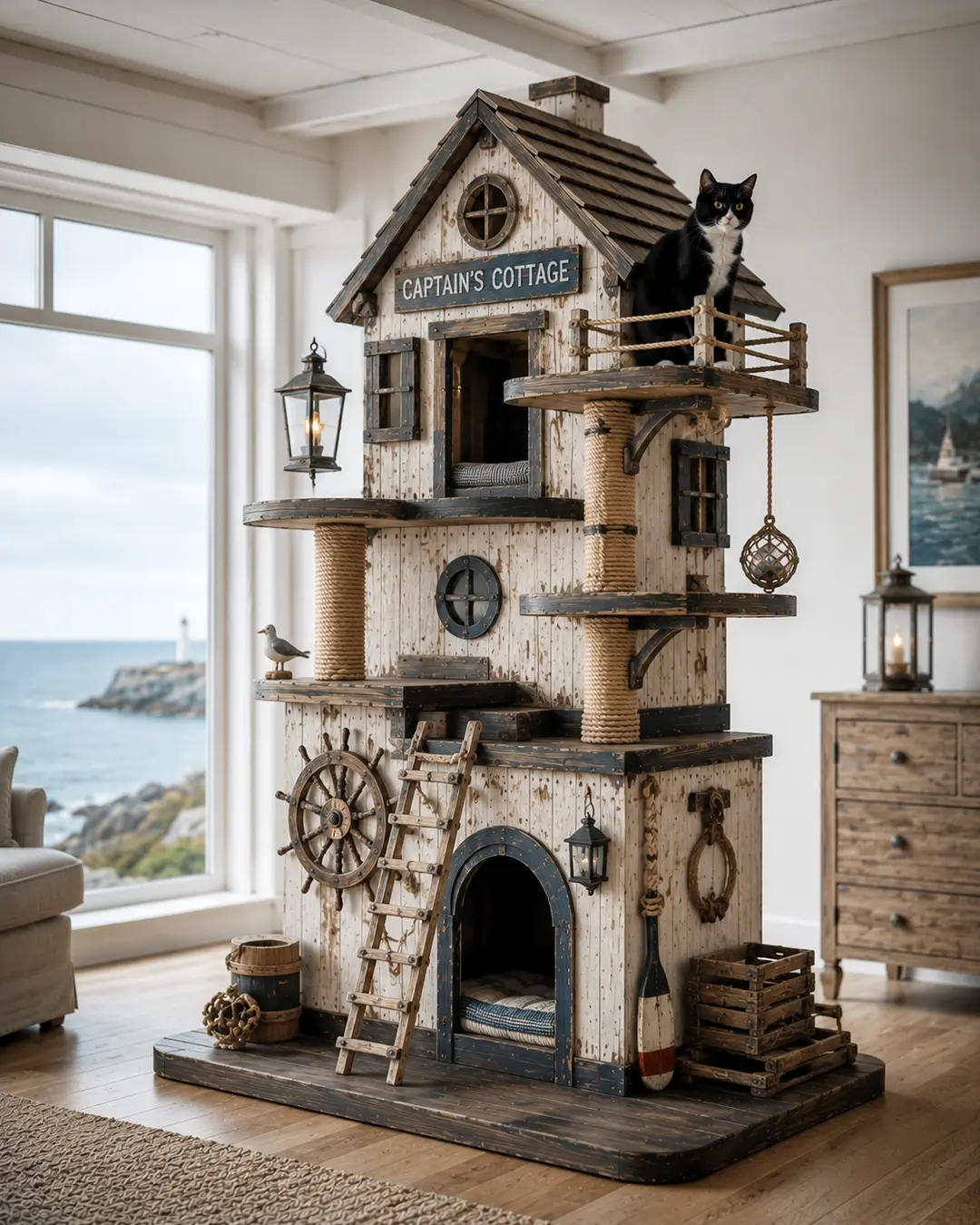
A Home Earned by the Sea
Along Canada’s Atlantic coast, the captain’s cottage represented more than comfortable living—it was the reward for a lifetime spent on the water. Built by experienced mariners who had navigated countless voyages, these modest yet well-crafted homes overlooked harbours where fishing boats and schooners came and went with the tides. Their owners understood the value of sturdy construction, practical design, and a welcoming place to return after weeks at sea.
Inspired by those historic coastal homes, this sculptural luxury cat tree captures the warmth and character of a traditional Maritime captain’s cottage while transforming it into an elegant retreat for curious cats. Weathered cedar siding, handcrafted shutters, rope railings, and authentic nautical accents reflect the craftsmanship found throughout Atlantic Canada’s seaside communities. The ship’s wheel, lanterns, weathered oars, and carefully aged finishes hint at a lifetime spent navigating the ocean, creating a piece that feels as though it has been lovingly cared for through generations.
Every level has been thoughtfully designed to encourage natural feline exploration. Wide platforms allow cats to move comfortably between floors, sheltered sleeping lofts provide quiet places to rest, and elevated observation decks offer commanding views of the room below. Multiple scratching columns, climbing routes, and cozy hideaways ensure the structure is every bit as functional as it is beautiful, allowing cats to satisfy their instinct to climb, perch, and watch over their surroundings.
Positioned inside a bright coastal home overlooking the Atlantic, the Captain’s Cottage feels like a treasured family heirloom passed down from one generation to the next. It celebrates the enduring traditions of Canada’s Maritime communities while blending timeless architecture with thoughtful feline design, creating a home that both people and cats would be proud to call their own.
Coast Guard Station
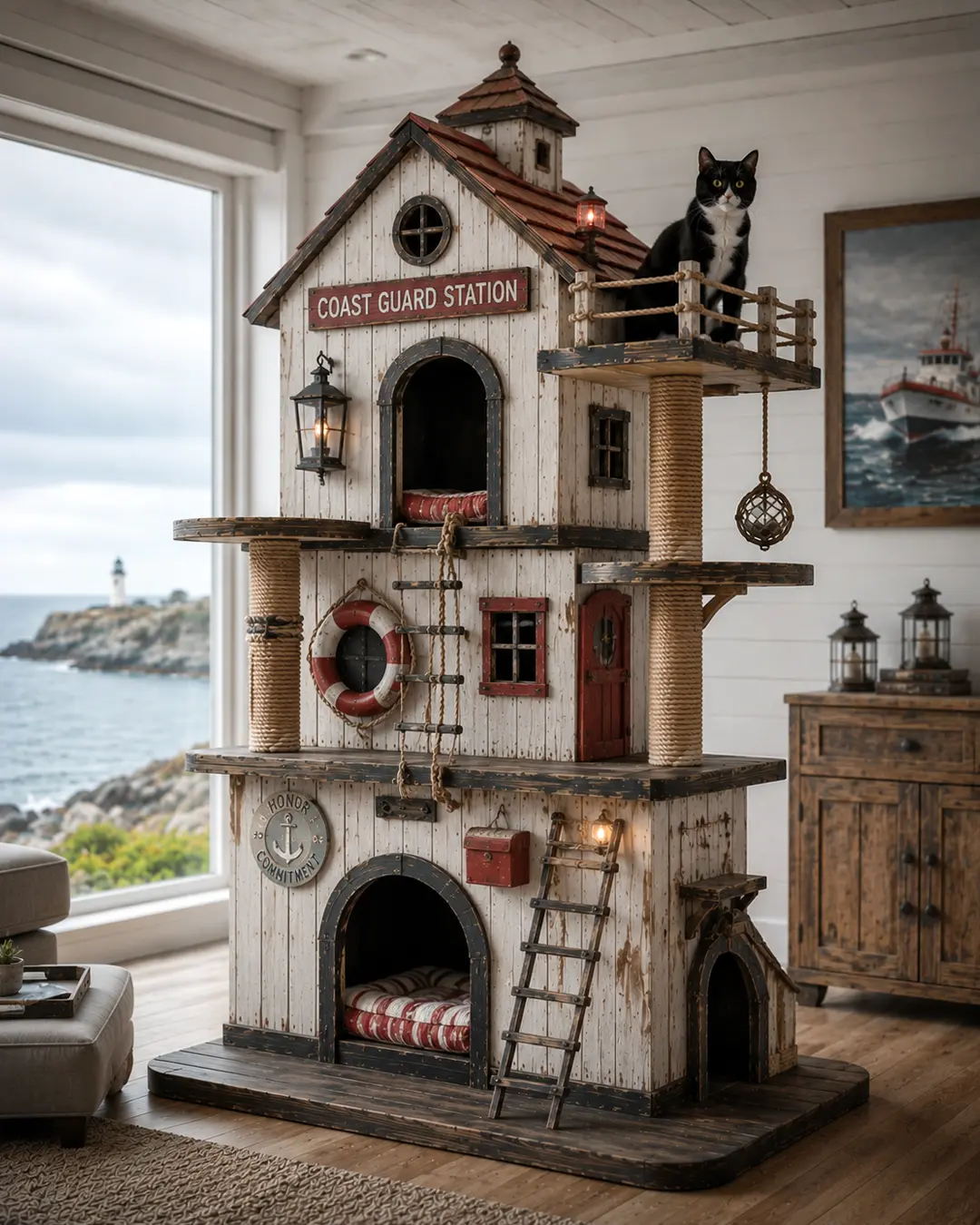
Standing Watch Along the Coast
For generations, Canada’s Coast Guard has safeguarded one of the world’s longest and most challenging coastlines. Along the Atlantic, Coast Guard stations have served as vital outposts where crews prepare for rescue missions, monitor changing weather, assist vessels in distress, and help ensure the safe passage of everyone who earns a living on the sea. These buildings represent vigilance, professionalism, and an unwavering commitment to protecting coastal communities.
Inspired by those iconic stations, this sculptural luxury cat tree transforms the familiar architecture of a Maritime rescue station into a beautifully handcrafted feline retreat. Weathered cedar siding, traditional lanterns, rope details, life rings, and authentic coastal colours reflect the practical beauty of buildings designed to withstand decades of salt air and Atlantic storms. Every architectural element celebrates the timeless craftsmanship found throughout Canada’s East Coast while paying tribute to the men and women who continue to watch over its waters.
The design balances realism with feline functionality. Spacious sleeping quarters provide secure places to rest, while generous observation decks and elevated platforms allow cats to oversee their surroundings from multiple vantage points. Rope-wrapped scratching columns, carefully positioned climbing ladders, and sheltered hideaways create natural pathways that encourage exploration without interrupting the clean architectural form. Every route has been thoughtfully designed so cats can move confidently from the ground floor to the highest lookout, just as Coast Guard crews move efficiently through their stations when every moment matters.
Photographed inside a bright oceanfront home overlooking the Atlantic, the Coast Guard Station feels both timeless and reassuring. More than an imaginative piece of cat furniture, it honours the enduring spirit of service, courage, and preparedness that has protected Canada’s coastal waters for generations, while giving curious cats a place to watch over their own home from above.
Harbour Master’s Office
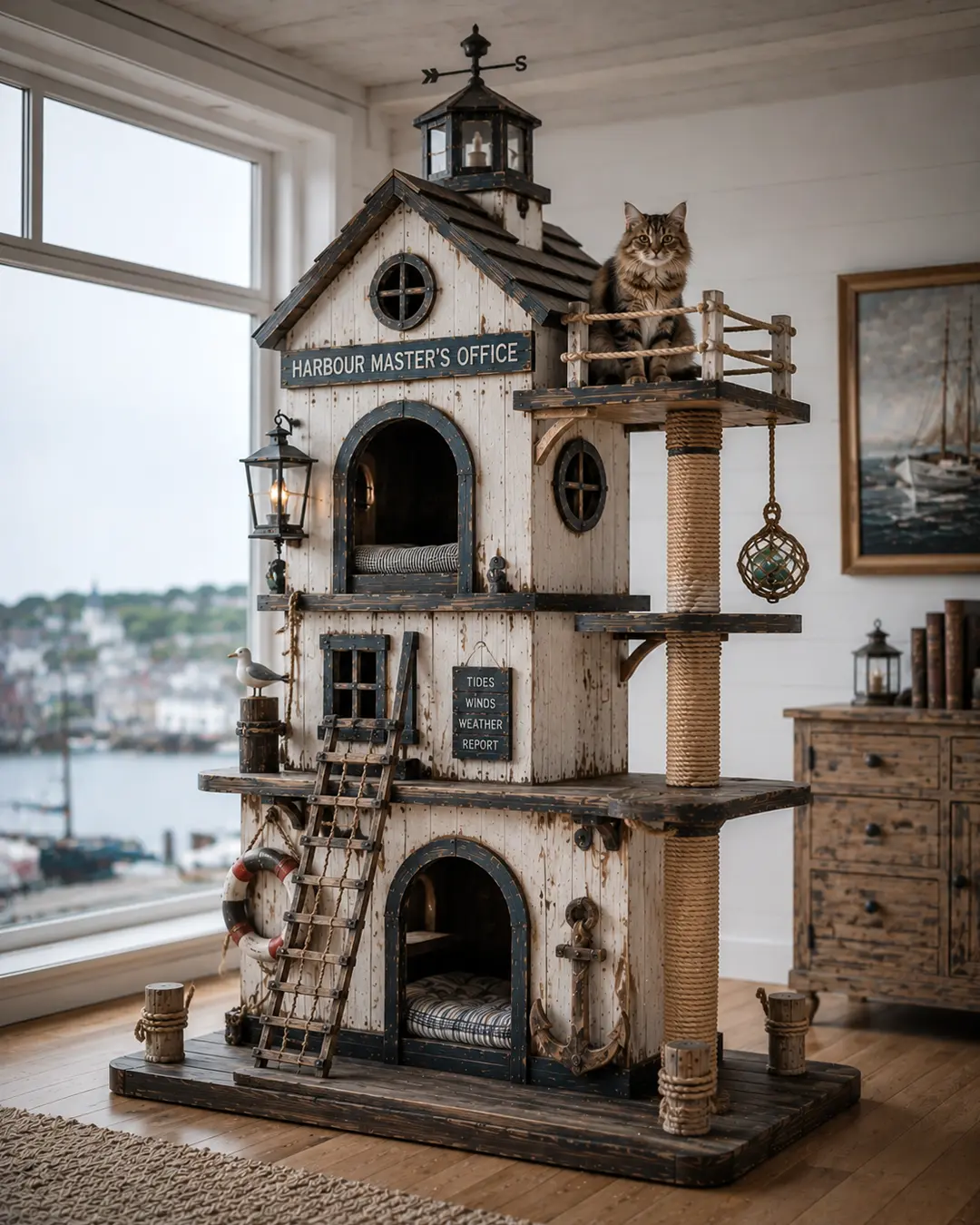
The Heart of a Working Harbour
Long before modern communication systems connected ports around the world, the harbour master’s office served as the command centre of every busy Maritime harbour. From these modest waterfront buildings, harbour masters coordinated arriving vessels, monitored tides and weather, assigned docking locations, and helped keep busy ports operating safely and efficiently. Their offices overlooked the water, offering a clear view of fishing boats, merchant ships, and pleasure craft as they navigated the ever-changing rhythm of the tide.
Inspired by these historic waterfront offices, this sculptural luxury cat tree transforms one of Canada’s most recognizable harbour buildings into a beautifully crafted retreat designed entirely for cats. Weathered cedar siding, traditional lanterns, nautical rope railings, and handcrafted architectural details capture the timeless character of East Coast port communities. Decorative anchors, weather reports, and maritime instruments pay tribute to the daily responsibilities of the harbour master while creating a design that feels authentic without overwhelming its clean architectural form.
Every level has been thoughtfully arranged to encourage natural feline exploration. Cats can climb easily from the lower sleeping quarters through wide resting platforms and elevated walkways before reaching the spacious observation deck overlooking the room. Multiple hideaways provide quiet places to nap, while rope-wrapped scratching columns and generous perches satisfy a cat’s instinct to climb, stretch, and survey its surroundings. Just as a harbour master once watched over the activity below, the highest platform offers the perfect vantage point for a curious cat to keep a watchful eye on everything happening at home.
Positioned inside a bright coastal residence overlooking a picturesque harbour, the Harbour Master’s Office feels like an heirloom handcrafted by generations of Maritime artisans. Blending coastal architecture, traditional woodworking, and thoughtful feline design, it celebrates the quiet leadership and enduring craftsmanship that have helped Canada’s Atlantic ports thrive for centuries.
Fishing Stage
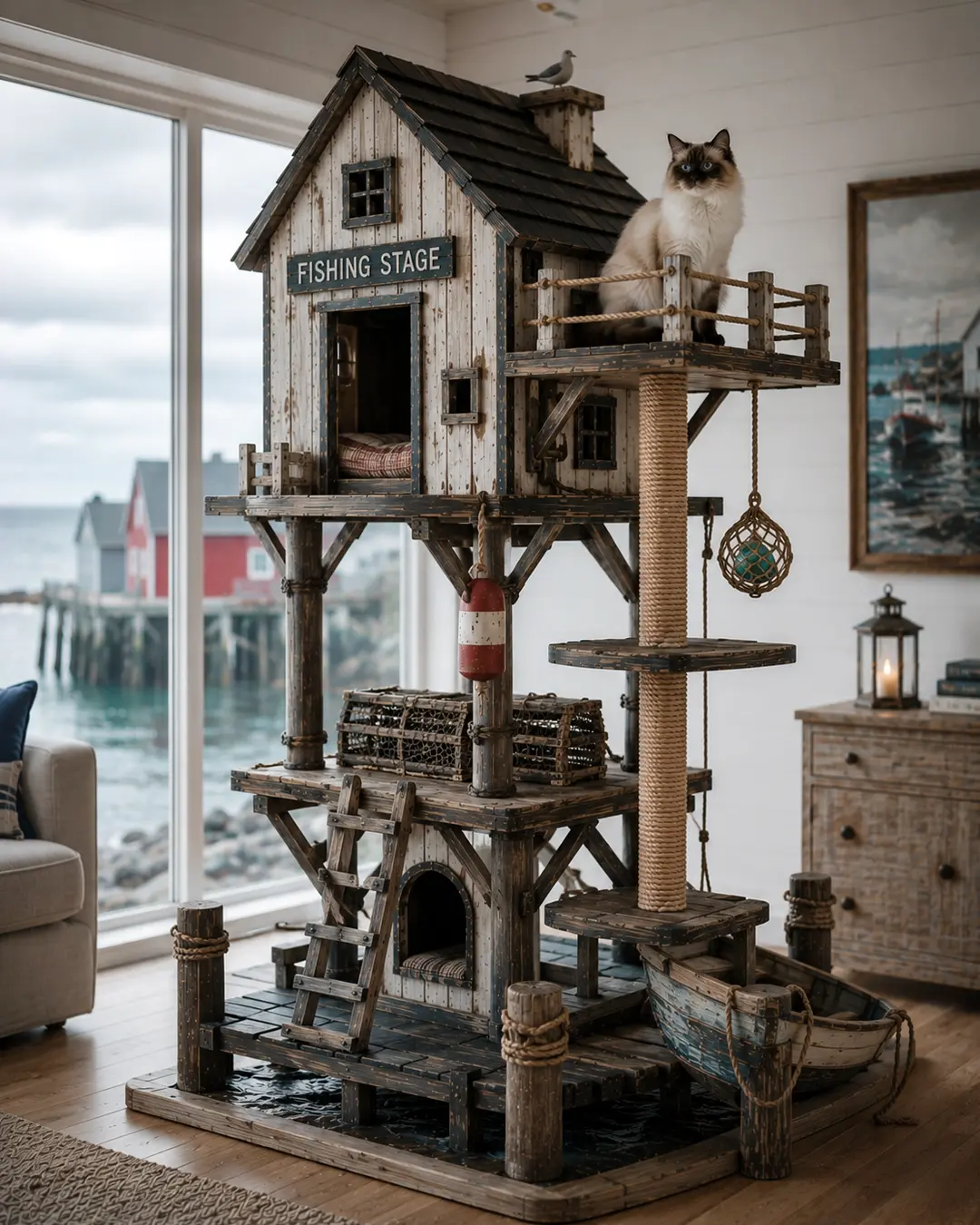
Built Above the Tide
Few structures are more closely associated with Canada’s Atlantic fishing villages than the traditional fishing stage. Built on sturdy timber pilings driven into the seabed, these weathered buildings extended out over the water where generations of fishermen unloaded their catch, repaired lobster traps, mended fishing nets, and prepared for another day at sea. Designed to rise and fall with the rhythm of the tides below, fishing stages became the working heart of countless Maritime communities, where the sights, sounds, and smell of the ocean were part of everyday life.
This sculptural luxury cat tree draws inspiration from those iconic waterfront structures while transforming them into a beautifully handcrafted playground for adventurous cats. Elevated on heavy timber posts above a detailed dock, the design faithfully captures the character of a traditional East Coast fishing stage. Weathered cedar siding, hand-built railings, stacked lobster traps, floating buoys, and a weathered wooden dory resting alongside the wharf create the unmistakable atmosphere of a working harbour that has served generations of fishing families.
Designed with feline exploration in mind, the multi-level layout allows cats to climb naturally from the dock below to elevated sleeping lofts, observation decks, and the rooftop lookout overlooking the room. Wide platforms provide comfortable resting places between climbs, while rope-wrapped scratching posts, sheltered hideaways, and thoughtfully placed entrances encourage the instinctive behaviours cats enjoy most. Every route has been carefully planned to feel realistic and intuitive, blending authentic architecture with practical feline design.
Set inside a bright coastal home overlooking the Atlantic, the Fishing Stage celebrates one of the most recognizable landmarks of Maritime life. More than a cat tree, it becomes a tribute to the working waterfronts that helped build Canada’s East Coast—places where craftsmanship, perseverance, and a deep connection to the sea have shaped communities for generations.
Coastal Church
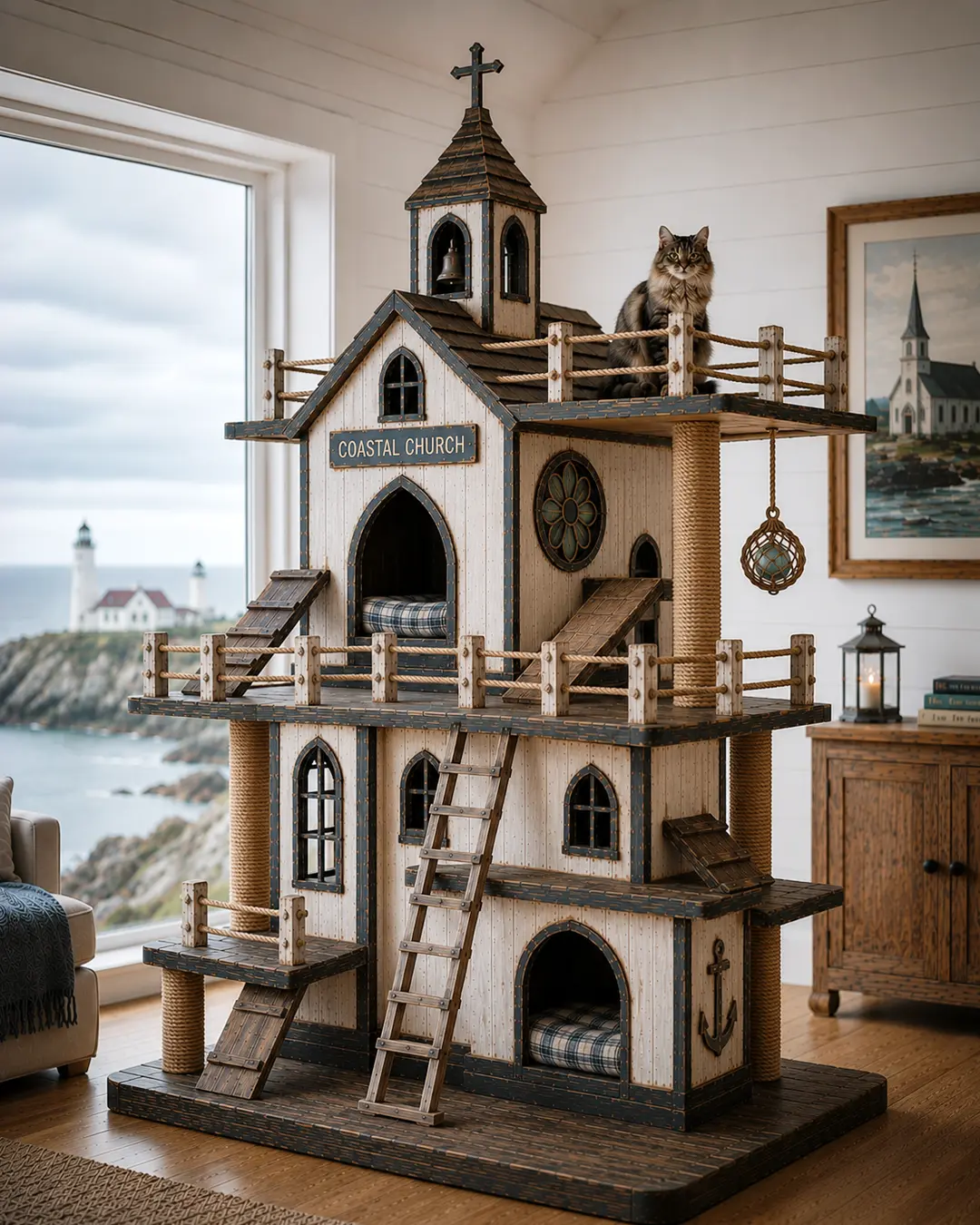
A Landmark of Faith and Community
Standing above rocky shorelines and sheltered harbours, the small wooden churches of Canada’s Atlantic coast have long been among the region’s most recognizable landmarks. Their bell towers welcomed families each Sunday, marked the passing of seasons, and often served as reassuring points of reference for fishermen returning from the sea. Built by local craftsmen using timber from nearby forests, these humble churches became the heart of countless Maritime communities, bringing neighbours together through generations of celebrations, traditions, and shared history.
Inspired by these timeless buildings, this sculptural luxury cat tree transforms the classic coastal church into a handcrafted retreat designed for curious cats. Weathered cedar siding, Gothic-inspired windows, an elegant bell tower, and carefully aged architectural details capture the quiet beauty of Maritime church architecture while maintaining the warmth and authenticity of traditional East Coast woodworking. Every element has been thoughtfully balanced to honour the original design without sacrificing functionality.
The interior has been reimagined for feline comfort and exploration. Spacious sleeping alcoves offer peaceful places to rest, while wide platforms, integrated scratching columns, and sturdy climbing ladders guide cats naturally from the ground floor to the elevated bell tower lookout. Multiple observation decks provide panoramic views of the room, allowing adventurous cats to watch over their surroundings from one of the highest points in the collection. Every pathway has been designed to feel intuitive, creating an experience that is as enjoyable to explore as it is beautiful to admire.
Photographed inside a bright coastal home overlooking the Atlantic, the Coastal Church combines timeless architecture with thoughtful feline design. More than an imaginative piece of furniture, it celebrates the craftsmanship, heritage, and enduring sense of community that have shaped Maritime towns for generations, reminding us that some of the most meaningful buildings are those that quietly bring people—and now their feline companions—together.
Dory Boat Landing
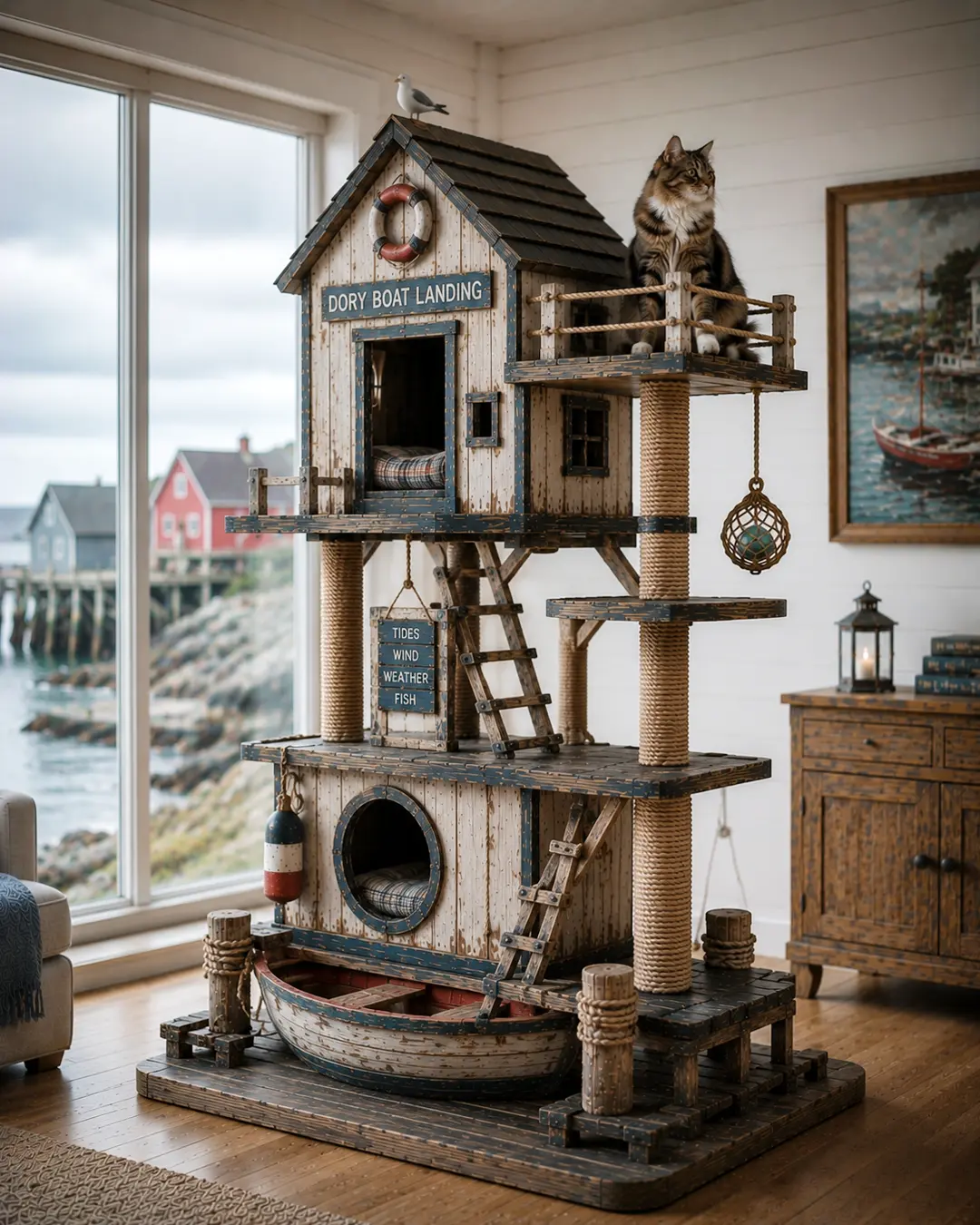
Where Every Voyage Began
For generations, the humble dory was one of the most important boats found along Canada’s Atlantic coast. Lightweight, durable, and easy to launch from rocky shorelines, these small wooden boats carried fishermen to larger vessels, hauled traps through sheltered coves, and transported families between islands and coastal communities. Beside nearly every working harbour stood a simple landing where dories were secured between tides, waiting for another day on the water.
Inspired by these historic waterfront landings, this sculptural luxury cat tree transforms the familiar architecture of a Maritime dock into a beautifully handcrafted retreat for adventurous cats. Elevated above weathered timber pilings, the structure features distressed cedar siding, handcrafted railings, traditional dock ladders, and a carefully detailed wooden dory resting beneath the landing. Every element reflects the practical beauty of East Coast waterfront construction while celebrating the craftsmanship that has defined Canada’s coastal communities for centuries.
Designed with feline exploration in mind, the layout encourages cats to move naturally through the structure. Wide platforms create comfortable resting places between climbs, while sheltered sleeping quarters provide quiet retreats tucked safely beneath the upper landing. Rope-wrapped scratching columns, elevated observation decks, and multiple climbing routes allow curious cats to explore from the dock below to the rooftop lookout with ease. Every pathway has been carefully integrated into the architecture so the design feels authentic, functional, and inviting.
Photographed inside a bright coastal home overlooking a picturesque harbour, the Dory Boat Landing blends Maritime heritage with thoughtful contemporary design. More than an imaginative piece of cat furniture, it celebrates the enduring relationship between Atlantic Canadians and the sea, honouring the simple wooden boats and working docks that helped shape generations of coastal life.
Bait Shack
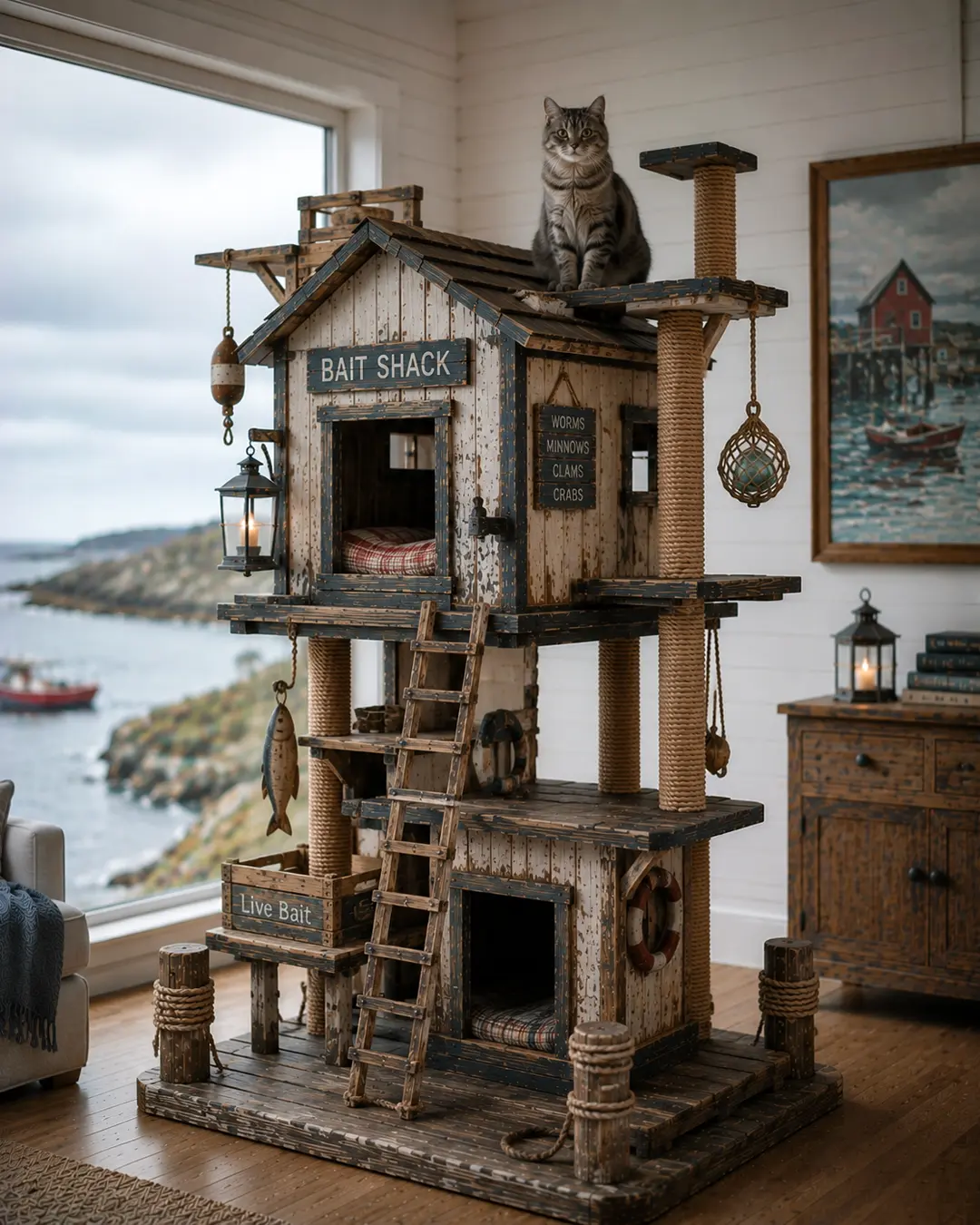
Preparing for the Next Tide
Long before dawn, while much of the village was still asleep, the bait shack was already open. Fishermen stopped by to collect bait, check the weather, exchange the latest harbour news, and make sure they had everything needed before heading out onto the Atlantic. Though often small and unassuming, these weathered wooden buildings played an essential role in daily life, helping generations of Maritime fishing families prepare for another day on the water.
Inspired by these hardworking waterfront shops, this sculptural luxury cat tree reimagines the traditional bait shack as a beautifully handcrafted retreat designed for curious cats. Distressed cedar siding, faded painted signage, weathered lanterns, stacked bait crates, hanging fishing gear, and authentic dockside details capture the character of a building that has welcomed fishermen for decades. Every architectural feature reflects the practical simplicity that defines so much of Canada’s Atlantic coastline.
The design is built around natural feline movement. Cats can climb easily from the lower sleeping quarters to the elevated observation platforms before reaching the spacious rooftop perch overlooking the room. Wide landings create comfortable resting places between climbs, while rope-wrapped scratching posts, sheltered hideaways, and thoughtfully positioned entrances encourage exploration at every level. Decorative fishing floats, bait boxes, and dockside accessories add personality without distracting from the clean architectural design, allowing the structure to feel equally at home as functional cat furniture and handcrafted coastal décor.
Photographed inside a bright Maritime-inspired home overlooking a sheltered harbour, the Bait Shack celebrates one of the quiet traditions of Atlantic life. While larger landmarks often receive the attention, it was these modest buildings that helped every journey begin. Reimagined as a sculptural cat tree, the bait shack becomes a tribute to the everyday routines, skilled craftsmanship, and enduring spirit that continue to define Canada’s coastal communities.
Wharf Café
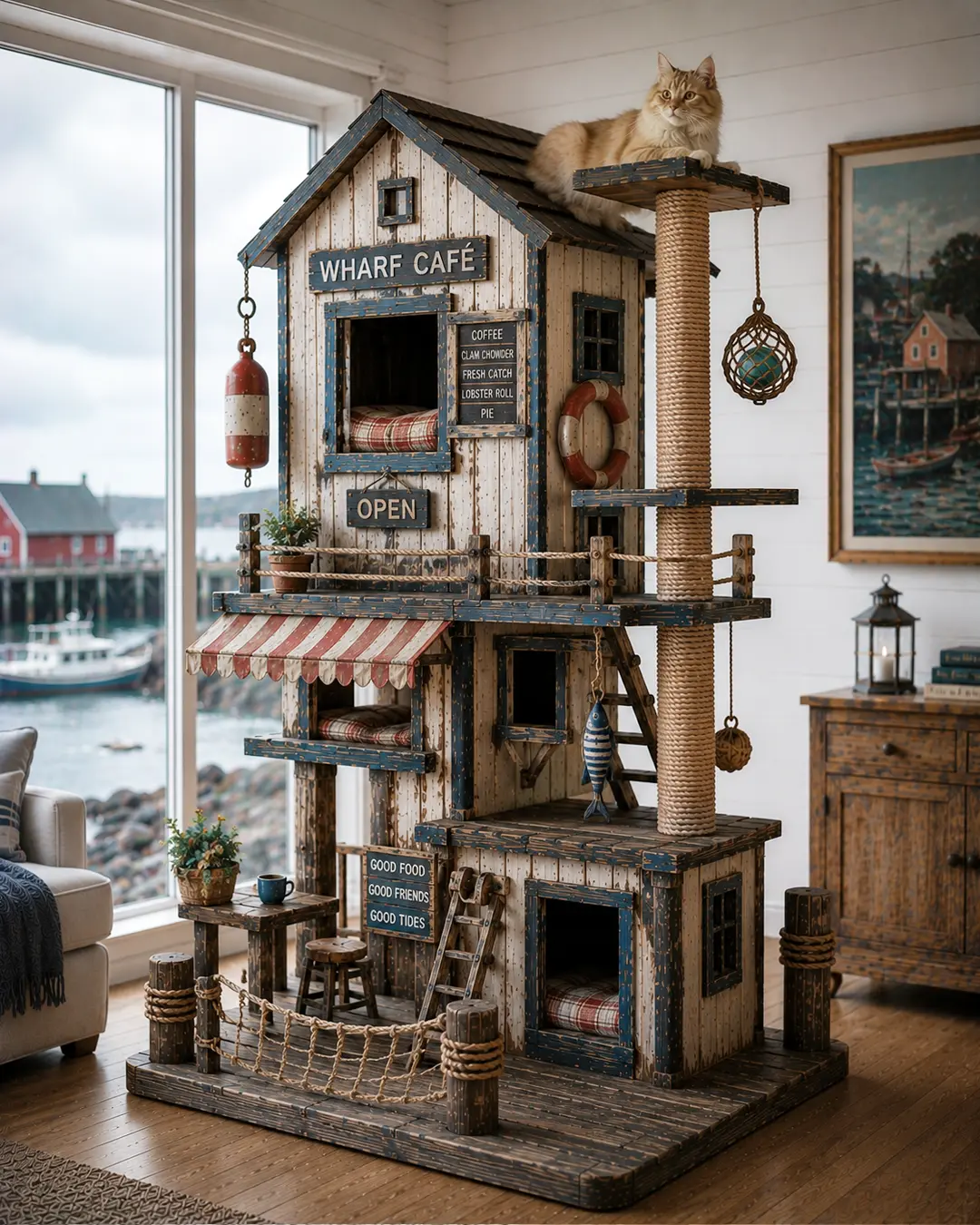
Where Every Good Story Begins
Every fishing village has a place where people naturally gather. Along Canada’s Atlantic coast, that place was often the small café overlooking the harbour. Fishermen stopped in before sunrise for a hot cup of coffee, neighbours met to exchange the latest news, and visitors found a warm welcome while watching boats come and go with the changing tide. These modest waterfront cafés became the social heart of Maritime communities, where conversations lasted as long as the coffee pot remained full and every table had a story to tell.
Inspired by these welcoming gathering places, this sculptural luxury cat tree transforms the classic wharf café into a beautifully handcrafted retreat designed for adventurous cats. Weathered cedar siding, striped canvas awnings, vintage café signage, rope railings, and handcrafted dockside details recreate the relaxed charm of a seaside eatery that has overlooked the harbour for generations. Small touches, from the menu board to the tiny outdoor seating area, add personality while remaining true to the practical architecture found throughout Atlantic Canada’s coastal towns.
Designed with feline comfort in mind, the café offers multiple places to climb, lounge, and observe. Spacious sleeping nooks provide quiet retreats, while elevated balconies and rooftop platforms invite curious cats to watch the activity below from the best seat in the house. Wide climbing routes, sturdy scratching posts, and thoughtfully positioned resting platforms create a natural flow throughout the structure, allowing every level to be explored with ease while preserving the appearance of a traditional waterfront building.
Photographed inside a bright coastal home overlooking a busy harbour, the Wharf Café captures the warmth and hospitality that define so many Maritime communities. More than an imaginative piece of cat furniture, it celebrates the simple pleasures of good conversation, fresh seafood, strong coffee, and friendships built one tide at a time. Like the cafés that inspired it, this little gathering place reminds us that the best memories are often made after the boats have returned safely to the dock.
Ice House
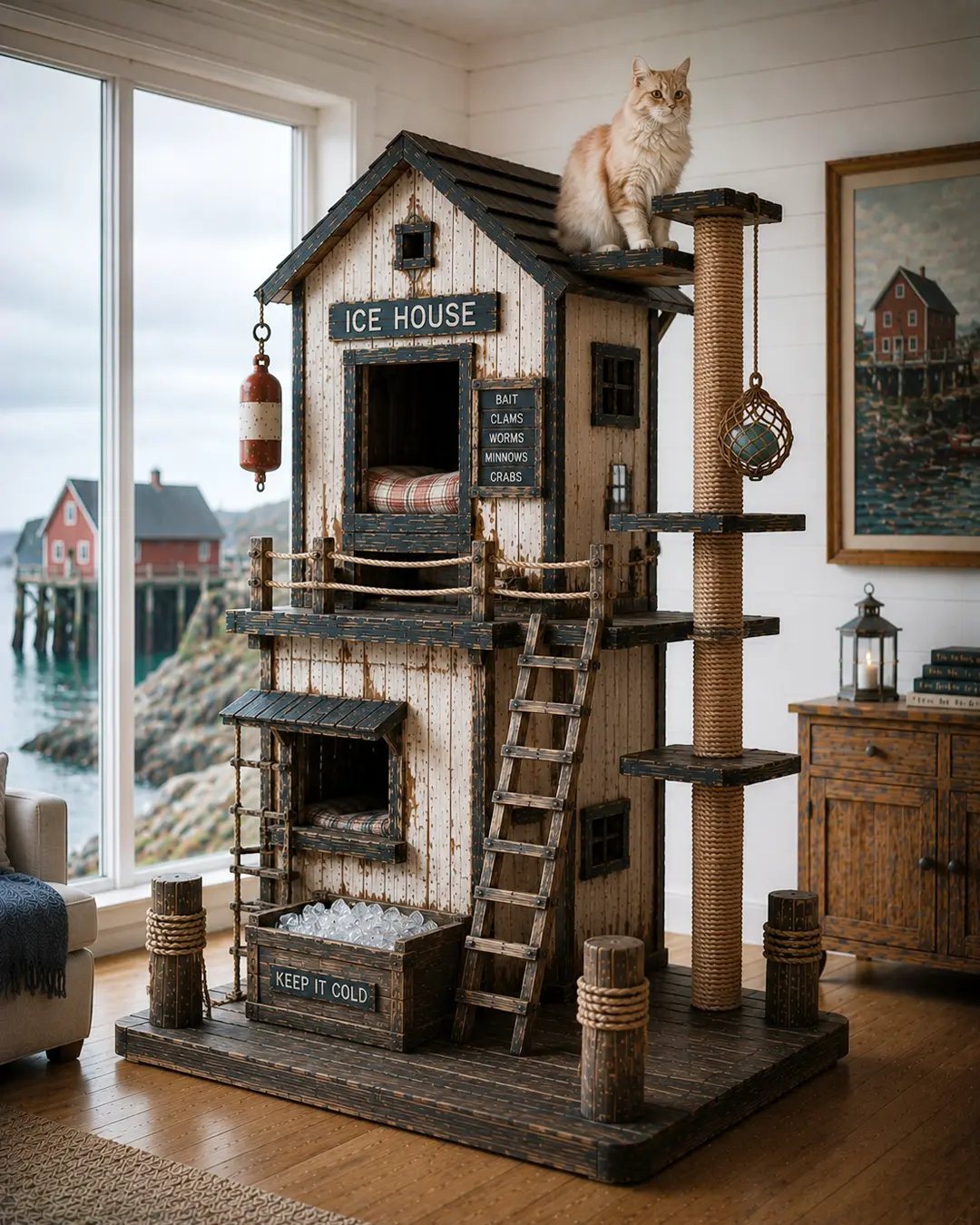
Preserving the Harvest of the Sea
Before electric refrigeration transformed the fishing industry, the ice house was one of the most important buildings in every Maritime harbour. During the winter months, large blocks of ice were cut from frozen lakes and rivers, packed tightly in insulated wooden buildings with layers of sawdust, and carefully preserved through the warmer seasons. That stored ice kept freshly caught fish and lobster cool during transport, allowing fishing communities to extend their reach and support growing coastal economies. Though simple in appearance, the humble ice house played a vital role in sustaining life along Canada’s Atlantic coast.
Inspired by these historic waterfront buildings, this sculptural luxury cat tree reimagines the traditional ice house as an elegant piece of handcrafted feline furniture. Weathered cedar siding, heavy timber construction, rope railings, vintage signage, and dockside details capture the rugged practicality of buildings that once stood beside busy wharves throughout Atlantic Canada. Decorative crates filled with ice, weathered ladders, and maritime accessories create an authentic atmosphere while celebrating the ingenuity of generations who relied on nature long before modern refrigeration.
Designed with curious cats in mind, the structure offers multiple climbing routes leading from the lower sleeping quarters to elevated balconies and a spacious rooftop observation deck. Generous scratching posts, wide resting platforms, and sheltered hideaways encourage natural feline behaviour while preserving the clean lines of traditional Maritime architecture. Every entrance, ladder, and platform has been carefully integrated into the design, creating a seamless balance between realism and functionality.
Photographed inside a bright coastal home overlooking a quiet harbour, the Ice House honours one of the unsung heroes of Maritime history. While it rarely stood in the spotlight like a lighthouse or church, it quietly supported the fishing families and waterfront communities that shaped Canada’s Atlantic coast. Reimagined as a sculptural cat tree, it reminds us that some of the most important buildings are remembered not for their grandeur, but for the essential role they played in everyday life.
General Store
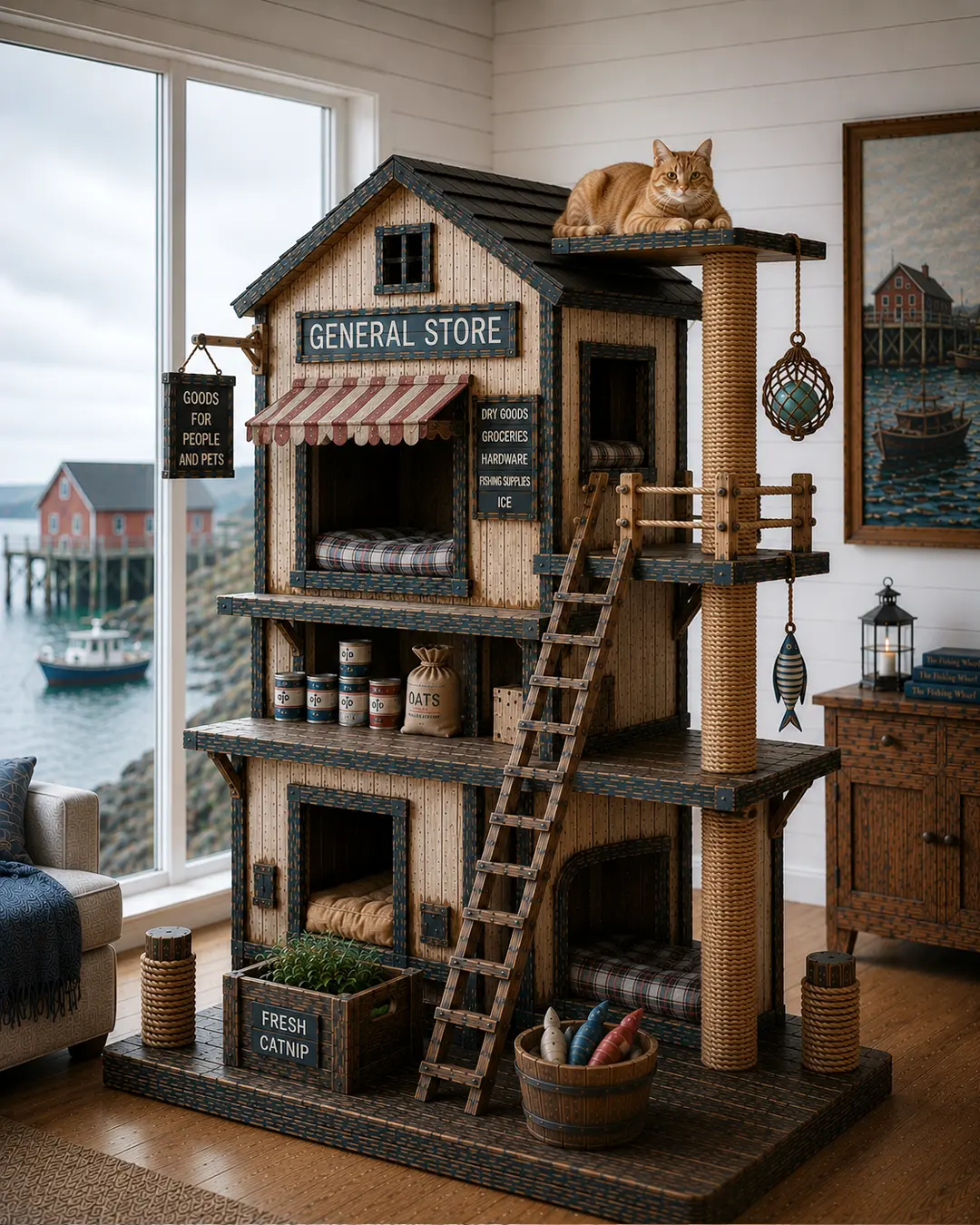
The Heart of Every Harbour Village
Long before supermarkets and shopping centres, the general store was the centre of everyday life in Canada’s Atlantic fishing communities. It was where families purchased groceries, fishermen stocked up on rope, lanterns, and supplies before heading to sea, and neighbours gathered to exchange news about the weather, the tides, and the latest catch. More than a place of business, the general store became the social heartbeat of the village—a welcoming space where everyone knew one another and every visit began with a conversation.
Inspired by these historic community landmarks, this sculptural luxury cat tree reimagines the traditional Maritime general store as an heirloom-quality retreat for adventurous cats. Weathered cedar siding, handcrafted awnings, vintage painted signs, stocked shelves, and carefully aged architectural details recreate the unmistakable charm of a century-old waterfront shop. From the crates of fresh catnip to the neatly arranged goods and fishing supplies, every detail celebrates the craftsmanship and character of the small family-owned businesses that helped sustain coastal life for generations.
Designed with both elegance and feline behaviour in mind, the General Store offers multiple levels connected by wide climbing routes that feel natural and intuitive. Spacious sleeping alcoves provide quiet places to rest, while elevated balconies and observation decks allow curious cats to survey the room from above. Rope-wrapped scratching posts, sheltered hideaways, and thoughtfully integrated entrances ensure that every part of the structure is fully accessible, blending authentic architecture with practical functionality. Like the real buildings that inspired it, every room has a purpose, and every pathway invites exploration.
Set inside a bright coastal home overlooking a working harbour, the General Store captures the warmth and familiarity of a Maritime village where neighbours greeted one another by name and every errand became an opportunity to catch up with friends. More than a sculptural piece of feline furniture, it celebrates the enduring traditions of craftsmanship, hospitality, and community that continue to define Canada’s Atlantic coast.
Conclusion
Canada’s Atlantic coast is shaped by the sea, but its true character comes from the people who built communities along its rugged shoreline. Lighthouses guided ships safely home, fishing stages bustled with activity, harbour masters kept ports running smoothly, and small cafés and general stores became gathering places where neighbours shared stories and welcomed newcomers. Each building served a purpose, and together they formed the heart of Maritime life.
The Maritime Collection reimagines these familiar landmarks as handcrafted sculptural cat trees, blending authentic coastal architecture with thoughtful feline design. Every piece is inspired by a real part of Canada’s East Coast heritage, celebrating the woodworking traditions, practical craftsmanship, and enduring spirit that have defined Atlantic communities for generations.
Whether you’re a cat lover, a fan of architectural design, or simply someone who appreciates Canada’s rich cultural heritage, these creations offer a different way to experience the places that have shaped life along the Atlantic Ocean. They remind us that even the most humble buildings—a weathered bait shack, a quiet ice house, or a family-run general store—can tell remarkable stories when viewed through a new lens.
Because sometimes the most memorable architecture isn’t measured by its size or grandeur, but by the lives it touched and the communities it helped build.