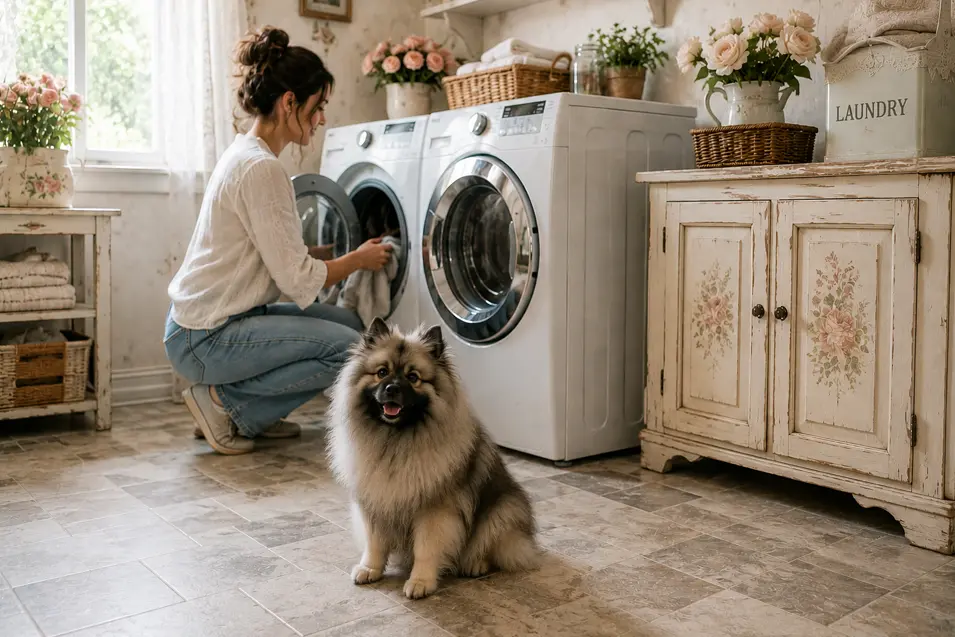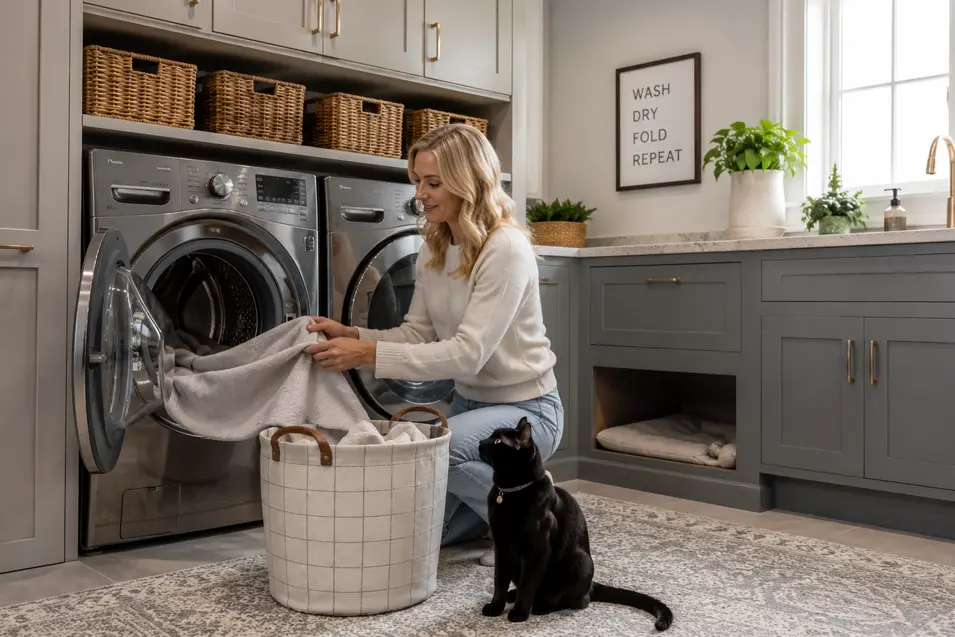
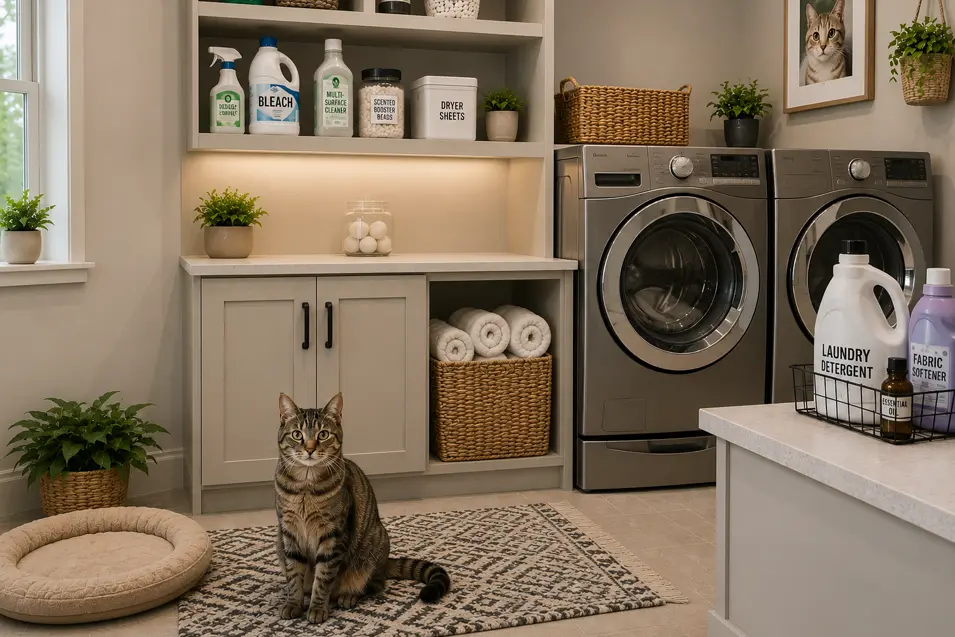
The laundry room may seem like one of the least dangerous areas in a home, but for curious cats and dogs, it can contain a surprising number of hidden hazards. Filled with detergents, cleaning products, appliances, cords, and storage items, the laundry room often presents risks that many pet owners overlook.
Because laundry rooms are frequently used for storage and household chores, they tend to accumulate products and equipment that were never designed with pets in mind. Dogs may investigate unusual scents, while cats often seek out warm appliances, cozy laundry baskets, and hidden resting spots.
Understanding the dangers that can exist in your laundry room is the first step toward creating a safer home for your pets. With a few simple precautions, you can greatly reduce the risk of accidents and injuries.
Why Pets Are Attracted to Laundry Rooms
Many pets are naturally drawn to laundry rooms.
Common reasons include:
- Warm appliances
- Soft piles of clothing
- New scents
- Quiet hiding places
- Access to water
Cats often enjoy sleeping in laundry baskets or on top of warm dryers, while dogs may be attracted to clothing that carries familiar family scents.
Unfortunately, many of the features that make laundry rooms appealing can also create safety concerns.
Laundry Detergent Hazards
Laundry detergent is one of the most common dangers found in laundry rooms.
Modern detergents often contain concentrated cleaning agents that can be harmful if swallowed.
Risks include:
- Mouth irritation
- Vomiting
- Diarrhea
- Chemical burns
- Respiratory irritation
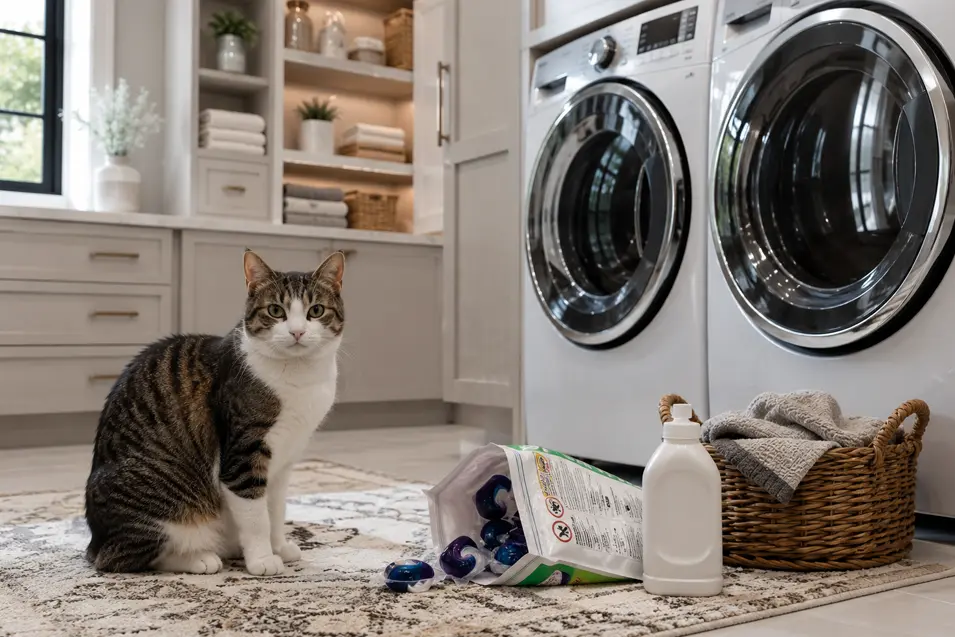
Liquid detergent pods can be especially dangerous.
Because they are brightly colored and soft, some pets mistake them for toys or treats.
Always store detergent products in secure cabinets or on high shelves that pets cannot access.
Fabric Softeners and Dryer Sheets
Fabric softeners and dryer sheets may seem harmless, but they can pose serious risks to pets.
Potential problems include:
- Digestive upset
- Chemical exposure
- Mouth irritation
- Intestinal blockages if swallowed
Used dryer sheets may still contain chemicals that can be harmful.
Dispose of them promptly and keep unused products out of reach.
Bleach and Cleaning Chemicals
Many laundry rooms double as storage areas for household cleaning products.
Common items include:
- Bleach
- Stain removers
- Disinfectants
- Carpet cleaners
- Spot treatments
Even small amounts of these products can cause significant health problems if pets ingest them or walk through spills and later groom themselves.
Improve safety by:
- Using locked cabinets
- Keeping products in original containers
- Cleaning spills immediately
- Avoiding open containers
Proper storage is one of the simplest ways to prevent accidents.
Washing Machines
Washing machines.
Cats, in particular, may seek out dark, enclosed spaces for naps.
An open washing machine can appear to be a comfortable hiding place.
Risks include:
- Pets becoming trapped inside
- Accidental starts
- Exposure to detergent residue
Before starting a load of laundry, always check inside the washer carefully.
This simple habit can prevent a tragic accident.
Dryers and Warm Appliances
Dryers are especially attractive to cats because they provide warmth and a sense of security.
Unfortunately, this can be dangerous.
Potential hazards include:
- Climbing inside open dryers
- Burns from hot surfaces
- Entrapment
- Injury from moving components
Always check inside the dryer before use, especially if the door has been left open.
Many pet owners develop a routine of checking appliances every time they start a load.
Laundry Baskets and Hamper Risks
Laundry baskets seem harmless, but they can present several dangers.
Common concerns include:
- Small pets becoming trapped
- Collapsing piles of laundry
- Chewing clothing
- Swallowing fabric items
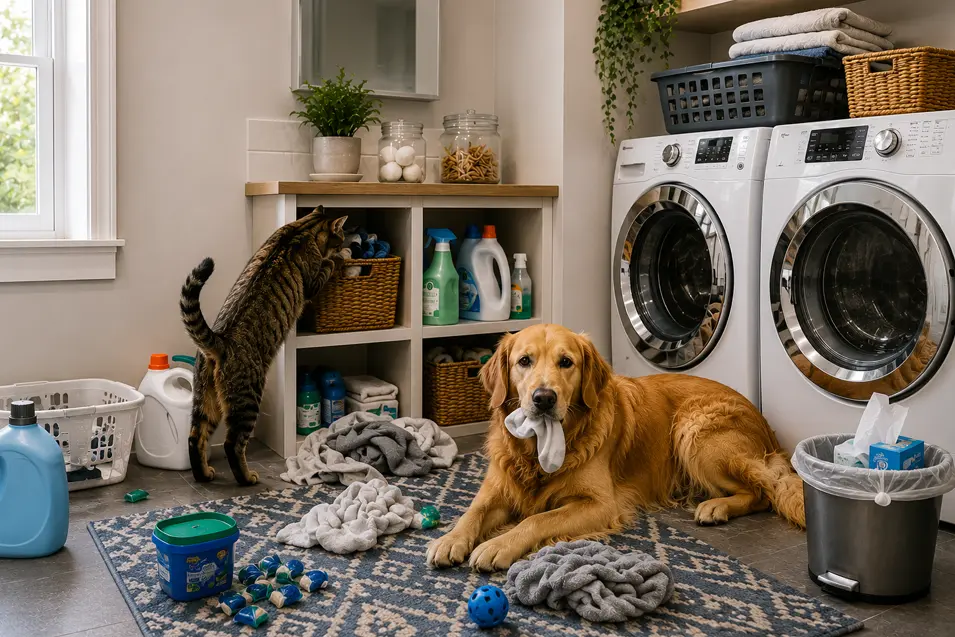
Dogs sometimes ingest socks, underwear, and other garments, which can lead to serious intestinal blockages requiring emergency veterinary treatment.
Keep laundry organized and avoid leaving clothing scattered on the floor.
Electrical Cords and Outlets
Laundry rooms often contain visible electrical cords for:
- Washers
- Dryers
- Irons
- Steamers
- Utility equipment
Potential risks include:
- Chewing cords
- Electric shock
- Burns
- Fire hazards
Use cord management systems whenever possible and inspect cords regularly for damage.
This is especially important for puppies and kittens.
Ironing Equipment
Some laundry rooms contain ironing boards, steamers, and irons.
These items can pose risks through:
- Hot surfaces
- Falling equipment
- Electrical hazards
- Steam burns
Store irons securely after use and allow them to cool completely before putting them away.
Never leave hot equipment unattended around pets.
Hidden Storage Hazards
Laundry rooms often become catch-all storage spaces.
Stored items may include:
- Batteries
- Tools
- Paint products
- Household chemicals
- Pest control products
Pets investigating shelves and storage bins can encounter dangerous substances without owners realizing it.
Regular organization helps reduce these risks.
Water Leaks and Moisture Problems
Laundry rooms are prone to leaks and excess moisture.
Over time, moisture can contribute to:
- Mold growth
- Mildew
- Poor air quality
- Structural damage
Some pets may be particularly sensitive to mold exposure.
Reduce moisture risks by:
- Inspecting hoses regularly
- Repairing leaks promptly
- Improving ventilation
- Using dehumidifiers if needed
A dry environment is healthier for both pets and people.
Toxic Plants in Laundry Rooms
Houseplants are sometimes placed in laundry rooms to brighten the space.
Unfortunately, some common plants are toxic to pets.
Examples include:
- Pothos
- Peace lilies
- Snake plants
- Philodendrons
Before introducing plants into any pet-accessible area, verify that they are safe for cats and dogs.
Pet-friendly alternatives are widely available.
Open Cabinets and Low Shelving
Many laundry rooms contain lower cabinets that pets can access.
Curious dogs may open cabinet doors, while cats often explore shelves and countertops.
Consider:
- Childproof cabinet locks
- Secured shelving
- Enclosed storage solutions
Limiting access to potentially dangerous products reduces risk significantly.
Small Items That Become Choking Hazards
Laundry rooms often contain numerous small objects that pets may swallow.
Examples include:
- Buttons
- Safety pins
- Coins
- Sewing supplies
- Lint balls
- Packaging materials
Even small items can cause choking or intestinal blockages.
Keeping surfaces clean and organized helps prevent accidental ingestion.
Creating a Safer Laundry Room
A pet-friendly laundry room doesn’t require a major renovation.
Important safety steps include:
- Securing chemicals
- Checking appliances before use
- Managing cords
- Improving storage
- Controlling moisture
- Keeping floors clean
Routine inspections can help identify hazards before they become emergencies.
Simple habits often provide the greatest protection.
Protecting Pets in an Overlooked Area of the Home
Laundry rooms may not seem dangerous at first glance, but they contain many hidden hazards that can threaten curious cats and dogs. From detergent pods and cleaning chemicals to warm appliances and choking hazards, this often-overlooked room deserves careful attention from pet owners.
By understanding the risks and making a few practical changes, you can transform your laundry room into a safer environment. Secure storage, proper organization, appliance safety checks, and routine maintenance all play an important role in protecting your pets.
A safer laundry room means greater peace of mind—and one less area of the home where hidden dangers can put your beloved companions at risk.