The kitchen is often called the heart of the home. It’s where meals are prepared, conversations happen, and families gather throughout the day. Because kitchens are among the most frequently used spaces in a house, homeowners are increasingly looking for ways to make them feel warmer, more inviting, and more visually interesting.
One design feature that occasionally appears in high-end homes and creative renovations is the kitchen aquarium. Whether incorporated into an island, built into a wall, or positioned near a dining area, an aquarium can introduce movement, color, and natural beauty into a space that is typically dominated by appliances, cabinets, and countertops.
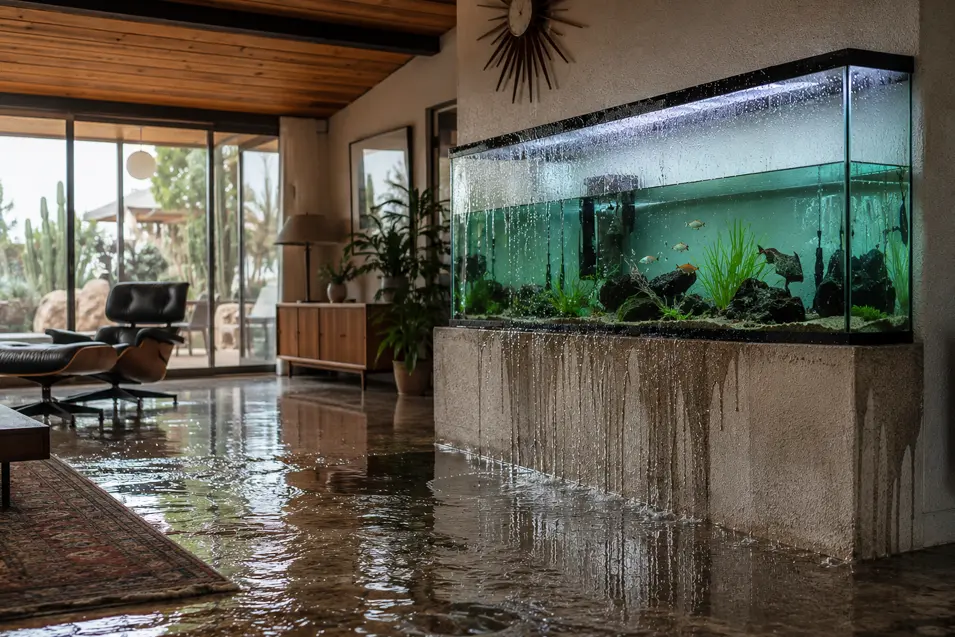
But while kitchen aquariums can be visually stunning, they are not always practical. Heat, moisture, traffic, and maintenance requirements create challenges that don’t exist in many other parts of the home.
Before installing a fish tank in the kitchen, it’s important to carefully consider both the advantages and the drawbacks.
Why Homeowners Consider Kitchen Aquariums
Aquariums naturally attract attention.
In a room filled with hard surfaces and functional features, an aquarium introduces something entirely different: life.
A kitchen aquarium can provide:
- A unique focal point
- Natural movement
- Color and visual interest
- A conversation starter
- A connection to nature
For homeowners who enjoy entertaining, a kitchen aquarium often becomes one of the most talked-about features in the home.
The Appeal of Combining Food and Nature
Although kitchens are practical workspaces, they are also increasingly designed as lifestyle spaces.
Modern kitchens often incorporate:
- Large islands
- Seating areas
- Open-concept layouts
- Gathering spaces
An aquarium can complement these trends by adding an organic element to an otherwise functional environment.
The contrast between living aquatic ecosystems and modern kitchen design can be surprisingly effective.
Kitchen Aquariums in Open-Concept Homes
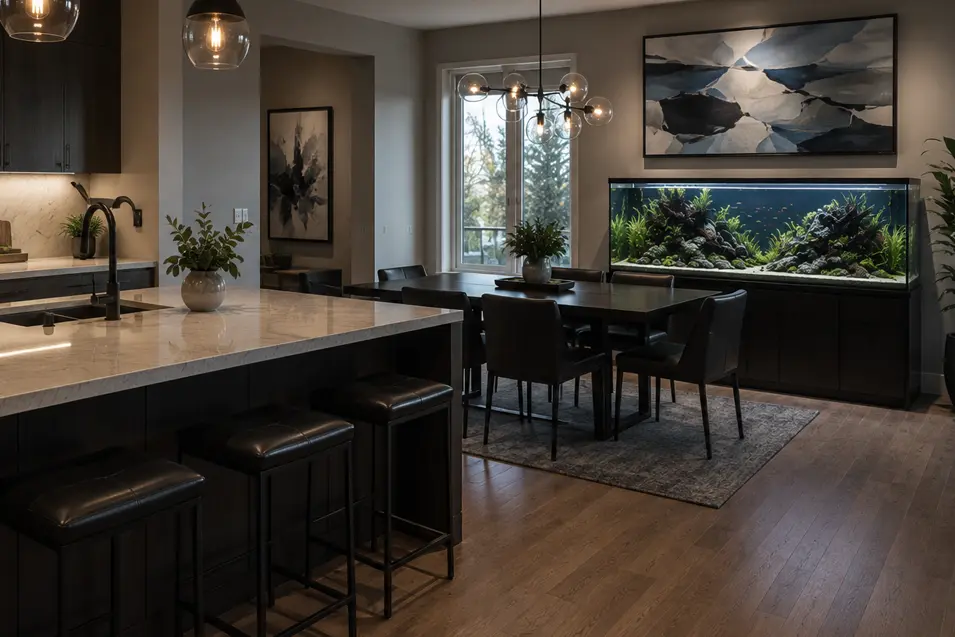
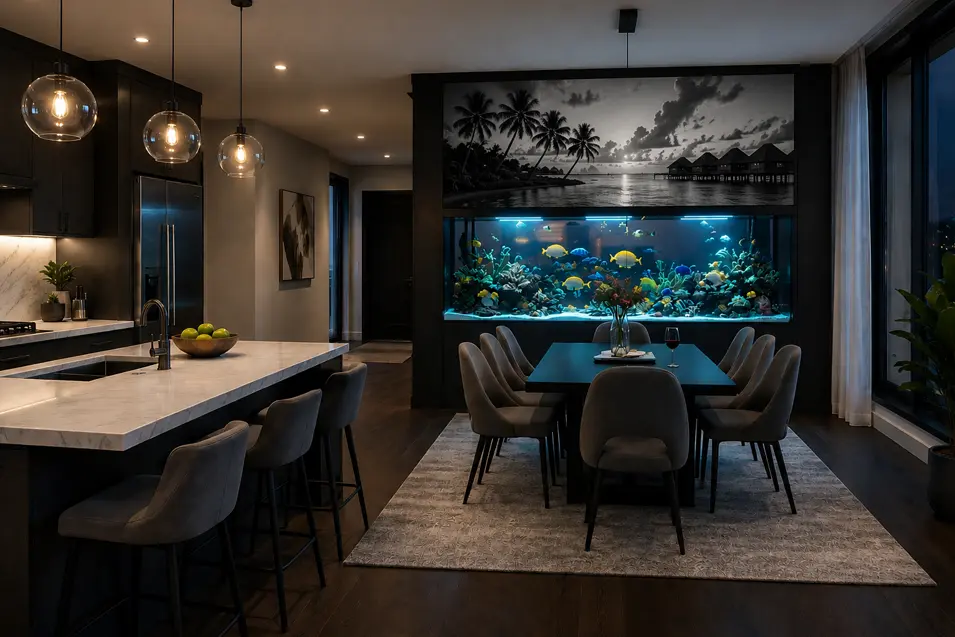
Open-concept homes have made kitchen aquariums more practical than ever.
Because kitchens often flow directly into:
- Dining rooms
- Living rooms
- Family rooms
an aquarium placed near the kitchen can serve multiple spaces simultaneously.
In many cases, the aquarium is technically positioned between rooms while remaining highly visible from the kitchen.
This approach often delivers the benefits of a kitchen aquarium without placing the tank directly within the primary cooking area.
Popular Kitchen Aquarium Designs
Kitchen aquariums can take several forms depending on available space and design goals.
Built-In Wall Aquariums
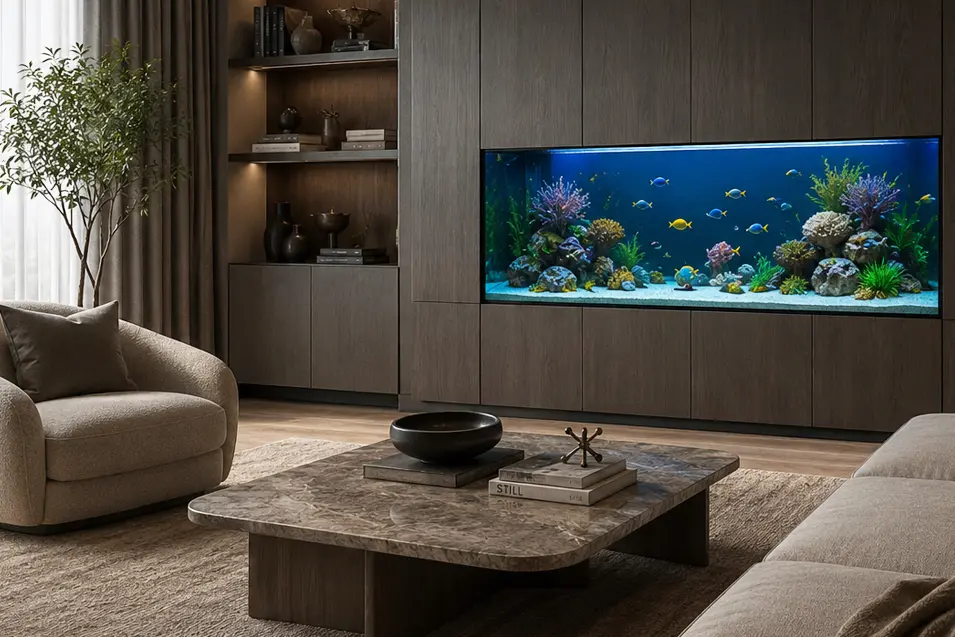
One of the most attractive options is a built-in aquarium integrated into a kitchen wall.
Benefits include:
- Strong visual impact
- Architectural integration
- Efficient use of space
- Hidden equipment
These installations often separate kitchens from dining or living areas.
Peninsula Aquariums
Peninsula aquariums can extend from a wall or cabinet into an open space.
Their multi-sided viewing angles allow the aquarium to be enjoyed from several areas at once.
Aquarium Room Dividers
Room divider aquariums work especially well in open floor plans.
They help define spaces while maintaining openness and natural light flow.
Aquarium Kitchen Islands
Some luxury homes incorporate aquariums into kitchen islands.
While visually dramatic, these installations require careful planning and are among the most complex aquarium projects to maintain.
Advantages of Kitchen Aquariums
Constant Enjoyment
Because kitchens are used daily, homeowners often spend considerable time near the aquarium.
This increases opportunities to:
- Observe fish
- Enjoy aquascaping
- Appreciate the display
The aquarium becomes part of everyday life.
Conversation Starter
Visitors are often surprised to encounter an aquarium in a kitchen.
The unexpected placement naturally sparks conversation and interest.
Enhanced Design Appeal
A well-designed aquarium can elevate the visual character of the space and help distinguish the home from more conventional designs.
Challenges of Kitchen Aquariums
Despite their appeal, kitchen aquariums are not ideal in every situation.
Temperature Fluctuations
Kitchens generate heat.
Sources include:
- Ovens
- Cooktops
- Dishwashers
- Sunlight from nearby windows
Temperature swings can affect aquarium stability and increase maintenance requirements.
Increased Activity
Kitchens are busy environments.
People frequently move through the space carrying:
- Groceries
- Pots and pans
- Small appliances
Heavy traffic increases the risk of accidental bumps and disturbances.
Moisture and Humidity
Cooking naturally produces steam and humidity.
When combined with aquarium evaporation, this may contribute to moisture management concerns in some homes.
Maintenance Logistics
Water changes, equipment servicing, and routine maintenance can be more challenging in kitchens with limited access.
The aquarium should remain easy to service without interfering with food preparation areas.
Choosing the Best Location
If you’re considering a kitchen aquarium, placement is critical.
Ideal locations often include:
- Adjacent walls
- Transitional spaces
- Dining area connections
- Open-concept boundaries
Avoid placing aquariums:
- Directly beside ovens
- Near heat vents
- In constant direct sunlight
- In narrow work zones
The aquarium should complement the kitchen without interfering with its primary function.
Freshwater vs. Saltwater for Kitchens
Both aquarium types can work in kitchen settings.
Freshwater Aquariums
Advantages include:
- Simpler maintenance
- Lower operating costs
- Natural planted displays
- Easier setup
These qualities often make freshwater aquariums the preferred choice for busy households.
Saltwater Aquariums
Marine systems offer:
- Vibrant colors
- Exotic fish
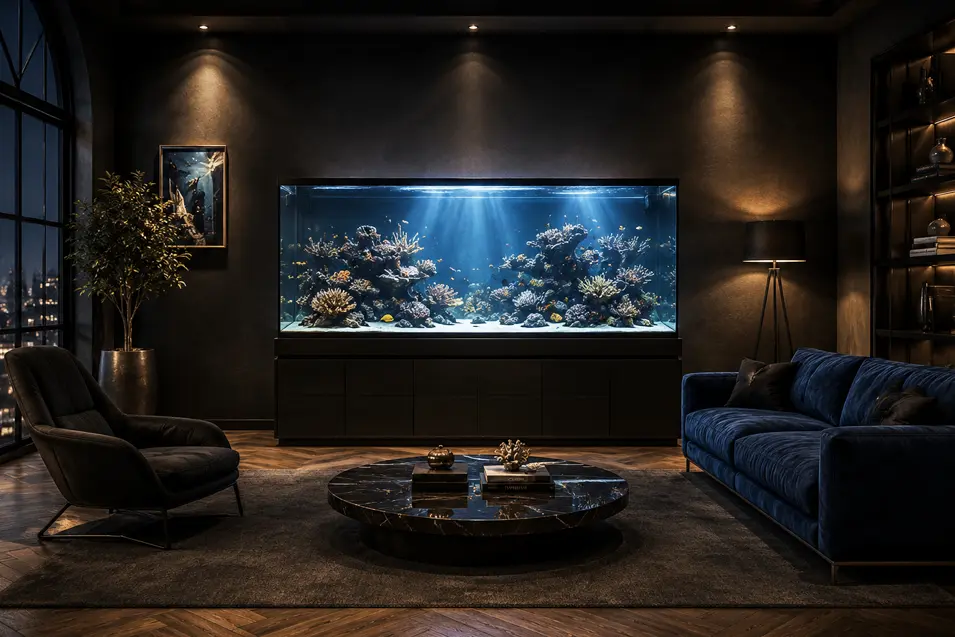
- Spectacular reef displays
However, they typically require more maintenance and environmental stability.
Designing Around the Aquarium
The best kitchen aquariums are incorporated into the overall design rather than added later.
Consider:
- Cabinet finishes
- Countertop materials
- Lighting
- Seating arrangements
- Traffic flow
When integrated thoughtfully, the aquarium can feel like a natural extension of the kitchen’s architecture.
Lighting Considerations
Aquarium lighting can dramatically enhance the kitchen’s atmosphere.
Many homeowners enjoy the way an illuminated aquarium:
- Adds warmth
- Creates ambiance
- Enhances evening gatherings
However, lighting should be balanced carefully to avoid overwhelming the room or competing with task lighting used for cooking.
Is a Kitchen Aquarium Right for Your Home?
Kitchen aquariums work best for homeowners who:
- Enjoy aquarium keeping
- Appreciate unique design features
- Have adequate space
- Are willing to plan carefully
They may be less suitable for:
- Small kitchens
- Extremely busy households
- Spaces with significant temperature fluctuations
- Homes where maintenance access is limited
The key is balancing aesthetics with practicality.
Alternatives to a Kitchen Aquarium
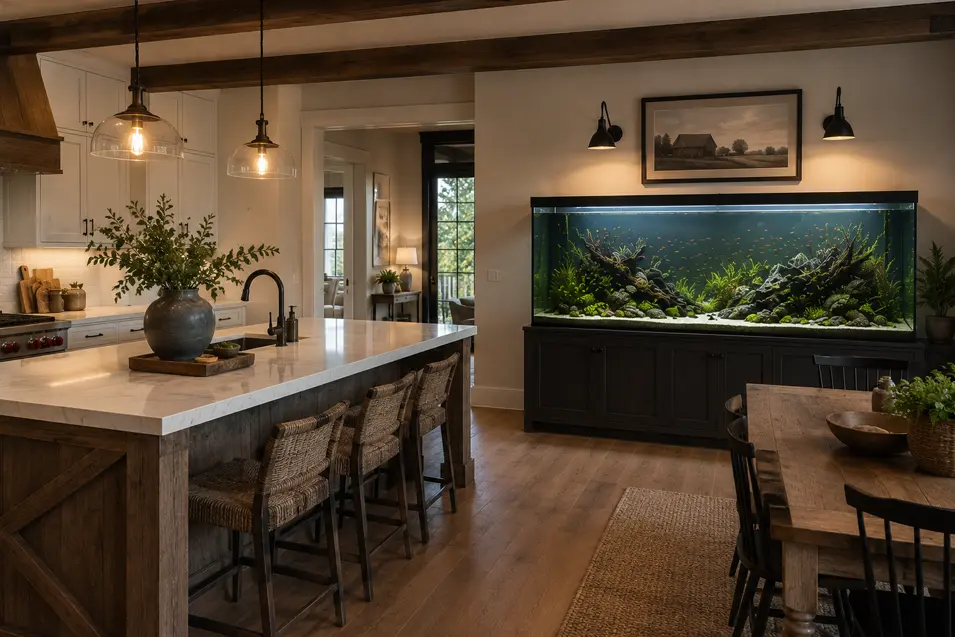
For homeowners who love the idea but worry about practicality, nearby placements may offer a better solution.
Consider aquariums located in:
- Adjacent dining rooms
- Open-concept living spaces
- Breakfast nooks
- Nearby family rooms
These locations often provide similar visual benefits with fewer challenges.
Conclusion
Kitchen aquariums can be stunning additions to a home, combining the beauty of aquatic life with one of the most frequently used spaces in modern living. They create memorable focal points, encourage conversation, and introduce a connection to nature that contrasts beautifully with contemporary kitchen design.
However, successful kitchen aquariums require careful planning. Heat, humidity, traffic flow, and maintenance access all deserve serious consideration before installation.
For homeowners willing to invest the time and effort, a kitchen aquarium can become one of the most distinctive and rewarding design features in the entire home.
Frequently Asked Questions
Is it safe to put an aquarium in a kitchen?
Yes, provided the aquarium is placed away from excessive heat, direct sunlight, and high-traffic work zones.
What is the biggest challenge of a kitchen aquarium?
Temperature fluctuations and maintenance access are often the most significant concerns.
Are built-in kitchen aquariums practical?
They can be, especially when incorporated into the home’s design from the beginning and planned with maintenance access in mind.
Should I choose a freshwater or saltwater aquarium for a kitchen?
Freshwater aquariums are often easier to manage in kitchen environments, though saltwater systems can be spectacular when properly maintained.
Can an aquarium be built into a kitchen island?
Yes, but these installations are complex and typically require professional design and planning.
Related Reading
- Aquariums in the Home: Design, Placement, Planning, and Practical Living
- Open Concept Homes and Aquarium Placement
- Room Divider Aquariums: Beautiful Living Spaces with Fish
- Aquariums as Statement Pieces in Home Design
- Luxury Home Aquariums: Inspiration and Planning Ideas
- Aquariums in Entryways and Foyers