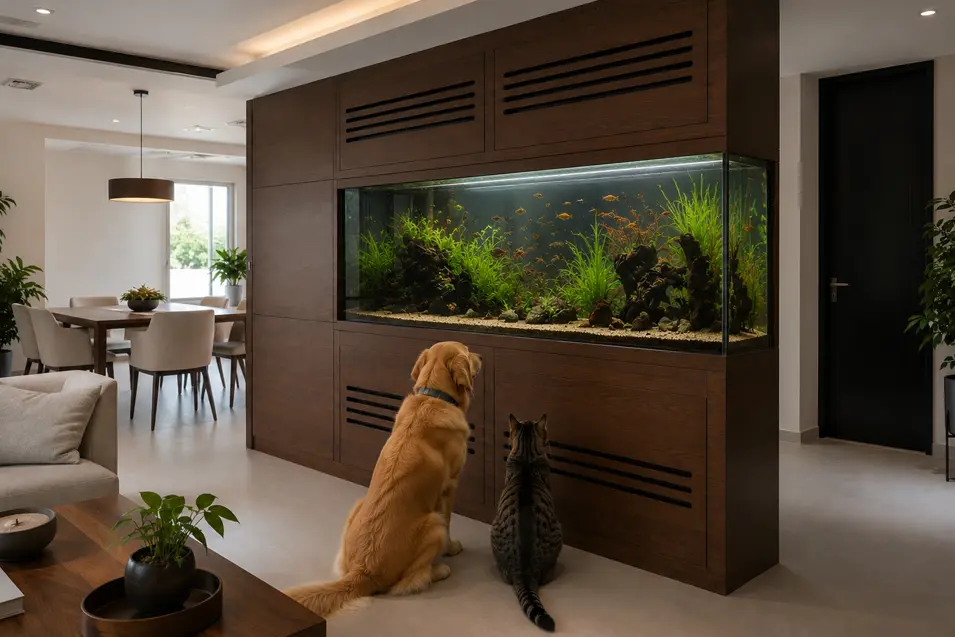
Many pet lovers don’t stop at one type of animal. It’s common for households to include fish, cats, dogs, or even a combination of all three. While this can create a lively and rewarding home environment, it also introduces unique challenges.
Cats are naturally fascinated by fish tanks, often spending hours watching fish swim through the water. Dogs may be curious about aquarium equipment, moving water, or the activity surrounding feeding and maintenance. Meanwhile, fish rely entirely on their owners to provide a safe, stable environment free from unnecessary stress and disruptions.
Fortunately, with thoughtful planning and a few practical precautions, aquariums, cats, and dogs can coexist successfully. The key is understanding the natural behaviors of each animal and designing the environment with safety in mind.
Why Cats and Dogs Are Interested in Aquariums
Aquariums provide something many household pets find irresistible: movement.
Fish swim unpredictably, creating constant visual stimulation.
For cats, this taps directly into natural hunting instincts.
For dogs, aquariums may simply represent:
- Something new
- Moving objects
- Interesting sounds
- Water activity
- Household attention
Not every pet reacts the same way.
Some cats become obsessed with watching fish, while others lose interest after a few days. Some dogs ignore aquariums entirely, while others remain curious for years.
Understanding your pet’s personality is an important part of aquarium safety.
Cats and Fish Tanks
Cats are generally more likely than dogs to interact directly with aquariums.
Common feline behaviors include:
- Watching fish
- Sitting near the aquarium
- Pawing at the glass
- Jumping onto the stand
- Investigating aquarium lids
Most of this behavior is harmless curiosity, but some situations require attention.
Why Cats Love Watching Fish
Cats are natural predators.
Their eyes are highly sensitive to movement, making aquariums particularly fascinating.
Fish provide:
- Constant motion
- Unpredictable behavior
- Visual stimulation
For indoor cats, an aquarium often functions as a form of entertainment and environmental enrichment.
Many cats simply enjoy observing the fish without attempting to interfere with them.
Dogs and Aquariums
Dogs generally interact with aquariums differently than cats.
Rather than focusing on the fish themselves, dogs are often interested in:
- New objects
- Water movement
- Maintenance activities
- Feeding routines
Large dogs may accidentally bump stands or equipment, while smaller dogs may investigate cords, tubing, or nearby supplies.
Most aquarium-related dog concerns involve curiosity rather than predatory behavior.
Use a Secure Aquarium Lid
One of the simplest and most effective safety measures is installing a secure lid.
A proper lid helps prevent:
- Curious paws entering the water
- Fish jumping out
- Debris entering the aquarium
- Accidental contamination
For homes with cats, a sturdy lid is especially important.
Cats are agile and often capable of reaching locations homeowners assume are inaccessible.
Choose a Stable Aquarium Stand
Aquariums are heavy, and stability is critical.
A quality stand should:
- Support the aquarium’s full weight
- Remain level
- Resist tipping
- Prevent wobbling
Large dogs, energetic puppies, or climbing cats can place additional demands on the stand’s stability.
Never place an aquarium on furniture not designed for aquarium use.
Prevent Climbing and Jumping
Many cats enjoy elevated viewpoints.
An aquarium canopy or lid may appear to be an inviting perch.
Discourage climbing by:
- Providing alternative elevated spaces
- Using cat trees
- Offering nearby window perches
- Redirecting unwanted behavior consistently
The goal is to make approved locations more appealing than the aquarium itself.
Protect Aquarium Equipment
Aquarium equipment often attracts pet attention.
Items that may require protection include:
- Electrical cords
- Air tubing
- Filter hoses
- Power strips
- Timers
Secure equipment whenever possible and avoid leaving loose cords accessible.
Cord management systems can improve both safety and appearance.
Keep Maintenance Supplies Out of Reach
Many aquarium products should not be accessible to pets.
Store items such as:
- Water conditioners
- Medications
- Fertilizers
- Test kits
- Fish food
inside cabinets or dedicated storage areas.
This helps prevent accidental ingestion and keeps supplies organized.
Reducing Stress for Fish
Aquarium safety isn’t only about protecting pets.
Fish also benefit from a calm and predictable environment.
Excessive disturbances can create stress.
Examples include:
- Constant tapping on the glass
- Repeated attempts to chase fish
- Sudden movements around the aquarium
- Pets jumping on the tank
Providing adequate hiding places helps fish feel secure.
Live plants, driftwood, caves, and rock formations allow fish to retreat when needed.
Creating Safe Viewing Opportunities
Many pet owners enjoy allowing their cats or dogs to observe the aquarium.
This can be done safely by creating designated viewing areas.
Examples include:
- Cat trees near the aquarium
- Pet beds positioned nearby
- Comfortable observation spots
These locations allow pets to enjoy the aquarium without physically interacting with it.
Introducing Pets to a New Aquarium
When installing a new aquarium, expect curiosity.
Allow pets to investigate under supervision.
Most animals eventually become accustomed to the aquarium’s presence.
Avoid encouraging behaviors such as:
- Pawing at the glass
- Chasing fish
- Jumping onto equipment
Consistent boundaries help establish healthy habits early.
Special Considerations for Large Aquariums
Large aquariums often attract more attention because they are easier to see and contain more movement.
Additional considerations may include:
- Reinforced stands
- Secure cabinetry
- Hidden equipment
- Protected electrical systems
These precautions help ensure both pets and fish remain safe.
Multi-Pet Homes
Homes with multiple pets may require additional planning.
For example:
- A cat may watch the fish while a dog investigates the food cabinet.
- Puppies may chew cords.
- Kittens may attempt to climb stands.
Understanding the unique behavior of each animal helps identify potential risks before problems occur.
Benefits of Aquariums for Pets
Interestingly, aquariums can provide benefits for household pets as well.
Many cats enjoy:
- Visual stimulation
- Mental enrichment
- Daily observation
Some dogs appear to enjoy watching fish or spending time near the aquarium with family members.
The aquarium becomes part of the shared home environment rather than simply a hobby.
Building a Pet-Friendly Aquarium Space
The most successful aquarium setups consider every member of the household.
A pet-friendly aquarium space typically includes:
- A sturdy stand
- A secure lid
- Protected equipment
- Organized storage
- Safe viewing opportunities
These features help create an environment where fish, cats, dogs, and people can coexist comfortably.
Conclusion
Keeping aquariums safe around cats and dogs is largely a matter of preparation and understanding animal behavior. Cats are naturally fascinated by fish, while dogs are often curious about the activity and equipment surrounding the aquarium. With proper safeguards in place, both can coexist safely with aquatic pets.
Secure lids, stable stands, organized equipment, and thoughtful placement all contribute to a safer environment. At the same time, providing alternative enrichment and observation opportunities helps satisfy your pets’ curiosity without compromising aquarium safety.
With the right approach, an aquarium can become a source of enjoyment not only for fishkeepers but for the entire household—including the four-legged members of the family.
Frequently Asked Questions
Are cats a danger to aquarium fish?
Most cats simply enjoy watching fish, but some may attempt to paw at the glass or access open aquariums. Secure lids and proper supervision help prevent problems.
Can dogs knock over an aquarium?
Large or energetic dogs could potentially bump unstable stands. Using a properly rated aquarium stand is essential for safety.
Should aquariums have lids in homes with pets?
Yes. Secure lids help protect fish from curious cats, prevent contamination, and reduce the risk of accidents.
Do fish get stressed by cats watching them?
Most fish adapt to household activity, but excessive tapping, chasing behavior, or constant disturbances may cause stress.
Can aquariums provide enrichment for cats?
Yes. Many indoor cats enjoy watching fish and find aquariums to be a source of visual stimulation and entertainment.
Related Reading
- Why Do Cats Love Watching Fish?
- Pet-Friendly Aquarium Homes: Balancing Fish, Cats, Dogs, and Family Life
- Aquariums in Homes with Young Children
- Aquariums in the Home: Design, Placement, Planning, and Practical Living
- What Happens If an Aquarium Breaks? Preparing for Leaks, Cracks, and Emergencies
- Aquarium Furniture: Stands, Cabinets, and Built-In Storage Solutions