Cats have never been particularly concerned with how much furniture costs.
Buy them a beautiful new bed and they may sleep in the cardboard box it arrived in.
Bring home a carefully designed cat tree and there’s a reasonable chance they’ll ignore it in favour of the back of the sofa.
But perhaps we’ve been approaching this all wrong.
Maybe the problem isn’t the cat.
Maybe cat furniture simply hasn’t been ambitious enough.
Because somewhere between the carpet-covered towers, fuzzy caves and little fabric cubes, there’s room for something considerably more interesting.
Actual architecture for cats.
Indoor cat houses designed with the same attention we give sofas, chairs, lighting and everything else we bring into our homes.
So we decided to imagine what might happen if architects and furniture designers were given a slightly unusual assignment:
Design a spectacular house for a cat.
It has to be comfortable.
It has to be functional.
And most importantly, it has to look good enough that you’d happily put it in your living room.
Here are 12 indoor cat houses we genuinely wish existed.
The Architectural Sphere
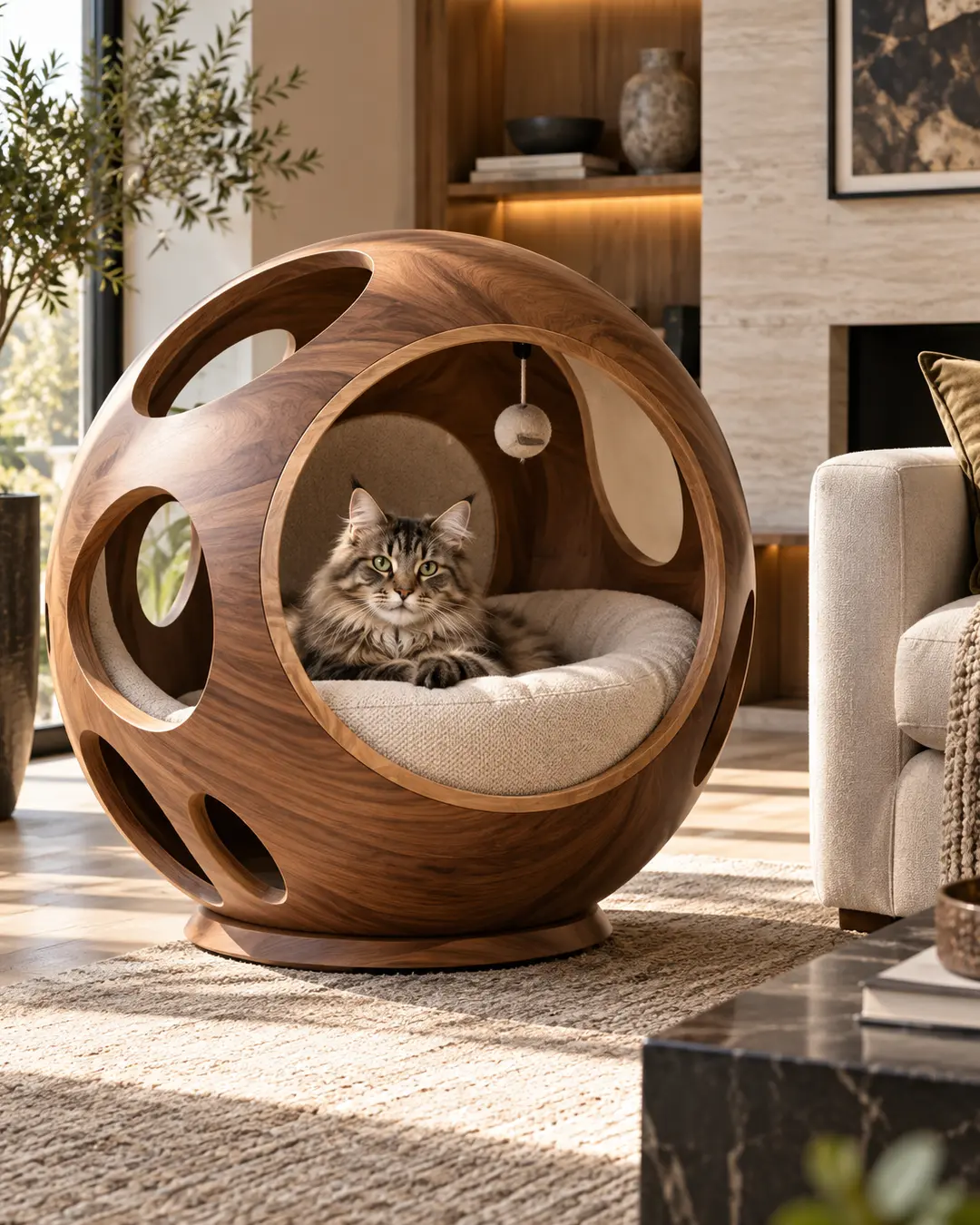
Let’s begin with something that doesn’t immediately look like pet furniture.
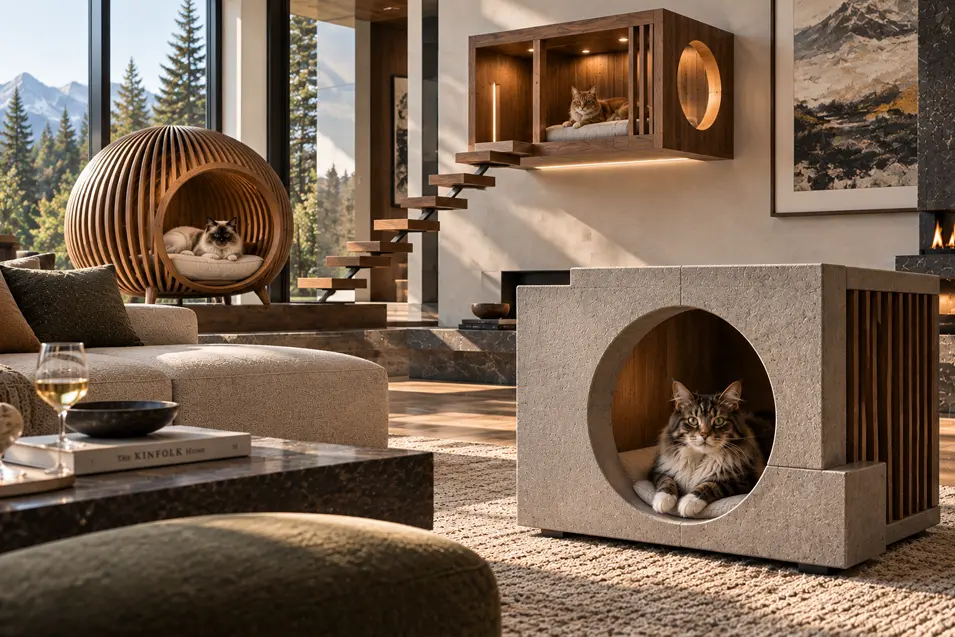
A large sculptural sphere formed from beautiful walnut, with sweeping openings carved through the exterior and a softly upholstered sleeping area tucked inside.
From across the room, it looks like sculpture.
Then two ears appear through one of the openings.
That’s considerably better.
The curved shell would give a cat the enclosed feeling they naturally seem to love while still providing several places to watch whatever the humans are doing.
And because cats apparently believe every room requires their supervision, visibility is important.
Place it beside a beautiful sofa and nobody needs to hide the cat furniture when company arrives.
They may actually ask where you bought it.
Unfortunately, that’s going to be a recurring problem with this article.
The Glass House
If humans can have enormous windows, ridiculous ceiling heights and open-concept architecture, why can’t cats?
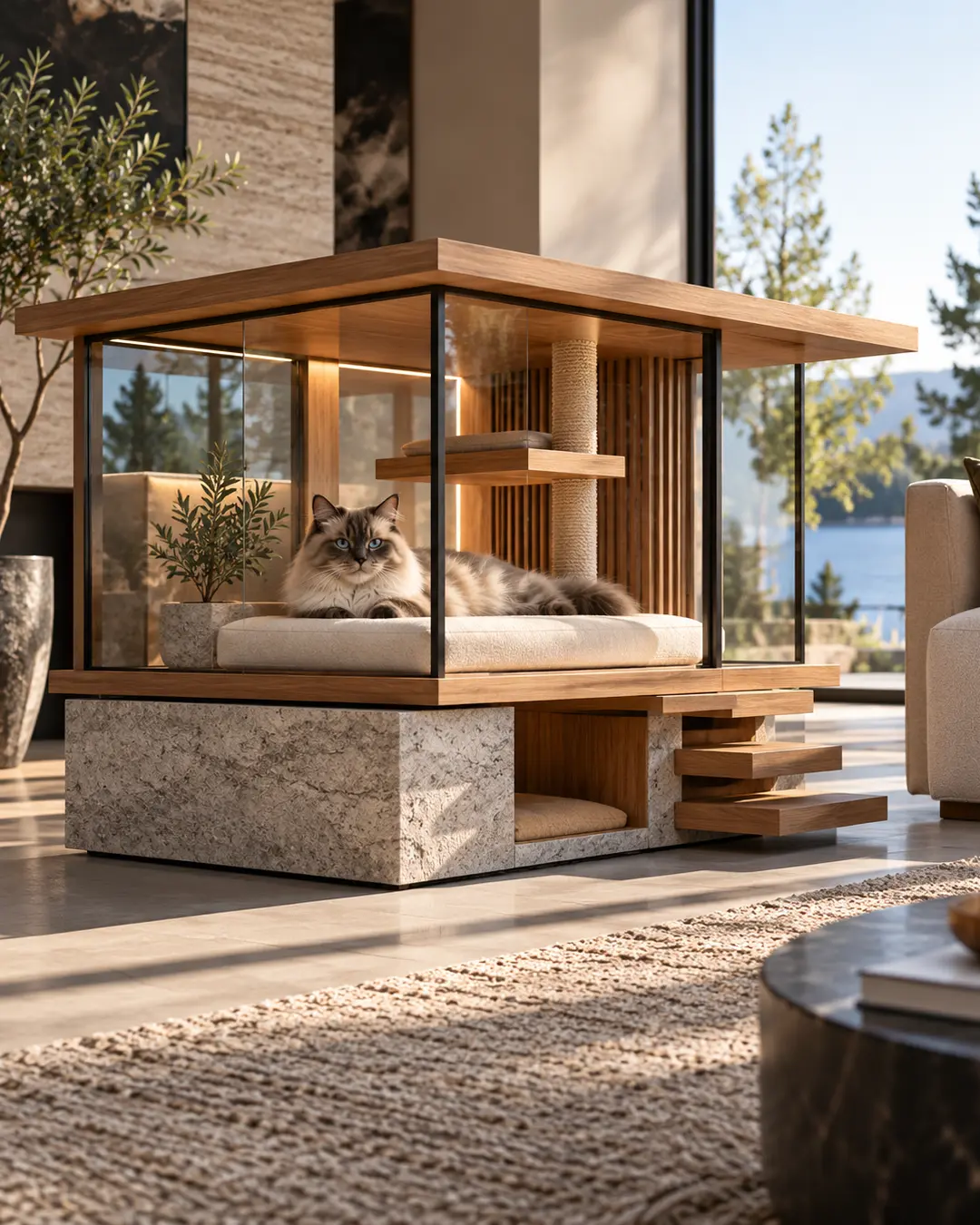
The Glass House is essentially a miniature modern residence.
A low stone base.
Warm natural wood.
Floor-to-ceiling glass.
A cantilevered roof.
And inside, one perfectly positioned upholstered platform where the owner can lie in the sun while maintaining visual control of the entire living room.
Privacy is limited.
But considering how often cats follow people into bathrooms, we’re not convinced privacy is particularly important to them.
This is less a cat bed and more a very small piece of modern architecture.
Which is exactly the point.
The Two-Storey Cat Loft
Some cats need a bed.
Others clearly require a duplex.
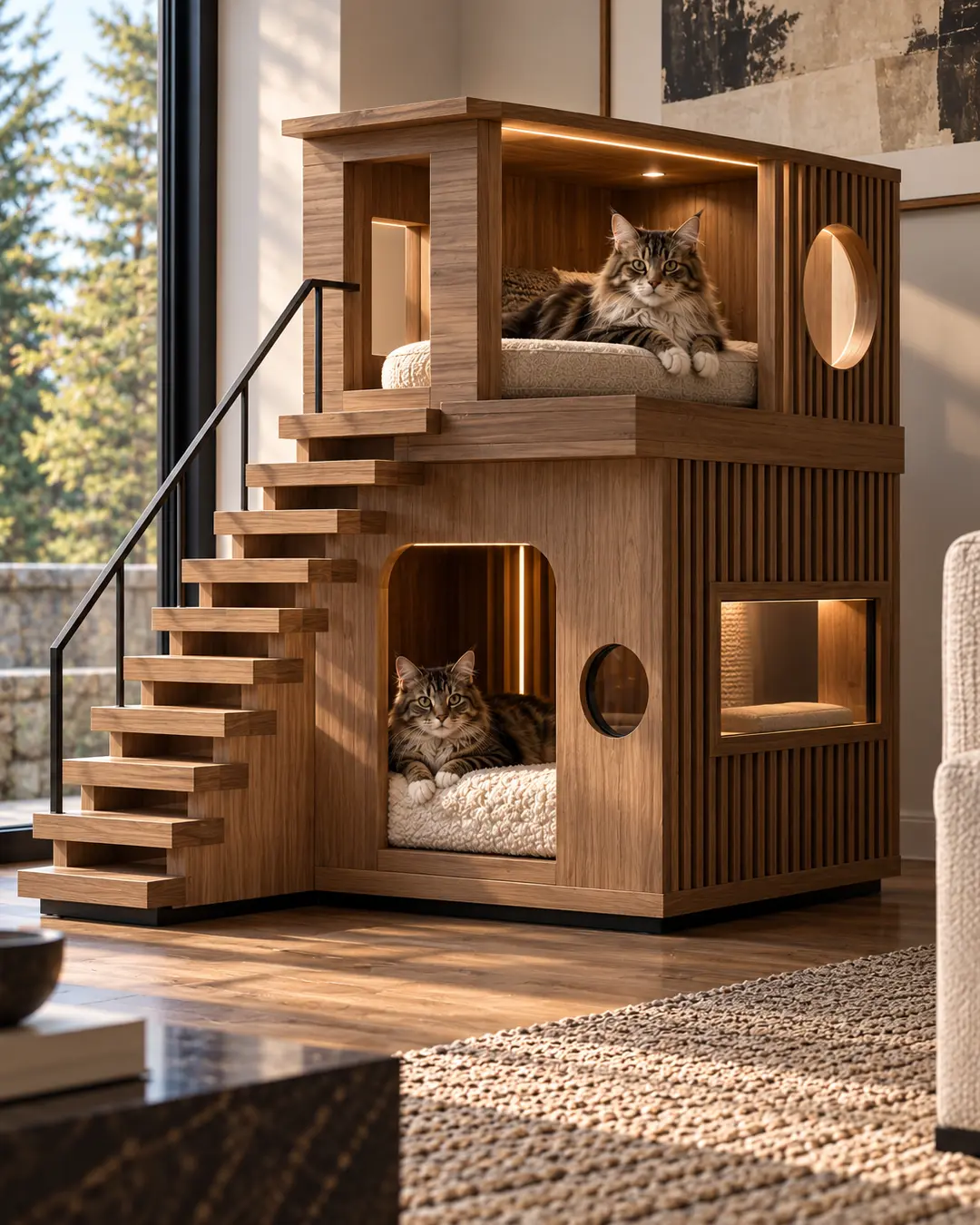
The Cat Loft would have an enclosed sleeping area on the lower level with a small staircase leading to an open upper lounge.
Downstairs for sleeping.
Upstairs for judging.
Perhaps a tiny window on the lower level and a broad platform above where the cat can stretch out and survey the room.
Build the entire thing from beautiful oak or walnut and suddenly it starts looking less like pet furniture and more like a miniature architectural model.
The only difficulty will be explaining why the cat’s house has nicer finishes than several rooms in your own.
The Japandi Cocoon
Cats understand minimalism.
They don’t need seventeen decorative pillows.
They don’t care about accessories.
Give them somewhere warm, quiet and comfortable and they’re remarkably satisfied.
Which makes a Japandi-inspired cat house almost inevitable.
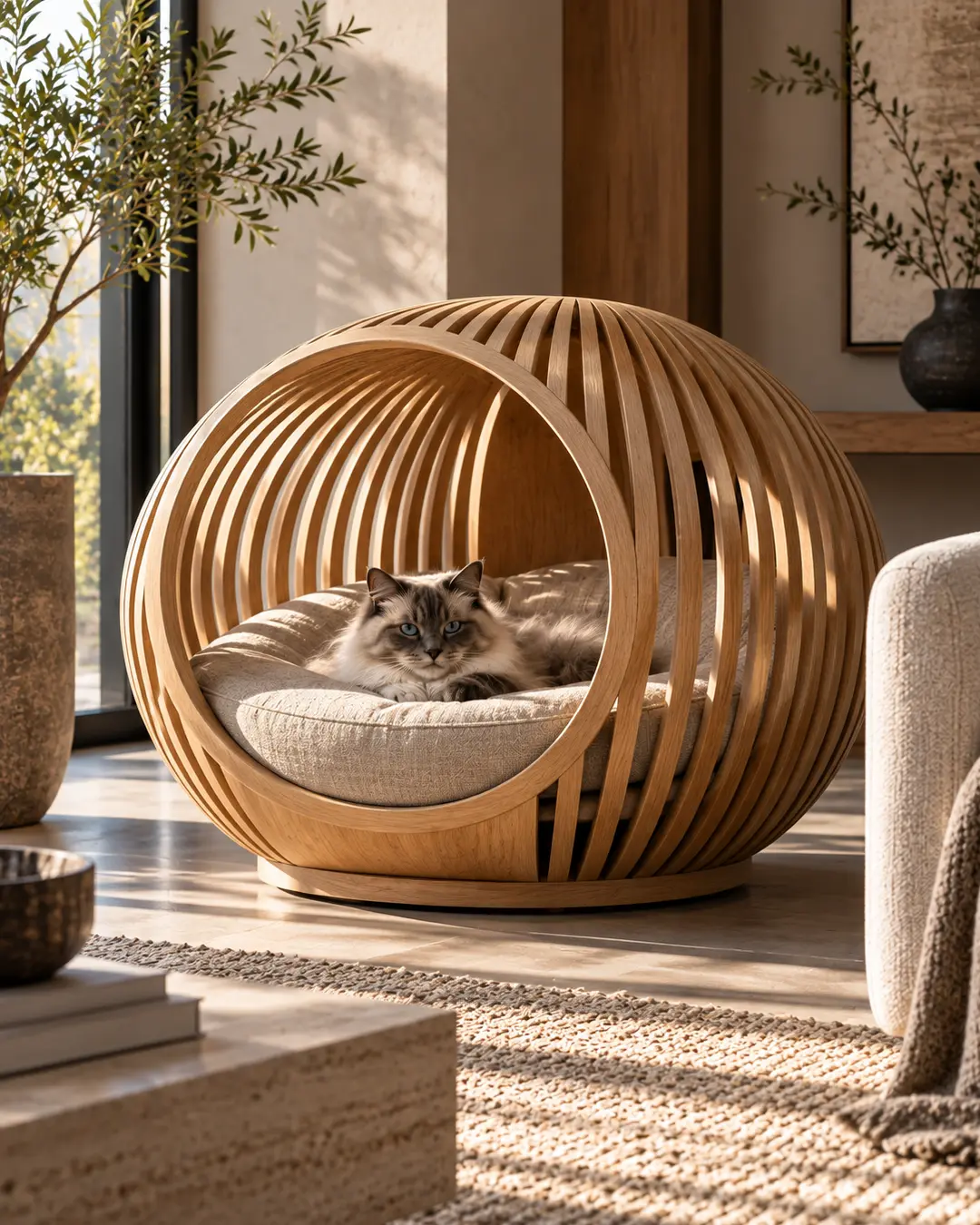
Imagine a large oval cocoon created from curved oak ribs, each spaced just far enough apart to allow light through.
Inside sits one thick natural-linen cushion.
Nothing unnecessary.
Nothing decorative simply for the sake of decoration.
Just beautiful materials, gentle curves and one extremely comfortable cat.
It would look particularly good in a calm contemporary living room where the shadows created by the wooden slats become part of the design.
Of course, the cat will still knock something off the coffee table.
Minimalism has limits.
The Mid-Century Cat House
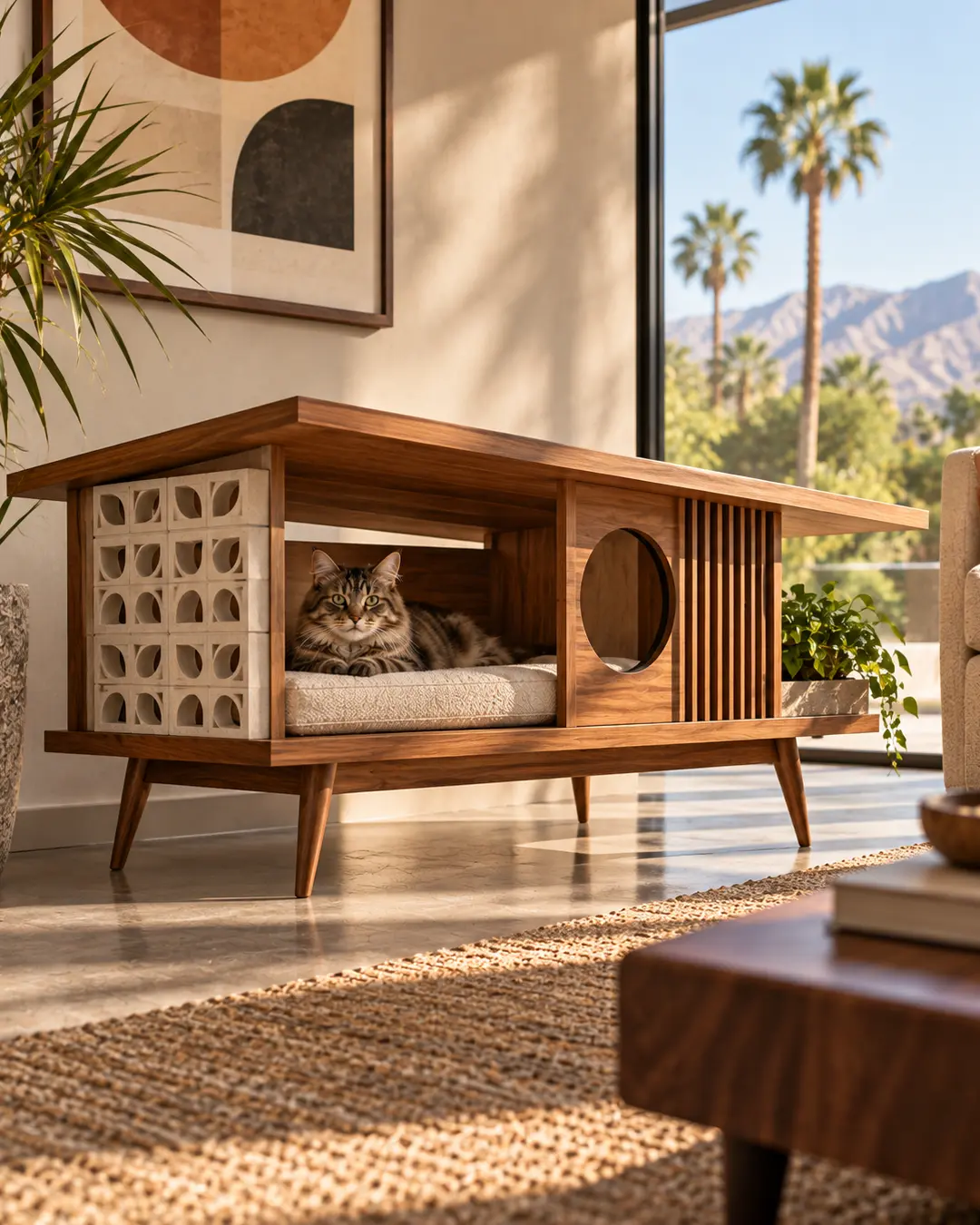
Somewhere in Palm Springs, there is almost certainly a cat who needs this.
Low profile.
Long roofline.
Warm walnut.
Tapered legs.
Perhaps even a small breeze-block-inspired screen along one side.
The Mid-Century Cat House would borrow the proportions and materials of classic mid-century furniture without becoming a novelty miniature house.
Inside, a simple upholstered sleeping platform.
Outside, enough architectural detail to make it interesting.
And because the structure sits slightly above the floor, the entire thing feels lighter and more like a genuine piece of furniture.
It’s sophisticated.
It’s understated.
And the cat occupying it will almost certainly behave as though the house came with a pool.
The Brutalist Bunker
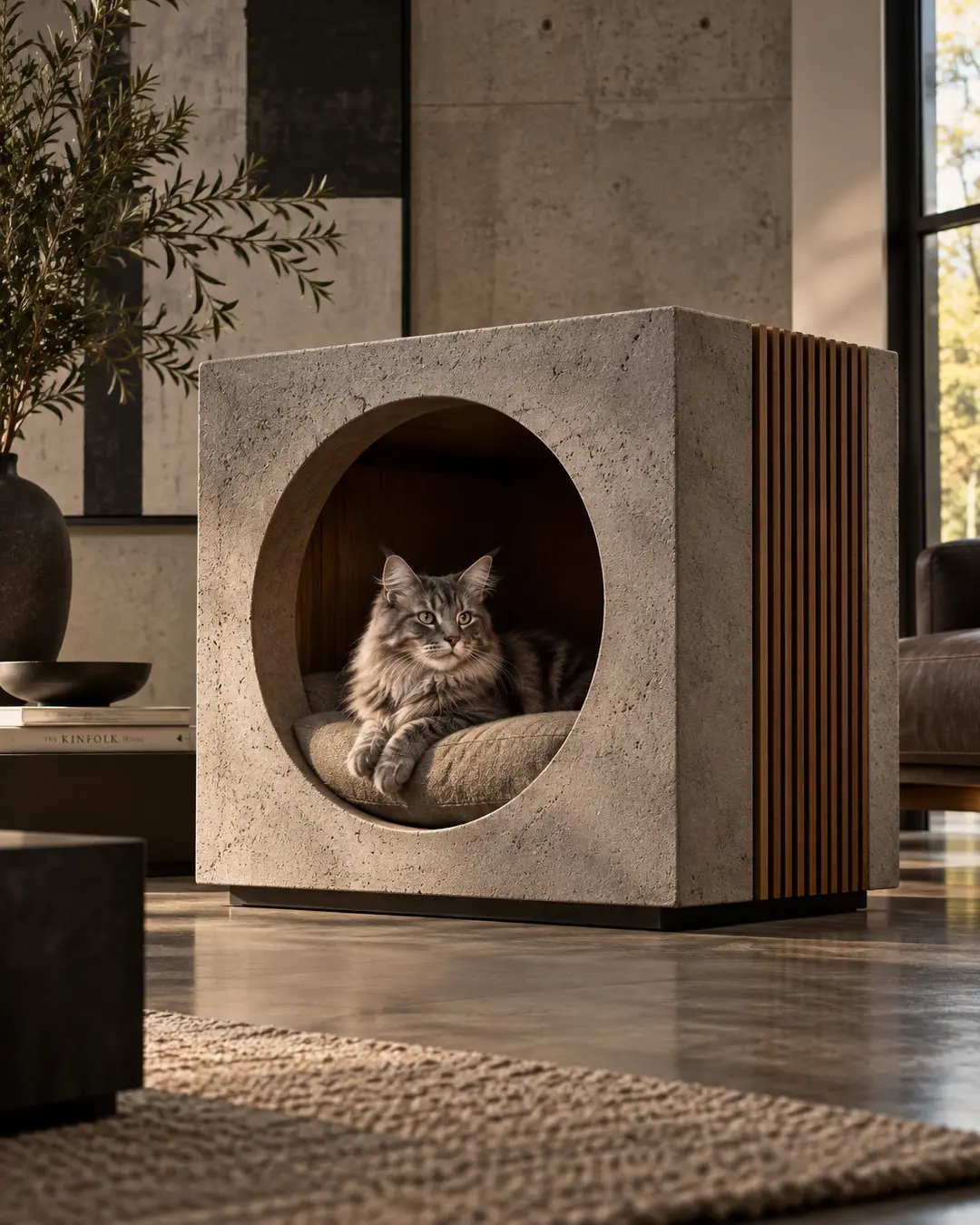
Not every cat wants cute.
Some cats look as though they should live inside a concrete monument.
So let’s give them one.
The Brutalist Bunker would be constructed from large geometric forms with a stone or concrete appearance, softened by warm wood and a deeply upholstered interior.
One enormous circular opening provides the entrance.
That’s it.
No paw prints.
No little ears built into the roof.
No sign announcing that a cat lives here.
Just a dramatic piece of architecture sitting quietly in the corner of an equally dramatic room.
Until a cat’s face appears in the giant circular doorway.
Then it becomes perfect.
The Floating Cat House
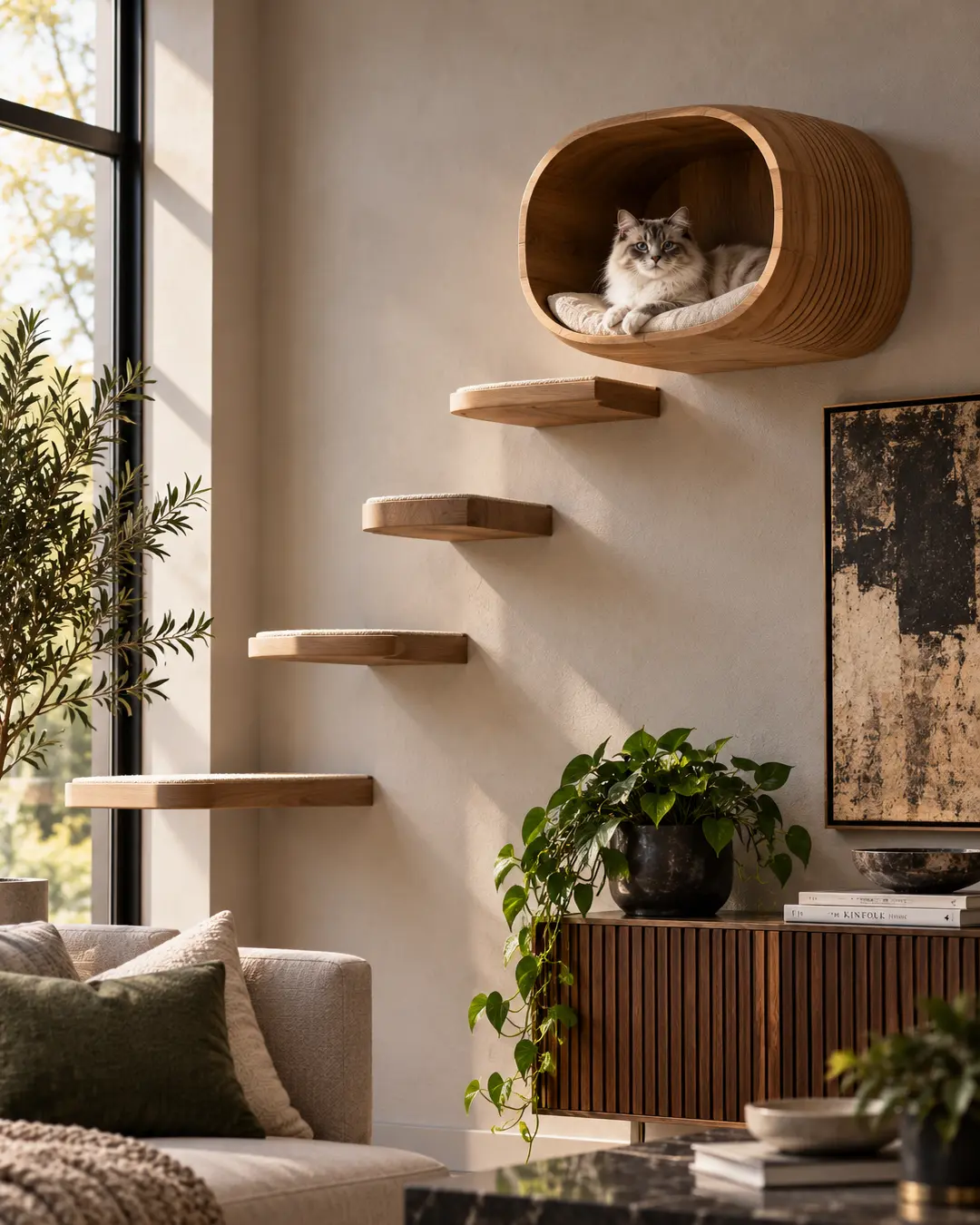
Floor space is valuable.
Wall space, however, is just sitting there.
The Floating Cat House would mount directly to the wall and appear almost weightless, with a series of beautifully designed steps or platforms leading toward it.
The house itself could be a simple curved wooden shell with one large opening and a soft sleeping surface inside.
But the route to it becomes part of the design.
A step.
Another platform.
A longer shelf.
Then finally the house.
Cats get the vertical territory they naturally enjoy while humans get something considerably more attractive than a traditional climbing tower.
It also gives the cat an elevated location from which to silently disapprove of household decisions.
A valuable feature.
The A-Frame Retreat
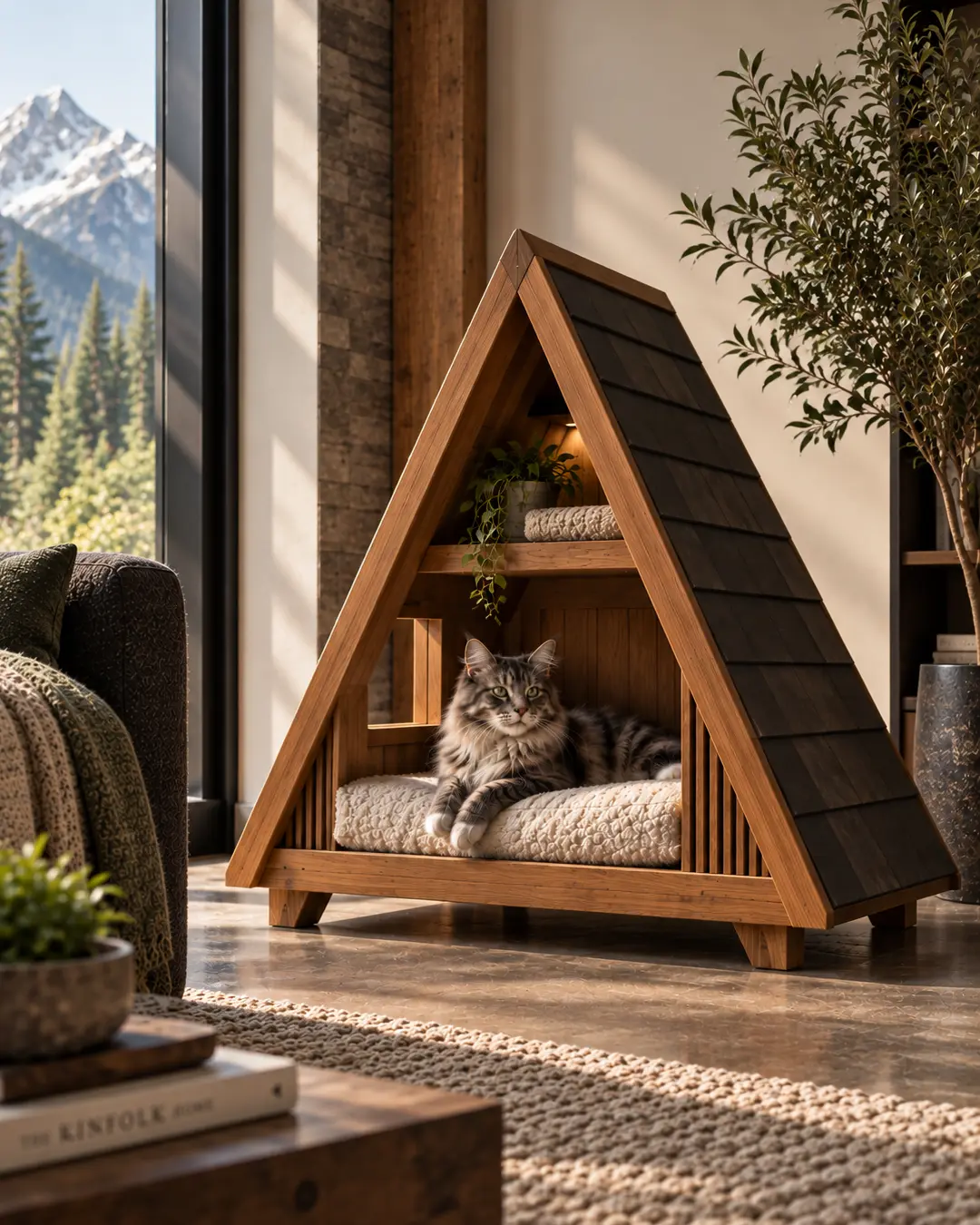
Cats have probably never dreamed about owning a cabin in the mountains.
But we’re going to give one a cabin anyway.
The A-Frame Retreat takes the familiar triangular form and turns it into a genuinely beautiful piece of miniature architecture.
A dramatic timber frame.
Deep roofline.
Large open front.
Soft sleeping area below.
And perhaps a small elevated platform tucked beneath the peak.
The proportions are important here.
Make it too small and it’s just another triangular cat bed.
Make it substantial enough and suddenly it feels like somebody commissioned a tiny mountain retreat for an animal who contributes absolutely nothing toward the mortgage.
Which seems appropriate.
The Art Deco Lounge
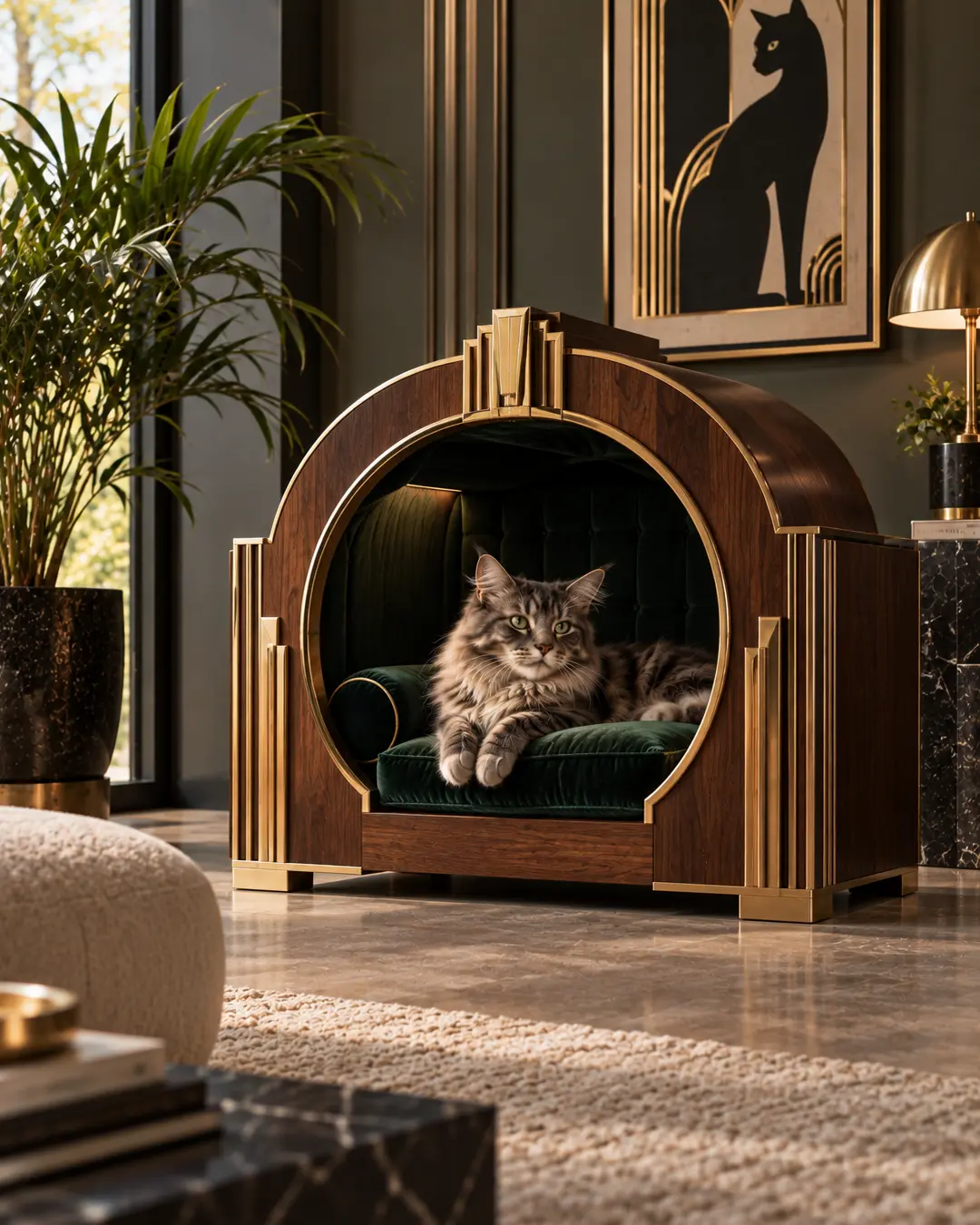
Some cats were never meant for plywood.
They require velvet.
The Art Deco Lounge would combine curved dark wood, subtle brass details and a rich upholstered interior.
The entrance might have a dramatic rounded shape, with stepped architectural details inspired by classic Art Deco interiors.
Inside?
Velvet.
Obviously.
This isn’t where the cat goes after chasing a bottle cap around the kitchen.
This is where the cat retires afterward.
Preferably while looking exhausted by the demands of society.
The Hidden Side Table
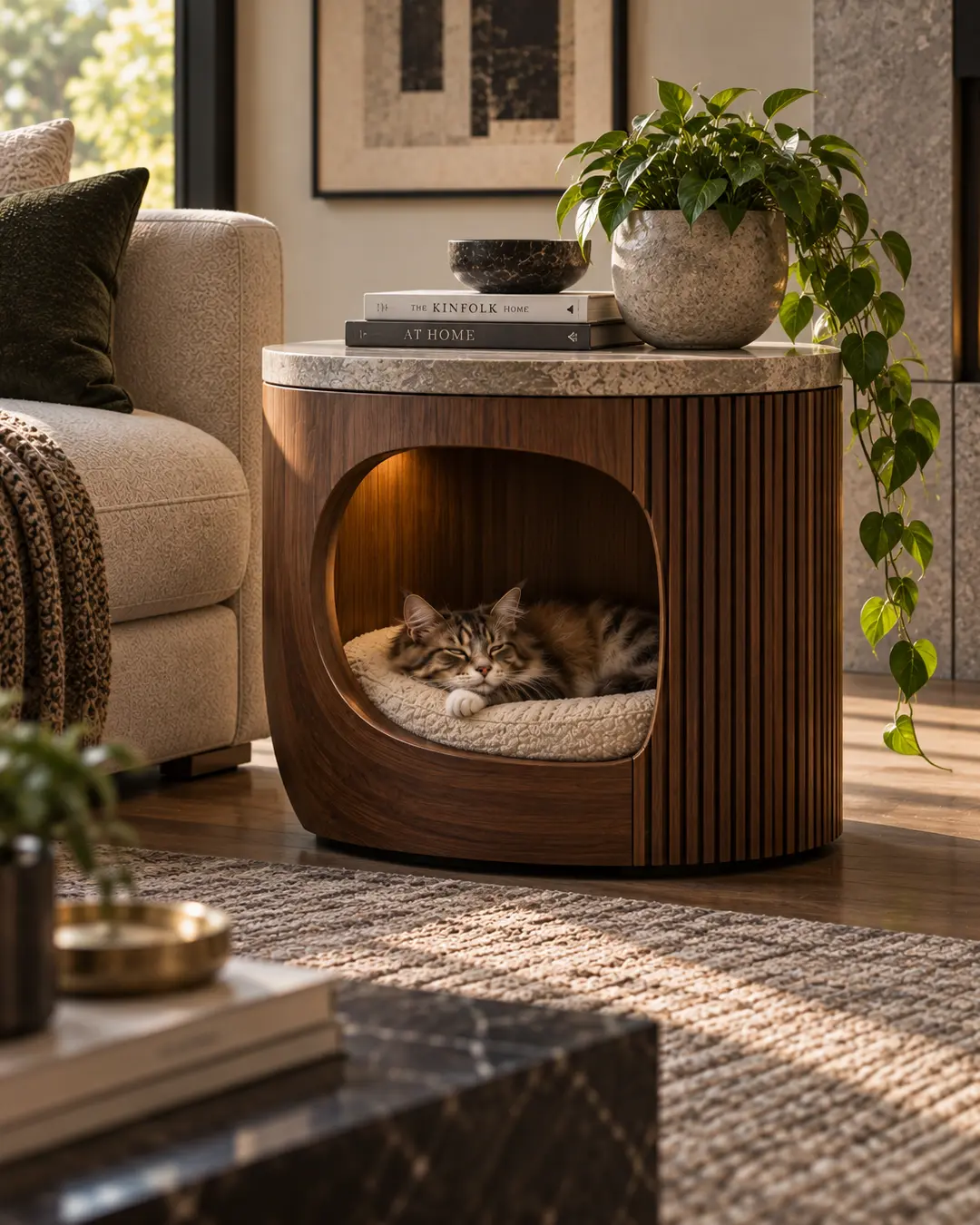
This may be the one humans appreciate most.
Because sometimes the best pet furniture doesn’t look like pet furniture at all.
Imagine a beautiful sculptural side table beside the sofa.
Stone top.
Curved wood base.
Perfectly proportioned.
Except part of that base contains a discreet opening leading to an upholstered sleeping space.
Your cat gets a private little house.
You get a side table.
And nobody has to sacrifice a corner of the living room to something covered in beige carpet.
There’s also something wonderfully cat-like about having an expensive piece of furniture containing a secret compartment occupied entirely by a sleeping animal.
The Courtyard House
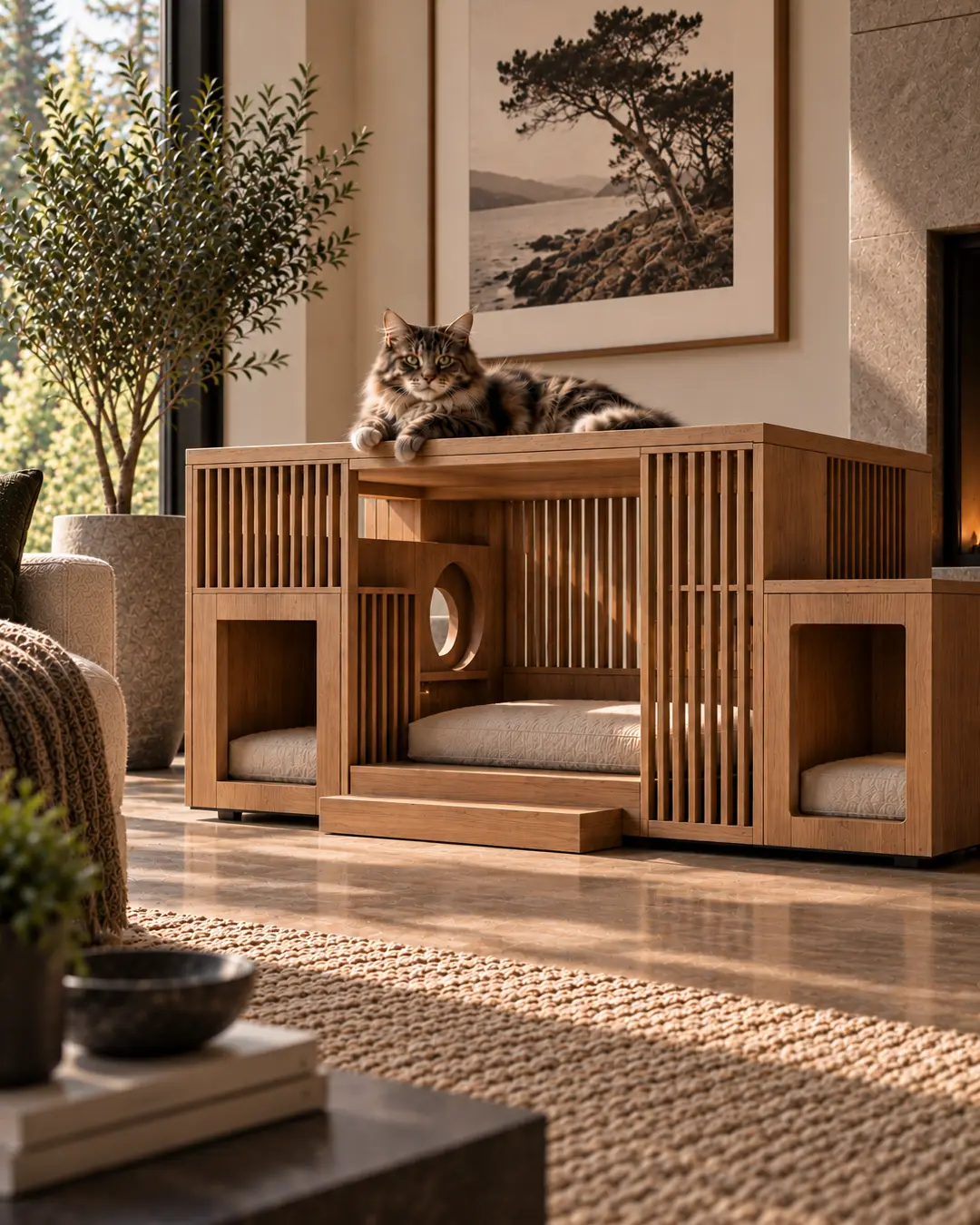
Cats love being enclosed.
They also love being able to see everything.
Architecturally, those requirements aren’t actually that difficult to combine.
The Courtyard House would wrap around a small central lounging area, creating protected walls on several sides while leaving the middle partially open.
Think of a tiny contemporary courtyard home reduced to feline proportions.
Wood screens could provide privacy.
Openings could create multiple entrances.
A raised central cushion becomes the main lounging area.
Instead of simply crawling inside a box, the cat gets several little spaces to move through and choose between.
Which means they’ll probably sleep on the roof.
But at least we tried.
The Cat Mansion
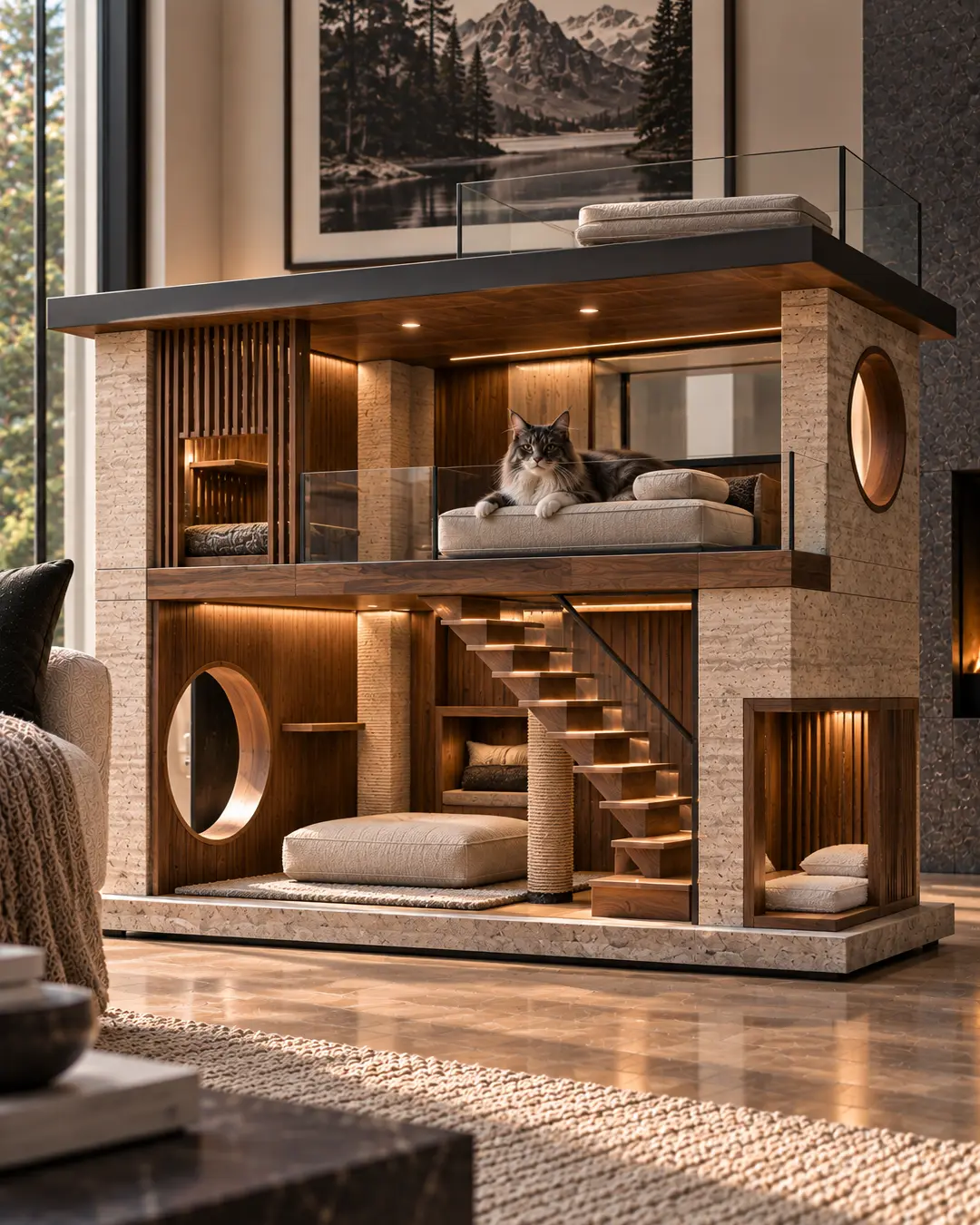
We have been reasonable long enough.
The final house should be completely unnecessary.
Two storeys.
Multiple lounging areas.
A dramatic cantilevered roof.
Stone.
Walnut.
Glass.
An internal staircase.
Maybe even a rooftop terrace.
Essentially, take everything architects use to make an expensive contemporary house look expensive and shrink it until a cat can live there.
The result shouldn’t look like a dollhouse.
It should look like somebody genuinely commissioned an architect to design a luxury residence for a cat.
And somewhere on the upper floor, stretched across an upholstered platform overlooking the living room, sits the homeowner.
The humans?
They’re still paying the mortgage on the larger house surrounding it.
Maybe Cat Furniture Should Be Beautiful
Most people don’t mind having things in their homes for their pets.
We have dog beds.
Cat trees.
Scratching posts.
Food stations.
Toys scattered under furniture that nobody remembers buying.
The problem is that pet furniture has traditionally been designed as though it belongs to an entirely different category from everything else in the room.
It doesn’t have to.
A cat house can be comfortable for the cat and beautiful for the human.
It can borrow ideas from architecture.
It can use great materials.
It can even become one of the most interesting objects in the room.
Would any cat appreciate the difference between a spectacular walnut architectural cocoon and the cardboard box it arrived in?
Probably not.
But that’s never stopped us from buying nice furniture before.