Most of us have a plan for our pets when we go on vacation. We arrange for a family member to stop by, hire a pet sitter or book a boarding kennel. We leave instructions about food, walks, medications and all the little routines our dogs and cats expect us to remember.
But what if the reason you don’t come home isn’t a vacation?
What if you have an accident, become seriously ill, end up in the hospital for weeks or die unexpectedly?
It’s not something any of us particularly wants to think about. But if another living creature depends on you every day, it is a question worth answering while you are healthy and able to make the decisions yourself.
What Would Happen to Your Pets Tonight?
It’s a simple question, but it can reveal some surprisingly big holes in your plans.
Imagine you left home this morning expecting to be back for dinner. Something happens, and instead you are admitted to the hospital and can’t return home.
Who knows your pets are there?
Who has a key?
Does that person know what your dog eats, where your cat’s medication is kept or which veterinarian you use?
Would anyone know that one pet needs medication at 8 p.m., that another can’t be around other dogs or that the cat will probably be hiding under the bed when a stranger enters the house?
For many pet owners, the answer is that somebody would eventually figure it out.
Eventually isn’t much of an emergency plan.
Serious Illness Can Change Life Very Quickly
This subject is particularly meaningful to me because I’ve experienced firsthand how dramatically a serious health problem can change the direction of a person’s life.
I needed a kidney transplant. My sister Brenda donated one of her kidneys to me, giving me an opportunity to continue living a life that could have turned out very differently.
Without that transplant, my family could have been left without a husband and father. The plans and ideas that eventually became part of the Pet Friendly House project might have remained nothing more than plans.
I’ve written more about that experience in Transplants Change People’s Lives. Organ donation gave me another chance at the life I wanted to live.
Going through something like that also makes the uncomfortable “what if?” questions a lot less theoretical.
Our pets depend on us regardless of what else is happening in our lives. They don’t know why we didn’t come through the door at the usual time. They only know that dinner hasn’t appeared, nobody has taken them outside or the person they rely on isn’t there.
Having a plan for them is one more way of taking care of them.
Choose an Emergency Pet Caregiver
The first person you choose doesn’t necessarily have to be the person who would permanently take your pets.
This is your emergency contact—the person who can step in tonight if necessary.
Ideally, that person lives close enough to reach your home reasonably quickly and already knows your animals. Give them a key or make sure they know how to obtain one.
Then actually have the conversation.
Don’t assume your brother will take the dog because he loves him. Don’t assume your neighbor will look after the cats because she has fed them before. Ask.
You should also have a second person as backup. Emergencies have a habit of happening at inconvenient times, and your first choice could be travelling, working, ill or otherwise unavailable.
Make an Emergency Information Sheet
A stranger shouldn’t need to conduct an archaeological expedition through your kitchen cupboards to figure out what your dog eats.
Create a basic information sheet for your pets and keep it somewhere your emergency caregiver knows to look.
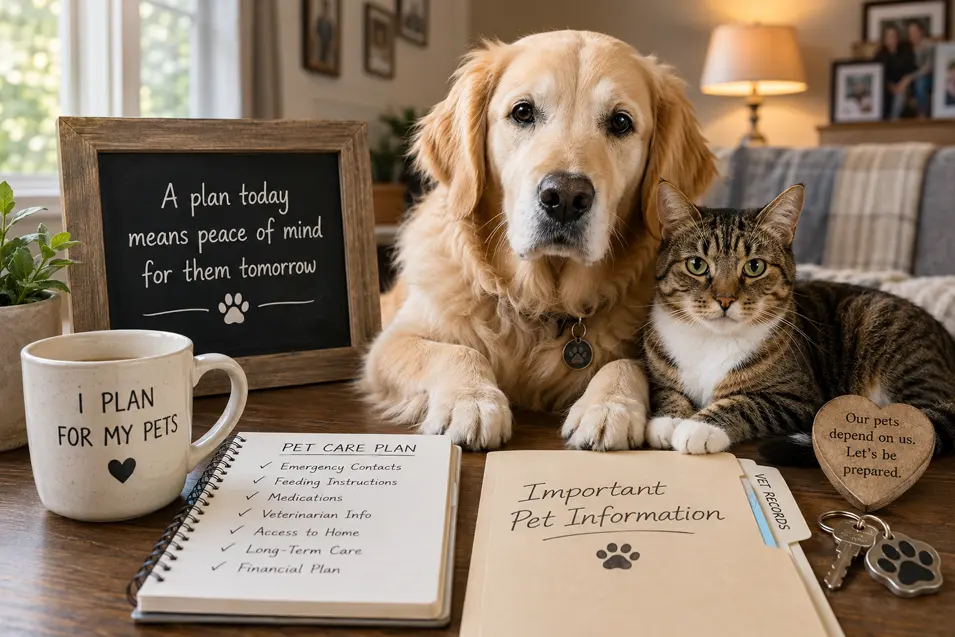
Include your pets’ names, photographs, veterinarian and emergency-veterinarian contact information, food and feeding schedule, medications and dosages, allergies, medical conditions, microchip information and your preferred emergency contacts.
Then add the information only someone who lives with the animal would know.
Maybe your dog will bolt through an open front door. Perhaps your cat needs to be fed separately from another cat. Maybe your elderly dog can’t manage the basement stairs, or your normally friendly pet becomes frightened around unfamiliar people.
Those seemingly minor details can become very important when somebody suddenly has to take over.
Think About Access to Your Home
One of the most practical parts of emergency planning is also one of the easiest to overlook.
Someone needs to be able to get inside.
A trusted family member, friend or neighbor could have a spare key. You might use a secure lockbox or another system that allows an emergency contact to gain access.
Whatever method you choose, don’t make your plan dependent on you being conscious and available to explain where the key is.
It can also be useful to carry an emergency card in your wallet indicating that you have pets at home and listing the person who should be contacted to care for them.
Plan for More Than a Couple of Days
An emergency caregiver solves the immediate problem. It doesn’t answer what happens if you’re unable to care for your pets for several weeks or months.
A hospital stay can become rehabilitation. A serious illness can make everyday tasks temporarily impossible. You may be able to return home but still be unable to walk a large dog, lift bags of food, clean a litter box or drive an animal to veterinary appointments.
Think about who could help under those circumstances.
The answer might be different from your emergency contact. One person could feed your cats while another walks your dog. Family members might temporarily take your pets into their homes. A professional dog walker or pet sitter could become part of the arrangement.
You don’t necessarily need one person capable of doing everything. You need a realistic plan that will continue working for as long as you need help.
Have a Financial Plan for an Extended Emergency
Pet care costs money even when you’re not there to provide it yourself.
Food still needs to be purchased. Prescriptions need refilling. Veterinary appointments don’t stop because you’re in the hospital. Boarding, dog walking and pet-sitting costs can become significant during a prolonged illness.
Consider how those expenses would be handled if you couldn’t manage them yourself.
Depending on your circumstances, this might simply mean making sure a trusted family member knows how pet expenses should be paid. For a longer-term plan, it may require more formal financial arrangements.
The important thing is not to leave somebody willing to help with your pets but unable to afford their care.
What If You Never Come Home?
This is the hardest part of the conversation, but it is also the reason an emergency plan shouldn’t end with a spare house key.
Who would permanently take your pets if you died?
Again, don’t assume.
A person can absolutely adore your dog and still be unable to take him. They may rent a home that doesn’t allow animals. Their own dog may not tolerate another pet. They might travel extensively, have allergies, have young children or simply not be in a position to assume responsibility for another animal for the next ten years.
Ask the person you have in mind whether they are genuinely willing to do it.
Then choose a backup.
Decide Whether Your Pets Should Stay Together
If you have more than one animal, think about their relationship with each other.
Some pets live happily under the same roof but wouldn’t be particularly bothered by separation. Others are deeply bonded.
If keeping two animals together is important to you, discuss that with your prospective caregiver before naming them in your plans. Taking one dog is a very different commitment from taking two dogs and a cat.
At the same time, be realistic. In some circumstances, finding two excellent homes may ultimately be better for the animals than insisting they remain together when no suitable person can accommodate both.
The goal is their welfare, not simply preserving the household exactly as it exists today.
Put Your Wishes in Writing
Once you’re thinking about permanent care, verbal arrangements aren’t enough.
Your estate plan should address what you want to happen to your pets and how their future care will be funded.
The details vary according to where you live, and pets generally aren’t treated in law in the same way as human beneficiaries. That’s why this is an area where professional estate-planning advice can be valuable.
We’ve looked at the subject in more detail for both dog and cat owners.
If you have a dog, read Including Your Dog in Your Will for more about planning for your dog’s care after your death.
Cat owners can read Including Your Cat in Your Will for the same considerations from the perspective of providing for a cat.
A lawyer or other qualified estate-planning professional in your jurisdiction can help you determine the appropriate way to document your wishes and provide funds for an animal’s future care.
Leave Enough Information for a Permanent Caregiver
Think about everything you’ve learned about your pet simply by living with them.
You know which food agrees with their stomach. You know they hate thunderstorms. You know the funny lump on their side has already been examined by the veterinarian. You know which toy they carry to bed, where they like to sleep and whether they’re trustworthy off leash.
A new caregiver doesn’t know any of that.
Create a more detailed record that can go with your pet if someone else has to assume permanent responsibility.
Include veterinary records, medication history, diet, routines, behavior, training cues, fears, preferences, grooming needs and any other information that would help someone understand the animal they’re bringing into their home.
You can even include the things that seem silly.
If your dog has slept with you every night for nine years, that’s worth knowing. If your cat only drinks happily from a particular type of bowl, write it down.
A plan isn’t only about keeping an animal alive. It’s about making a potentially enormous transition as gentle as possible.
Pay Special Attention to Older and Special-Needs Pets
An eight-month-old friendly dog may be relatively easy for a family member to accommodate.
A 13-year-old dog taking several medications is a different responsibility.
The same is true for cats with chronic medical conditions, animals with significant behavioral issues and pets requiring specialized diets or frequent veterinary care.
If one of your pets would be particularly difficult to rehome, make that animal a priority in your planning.
Talk frankly with the person you’ve chosen about the likely responsibilities and expenses. If necessary, consider whether there are trusted organizations that could become a backup if friends or family were unable to provide suitable care.
Update the Plan When Your Life Changes
Making a pet emergency plan once doesn’t mean you’re finished forever.
Pets change. People change.
The friend who happily agreed to take your dog five years ago may now have three dogs of her own. Your parents may no longer be physically capable of caring for a large, energetic animal. You may have moved to another city. A pet may have developed medical needs that weren’t present when you made the original plan.
And, of course, you may have welcomed more animals into your home.
Review your plan periodically and after major changes in your life. Confirm that the people you’ve chosen are still willing and able to help.
A Simple Pet Emergency Plan
You don’t need to turn this into a massive project. Start with the essentials:
- Choose a primary emergency caregiver and a backup.
- Make sure someone can access your home.
- Create written feeding, medication and veterinary instructions.
- Keep identification and microchip information current.
- Decide who could provide care during a prolonged illness.
- Think about how temporary care would be paid for.
- Choose the person you would want to permanently take each pet.
- Discuss your wishes with that person rather than assuming.
- Put permanent arrangements into your estate planning.
- Leave detailed information about each pet’s health, habits and personality.
- Review everything periodically.
You can accomplish most of the immediate planning in an afternoon.
Hopefully, nobody will ever need to use it.
Plan for Them Because They Can’t Plan for Themselves
There is an uncomfortable reality behind all of this: our pets have absolutely no control over what happens if we’re suddenly gone.
We do.
None of us knows what tomorrow will bring. I certainly didn’t plan on needing a kidney transplant. I was fortunate to have a sister willing and able to give me an extraordinary gift, and because of that gift I got more time with the people, animals, work and dreams that mattered to me.
We can’t prepare for every possibility in life. We can, however, make sure the animals depending on us aren’t forgotten when something goes wrong.
Choose the people. Give somebody a key. Write down the instructions. Have the difficult conversation about who will take your pets if you die. And when appropriate, make those wishes part of your estate planning.
Then put the plan away and get back to enjoying life with your pets.
With any luck, they’ll never need it.