Christmas is a time for family gatherings, holiday traditions, and visiting the people we love. For many dog owners, that means packing up the car, loading the presents, and bringing the family dog along for the festivities.
Of course, travelling with a dog at Christmas isn’t always as simple as grabbing a leash and heading out the door.
Winter weather, busy highways, crowded airports, unfamiliar homes, and changes to your dog’s regular routine can turn an otherwise enjoyable holiday trip into a stressful experience.
Whether you’re driving across town for Christmas dinner, spending several days with relatives, or flying across the country, a little planning can make a tremendous difference.
The goal isn’t just to get your dog to your Christmas destination. It’s to make sure they arrive safely, comfortably, and ready to enjoy the holidays with you.
1. Decide Whether Your Dog Should Travel at Christmas
Before making travel arrangements, consider whether bringing your dog is genuinely the best choice.
Some dogs love travelling. They happily jump into the car, enjoy exploring new places, and settle comfortably into unfamiliar surroundings.
Others find travel exhausting or frightening.
Older dogs, puppies, dogs with medical conditions, and pets with significant anxiety may struggle with long journeys or busy holiday gatherings.
Consider your dog’s temperament, health, mobility, and previous travel experiences.
A dog that becomes distressed during a 20-minute car ride may not enjoy a six-hour Christmas road trip.
Similarly, a dog that dislikes unfamiliar people might find a house filled with excited relatives and children overwhelming.
Sometimes arranging for a trusted pet sitter or boarding facility is kinder than bringing your dog along.
Christmas should be enjoyable for your dog, too.
2. Plan Your Christmas Trip Well in Advance
Holiday travel can be hectic even without a dog.
Hotels fill up, flights become expensive, roads get busy, and family schedules change.
Travelling with a pet adds another layer of planning.
Before leaving home, confirm that your destination welcomes dogs and that everyone involved understands your plans.
If you’re staying with relatives, ask whether there are other pets in the household, whether the property has a secure yard, and whether your dog will have somewhere quiet to rest.
If you’re booking accommodation, confirm the pet policy directly with the hotel or rental property.
Some accommodations have restrictions on dog size, breed, number of pets, or whether animals can be left unattended.
Don’t assume that a property advertised as pet-friendly automatically welcomes every dog.
It’s much easier to resolve these questions before Christmas than after arriving with a tired dog and a car full of luggage.
3. Make Sure Your Dog Has Proper Identification
Christmas travel often means unfamiliar environments, open doors, busy parking lots, and people coming and going.
These situations can increase the risk of a dog escaping or becoming lost.
Before travelling, make sure your dog wears a secure collar with an identification tag displaying your current telephone number.
If your dog is microchipped, confirm that the registration information is accurate and up to date.
A microchip is especially valuable because collars and tags can sometimes become detached.
It’s also wise to carry a recent photograph of your dog on your phone.
If your dog becomes lost during your holiday trip, having an easily accessible photograph and accurate identification can make the search much easier.
4. Pack a Christmas Travel Bag for Your Dog
Most people remember their own luggage, Christmas presents, and phone chargers.
The dog’s belongings are sometimes a last-minute consideration.
Packing a dedicated travel bag helps keep everything organized and reduces the chance of forgetting something important.
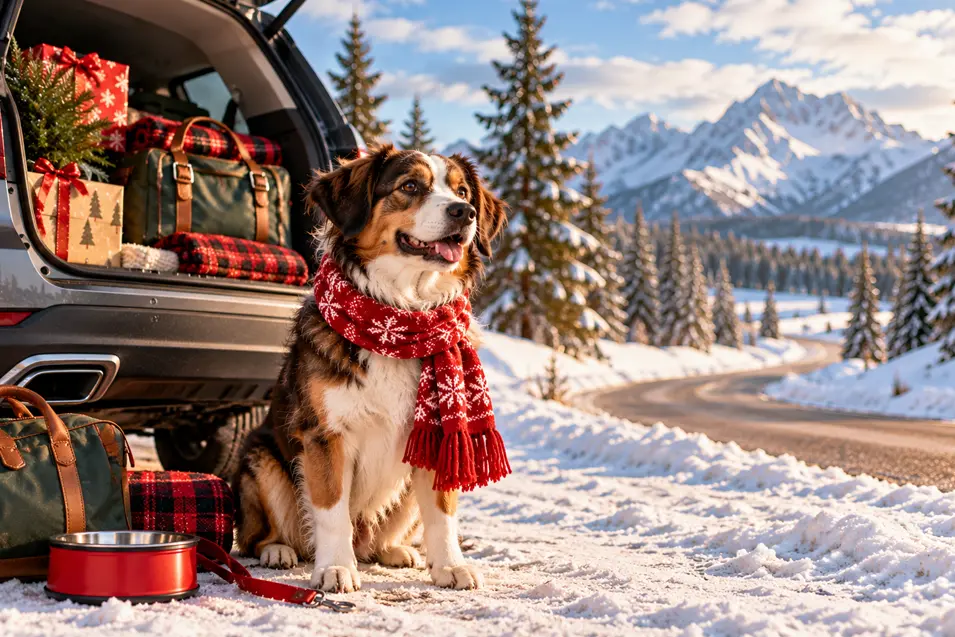
Your dog’s Christmas travel bag should include:
- Enough regular dog food for the entire trip, plus a little extra
- Food and water bowls
- Fresh drinking water for the journey
- A leash, harness, and secure collar
- Waste bags
- Any prescribed medications
- A copy of relevant veterinary records
- A familiar blanket or bed
- Favourite toys
- Appropriate treats
- Towels for muddy or snowy paws
- A brush or other essential grooming supplies
- A pet first-aid kit
If your dog follows a special diet, don’t assume you’ll be able to purchase their usual food at your destination.
Holiday store closures can make finding specific products difficult.
A familiar blanket or toy can also help your dog feel more comfortable in an unfamiliar home or hotel room.
5. Keep Your Dog Secure During Christmas Road Trips
For many families, driving is the easiest way to travel with a dog at Christmas.
However, an unrestrained dog inside a moving vehicle can be dangerous.
A dog moving freely around the car can distract the driver, interfere with vehicle controls, or become seriously injured during sudden braking or a collision.
The safest approach is to use a properly secured travel crate or an appropriate vehicle restraint system designed for dogs.
Choose equipment that fits your dog and vehicle correctly. Where available, look for products with credible independent crash-testing information.
A harness intended for walking isn’t necessarily suitable for vehicle restraint.
Avoid allowing your dog to ride in the front seat, particularly where an airbag could deploy.
And never allow your dog to travel loose in the open bed of a pickup truck.
A little preparation before leaving the driveway can prevent a serious accident.
6. Prepare for Winter Driving Conditions
Christmas travel often involves unpredictable weather.
Snow, ice, freezing rain, and sudden temperature changes can affect both road safety and your dog’s comfort.
Before leaving, check the weather forecast and road conditions along your route.
Allow additional travel time and avoid driving through dangerous conditions simply to arrive for a scheduled Christmas dinner.
Pack extra blankets and sufficient water in case of unexpected delays.
For dogs travelling in cold climates, a properly fitted winter coat may be helpful, particularly for small, short-haired, elderly, or cold-sensitive dogs.
Remember that dogs can become cold inside a vehicle when the engine is off.
Never leave your dog unattended in a parked car during freezing weather. Vehicle interiors can become dangerously cold, even when the trip inside a store is expected to be brief.
Your dog’s safety is more important than keeping to a holiday schedule.
7. Schedule Regular Breaks During Long Drives
Long car journeys can be uncomfortable for dogs, especially those that aren’t accustomed to travelling.
Plan regular stops so your dog can stretch, relieve themselves, and have access to drinking water.
Many adult dogs benefit from a break approximately every two to three hours, although puppies, senior dogs, and dogs with medical conditions may need more frequent stops.
Choose safe locations away from heavy traffic.
Keep your dog securely leashed before opening the vehicle door.
Highway rest stops and unfamiliar parking areas can be noisy and intimidating, particularly during busy holiday travel periods.
Avoid allowing your dog to run loose, even if they normally have excellent recall.
A frightened dog in an unfamiliar location may behave unpredictably.
8. Be Careful With Christmas Treats During Travel
Holiday road trips often involve snacks, fast food, and plenty of Christmas treats.
Unfortunately, many foods people enjoy during the holidays aren’t suitable for dogs.
Chocolate, raisins, grapes, products containing xylitol, and foods prepared with onion or garlic can be dangerous.
Rich, fatty leftovers may cause gastrointestinal upset or pancreatitis.
Keep Christmas chocolates, baked goods, and other potentially hazardous foods securely packed where your dog cannot reach them.
It’s also best to avoid introducing unfamiliar treats immediately before or during a long journey.
A dog experiencing digestive upset in the middle of a highway trip isn’t going to enjoy Christmas very much.
Stick with familiar food and offer treats in moderation.
9. Flying With Your Dog at Christmas Requires Extra Planning
Flying with a dog during the Christmas season can be considerably more complicated than driving.
Airlines have different rules regarding pet travel, including carrier dimensions, weight limits, documentation, fees, and the number of animals permitted on individual flights.
Some airlines restrict pet travel during particularly busy holiday periods or during extreme temperatures.
Before booking, contact the airline directly to confirm its current pet policies.
Small dogs may qualify to travel in an approved carrier inside the passenger cabin, depending on the airline and route.
Larger dogs may face additional restrictions, and some airlines do not accept pets in the cargo hold at all.
If your dog must travel in the hold, discuss the risks and available alternatives with your veterinarian before booking.
Whenever possible, choose direct flights to reduce the number of transfers and potential complications.
International travel may require additional veterinary certificates, vaccinations, permits, or other documentation.
Requirements vary by destination and may take weeks or months to complete.
Never assume that bringing your dog home will involve the same requirements as entering your holiday destination.
Should You Sedate Your Dog Before Flying?
Do not give your dog sedatives or calming medications for air travel without veterinary guidance.
Sedation can affect breathing, blood pressure, balance, and the ability to regulate body temperature. These concerns may be especially important during air travel.
Some airlines also restrict the transport of sedated animals.
If your dog experiences significant travel anxiety, speak with your veterinarian well before departure about appropriate management strategies and whether flying is advisable.
10. Help Your Dog Settle Into an Unfamiliar Home
Arriving at your Christmas destination can be exciting for everyone except the dog who has no idea where they are.
New smells, unfamiliar furniture, different routines, and enthusiastic relatives can be overwhelming.
When you arrive, give your dog time to explore calmly.
Introduce them to the environment gradually rather than immediately surrounding them with people.
Set up their bed, water bowl, and familiar belongings in a quiet location.
Try to maintain regular feeding, walking, and sleeping schedules.
Familiar routines can provide reassurance when everything else feels different.
If your dog seems nervous, don’t force interactions with family members or other pets.
Allow them to settle at their own pace.
11. Introduce Your Dog Carefully to Other Holiday Pets
Christmas gatherings sometimes bring together dogs and cats that have never met before.
Even friendly animals can become uncomfortable when unfamiliar pets enter their territory.
Ask your hosts about their animals before arriving.
If possible, arrange initial dog-to-dog introductions in a calm, neutral outdoor location with appropriate supervision.
Avoid immediately bringing your dog into a crowded room where another dog is already excited or protective of its surroundings.
Keep food bowls, treats, favourite toys, and resting areas separate until you’re confident the animals are comfortable together.
Never assume that two dogs will get along simply because both are normally friendly.
If either animal appears stressed, give them space and use separate areas when necessary.
For households with cats, make sure the cats have safe places to retreat where the visiting dog cannot follow.
12. Watch Out for Christmas Decorations in Unfamiliar Homes
Your own home may already be arranged with your dog’s safety in mind.
A relative’s house might not be.
Christmas trees, electrical cords, ornaments, candles, ribbons, and wrapped presents can create hazards for curious dogs.
Before allowing your dog to explore freely, take a few minutes to inspect the surroundings.
Keep an eye out for:
- Chocolate or candy left within reach
- Electrical cords and decorative lighting
- Breakable glass ornaments
- Tinsel, ribbons, and gift-wrapping materials
- Unsecured Christmas trees
- Candles and open flames
- Potentially toxic holiday plants
- Medications and household chemicals
- Accessible garbage containing food scraps or bones
Ask your hosts to keep potentially dangerous items out of reach.
It’s much easier to prevent an accident than to locate an emergency veterinary clinic on Christmas Day.
13. Give Your Dog a Quiet Place During Christmas Gatherings
Christmas celebrations can be noisy.
Children may be running around, relatives may be arriving throughout the day, and someone inevitably decides it’s time to play Christmas music at full volume.
Even sociable dogs can become overwhelmed.
Set aside a quiet room or comfortable resting area where your dog can retreat when they need a break.
Provide their familiar bed, fresh water, and a favourite toy.
Make sure children understand that the dog’s resting area is not a place for games, hugs, or unwanted attention.
If your dog is comfortable using a crate, bringing their familiar crate may help them settle.
However, a crate should never be used to force a frightened dog to remain near stressful activity.
Pay attention to signs of discomfort, including pacing, panting, lip licking, trembling, hiding, or attempts to leave.
Giving your dog a break before they become overwhelmed can help keep Christmas enjoyable for everyone.
14. Be Extra Careful With Doors and Gates
One of the biggest risks when travelling with a dog at Christmas is an accidental escape.
Holiday gatherings involve frequent arrivals and departures.
Guests may leave doors open while carrying presents, children may forget to close gates, and unfamiliar visitors may not realize a dog is nearby.
A dog that is normally reliable at home may become frightened or disoriented in an unfamiliar neighbourhood.
Keep your dog securely contained whenever people are coming and going.
Use gates or closed doors where appropriate, and remind guests to check before opening exterior doors.
Always attach your dog’s leash before taking them outside.
Even a brief moment of confusion can result in a lost pet.
15. Know Where the Nearest Emergency Veterinarian Is Located
Nobody wants to think about veterinary emergencies during Christmas.
Unfortunately, accidents and illnesses don’t take holidays.
Before travelling, identify a veterinary emergency clinic near your destination.
Save its telephone number and address on your phone.
Check whether the clinic provides 24-hour emergency services and confirm its holiday arrangements.
This is especially important if you’re travelling to a rural area where emergency veterinary care may be limited.
If your dog has a chronic medical condition, bring sufficient medication and ask your veterinarian whether any special travel precautions are necessary.
Having an emergency plan doesn’t mean something will go wrong.
It simply means you’ll be better prepared if it does.
16. Remember That Your Dog Doesn’t Understand Christmas Schedules
Humans tend to pack an enormous amount into the Christmas holidays.
There’s shopping, travelling, visiting relatives, exchanging gifts, preparing meals, and trying to see everyone before the holidays are over.
Dogs don’t understand why their normal routine has suddenly disappeared.
They still need regular meals, exercise, rest, and opportunities to relax.
Try not to schedule every hour of your trip around human activities.
Allow time for walks, quiet mornings, and familiar routines.
If your dog seems exhausted after a day of travelling or socializing, give them an opportunity to rest rather than bringing them along to another gathering.
Sometimes the best Christmas activity for a dog is a peaceful afternoon nap.
Frequently Asked Questions About Travelling With Dogs at Christmas
Is Christmas a stressful time for dogs?
It can be. Changes in routine, unfamiliar visitors, loud gatherings, travel, and new environments may cause stress in some dogs. Maintaining familiar routines and providing quiet spaces can help.
How often should I stop when driving with my dog?
Many adult dogs benefit from a break every two to three hours, but puppies, senior dogs, and dogs with medical conditions may need more frequent stops. Adjust your schedule to your dog’s individual needs.
Can I leave my dog alone in a hotel room?
That depends on the hotel’s pet policy and your dog’s behaviour. Some hotels prohibit leaving pets unattended. Even when permitted, dogs unfamiliar with the environment may become distressed or bark excessively.
Can dogs fly during the Christmas holidays?
Some airlines permit dogs to travel during Christmas, but restrictions vary by airline, route, aircraft, weather, and travel dates. Confirm the rules directly before booking.
Should I feed my dog before a long car journey?
Avoid giving your dog a large meal immediately before travelling, particularly if they experience motion sickness. Ask your veterinarian about an appropriate feeding schedule if your dog has a history of travel-related nausea.
What should I do if my dog becomes anxious while travelling?
Stop somewhere safe if you’re driving, allow your dog to settle, and assess whether the journey can continue comfortably. For recurring travel anxiety, consult your veterinarian or a qualified reward-based behaviour professional before future trips.
Is it better to leave my dog at home for Christmas?
For some dogs, yes. A trusted pet sitter or suitable boarding arrangement may be preferable if your dog has significant travel anxiety, health concerns, or difficulty coping with unfamiliar environments.
Making Christmas Travel Enjoyable for Your Dog
Travelling with your dog at Christmas can be a wonderful way to include them in family celebrations and create lasting holiday memories.
But successful holiday travel isn’t about how many places you visit or how many Christmas photographs you take.
It’s about making sure your dog feels safe, comfortable, and cared for throughout the journey.
Plan ahead, pack familiar belongings, prepare for winter weather, and pay attention to your dog’s individual needs.
Give them time to settle into unfamiliar environments, protect them from holiday hazards, and remember that rest is just as important as excitement.
And if your dog would rather spend Christmas sleeping beside the fireplace than attending another family gathering, perhaps they’ve figured out the secret to a truly relaxing holiday.
After all, the best Christmas memories aren’t necessarily made by travelling the farthest.
Sometimes they’re made simply by having everyone you love together — including the one with four paws.
More Reading: Travelling Safely With Your Dog
Whether you’re heading across town for Christmas dinner or embarking on a holiday road trip, travelling with your dog requires a little extra planning. These articles offer helpful advice for making car journeys safer, more comfortable, and less stressful for everyone.
- My Dog Gets Car Sick: What Can I Do? – Learn why some dogs experience motion sickness and discover ways to make car rides more comfortable for your four-legged passenger.
- Crossing Canada With Your Dog – Planning a longer road trip? Explore practical tips for travelling across Canada with your dog, from preparing for the journey to making stops along the way.
- Distracted Driving and Dogs – An excited or restless dog can quickly become a driving distraction. Find out why keeping your pet safely secured is essential for everyone’s safety.
- What to Look for in a Pet-Friendly Vehicle – Discover the features that make a vehicle more comfortable and practical for travelling with dogs, whether you’re running errands or heading out on a holiday adventure.