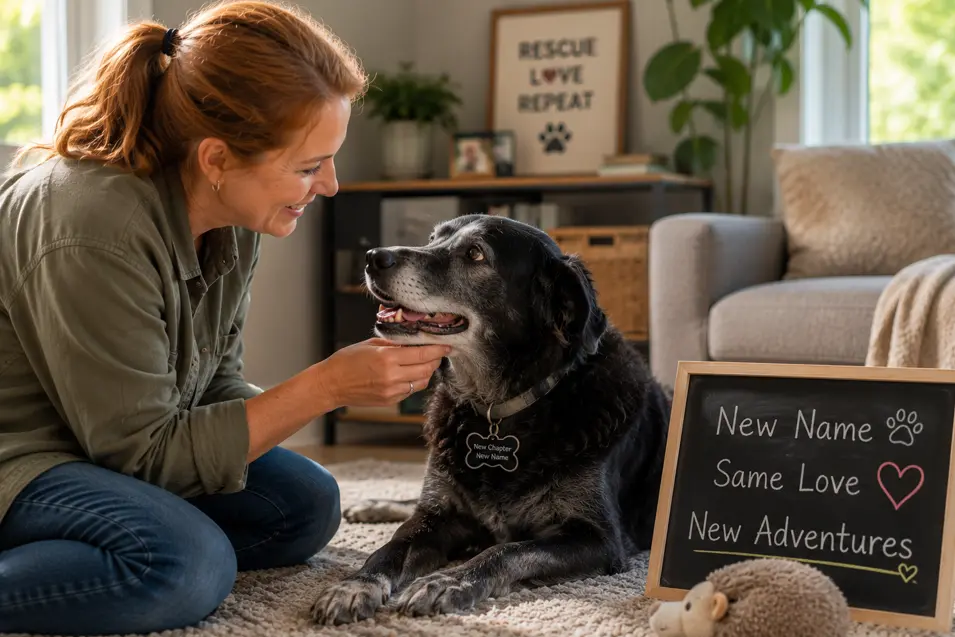

Choosing the perfect name is only the first step. Once you’ve decided what to call your new puppy or dog, the next goal is helping them recognize that their name means something positive.
The good news is that dogs are remarkably good at learning names. With consistency, patience, and plenty of rewards, most puppies begin responding to their name within just a few days. Older dogs and newly adopted rescue dogs can learn a new name just as successfully.
This guide will show you how to teach your dog its name using positive reinforcement and simple daily exercises that take only a few minutes.
Why Learning Their Name Matters
Your dog’s name is one of the most important words they’ll ever learn.
Unlike commands such as “sit” or “stay,” a dog’s name isn’t a cue to perform a specific behavior. Instead, it’s a way of getting their attention before giving another command or interacting with them.
When your dog hears their name, the ideal response is simple:
“Pay attention to my person.”
That foundation makes every other aspect of training much easier.
When Should You Start?
Immediately.
Whether you’ve brought home an eight-week-old puppy or adopted an adult rescue, begin using their new name on the very first day.
The sooner your dog begins hearing their name in positive situations, the faster they’ll learn that it refers to them.
Start in a Quiet Room
The first lessons should happen somewhere with very few distractions.
Choose a quiet room inside your home where your puppy is relaxed and comfortable.
Turn off the television, put away noisy toys, and wait until your puppy is calm but awake.
Say Their Name Once
One of the biggest mistakes owners make is repeating the dog’s name over and over.
Instead, simply say it once.
For example:
“Scout.”
Then wait.
If your puppy looks toward you—even for a second—immediately reward them.
Reward Every Success
As soon as your puppy makes eye contact or turns toward you after hearing their name, reward them.
Use something your dog enjoys, such as:
- A small training treat
- Praise
- Gentle petting
- A favorite toy
- A quick game
The goal is for your puppy to think:
“When I hear my name, good things happen.”
Keep Sessions Short
Young puppies have very short attention spans.
Aim for training sessions of just:
- Two to five minutes
- Two or three times each day
Ending while your puppy is still engaged is much more effective than continuing until they become distracted or bored.
Practice Throughout the Day
Formal training sessions help, but everyday life offers even more opportunities.
Use your dog’s name:
- Before meals
- Before going outside
- Before playtime
- During walks
- Before giving affection
- Before tossing a toy
Every positive experience helps strengthen the connection.
Avoid Using Their Name for Punishment
Your dog’s name should never predict something unpleasant.
Avoid saying their name immediately before:
- Scolding them
- Trimming nails
- Giving medication
- Ending playtime
- Doing something they dislike
If your puppy begins associating their name with negative experiences, they may become less enthusiastic about responding.
Instead, calmly get their attention first, then handle the situation without repeatedly using their name in frustration.
Don’t Repeat the Name
It’s tempting to say:
“Scout… Scout… Scout… Scout!”
Unfortunately, this teaches many dogs that they don’t need to respond the first time.
Instead:
Say the name once.
Wait.
Reward the response.
If they don’t respond, simply try again later in an easier environment.
Make Eye Contact the Goal
Many people assume that responding to a name means running toward them.
Not at first.
Initially, simply reward your dog for:
- Looking toward you
- Making eye contact
- Turning their head
- Showing interest
Later, you can build more advanced behaviors like coming when called.
Gradually Add Distractions
Once your puppy reliably responds inside the house, begin practicing in more challenging environments.
Try:
- Different rooms
- Your backyard
- Quiet sidewalks
- Local parks
- Pet-friendly stores
Increase distractions gradually so your dog continues to succeed.
Get the Whole Family Involved
Consistency is one of the biggest keys to success.
Everyone in the household should:
- Use the same name
- Say it the same way
- Reward responses
- Avoid repeating it unnecessarily
Dogs learn much faster when everyone follows the same approach.
What If Your Dog Ignores Their Name?
Don’t worry.
Many puppies are simply distracted.
Ask yourself:
- Is the environment too exciting?
- Are the rewards valuable enough?
- Is your puppy tired?
- Have you been practicing too long?
Go back to an easier situation where your puppy can succeed.
Confidence builds learning.
Can Older Dogs Learn a New Name?
Absolutely.
Dogs of all ages are capable of learning new names.
Many rescue dogs successfully learn new names within a few weeks using exactly the same positive reinforcement techniques.
Age is rarely the obstacle.
Consistency is what matters most.
Common Mistakes to Avoid
Avoid these common training mistakes:
- Repeating the name over and over
- Using the name during punishment
- Training for too long
- Expecting immediate perfection
- Practicing only once a week
- Forgetting to reward successful responses
- Starting in distracting environments
Small improvements each day lead to lasting success.
How Long Does It Take?
Every dog learns at a different pace.
Many puppies begin recognizing their name within a few days.
Most dogs respond reliably after one to three weeks of consistent daily practice.
Some energetic puppies or recently adopted rescue dogs may take a little longer, and that’s perfectly normal.
Frequently Asked Questions
How many times should I practice each day?
Two or three short sessions of just a few minutes each are usually enough, along with using your dog’s name naturally throughout the day.
Should I use treats every time?
Initially, yes. As your dog becomes more reliable, you can gradually replace some treats with praise, toys, or affection.
Can I teach an older rescue dog its new name?
Yes. Older dogs are fully capable of learning a new name with patience and consistent positive reinforcement.
What if my puppy doesn’t look at me?
Reduce distractions, use a higher-value reward, and keep sessions shorter. Success is easier in a quiet environment.
Should my dog’s name mean “come”?
No. Your dog’s name should simply mean “pay attention.” The recall command, such as “come,” should be taught separately.
Final Thoughts
Teaching your dog its name is one of the first and most rewarding training milestones you’ll share together.
Keep training positive, reward every success, and practice regularly in everyday situations. Before long, your dog will happily turn toward you every time they hear their name.
Once your dog reliably recognizes their name, you’ll have built the foundation for recall, obedience training, and a lifetime of clear communication.
Remember, your dog’s name isn’t just a word—it’s the beginning of every adventure you’ll share together.