For pet owners, finding dog or cat hair around the house is simply part of daily life. It collects on furniture, drifts across floors, sticks to clothing, gathers in corners, and somehow appears in places pets have never even visited. While shedding is completely normal for most dogs and cats, excessive pet hair can quickly make a home feel untidy and increase the amount of cleaning required.
The good news is that while you may never eliminatepet hair entirely, you can significantly reduce it. A combination of grooming, cleaning, home design choices, and preventative habits can help keep hair under control and make maintaining a clean home much easier.
Whether you share your home with one pet or several, these practical strategies can help minimize pet hair and create a more comfortable living environment.
Why Pets Shed
Before tackling pet hair, it’s helpful to understand why shedding occurs.
Most dogs and cats naturally shed old or damaged hair as part of the normal growth cycle.
Factors that influence shedding include:
- Breed
- Age
- Health
- Diet
- Season
- Indoor climate
Some breeds shed very little, while others seem to leave hair everywhere year-round.
Understanding your pet’s shedding patterns can help you develop a more effective maintenance routine.
Regular Grooming Is the First Line of Defense
The most effective way to reduce hair inside the home is to remove loose fur before it falls.
Regular grooming helps:
- Capture shedding hair
- Reduce tangles
- Improve coat health
- Distribute natural oils
- Minimize hair accumulation indoors
For many pets, consistent grooming can dramatically reduce the amount of hair found throughout the house.
Brush Your Pet Frequently
Brushing is one of the simplest and most effective shedding-control techniques.
Benefits include:
- Removing loose fur
- Reducing matting
- Improving skin health
- Decreasing household hair buildup
The ideal schedule depends on your pet’s coat type.
Heavy Shedders
May benefit from brushing several times per week.
Moderate Shedders
Often do well with weekly brushing.
Long-Haired Breeds
Typically require more frequent grooming to prevent tangles and mats.
Using the proper brush for your pet’s coat type improves results significantly.
Bathe Pets as Needed
Bathing can help remove loose hair while improving overall coat condition.
Benefits include:
- Removing dead fur
- Cleaning skin and coat
- Reducing odors
- Improving grooming effectiveness
However, excessive bathing can dry out the skin and potentially increase shedding.
Follow grooming recommendations appropriate for your pet’s breed and coat type.
Feed a High-Quality Diet
Coat health begins from the inside out.
Poor nutrition can contribute to:
- Excessive shedding
- Dry skin
- Dull coats
- Poor hair quality
A balanced diet that provides essential nutrients supports healthy skin and coat maintenance.
Important nutrients include:
- Protein
- Omega-3 fatty acids
- Omega-6 fatty acids
- Vitamins and minerals
Consult your veterinarian if you notice sudden changes in shedding patterns.
Vacuum More Frequently
Even with excellent grooming, some hair will still find its way into the home.
Regular vacuuming remains essential.
Focus on:
- Carpets
- Area rugs
- Upholstered furniture
- Pet resting areas
- Baseboards
Homes with multiple pets may benefit from vacuuming high-traffic areas several times per week.
Consistent maintenance prevents hair from accumulating and becoming harder to remove.
Choose Pet-Friendly Flooring
Some flooring materials make pet hair easier to manage than others.
Popular pet-friendly options include:
- Luxury vinyl plank
- Tile
- Laminate
- Sealed hardwood
- Concrete
These surfaces allow hair to be swept or vacuumed easily.
Carpet tends to trap hair, making removal more difficult and increasing maintenance requirements.
Use Washable Area Rugs
Area rugs can provide comfort while protecting floors.
For pet owners, washable rugs offer several advantages:
- Easier cleaning
- Hair removal convenience
- Reduced maintenance
- Improved appearance
Washable rugs are especially useful in:
- Living rooms
- Entryways
- Pet sleeping areas
Regular washing helps prevent hair buildup.
Protect Furniture With Covers
Pets often spend significant time on furniture.
Washable furniture covers and slipcovers can help:
- Capture hair
- Protect upholstery
- Simplify cleaning
Instead of vacuuming furniture constantly, covers can often be removed and washed as needed.
This approach can save considerable time and effort.
Clean Pet Beds Regularly
Pet beds are major collection points for fur.
Over time, they accumulate:
- Hair
- Dander
- Dirt
- Odors
Regular washing helps prevent hair from spreading to other areas of the home.
Many pet owners find it helpful to maintain multiple washable covers for convenience.
Use Lint Rollers Strategically
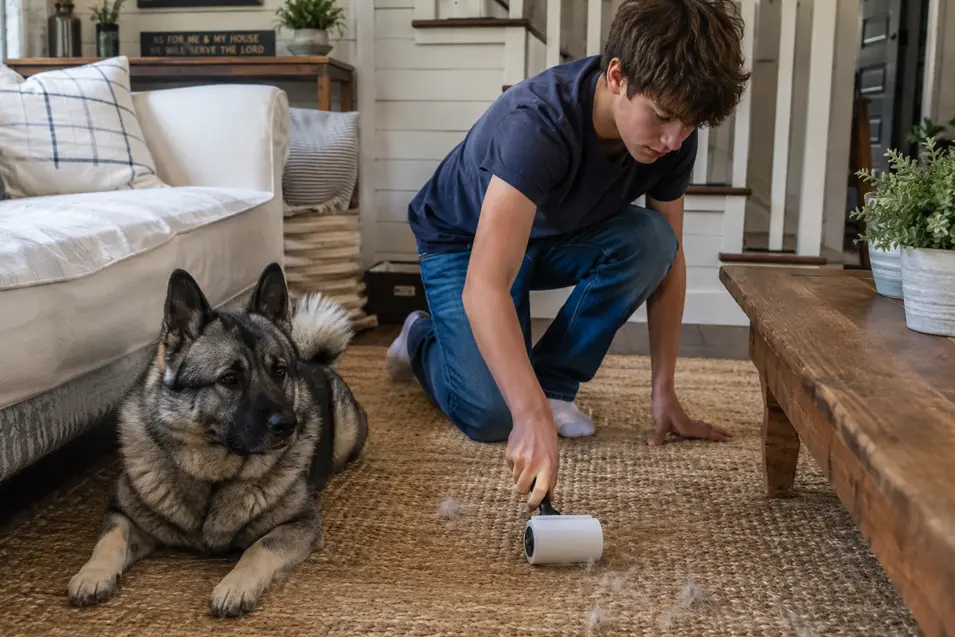
Lint rollers remain one of the simplest tools for quick hair removal.
They work well on:
- Clothing
- Furniture
- Car seats
- Decorative pillows
Keeping rollers near entryways, laundry rooms, and closets allows for quick touch-ups when needed.
Improve Air Filtration
Pet hair often travels through the air before settling on surfaces.
Improving air quality can help reduce airborne particles.
Options include:
- Air purifiers
- High-efficiency HVAC filters
- Regular filter replacement
- Improved ventilation
These measures can help capture dander and fine hair before it spreads throughout the home.
Designate Pet Resting Areas
Pets tend to spend most of their time in a few favorite locations.
Providing designated resting areas helps concentrate hair in predictable spots.
Examples include:
- Pet beds
- Mats
- Blankets
- Window perches
Cleaning these specific areas regularly can help reduce hair distribution throughout the house.
Wash Bedding Frequently
Pet hair often transfers to:
- Human bedding
- Throws
- Blankets
- Decorative fabrics
Regular laundering helps prevent hair accumulation and keeps living spaces feeling fresh.
Using washable materials whenever possible simplifies maintenance.
Keep Entryways Clean
Hair often combines with dirt and debris near entrances.
Maintaining clean entryways can help reduce overall mess.
Useful tools include:
- Door mats
- Paw-cleaning stations
- Towels
- Brushes
Preventing dirt from entering the home also helps keep hair from becoming embedded in surfaces.
Consider Grooming Outdoors
Whenever weather permits, grooming outdoors can help prevent loose fur from spreading throughout the house.
Outdoor grooming allows hair to disperse naturally rather than settling on floors and furniture.
This simple change can make indoor cleanup much easier.
Manage Seasonal Shedding
Many pets experience heavier shedding during seasonal coat changes.
During these periods:
- Increase brushing frequency
- Vacuum more often
- Wash bedding regularly
- Monitor coat condition
A proactive approach can prevent seasonal shedding from becoming overwhelming.
Know When Excessive Shedding May Be a Problem
While shedding is normal, excessive hair loss may indicate an underlying issue.
Potential causes include:
- Allergies
- Parasites
- Stress
- Nutritional deficiencies
- Medical conditions
If shedding suddenly increases or bald patches develop, consult your veterinarian for guidance.
Focus on Consistency
The most effective strategy for controlling pet hair is consistency.
Small daily habits often produce better results than occasional deep-cleaning sessions.
Simple routines such as:
- Brushing pets regularly
- Vacuuming high-traffic areas
- Washing pet bedding
- Cleaning furniture
can dramatically reduce the amount of hair throughout the home.
The Bottom Line
Pet hair is a normal part of life with dogs and cats, but it doesn’t have to take over your home. Regular grooming, proper nutrition, strategic cleaning routines, washable fabrics, and pet-friendly design choices can all help reduce hair accumulation and simplify maintenance.
While no solution will completely eliminate shedding, a consistent approach can significantly reduce the amount of hair on floors, furniture, and clothing. By focusing on prevention and routine maintenance, pet owners can enjoy cleaner living spaces while still sharing their homes with the furry companions they love.