Hardwood flooring is one of the most desirable features in a home, offering timeless beauty, warmth, and long-lasting value. However, for pet owners, maintaining hardwood floors can present unique challenges. Dogs and cats can unintentionally cause scratches, stains, moisture damage, and wear that affect the appearance and longevity of wood flooring.
Fortunately, owning pets doesn’t mean you have to sacrifice beautiful hardwood floors. With proper care and preventative measures, you can enjoy the best of both worlds. This guide explores practical ways to protect hardwood floors from pet-related damage while keeping your home comfortable for your furry companions.
Common Types of Pet Damage to Hardwood Floors
Understanding the most common threats to hardwood flooring can help you take preventative action.
Scratches
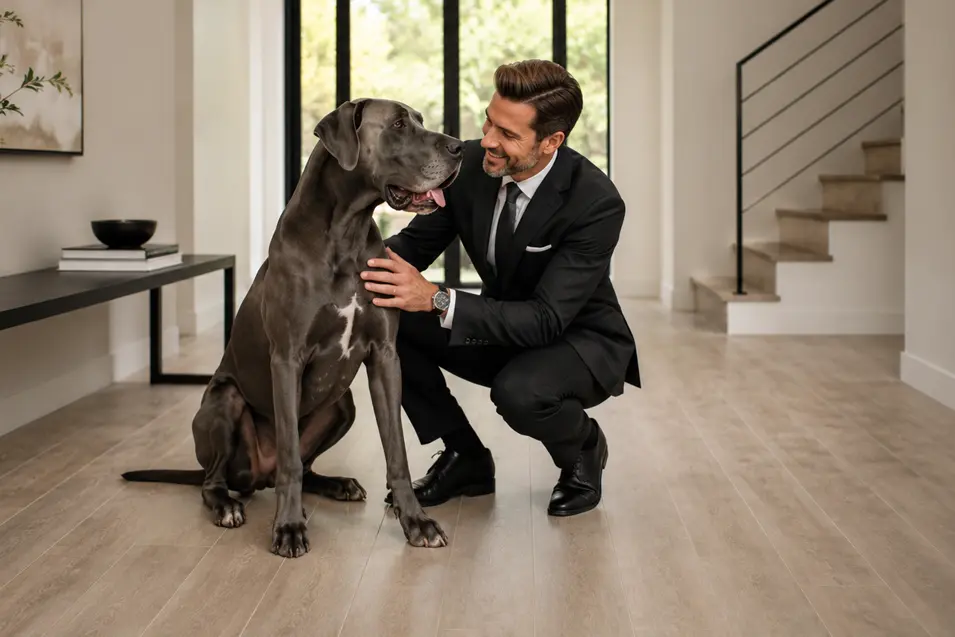
Pet nails are one of the leading causes of surface scratches. Active dogs, especially large breeds, can leave visible marks as they run, play, and turn quickly on hardwood surfaces.
Moisture Damage
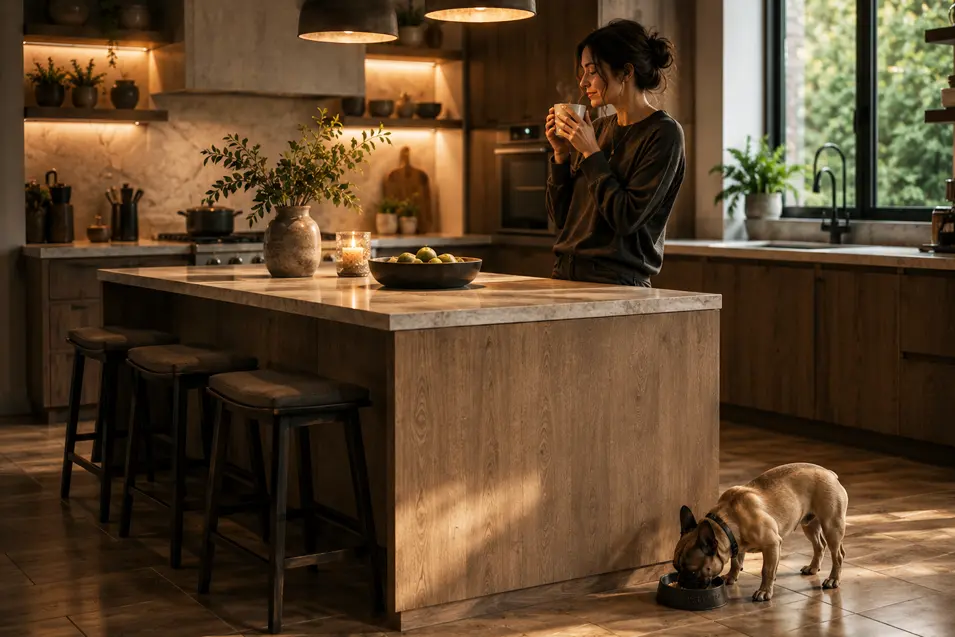
Water bowls, wet paws, and accidents can expose hardwood floors to moisture. Over time, moisture may cause staining, warping, or swelling.
Stains
Pet urine can penetrate wood surfaces and leave difficult-to-remove stains, particularly if not cleaned promptly.
Wear in High-Traffic Areas
Repeated foot traffic from pets can gradually wear down floor finishes, especially near doors, feeding stations, and favorite resting spots.
Fortunately, many of these issues can be minimized with a few proactive strategies.
Keep Pet Nails Properly Trimmed
One of the simplest ways to protect hardwood floors is to maintain your pet’s nails regularly.
Long nails are more likely to:
- Scratch floor finishes
- Create deep gouges
- Reduce traction on smooth surfaces
Most dogs benefit from routine nail trimming every few weeks, although frequency varies depending on breed and activity level.
If you’re uncomfortable trimming nails yourself, a professional groomer or veterinarian can help maintain a safe nail length.
Use Area Rugs and Runners
Strategically placed rugs can significantly reduce wear and tear on hardwood flooring.
Focus on protecting:
- Entryways
- Hallways
- Feeding areas
- High-traffic routes
- Play areas
Choose rugs with non-slip backing to prevent shifting and improve safety for both pets and family members.
Washable rugs are particularly useful in homes with petssince they can be cleaned easily when accidents or spills occur.
Place Mats Under Food and Water Bowls
Water spills are inevitable when pets eat and drink.
Protect hardwood floors by using:
- Waterproof feeding mats
- Silicone bowl mats
- Absorbent floor protectors
These products help contain splashes and prevent moisture from seeping into the wood.
Inspect the area regularly and wipe up standing water as soon as possible.
Clean Accidents Immediately
Prompt cleanup is essential when accidents occur.
Pet urine can quickly penetrate hardwood flooring and cause:
- Permanent staining
- Odors
- Damage to the floor finish
- Wood swelling
If an accident occurs:
- Blot the area immediately.
- Clean with a pet-safe hardwood floor cleaner.
- Dry the surface thoroughly.
- Monitor the area for lingering odors or discoloration.
The faster you respond, the lower the risk of long-term damage.
Maintain Protective Floor Finishes
The finish on your hardwood floor serves as its first line of defense.
Over time, finishes can wear down, leaving wood more vulnerable to scratches and moisture.
Depending on traffic levels and floor type, periodic maintenance may include:
- Buffing
- Recoating
- Refinishing
Consult the flooring manufacturer’s recommendations to determine the appropriate maintenance schedule.
A well-maintained finish provides significantly better protection against pet-related wear.
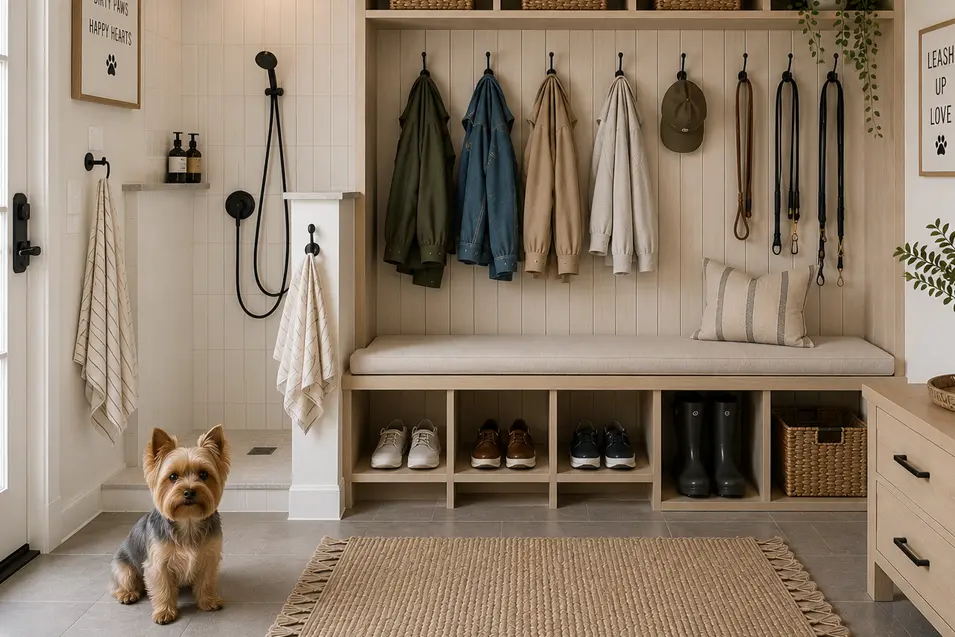
Create Pet-Friendly Entry Areas
Pets often bring dirt, moisture, and debris indoors after spending time outside.
Establish a cleanup zone near entrances that includes:
- Absorbent mats
- Towels
- Paw-cleaning supplies
- Storage for leashes and accessories
Wiping paws before pets enter the home helps reduce both scratches and moisture exposure.
Mudrooms are particularly effective for containing messes before they reach hardwood flooring throughout the house.
Groom Pets Regularly
Routine grooming helps minimize several common flooring issues.
Regular brushing reduces:
- Shedding
- Dirt accumulation
- Dander
- Debris carried indoors
Bathing and grooming also help keep paws cleaner, which can reduce grime and moisture tracked across floors.
A consistent grooming routine benefits both your pet and your home’s flooring.
Use Furniture and Pet Bed Protection
Many pets have favorite sleeping and lounging spots.
Protect these areas by placing:
- Washable pet beds
- Protective mats
- Area rugs
under frequently used resting locations.
This helps prevent concentrated wear patterns and protects hardwood from repeated scratching as pets settle into place.
Choose Pet-Friendly Cleaning Products
Not all floor cleaners are safe for pets or hardwood surfaces.
Look for products that are:
- Specifically designed for hardwood floors
- Non-toxic to pets
- Free of harsh chemicals
- Safe for regular use
Avoid excessive water when cleaning hardwood floors, as moisture remains one of the greatest risks to wood surfaces.
Always follow manufacturer recommendations for both flooring and cleaning products.
Consider Protective Floor Treatments
Some homeowners choose additional protective measures to extend the life of their hardwood floors.
Options may include:
Durable Polyurethane Finishes
Modern polyurethane coatings offer excellent resistance to scratches and moisture.
Protective Floor Coatings
Certain products can add an additional layer of protection without altering the floor’s appearance.
Area Protection Systems
Floor protectors placed beneath crates, feeding stations, and furniture can help prevent localized damage.
These solutions can be especially beneficial in homes with multiple pets.
Train Pets to Reduce Damage
Behavioral training can also play a role in floor protection.
Helpful habits include teaching pets to:
- Enter calmly after outdoor activities
- Avoid running indoors excessively
- Use designated feeding areas
- Stay off furniture if desired
While training won’t eliminate all wear and tear, it can help reduce unnecessary damage.
When to Refinish Hardwood Floors
Even well-maintained floors eventually show signs of age.
You may want to consider refinishing if you notice:
- Deep scratches
- Widespread finish wear
- Persistent stains
- Dull appearance
- Areas of moisture damage
Refinishing can restore the beauty of hardwood floors and provide a fresh layer of protection.
Final Thoughts
Hardwood floors and pets can coexist successfully with the right preventative measures. By trimming nails regularly, using protective rugs, cleaning accidents promptly, and maintaining your floor’s finish, you can significantly reduce the risk of scratches, stains, and moisture damage.
While some wear is inevitable in any active household, proactive care can preserve the beauty of your hardwood floors for years to come. With a little planning and routine maintenance, pet owners can enjoy both stunning wood floors and happy, healthy companions.