Summer can be wonderfully entertaining for a family dog.
Children are home more often, doors open and close throughout the day, and someone is usually available for a walk, game or trip into the backyard. Even when nobody is actively playing with the dog, the house is filled with movement and companionship.
Then school begins.
The children disappear each morning, adults return to regular work schedules and the house becomes quiet for several hours at a time. Some dogs settle down and sleep. Others become restless, bored or frustrated by the sudden change.
A dog does not need constant entertainment while the family is away. They do, however, benefit from an appropriate balance of exercise, enrichment, social interaction and rest.
Start With a Good Morning Routine
The easiest way to improve a dog’s day may be to begin before everyone leaves.
A dog that has already had an opportunity to walk, sniff, use the bathroom and eat is more likely to settle than one who watches the family rush out while still full of energy.
A realistic school-morning routine might include:
- A bathroom break immediately after waking
- A short walk with time to sniff
- Breakfast served in an enriching way
- Fresh water
- A few calm minutes before the family leaves
- Another bathroom opportunity when needed
The walk does not always need to be long or physically demanding. Allowing the dog to investigate smells can provide valuable mental stimulation.
On rushed mornings, even ten focused minutes can be more useful than opening the back door while everyone searches for backpacks.
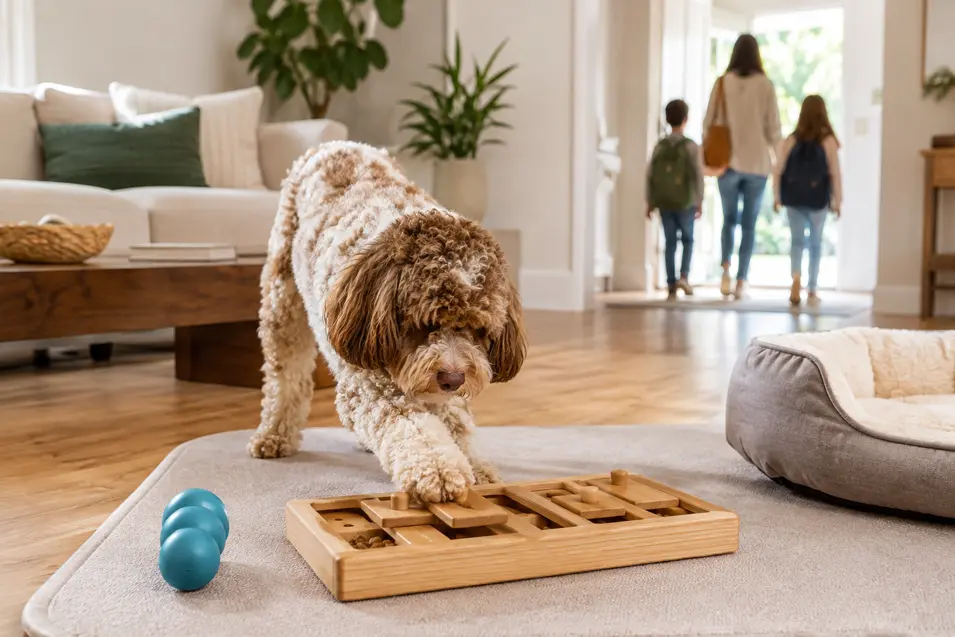
Use Food Puzzles for Breakfast
Instead of serving breakfast in an ordinary bowl, use part or all of the meal in a food puzzle.
Options include:
- A food-filled rubber toy
- A slow feeder
- A snuffle mat
- A treat-dispensing ball
- A puzzle board
- A frozen food toy
- A cardboard enrichment activity used under supervision
Choose a puzzle appropriate for the dog’s size, experience and chewing style. A highly determined chewer may destroy a toy that is safe for a gentler dog.
Introduce every new food toy while someone is home. Watch how the dog uses it, check for loose pieces and remove it if it becomes damaged.
Do not simply fill the toy with unlimited peanut butter or rich treats. Use part of the dog’s regular meal whenever possible, and include all extras in the dog’s daily calorie intake.
If using peanut butter, check the ingredient list to make sure it does not contain xylitol.
Freeze Food Toys for a Longer Activity
Freezing a filled toy can make it last longer.
The toy can be packed with the dog’s regular wet food, soaked kibble or another veterinarian-approved option. Preparing several at once makes school mornings easier.
Start with a loosely filled toy before making the challenge more difficult. A dog that cannot access the food may become frustrated and abandon it.
Frozen enrichment may not be suitable for every dog or every dental condition, so consider the individual animal.
Let Your Dog Search for Breakfast
Dogs experience much of the world through scent. A simple food search can turn breakfast into an activity.
Before leaving, hide small portions of kibble in safe, accessible areas of one room. Place pieces behind furniture legs, beside a dog bed or inside easy puzzle objects.
The hiding places should not encourage the dog to climb, knock over furniture or search areas where human food, medication or household hazards are stored.
Begin with obvious locations. As the dog learns the game, gradually make some hiding places more challenging.
Count the hidden pieces or limit the game to one room so food is not forgotten under furniture.
Make a Sniffing Box
A sniffing box can provide simple, inexpensive enrichment.
Place several loosely crumpled pieces of plain paper inside a sturdy shallow box and scatter part of the dog’s meal among them. Allow the dog to search with their nose.
This activity is only appropriate for dogs that search without eating paper or cardboard. It should be introduced under supervision and removed if the dog begins shredding or swallowing the materials.
For dogs that consume non-food objects, use a commercial puzzle designed for unsupervised use instead.
Rotate Toys Rather Than Offering Everything
A basket containing the same twenty toys every day may become part of the furniture.
Keep some toys out of sight and rotate them every few days. A familiar toy may feel interesting again after being unavailable for a week.
The rotation can include:
- Chew toys
- Food puzzles
- Durable rubber toys
- Balls used only during supervised play
- Tug toys used with people
- Scent-based activities
Not every toy should be left with an unsupervised dog. Rope toys, plush toys, balls, squeakers and items that can be torn apart may need to be put away before the family leaves.
The safest option depends on the individual dog. Inspect toys regularly and discard anything cracked, frayed or small enough to swallow.
Leave Safe Chewing Options
Chewing can be calming and satisfying for dogs, but there is no universally safe chew.
An item appropriate for one dog may splinter, break teeth or become a choking hazard for another. Size, hardness and chewing intensity all matter.
Ask your veterinarian for recommendations suited to your dog. Introduce new chews while someone is present, and watch for attempts to swallow large pieces.
Do not leave a dog alone with a chew simply because the packaging describes it as long-lasting or natural.
Set Up a Comfortable Resting Area
Keeping a dog busy does not mean preventing them from sleeping.
Adult dogs may spend much of the school day resting. Provide a comfortable place where the dog can relax without being disturbed by outdoor activity or household noise.
The area might include:
- A supportive bed
- Fresh water
- Comfortable room temperature
- Closed access to unsafe areas
- Blinds positioned to reduce visual triggers
- Gentle background sound if the dog prefers it
- A crate only if the dog is comfortably crate-trained
Some dogs enjoy watching the neighbourhood through a window. Others bark at every pedestrian, delivery or dog that passes.
If window activity causes repeated barking or agitation, move the bed, close the blinds or apply a privacy covering to the lower portion of the window.
Use Background Sound Thoughtfully
A quiet radio, television or white-noise machine can soften sudden outdoor sounds.
Choose calm programming without frequent doorbells, barking dogs, explosions or dramatic volume changes. The sound should remain low enough that the dog can rest.
Background noise will not treat separation anxiety, but it may make the environment feel less abrupt for dogs accustomed to hearing people in the house.
Arrange a Midday Bathroom Break
Enrichment cannot replace a bathroom break.
Puppies, senior dogs and dogs with medical conditions may need to go outside more frequently than a healthy adult. Even adult dogs should not routinely be expected to wait longer than they can comfortably manage.
Possible midday help includes:
- A family member
- A trusted neighbour
- A professional pet sitter
- A dog walker
- An owner returning home at lunch
- Family members with staggered schedules
The visit can include a bathroom opportunity, fresh water, a short walk and a little interaction.
Make sure anyone entering the home understands the dog’s routine, equipment and behaviour around doors and other animals.
Hire a Dog Walker
A dependable dog walker can break up a long school day and provide both exercise and companionship.
Before hiring someone, ask about:
- Experience and references
- Insurance and business practices
- Emergency procedures
- Leash and equipment policies
- Whether walks are private or in groups
- Transportation methods
- How dogs are matched for group walks
- Procedures for extreme weather
- How keys and entry codes are protected
- How the walker reports concerns
A dog that is fearful, reactive, elderly or recovering from an injury may need an individual walk rather than a group outing.
The goal is not to exhaust the dog. It is to provide a safe, enjoyable break suited to their needs.
Consider Daycare Carefully
Dog daycare can be helpful for some social, energetic dogs. It can also be overwhelming for dogs that dislike groups, become overstimulated or need considerable rest.
A good facility should assess dogs before placing them into playgroups and provide:
- Appropriate staff supervision
- Manageable group sizes
- Separate areas based on size and play style
- Rest periods
- Safe flooring
- Vaccination and health requirements
- Clear emergency procedures
- Honest communication about behaviour
Daycare does not need to be an everyday activity. One or two carefully selected days may provide variety without leaving the dog exhausted.
Ask your veterinarian whether daycare is appropriate for your dog’s age, health and vaccination status.
Give the Dog a Job Before You Leave
A brief training session can provide useful mental activity.
Spend five minutes practising familiar cues such as:
- Sit
- Down
- Stay
- Touch
- Go to bed
- Find it
- Leave it
- Place a toy in a basket
Keep the session positive and finish while the dog is still engaged.
Children can participate when time allows, but the morning routine should not depend on a child who is already trying to catch the school bus.
Training does not need to be elaborate. Asking the dog to find three hidden treats or perform a few familiar behaviours may be enough to create a satisfying transition into quiet time.
Create a Safe Scent Activity
Dogs can be entertained by scent without food.
Place a dog-safe item carrying a familiar family member’s scent near the dog’s resting area. Avoid anything with buttons, zippers, strings or pieces the dog may swallow.
You can also create simple scent games while someone is home by hiding a favourite toy and encouraging the dog to find it.
Do not use essential oils or concentrated fragrances for scent enrichment. Some products can irritate pets or be unsafe when swallowed, inhaled or placed on the skin.
Save Special Activities for School Days
A particular food puzzle or durable toy can become associated with the family leaving.
Offer it shortly before departure and put it away once the family returns. This keeps the item more interesting than a toy that remains available all day, every day.
The activity should be something the dog has already used safely. A school morning is not the time to test an unfamiliar product before leaving the dog alone with it.
Keep Departures Calm
A long emotional goodbye may make the morning departure feel unusually important.
Prepare the dog’s activity, check the environment and leave calmly. There is no need to ignore the dog, but avoid creating a dramatic ritual around walking out the door.
Arrivals can also be calm. Give the dog a bathroom opportunity and a chance to settle before the children begin an energetic greeting.
A dog that jumps or becomes frantic when the family returns may benefit from everyone entering quietly and greeting them once all four paws are on the floor.
Give Children an After-School Role
Children may be tired or distracted when they get home, but a short pet-related routine can help restore the connection they had during summer.
Age-appropriate options include:
- Joining an adult for a walk
- Refilling the water bowl
- Practising a few training cues
- Gently brushing the dog
- Playing a supervised game
- Preparing tomorrow’s food puzzle
- Sitting quietly with the dog during homework
An adult should remain ultimately responsible for the dog’s care. The dog should not miss a walk or meal because a child forgot or had an after-school activity.
Avoid Creating a Dog Who Needs Constant Entertainment
Enrichment is valuable, but dogs also need to learn how to rest.
If every quiet moment is immediately filled with a puzzle, treat or game, the dog may struggle to settle without assistance.
Build a balanced routine. Offer a morning activity, provide an appropriate midday break and allow plenty of time for sleep.
After-school and evening interaction can then meet the dog’s social and exercise needs without turning the entire day into scheduled entertainment.
Use Cameras Carefully
A home camera can help owners see what their dog does after everyone leaves.
You may discover that the dog finishes breakfast and sleeps peacefully until midday. You may also notice repeated pacing, barking, panting or attempts to escape.
Avoid speaking through the camera unless you already know it helps your dog. Hearing a familiar voice without finding the person may confuse or upset some animals.
A camera is a tool for observation, not a substitute for care.
Boredom or Separation Anxiety?
A bored dog may search for activities, chew accessible objects or become restless when exercise and enrichment are lacking.
Separation anxiety is more serious. A dog experiencing panic may howl, drool, pace continuously, damage doors or windows, have accidents, refuse food or attempt to escape.
A food puzzle may entertain a bored dog. It will not resolve severe distress caused by being alone.
Contact your veterinarian if your dog appears panicked, injures themselves, destroys exit points or remains distressed throughout the family’s absence. A veterinarian or qualified behaviour professional can help develop an appropriate treatment plan.
Do not punish the dog for behaviour that occurred while nobody was home. Punishment does not address anxiety and may increase fear.
A Sample School-Day Routine
Every household and dog is different, but a weekday might look like this:
Before School
- Bathroom break
- Sniff-focused walk
- Short training session
- Breakfast in a food puzzle
- Calm departure
Midday
- Visit from a family member, neighbour or professional
- Bathroom break
- Short walk or gentle interaction
- Water check
After School
- Calm greeting
- Bathroom opportunity
- Walk, play or training with the children
- Quiet rest while homework is completed
Evening
- Dinner
- Family time
- Appropriate exercise
- Final bathroom break
- Preparation of the next day’s enrichment
The schedule should be adjusted for the dog’s age, health, energy level and individual preferences.
A Quiet House Does Not Need to Be an Empty Day
Most dogs will not spend the entire school day waiting miserably at the window. With an appropriate routine, many will eat, investigate their enrichment and settle down for a long sleep.
The goal is not to recreate the constant activity of summer. It is to make the transition predictable and provide enough physical activity, mental stimulation and companionship to meet the dog’s needs.
A morning sniff walk, part of breakfast hidden in a puzzle and a dependable midday break can transform a long, quiet day.
Then, when the children return, the dog is ready for the best enrichment of all: time with their family.