
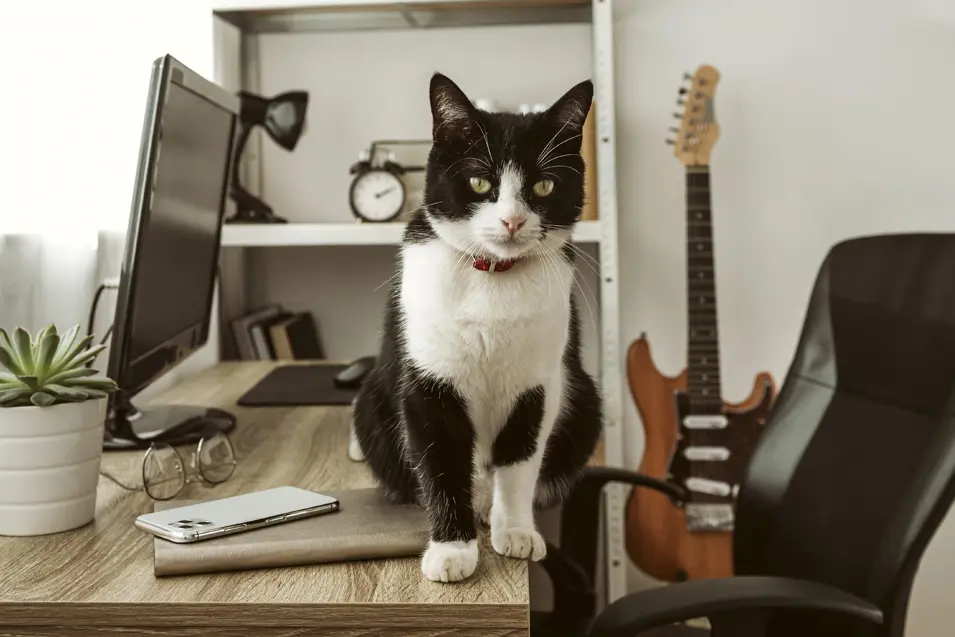
If you work from home, study online, or spend significant time at a computer, you’ve probably experienced the frustration of a cat that insists on sitting directly on your desk. One moment you’re answering emails, and the next your cat is sprawled across the keyboard, blocking your monitor, or knocking pens and papers onto the floor.
While this behavior can be amusing at times, it can also interfere with productivity and potentially put your cat at risk. Desks often contain electronics, cords, hot beverages, and other items that can be dangerous for curious pets. Fortunately, keeping your cat off your desk doesn’t require punishment or conflict. Understanding why cats are attracted to desks is the first step toward finding effective and humane solutions.
Cats are naturally curious creatures. They enjoy observing their surroundings, seeking elevated vantage points, and spending time near their favorite humans. Your desk offers all of these things. It provides a high perch, interesting objects to investigate, and direct access to your attention. By addressing the reasons your cat is drawn to your workspace, you can encourage better habits while maintaining a positive relationship with your pet.
Understanding Why Cats Love Desks
Many cat owners mistakenly believe their cat is intentionally trying to be disruptive. In reality, cats are usually motivated by instinct and curiosity rather than mischief.
One major attraction is attention. If your cat notices that walking across your keyboard immediately causes you to stop working and interact with them, they quickly learn that desk time leads to rewards. Even if you’re gently moving them away, speaking to them, or picking them up, they may view the interaction as positive attention.
Warmth is another factor. Computers, monitors, laptops, and desk lamps often generate heat that cats find appealing. A cozy spot next to your keyboard may be far more attractive than a cool floor elsewhere in the house.
Cats are also naturally drawn to elevated areas. In the wild, climbing helps cats observe their environment and stay safe from potential threats. Even indoor cats retain these instincts. A desk gives them a commanding view of the room and allows them to monitor household activity.
Your scent can play a role as well. Cats often seek out places that smell like their owners because those areas provide comfort and security. Since you spend many hours at your desk, it naturally becomes a location your cat associates with you.
Additionally, desks are full of fascinating objects. Pens, papers, cables, headphones, and moving computer cursors can all capture a cat’s attention. To a curious feline, your workspace may resemble an endless source of entertainment.
Redirecting Your Cat’s Attention to Better Alternatives
The most effective way to keep a cat off your desk is not by constantly removing them, but by providing a more appealing alternative.
Creating a dedicated space near your workspace can be extremely effective. Consider placing a cat tree, perch, or comfortable cat bed close to your desk. This allows your cat to remain near you without occupying your work area. Many cats simply want companionship and observation opportunities rather than access to the desk itself.
Window perches are another excellent option. Cats enjoy watching birds, squirrels, people, and outdoor activity. A nearby window seat can provide hours of entertainment and reduce their interest in your workspace.
Interactive toys can also help redirect attention. Puzzle feeders, treat-dispensing toys, and rotating playthings provide mental stimulation that keeps cats engaged. A bored cat is far more likely to seek entertainment by exploring your desk.
Consistency is important when establishing boundaries. If your cat jumps onto the desk, calmly remove them and place them in their designated area. Avoid yelling, spraying water, or using punishment. These methods can create anxiety and damage trust without effectively addressing the underlying behavior.
Reward-based training often produces better results. When your cat chooses their bed, perch, or cat tree instead of your desk, offer praise, treats, or affection. Over time, they will begin associating those locations with positive outcomes.
You can also make the desk itself less appealing. Remove unnecessary clutter and eliminate items that might attract curiosity. Secure loose cords, store small objects in drawers, and avoid leaving food on your desk.
Some cat owners find temporary deterrents useful during the training process. Double-sided tape, motion-activated deterrents designed for pets, or textured desk mats can make the surface less comfortable without causing harm. However, these tools should be used alongside positive reinforcement rather than as the sole solution.
Regular play sessions are equally important. Cats have natural hunting instincts and energy that must be released. Scheduling interactive play before work sessions can help tire your cat mentally and physically, making them more likely to relax elsewhere while you work.
For households with multiple cats, ensure each cat has access to adequate climbing spaces, resting areas, and enrichment opportunities. Competition for resources can sometimes increase attention-seeking behavior and encourage cats to invade restricted areas.
Patience is essential during the process. Cats develop habits over time, and changing those habits requires consistency. Some cats may learn quickly, while others need several weeks to fully adapt to new expectations.
Remember that your cat isn’t trying to sabotage your productivity. They are seeking comfort, stimulation, warmth, and connection. By meeting those needs in appropriate ways, you can significantly reduce unwanted desk visits.
A cat-free workspace is possible without creating stress for either you or your pet. By understanding why cats are attracted to desks, providing appealing alternatives, and reinforcing positive behaviors, you can establish healthy boundaries while maintaining a strong bond with your feline companion.
With a little planning and consistency, your cat can enjoy a comfortable space nearby while you enjoy a more productive and distraction-free work environment.