A dog crate can be one of the most useful pieces of pet equipment you own. It provides a safe space for your dog, helps with training, and can even reduce anxiety by giving your pet a comfortable retreat.
Unfortunately, dog crates aren’t always known for their beauty.
Many homeowners struggle to find a place for a large wire crate without making the living room feel cluttered or turning it into the focal point of the space. The good news is that you don’t have to choose between your dog’s comfort and an attractive home.
With a little creativity, it’s possible to incorporate a crate into your living room design so naturally that guests may not even realize it’s there.
Whether you have a small apartment, a modern home, or a traditional family room, these ideas can help you hide a dog crate while keeping it easily accessible for your furry friend.
Why Hide a Dog Crate?
Most dog owners don’t necessarily want to hide a crate because they’re embarrassed by it.
Instead, they’re trying to create a living space that feels organized and intentional.
A large metal crate can:
- Take up valuable floor space
- Clash with existing décor
- Make a room feel crowded
- Draw attention away from furniture and design features
At the same time, removing the crate entirely isn’t always practical. Many dogs rely on their crate as a safe place to rest, especially when visitors arrive or the household becomes busy.
The goal is to make the crate blend into the room rather than dominate it.
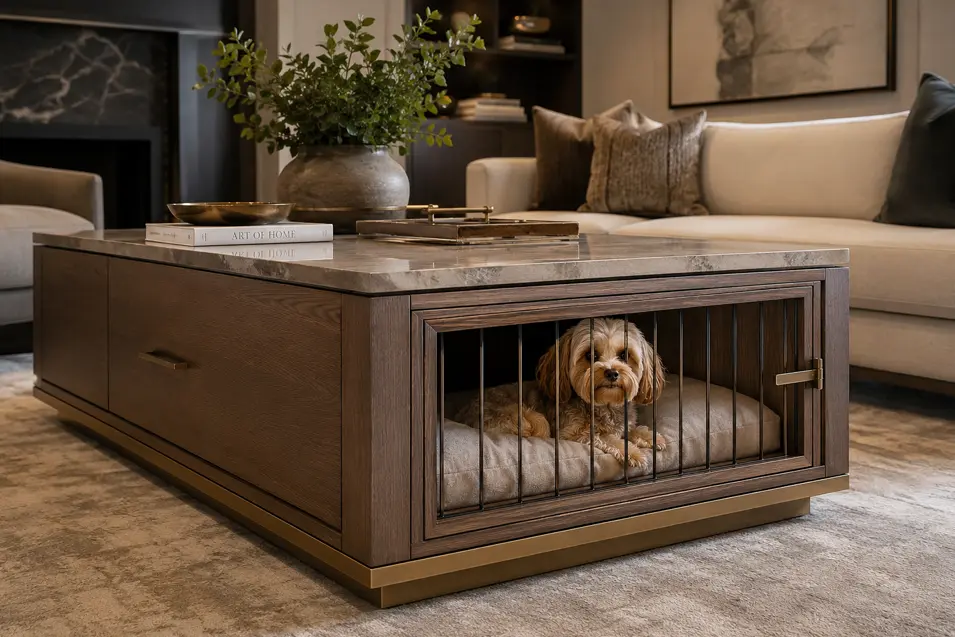
- Use a Crate Furniture End Table
One of the easiest solutions is to replace a traditional crate with furniture designed specifically for dogs.
Crate end tables combine function and style by serving as both a dog crate and a piece of furniture.
They can:
- Hold lamps
- Display decorative items
- Store books or magazines
- Blend with existing furnishings
Because they resemble standard end tables, most visitors won’t immediately recognize them as dog crates.
This option works particularly well for small and medium-sized dogs.
- Choose a Crate That Doubles as a Console Table
For larger dogs, a console-style crate may be a better solution.
Placed behind a sofa or along a wall, these oversized furniture crates provide enough room for larger breeds while still serving a practical purpose.
The top surface can be used for:
- Family photos
- Plants
- Decorative accents
- Storage baskets
This transforms the crate from a necessity into a functional design element.
- Build the Crate Into Existing Cabinetry
Custom built-ins create one of the most seamless ways to hide a dog crate.
If you’re remodeling or designing a living room, consider incorporating a dedicated dog space into:
- Entertainment centers
- Built-in bookshelves
- Window seating
- Storage cabinets
The crate becomes part of the room’s architecture rather than a separate object.
- Create a Crate Under a Staircase
The space beneath a staircase often goes unused.
This area can be transformed into a custom dog crate complete with:
- Ventilation
- Lighting
- Comfortable bedding
- Decorative doors
Not only does this save space, but it also gives your dog a cozy den-like environment.
- Use a Decorative Crate Cover
Sometimes the simplest solution is the best one.
A crate cover can dramatically change the appearance of a standard wire crate.
Choose a cover that complements your décor:
- Neutral linen
- Canvas
- Decorative fabric
- Furniture-style wood panels
The crate instantly looks more intentional and less industrial.
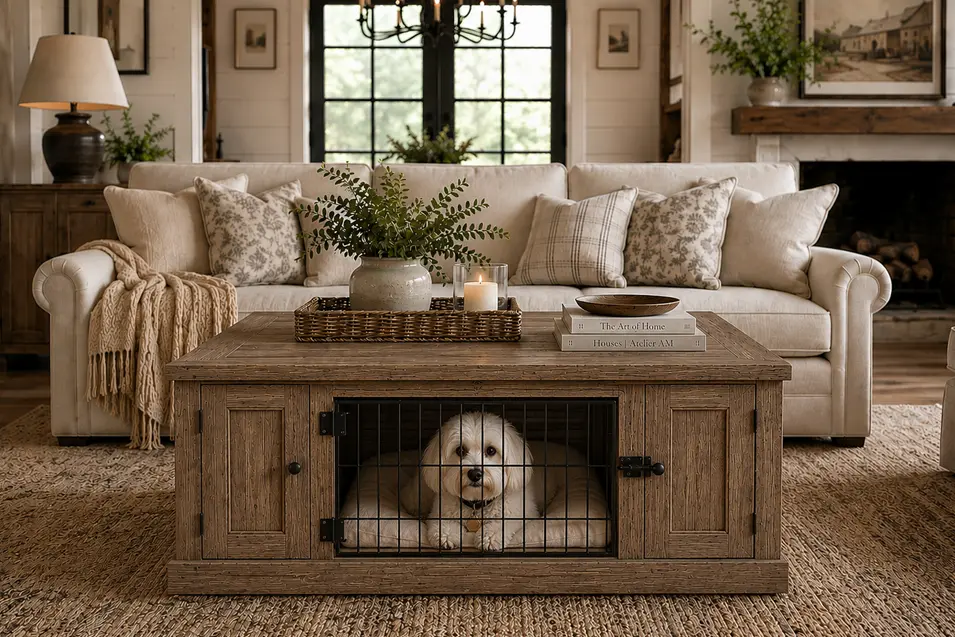
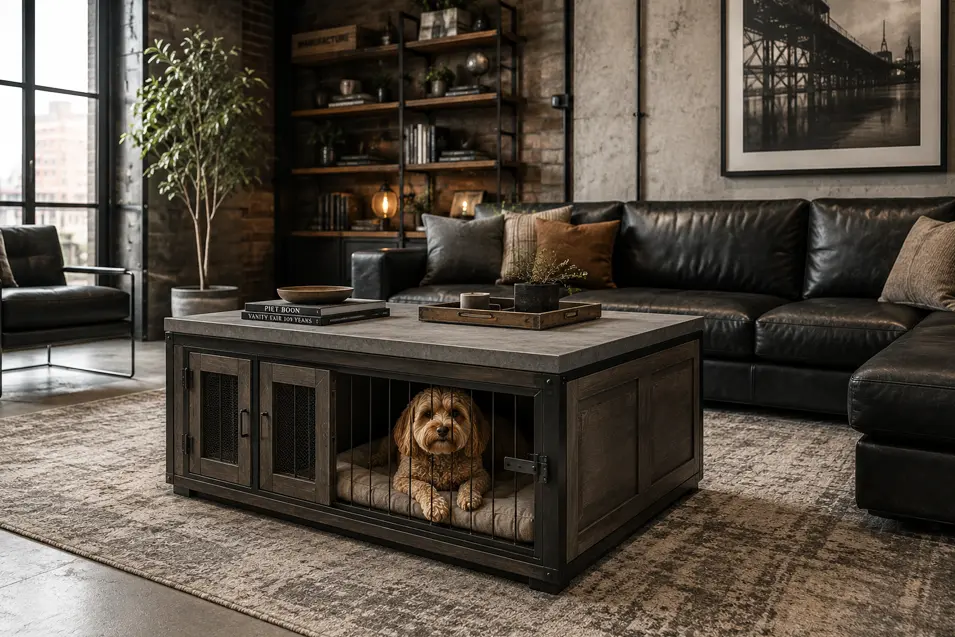
- Turn the Crate Into a Coffee Table
If your dog is small enough, a sturdy crate can double as a coffee table.
Add a custom wood top and style it with:
- Books
- Candles
- Decorative trays
- Plants
This approach works particularly well in smaller living rooms where every square foot matters.
- Hide It Behind Furniture
Strategic furniture placement can make a crate much less noticeable.
Try positioning the crate:
- Behind a sectional sofa
- Along a side wall
- Behind a console table
- In a corner partially screened by furniture
This keeps the crate accessible while reducing its visual impact.
- Use Room Dividers or Decorative Screens
A folding screen can instantly hide a dog crate when guests visit.
Popular options include:
- Wooden slat screens
- Woven room dividers
- Decorative metal panels
- Modern partition walls
Because they’re movable, screens provide flexibility without permanent modifications.
- Incorporate the Crate Into a Window Seat
A built-in window seat offers an elegant solution.
The lower section can contain a hidden dog crate while the upper portion provides additional seating.
This works particularly well in:
- Living rooms
- Sunrooms
- Reading nooks
- Family rooms
- Match the Crate to Your Furniture
Many homeowners make the mistake of purchasing whatever crate is cheapest.
Instead, consider choosing a crate that complements your existing décor.
Look for finishes that match:
- Wood flooring
- Coffee tables
- Entertainment units
- Side tables
When colors and materials coordinate, the crate naturally blends into the room.
- Use Plants to Soften the Appearance
Houseplants can help visually integrate a crate into the space.
Position larger plants nearby to soften hard lines and create a more natural appearance.
Popular choices include:
- Snake plants
- Areca palms
- Rubber plants
- ZZ plants
Always verify that any plant is pet-safe before bringing it into your home.
- Turn an Unused Closet Into a Dog Nook
If your living room includes a nearby closet, consider converting part of it into a dog retreat.
With proper ventilation and lighting, a closet can become:
- A crate area
- A sleeping space
- A quiet retreat during busy gatherings
This option works especially well for dogs that prefer privacy.
- Create a Built-In Bench Crate
Bench seating remains popular in modern homes.
A custom bench can easily conceal a dog crate underneath while providing extra seating for family members and guests.
This solution combines:
- Style
- Storage
- Functionality
- Space efficiency
- Use Decorative Baskets and Accessories
Sometimes the crate itself isn’t the only issue.
Leashes, toys, blankets, and food supplies can create visual clutter.
Adding:
- Decorative baskets
- Storage bins
- Matching containers
helps create a more organized and intentional look.
- Design a Dedicated Pet Corner
Rather than trying to completely hide the crate, consider embracing it.
Create a pet-friendly corner that includes:
- The crate
- Matching dog bed
- Toy storage
- Feeding station
- Decorative pet artwork
When thoughtfully designed, the area becomes part of the room instead of something you’re trying to disguise.
What Not to Do When Hiding a Dog Crate
While aesthetics matter, your dog’s comfort should always come first.
Avoid:
Blocking Airflow
Dogs need adequate ventilation at all times.
Restricting Access
A crate should remain easy for your dog to enter and exit.
Using Unsafe Materials
Avoid coverings that could become chewing hazards.
Making the Space Too Dark
Dogs generally prefer cozy spaces, but complete darkness can create anxiety for some pets.
Should You Hide Your Dog’s Crate?
There’s nothing wrong with leaving a crate visible.
In fact, many modern furniture-style crates are attractive enough to become part of a room’s décor.
The decision ultimately comes down to personal preference.
Some homeowners prefer a completely seamless look, while others embrace the fact that pets are part of the family.
Either approach can work beautifully.
Final Thoughts
A dog crate doesn’t have to be an eyesore.
From stylish furniture crates and custom built-ins to decorative covers and clever furniture placement, there are countless ways to make a crate blend naturally into your living room.
The best solution is one that balances design with your dog’s comfort and safety. After all, a truly pet-friendly home should work for everyone who lives there—including the four-legged family members.