
A beautiful living room and a happy cat don’t have to be competing priorities. In fact, some of the things cats value most—sunny windows, elevated viewpoints, quiet retreats, interesting pathways and comfortable places to stretch out—can become part of what makes a room feel thoughtfully designed.
The trick is to stop thinking in terms of adding cat furniture and start looking at the living room from your cat’s perspective. Where can they climb? Where can they watch the room without being disturbed? Is there somewhere appropriate to scratch? Can they retreat when they want privacy and still choose to stay close to the family when they want company?
With a little planning, those needs can be incorporated into shelving, cabinetry, furniture placement, window seats, textiles and even the materials used throughout the room. The result doesn’t have to look like a living room designed for a cat. It can simply look like a beautiful living room—one that happens to work exceptionally well for everyone who lives there.
Build Vertical Territory Into the Room
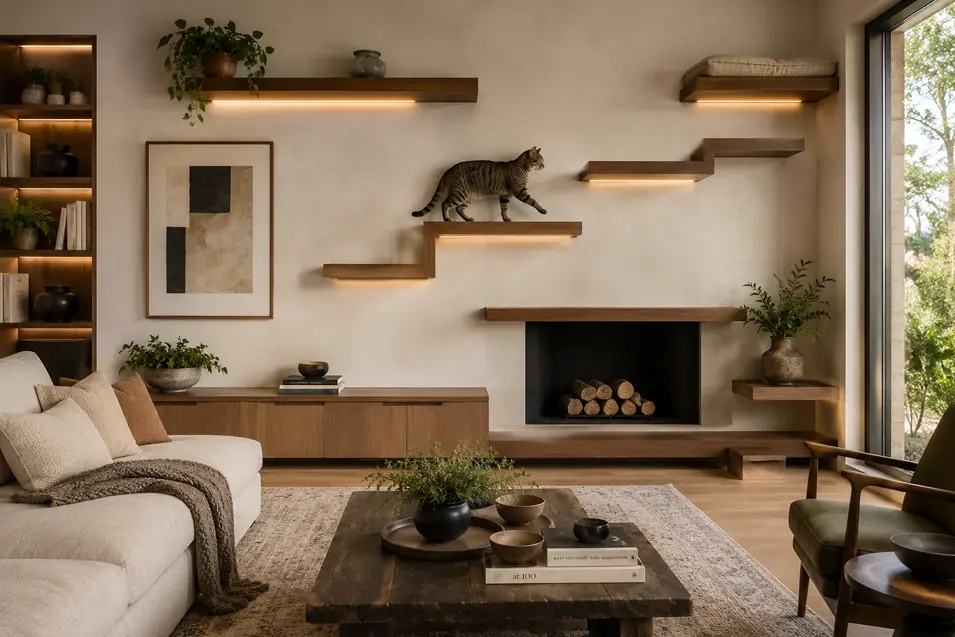
Cats experience a living room in three dimensions. While we tend to think about the floor plan, cats are just as interested in what exists above it. A high perch gives them a place to observe what is happening, escape activity at floor level and settle somewhere that feels secure without having to leave the room.
That doesn’t mean putting a bulky cat tree beside the sofa. Vertical territory can be incorporated into the architecture of the room through substantial floating shelves, built-in bookcases, stepped cabinetry, deep ledges or even the top of a well-placed console. Done thoughtfully, these features can look like deliberate elements of the interior rather than accommodations added for a pet.
The route matters as much as the destination. A beautiful shelf near the ceiling is of little use if your cat can’t comfortably reach it. Think about the entire journey: a low piece of furniture might provide the first step, followed by a deeper shelf, another ledge and finally a generous resting spot above the activity of the room. Surfaces should be deep enough for secure footing and positioned so the jumps between them are realistic for your particular cat.
You also don’t need to cover an entire wall with platforms. A few carefully positioned surfaces can provide surprisingly useful vertical territory while maintaining the clean, sophisticated look of the living room. The goal is to create something that reads as good architecture to you and an irresistible climbing route to your cat.
Turn the Best Window Into Shared Real Estate
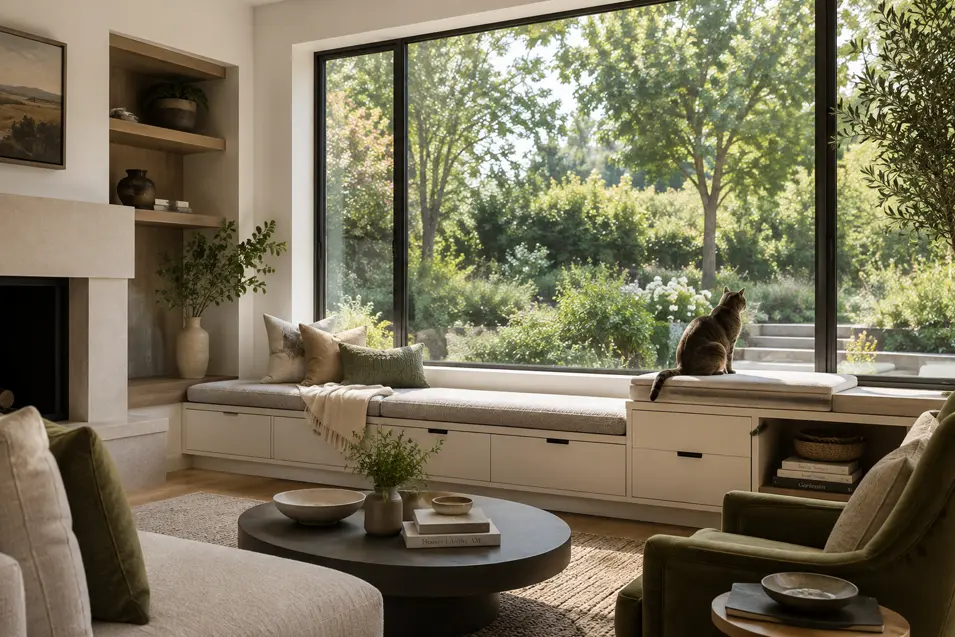
For many cats, the best seat in the living room isn’t the sofa—it’s the one with a view. A window offers an ever-changing source of stimulation, from birds and squirrels to passing people, blowing leaves and shifting sunlight. Rather than squeezing a small cat perch into the window after the room has been designed, treat that valuable spot as shared real estate from the beginning.
A deep windowsill can sometimes be enough, but larger windows create opportunities for something much more integrated. A built-in bench beneath the glazing can provide extra seating for people, concealed storage and a generous observation spot for the cat. A low cabinet or console positioned beneath a window can accomplish much the same thing while looking like a natural part of the furniture plan.
Comfort matters here, too. If your cat spends hours at the window, give them a stable surface with enough room to sit, stretch out and turn around comfortably. A removable, washable cushion or pad can make a favorite spot more inviting without permanently sacrificing the upholstery to fur, muddy paws or the occasional hairball.
Most importantly, resist the temptation to style every inch of the window with decorative objects. Leaving part of the surface intentionally open gives your cat something far more valuable: an unobstructed place to watch the world while remaining comfortably inside the room with you.
Make Scratching Part of the Material Palette
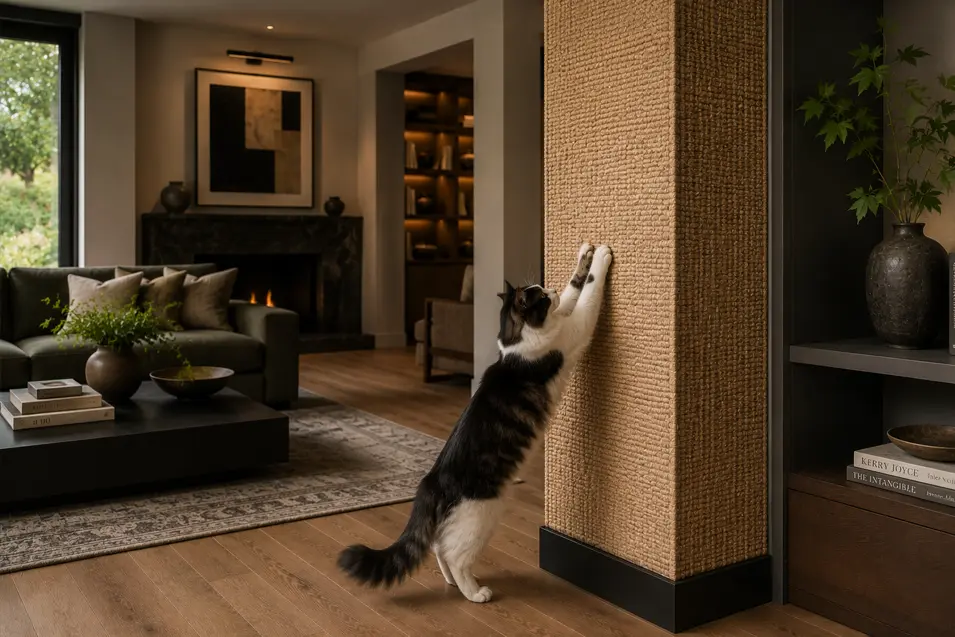
Scratching is something cats need to do, not a habit we can realistically design out of a living room. It helps them stretch, maintain their claws and leave both visual and scent marks in their territory. The better approach is to give them an appealing place to scratch and make that surface part of the room itself.
Instead of relying on a small scratching post tucked into a corner, consider materials that already belong in a sophisticated interior. Natural sisal, tightly woven fibres, textured panels or suitable unfinished wood can be incorporated into the end of a cabinet, a section of wall, a substantial column or another architectural feature. Used on a generous scale, a scratching surface can read as texture rather than pet equipment.
Placement is particularly important. Cats often scratch after waking, when entering an important part of their territory or in prominent locations where their marks have meaning. A beautiful scratching panel hidden somewhere your cat never visits won’t protect the sofa. Pay attention to where your cat already wants to scratch and use that information when deciding where the integrated surface should go.
Think about orientation as well. Some cats prefer to stretch upward against a tall vertical surface, while others favor horizontal or angled scratching. Whatever you incorporate should be large and stable enough for your cat to stretch fully without the surface shifting beneath them.
Finally, make wear part of the design plan. Sisal and other scratching materials will eventually show the evidence of doing their job. A removable panel, replaceable insert or easily renewed section allows the cat to use it enthusiastically without requiring you to replace an entire piece of cabinetry. When scratching is treated as a design requirement rather than something to conceal, the solution can be both more attractive and much more useful.
Create Hiding Places That Look Like Millwork
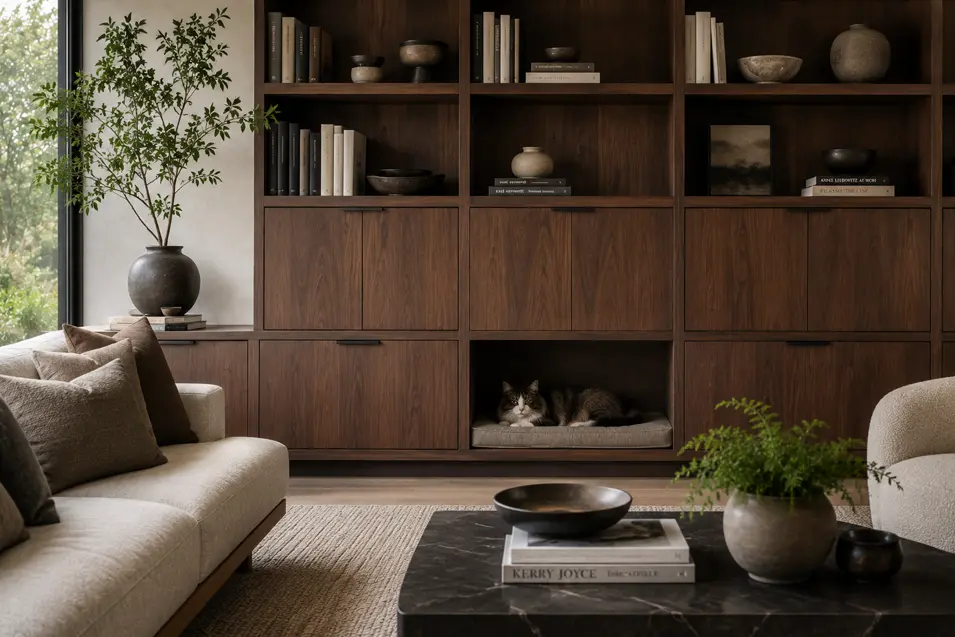
Cats often want privacy without wanting to be completely removed from what is happening around them. A sheltered spot in the living room lets them retreat from noise, visitors or activity while still keeping tabs on the household from somewhere that feels protected.
Rather than adding a separate covered cat bed, look for opportunities to create that refuge within furniture the room already needs. A built-in bookcase can leave one lower compartment open, a window bench can contain a recessed nook, or custom cabinetry can incorporate a generously sized resting space among its drawers and cupboards. Even a substantial console can be designed with one section reserved for the cat.
The most successful versions don’t announce themselves as cat furniture. There is no need for a paw-print motif or cat-shaped entrance. A simple architectural opening, finished in the same wood or material as the surrounding millwork, allows the retreat to disappear into the overall design.
Inside, however, it should genuinely work for the cat. The space needs enough room to settle comfortably, a soft or removable washable lining and an opening that allows the cat to enter and leave easily. Position it somewhere relatively protected rather than beside a frequently slammed door, noisy speaker or busy walkway.
It’s also worth remembering that hiding is about choice. The goal isn’t to encourage your cat to spend the day tucked away, but to give them control over how exposed they want to be. A beautifully integrated nook lets them withdraw when they need to and emerge again on their own terms—all without adding another piece of obvious pet furniture to the living room.
Let Furniture Become the Cat Highway
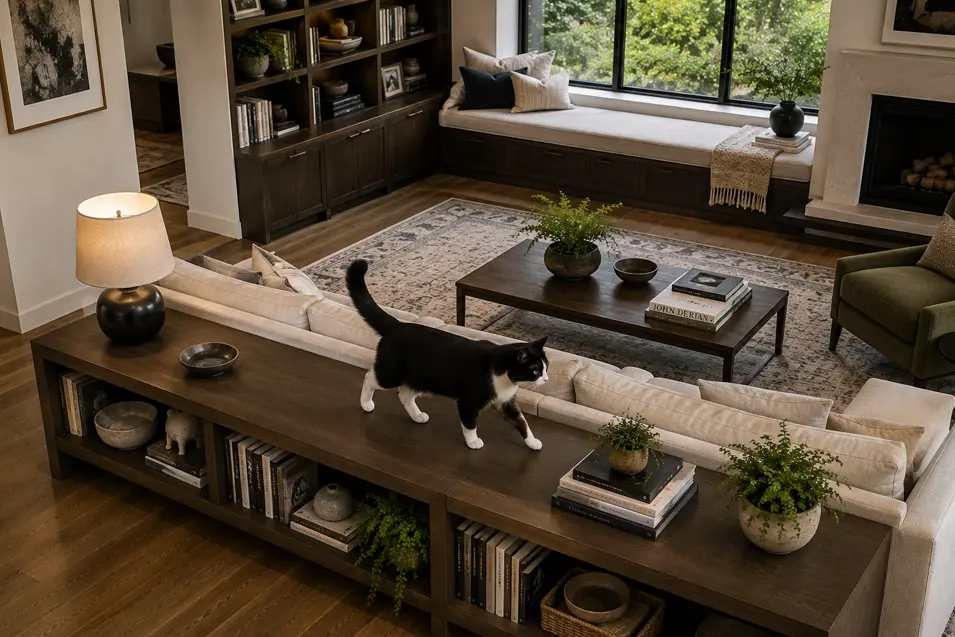
You may already have the beginnings of a cat highway in your living room without realizing it. The back of a substantial sofa, a low bookcase, a console table and a deep windowsill can become a connected route that allows your cat to travel through the room without spending all of their time at floor level.
The secret is to think about furniture placement from your cat’s point of view. A console positioned near the end of the sofa might provide an easy step up. The sofa back can lead to a side cabinet, which in turn provides access to a window ledge or another elevated destination. To us, these pieces still perform their normal functions. To a cat, they form a network of pathways and observation points.
This can be particularly useful in busy households. Cats often appreciate being able to move around a room without having to pass directly through human traffic, visiting dogs, children or other cats. Providing more than one route also gives them choices. A cat that can approach or leave a favorite resting place in several directions is less likely to feel cornered than one forced to use a single path.
You don’t need to push every piece of furniture against another to make this work. The gaps simply need to be appropriate for your cat’s age, size and mobility. Younger, athletic cats may happily negotiate larger jumps, while kittens, seniors and cats with limited mobility will benefit from shorter distances and intermediate steps.
Before buying anything specifically for your cat, look at the furniture already in the room and consider how the pieces could connect. Sometimes moving a console, leaving part of a bookcase clear or bringing a chair slightly closer to a window is enough to create an entirely new route. The best cat highway may be one that everyone else simply sees as a beautifully arranged living room.
Choose Upholstery for the Animal That Actually Lives There
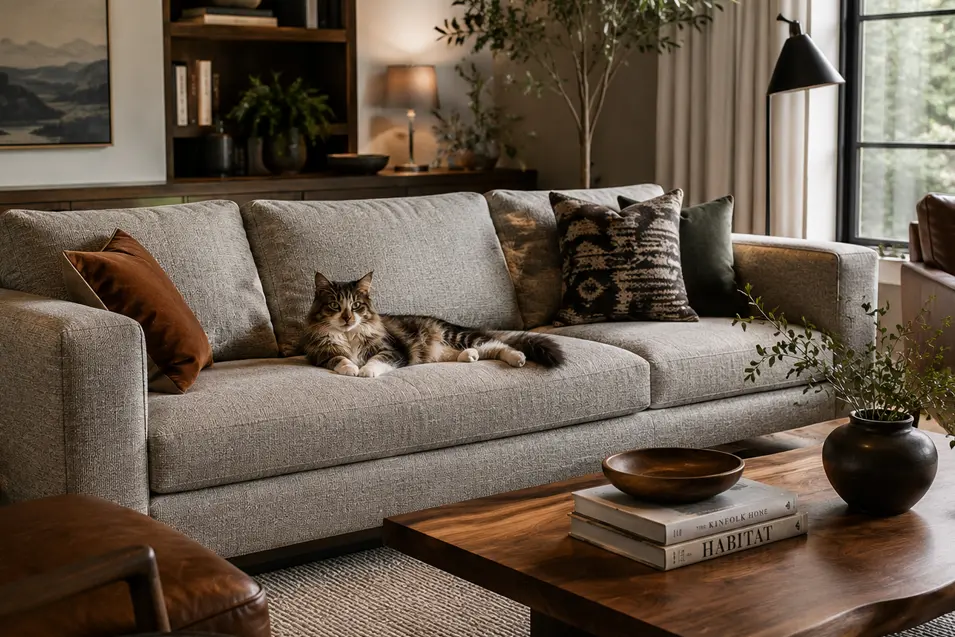
There is no single fabric that deserves to be called “cat-proof.” The best upholstery for your living room depends on the cat who actually lives there: how much they shed, whether they scratch furniture, where they like to sleep and how enthusiastically they use the sofa as part of everyday life.
As a general rule, tightly woven fabrics tend to be easier to live with than loose, highly textured weaves. Open loops can catch claws, while dense, smooth surfaces give them less to grab onto and are often easier to vacuum or brush free of fur. Performance fabrics can also be worth considering, particularly on heavily used sofas and chairs, but durability and cleanability are more important than the marketing label attached to the material.
Color and texture deserve some practical thought as well. If your cat sheds heavily, upholstery that doesn’t dramatically contrast with every loose hair can make daily life easier. This doesn’t mean matching the sofa exactly to your cat, but a forgiving mid-tone or subtly textured fabric may stay looking presentable longer than a very dark or pristine pale surface.
Removable cushion covers are another feature worth prioritizing. Cats have an uncanny ability to choose the most expensive-looking cushion in the room as their favorite sleeping spot, so being able to remove and wash or professionally clean a cover can be far more valuable than trying to keep them off the furniture altogether.
Most importantly, choose materials based on your own cat’s habits rather than searching for an indestructible surface that doesn’t exist. Pair sensible upholstery with good scratching options, washable layers where they’re useful and permission for the room to actually be lived in. A beautiful living room doesn’t have to remain untouched to stay beautiful.
Design Washability Into the Beautiful Parts
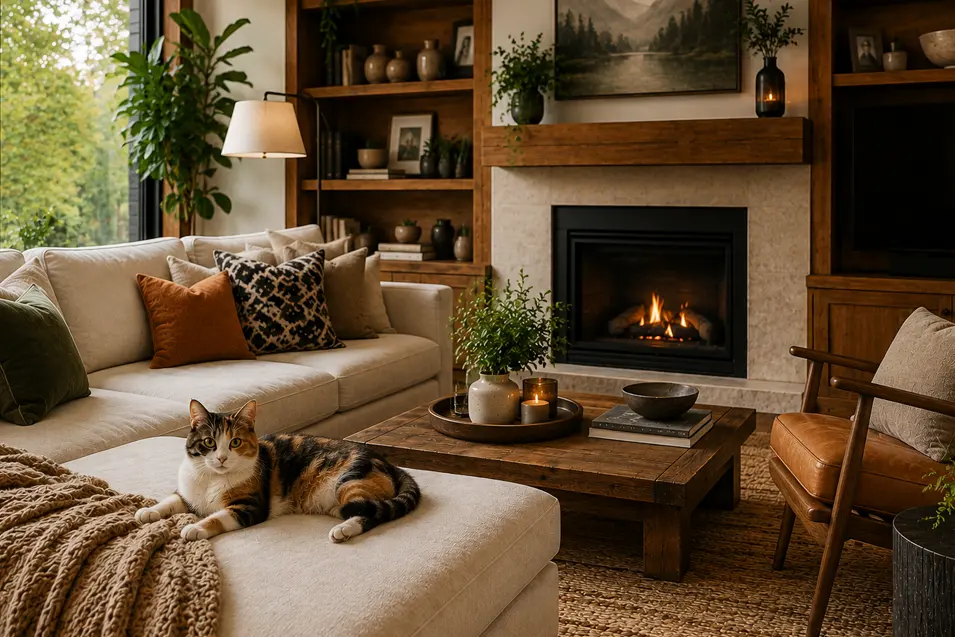
A cat-friendly living room is going to need cleaning. Fur, dusty paws, the occasional accident and the even more occasional hairball are simply part of sharing a home with an animal. The answer isn’t to fill the room with surfaces chosen solely because they can survive a scrubbing. Instead, build washability into the beautiful things you would want in the room anyway.
Start with the places your cat uses most. If one end of the sofa is a favorite sleeping spot, a beautiful washable throw can protect the upholstery while adding another layer of color or texture. Removable cushion covers make frequently used seats easier to maintain, while a washable cover on a window bench or integrated cat perch allows you to clean the surface without dismantling the space around it.
Rugs deserve similar consideration. A living room rug doesn’t necessarily need to be inexpensive or purely practical, but it should suit the reality of the household. Low-pile and easier-to-clean constructions can be simpler to vacuum and maintain than delicate, heavily textured alternatives, particularly when a cat sheds heavily or regularly races through the room.
The same principle can be applied to smaller details. A cushion inside a built-in retreat can have a removable cover. A favorite resting pad can use a replaceable insert. Coffee tables, consoles and other surfaces can be selected with finishes that tolerate routine wiping rather than requiring constant protection from everyday life.
The goal isn’t to make every element washable. It’s to identify the parts most likely to encounter fur, paws and feline mishaps and make those elements easy to refresh. When practicality is considered at the design stage, cleaning becomes part of maintaining a beautiful room rather than a constant battle to preserve one.
Give Toys Somewhere to Disappear
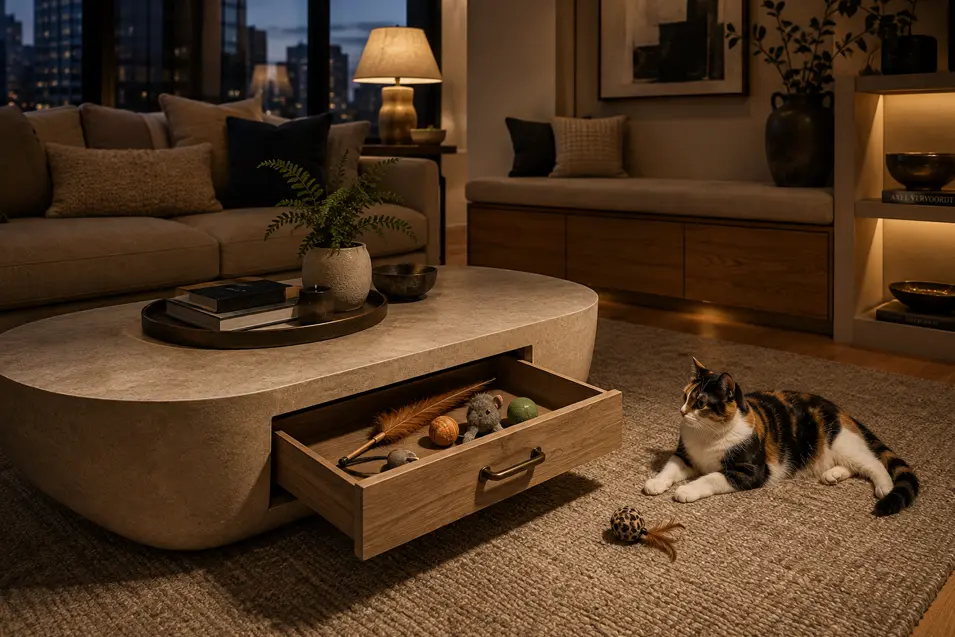
Cat toys have an impressive ability to migrate across an entire living room. Balls end up beneath the sofa, toy mice collect beside the rug and wand toys somehow become permanent accessories draped over furniture. Cats need opportunities to play, but that doesn’t mean their toys need to remain part of the decorating scheme all day.
Give them a designated home that fits naturally into the room. A drawer in the coffee table, a compartment inside a storage bench, one section of a sideboard or an attractive basket tucked beneath a console can keep frequently used toys close at hand without leaving them scattered throughout the space.
Storage is particularly useful for interactive toys such as wands, feathers and strings. These are often best brought out for play and put away afterward rather than left continuously accessible. A long, shallow drawer can make them just as convenient to reach as anything left sitting in a basket beside the sofa.
You don’t necessarily need to hide everything. A favorite ball or soft toy on the floor isn’t going to ruin a beautiful living room, and leaving a few appropriate toys available gives your cat opportunities for independent play. The goal is simply to prevent the collection from taking over the room.
Think of toy storage as the living room’s reset button. Play can be energetic and messy when it’s happening, and a minute later most of the evidence can disappear back into furniture that was already part of the design. The room remains a place where your cat can genuinely play rather than one that only looks good when nobody is using it.
Give the Cat More Than One Kind of Resting Place
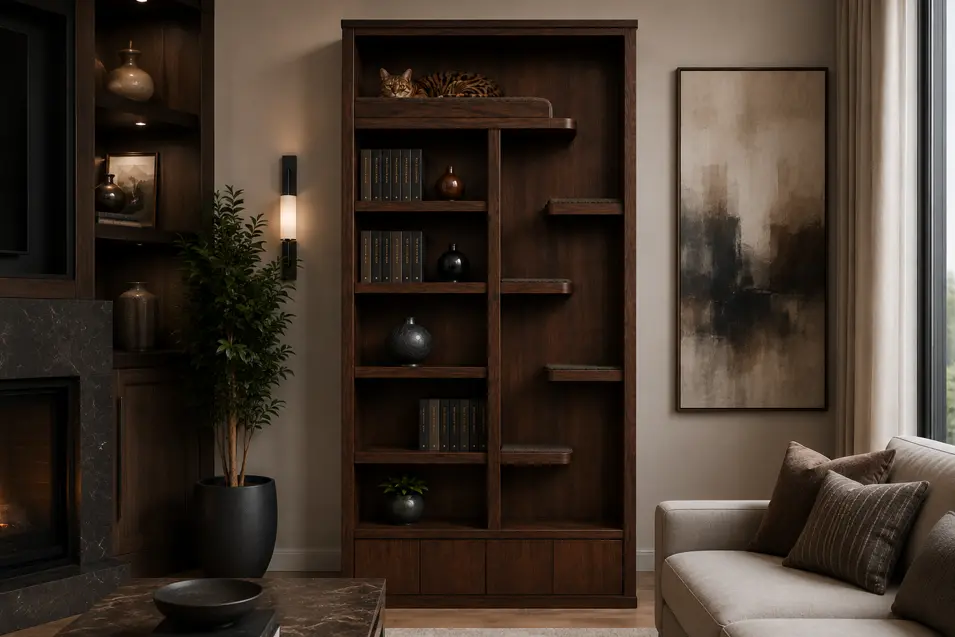
Cats can sleep for an impressive portion of the day, but that doesn’t mean they always want to sleep in the same place. The sunny window that is irresistible in the morning may be abandoned for a protected nook in the afternoon, while the sofa becomes the preferred spot when everyone settles down in the evening.
Instead of creating one designated cat bed and expecting it to satisfy every situation, give your cat several different kinds of resting places throughout the living room. A deep shelf can provide an elevated retreat with a view of the room. A window seat offers warmth and entertainment. An open section of cabinetry can provide privacy, while a generous sofa cushion lets a social cat sleep close to the people they trust.
These options don’t all need to be purpose-built. The top of a low cabinet, an unused corner of a window bench or a protected end of the sofa may already be appealing. Sometimes designing for the cat simply means recognizing a place they naturally choose and making it more comfortable, accessible and practical.
Think about how exposed each resting place feels, too. A perch high above the room provides a very different experience from a sheltered nook at floor level. Likewise, a spot beside the sofa offers companionship while a quieter position at the edge of the room allows the cat to withdraw without disappearing completely.
The important thing is choice. Cats move between resting places according to temperature, household activity, time of day and how social or secure they feel at that moment. A well-designed living room doesn’t dictate where the cat belongs. It quietly provides several good options and lets the cat decide.
Design the Whole Room as Shared Territory
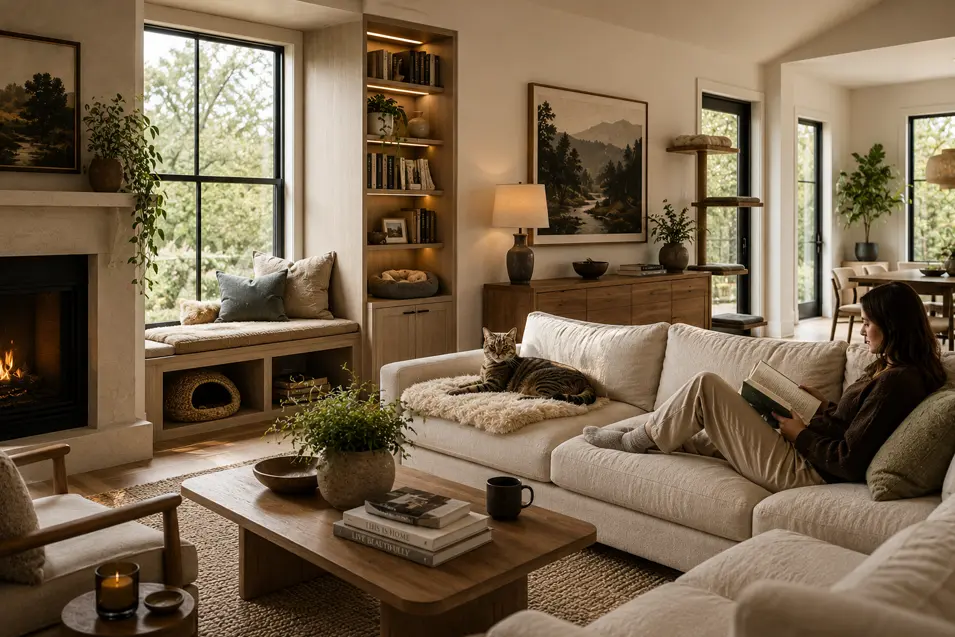
The best cat-friendly living rooms don’t divide the space into human territory and pet territory. Instead, the same architecture and furniture work for everyone. A window bench can be both beautiful seating and a lookout, a well-placed cabinet can become part of a cat’s route through the room, and a textural architectural element can provide an appropriate place to scratch without looking like pet equipment. Even a quiet opening in custom cabinetry can give a cat somewhere to retreat while remaining connected to the room.
The key is to think about how all of these elements work together. A perch needs a comfortable way to reach it, a scratching surface needs to be where the cat naturally wants to use it, and resting places should offer different levels of privacy, warmth and proximity to people. When those decisions are considered as part of the room’s layout rather than added afterward, cat-friendly design becomes almost invisible.
That is ultimately the goal: not to disguise cat furniture, but to design human furniture and architecture that performs the same functions better. The result is a living room that feels cohesive, comfortable and beautiful while giving the cat genuine choices about where to move, observe, scratch, retreat and spend time with the people who share the space.