For many pet owners, photographs and portraits of beloved companions are among their most treasured possessions. From playful puppy snapshots to professional pet portraits and candid moments captured over the years, these images tell the story of a special bond that deserves to be celebrated.
One of the most stylish and meaningful ways to display these memories is through a pet gallery wall. By thoughtfully arranging photographs, artwork, and decorative elements, you can transform an ordinary wall into a personalized showcase that highlights your pets while enhancing your home’s décor.
Whether your style is modern, traditional, rustic, or eclectic, a pet gallery wall can become a striking focal point that reflects both your love for animals and your personal design aesthetic.
Start with a Collection of Meaningful Images
The first step in creating a pet gallery wall is gathering the photographs and artwork you want to display.
Look through your favorite pet photos, professional portraits, adoption pictures, holiday snapshots, and candid moments. Consider selecting images that represent different stages of your pet’s life, unique personality traits, or memorable experiences you’ve shared together.
Don’t limit yourself to photographs alone. Pet-themed paintings, sketches, custom illustrations, and digital artwork can add variety and visual interest to the display.
A mix of media often creates a more dynamic and curated appearance than using only one type of image.
Choose a Location That Gets Attention
The placement of your gallery wall plays a major role in its overall impact.
Popular locations include:
- Living rooms
- Hallways
- Staircases
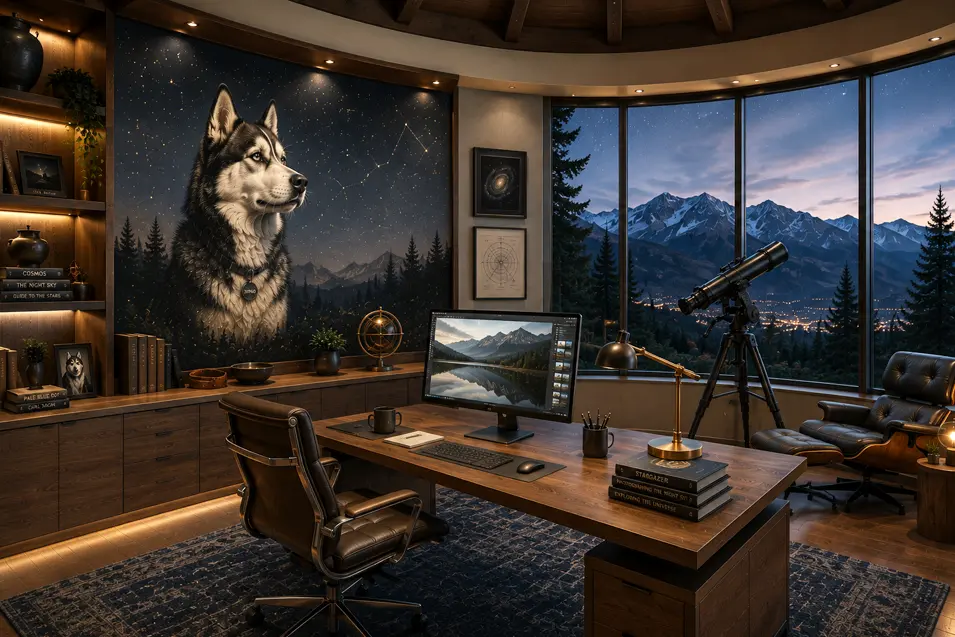
- Home offices
- Entryways
- Family rooms
Choose a space where people naturally spend time or pass through frequently. A well-placed gallery wall can become an instant conversation piece while adding warmth and personality to the room.
Large blank walls often work best because they provide enough space to create a balanced arrangement without feeling crowded.
Select a Cohesive Style
One of the keys to a successful gallery wall is visual consistency.
This doesn’t mean every frame or image must be identical, but there should be a unifying element that ties everything together.
Some popular approaches include:
Matching Frames
Using identical frames creates a clean, organized appearance that works especially well in modern and contemporary interiors.
Coordinated Colors
Select frames and mats that share similar tones or finishes to create visual harmony.
Black-and-White Photography
Converting images to black and white can give a collection a timeless and sophisticated look.
Mixed Media Collections
Combining photographs, paintings, and illustrations can create a more artistic and eclectic display while still maintaining a cohesive color palette.
Plan Your Layout Before Hanging
One of the biggest mistakes homeowners make is hanging pieces without first planning the arrangement.
Before making any holes in the wall, lay the frames on the floor and experiment with different configurations.
Common gallery wall layouts include:
Grid Layout
A symmetrical grid creates a polished, structured appearance and works particularly well with similarly sized frames.
Salon Style
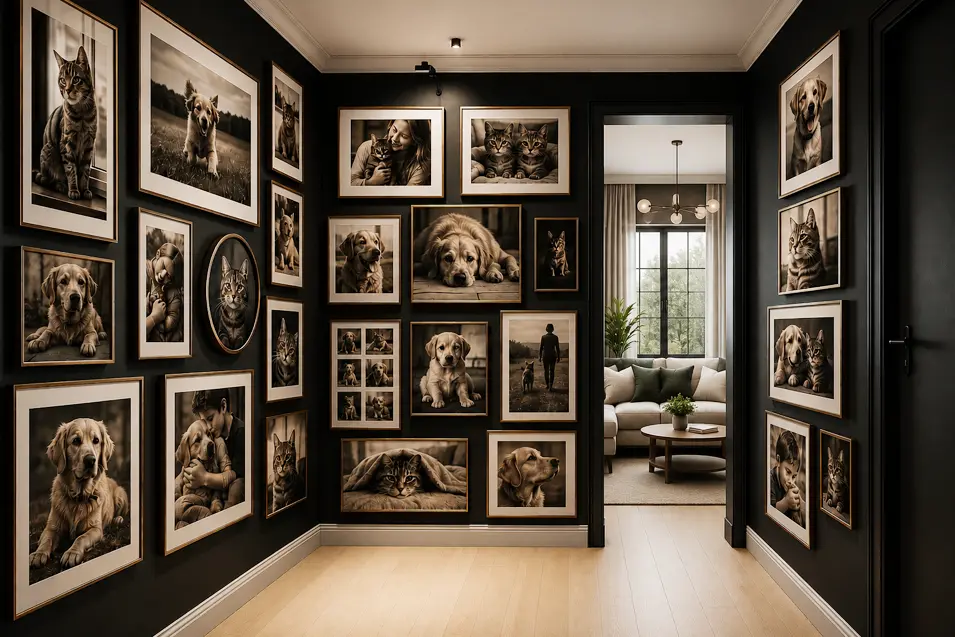
This arrangement uses various sizes and shapes to create a more organic, collected look.
Centerpiece Design
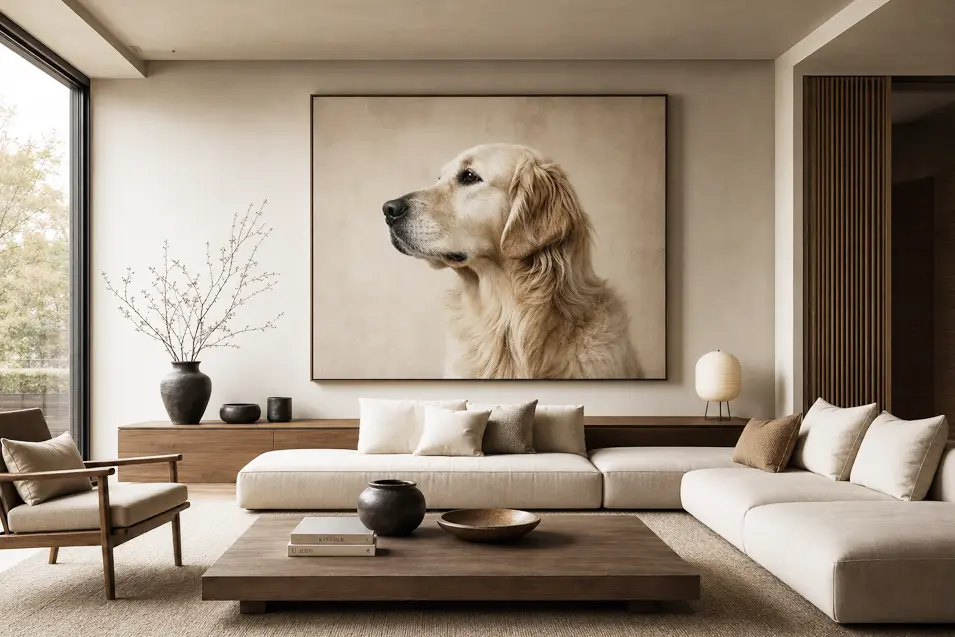
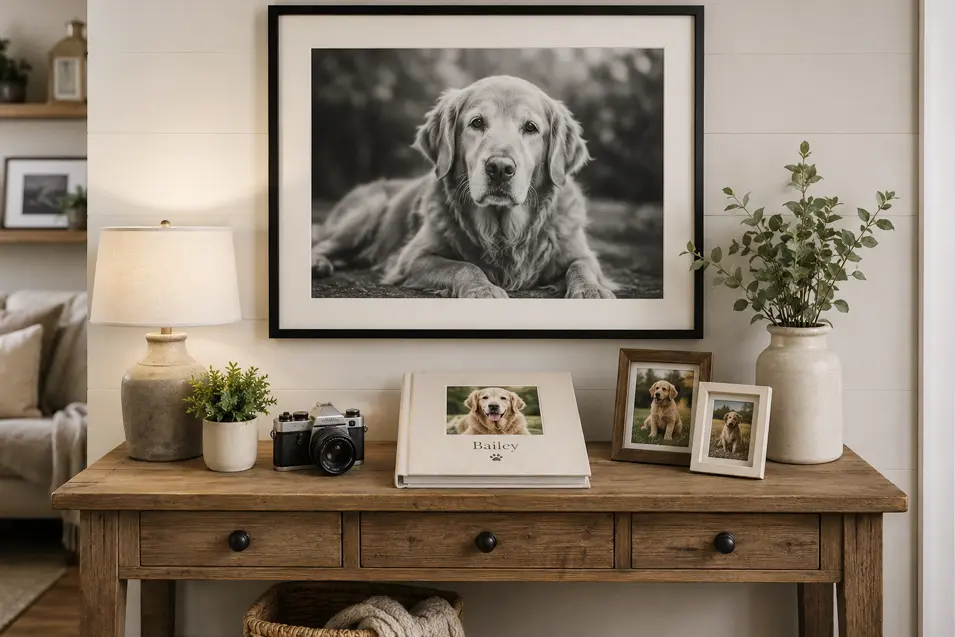
A large pet portrait serves as the focal point, surrounded by smaller photographs and complementary artwork.
Linear Arrangement
Frames are aligned horizontally or vertically for a minimalist and contemporary effect.
Taking time to visualize the final arrangement helps ensure a balanced and professional-looking result.
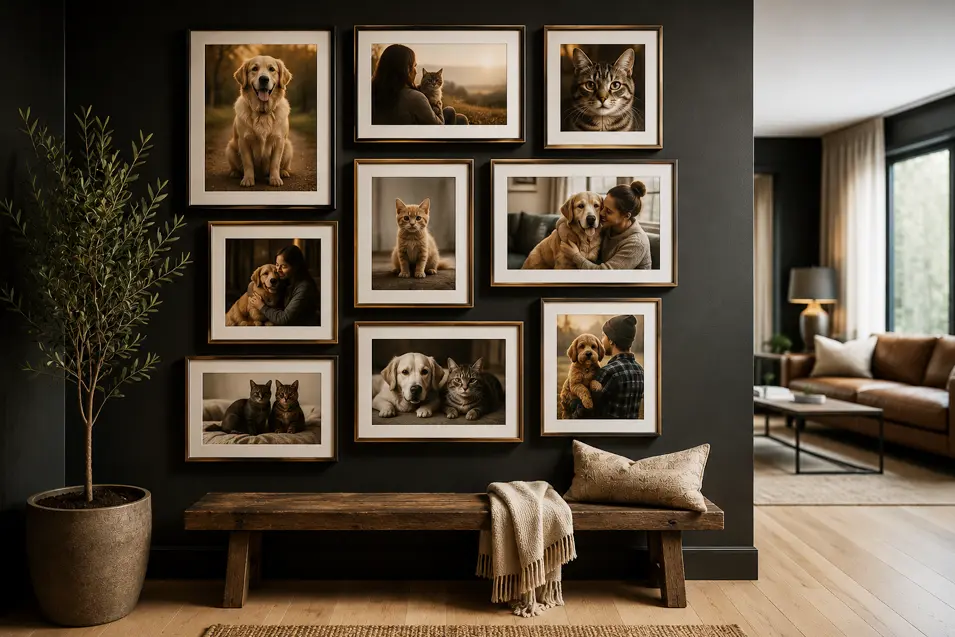
Mix Large and Small Pieces
A visually interesting gallery wall often incorporates a variety of sizes.
Large statement portraits provide focal points, while smaller photographs fill in surrounding areas and add detail. This combination creates depth and keeps the display from feeling repetitive.
Many designers recommend starting with one or two larger anchor pieces and building the gallery around them.
This approach naturally guides the eye through the display while maintaining visual balance.
Tell a Story
The most memorable gallery walls go beyond decoration and tell a story.
Consider arranging images chronologically to showcase your pet’s life journey. Alternatively, group photos by theme, such as outdoor adventures, family moments, holidays, or favorite activities.
You can also include meaningful items such as:
- Pet nameplates
- Paw print artwork
- Adoption certificates
- Memorial keepsakes
- Custom quotes
- Framed collars or tags
These personal touches add emotional depth and make the gallery uniquely yours.
Pay Attention to Spacing
Consistent spacing helps create a polished appearance.
Most designers recommend leaving two to four inches between frames, depending on their size and the overall scale of the display.
Frames that are too close together can feel cluttered, while pieces that are spaced too far apart may appear disconnected.
Maintaining relatively even spacing creates a sense of order and unity.
Incorporate Artwork and Custom Portraits
Professional pet portraits can elevate a gallery wall from casual to truly remarkable.
Custom paintings, watercolor illustrations, charcoal sketches, and digital artwork introduce texture and artistic variety. These pieces often become focal points that complement surrounding photographs.
Many homeowners choose to commission a portrait of a current pet or a beloved companion who has passed away, creating a meaningful centerpiece that honors the bond they shared.
Match the Gallery to Your Home’s Design
A successful pet gallery wall should feel like a natural extension of the room.
For modern interiors, consider sleek black frames and minimalist layouts. Traditional spaces may benefit from classic wood frames and elegant portraiture. Farmhouse-inspired homes often pair well with rustic wood finishes and vintage-style photographs.
By coordinating the gallery with the surrounding décor, the display feels intentional and integrated rather than separate from the overall design.
Let Your Pets Inspire Your Home
A pet gallery wall is more than a collection of pictures. It is a celebration of companionship, memories, and the special role animals play in our lives.
Every photograph captures a moment, every portrait reflects a personality, and every arrangement tells a story. When thoughtfully designed, a pet gallery wall transforms ordinary memories into meaningful home décor that brings warmth, character, and joy to any space.
Whether you choose a simple arrangement of favorite photos or an elaborate display featuring custom artwork and keepsakes, your gallery wall becomes a lasting tribute to the pets who make your house feel like home.