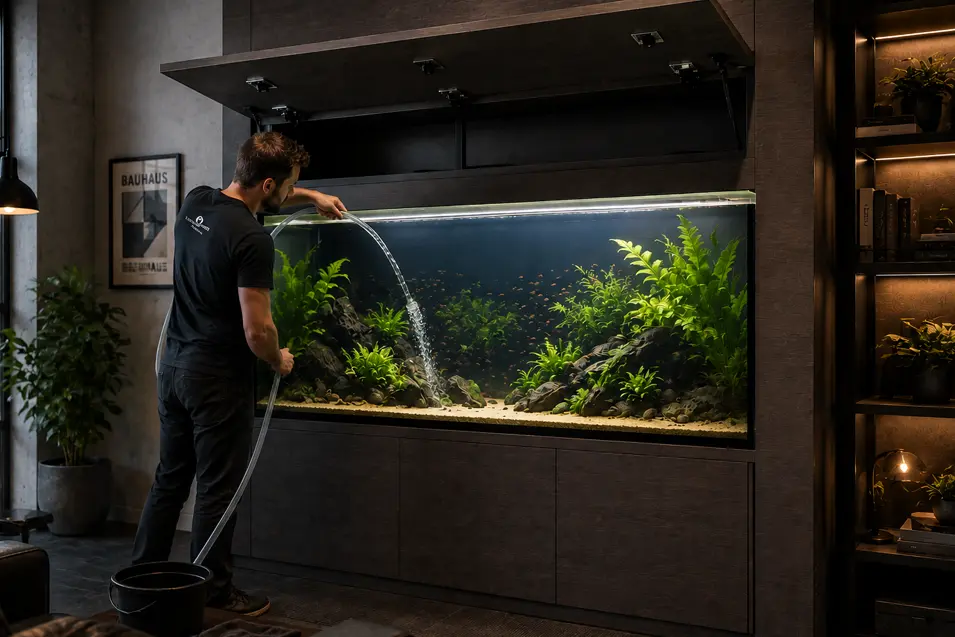
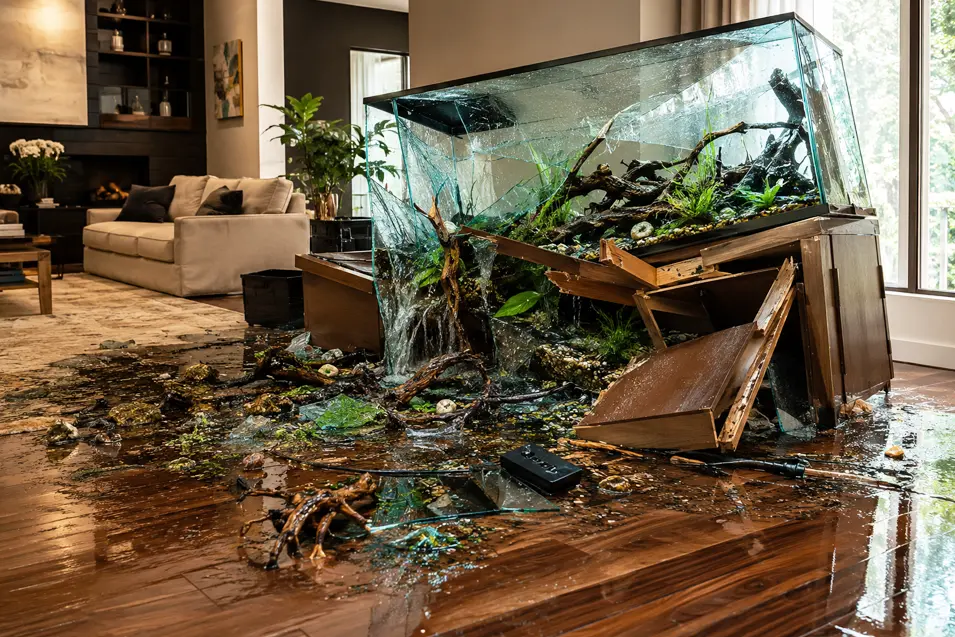
Aquariums may look peaceful and elegant, but they are also extremely heavy. Many new fishkeepers underestimate just how much weight a filled aquarium places on floors, stands, and furniture. A tank that seems manageable when empty can become hundreds or even thousands of pounds once filled with water, substrate, rocks, equipment, and decorations.
This is one of the most important planning considerations before bringing an aquarium into your home. Choosing the wrong stand, placing a tank on weak furniture, or ignoring floor support can create serious risks for both the aquarium and the surrounding space.
Before setting up any fish tank, it is worth understanding how aquarium weight works and what homeowners should consider.
Why Aquariums Are So Heavy
The main reason aquariums become so heavy is water.
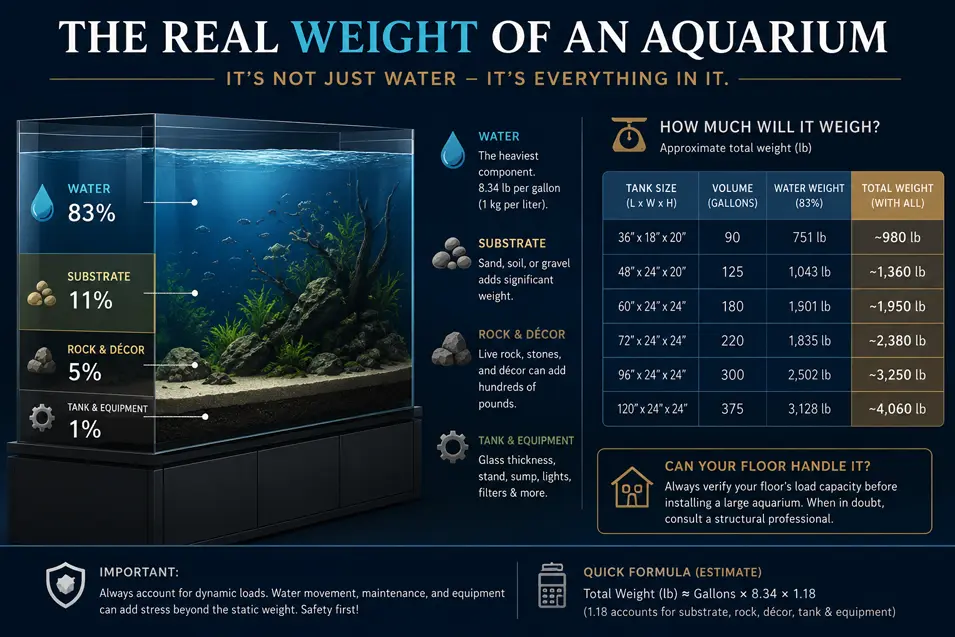
Freshwater weighs about 8.34 pounds per gallon. That means the water alone in a 55-gallon aquarium weighs roughly 459 pounds. Once you add the glass, gravel, rocks, decorations, filter, lights, and stand, the total weight can be much higher.
Saltwater aquariums may weigh slightly more because saltwater is denser than freshwater. Reef aquariums can also include large amounts of live rock, sand, and equipment, increasing the total load.
Approximate Aquarium Weights by Size
The following estimates include water, tank, substrate, and basic décor. Actual weight can vary depending on materials and setup.
| Aquarium Size | Approximate Filled Weight |
| 10 gallons | 100–120 pounds |
| 20 gallons | 220–250 pounds |
| 29 gallons | 300–350 pounds |
| 40 gallons | 450–500 pounds |
| 55 gallons | 600–700 pounds |
| 75 gallons | 850–950 pounds |
| 90 gallons | 1,000–1,150 pounds |
| 125 gallons | 1,400–1,600 pounds |
| 180 gallons | 2,000+ pounds |
Even a medium-sized aquarium can weigh as much as several adults standing in one concentrated area.
Don’t Forget the Stand
The aquarium stand is part of the total system weight.
Large wooden or metal stands can add substantial weight, especially if they include cabinetry, doors, shelves, or built-in storage. When planning aquarium placement, consider the combined weight of:
- Aquarium
- Water
- Substrate
- Rocks and decorations
- Equipment
- Canopy or lid
- Stand or cabinet
This total is what your floor and support structure must handle.
Can Regular Furniture Hold an Aquarium?
In most cases, regular furniture is not suitable for aquariums.
A bookshelf, dresser, console table, or decorative cabinet may look strong, but aquarium weight is different from ordinary household weight. A filled tank applies constant pressure day and night. Any sagging, twisting, unevenness, or weakness can create stress on the aquarium glass.
Avoid placing aquariums on:
- Particleboard furniture
- Lightweight shelves
- Old or damaged cabinets
- Narrow tables
- Furniture with loose joints
- Surfaces that are not perfectly level
A purpose-built aquarium stand is usually the safest choice.
Why Level Support Matters
Aquariums must be supported evenly.
If a tank is not level, water pressure may not be distributed properly. Over time, this can stress seams, glass panels, and the stand itself.
Warning signs of poor support include:
- Uneven water line
- Wobbling stand
- Gaps beneath the aquarium frame
- Doors on the stand not closing properly
- Creaking, shifting, or sagging furniture
Small uneven spots may seem harmless, but they can create long-term problems.
Floor Support Considerations
Most modern homes can safely support small and medium aquariums when they are placed properly. Larger aquariums, however, deserve more careful planning.
The concern is not only total weight, but how that weight is distributed.
A 100-gallon aquarium may weigh well over 1,000 pounds. Because that weight is concentrated in a relatively small footprint, placement matters.
Best Places to Put Heavy Aquariums
Heavy aquariums are usually best placed:
- Along load-bearing walls
- Perpendicular to floor joists
- On ground floors
- Over structural beams where possible
- On concrete slabs when available
Basements and slab foundations often provide excellent support for large aquariums, while upper floors may require more caution.
When to Consult a Professional
For small tanks, professional structural advice is usually unnecessary. For large aquariums, it can be a wise investment.
Consider consulting a contractor, builder, or structural engineer if:
- The aquarium is over 75–100 gallons
- The tank will be placed on an upper floor
- The home is older
- Floors feel bouncy or uneven
- You are planning a built-in aquarium
- The system may exceed 1,000 pounds
- You are unsure about joist direction or load-bearing walls
Professional guidance is especially important for luxury aquariums, wall installations, and very large displays.
Aquariums on Upper Floors
Many people successfully keep aquariums on second floors, but placement becomes more important as tank size increases.
Small aquariums are usually not a concern. A 10-gallon or 20-gallon tank weighs far less than many pieces of furniture.
Larger aquariums require more caution.
When placing an aquarium upstairs, choose a location near strong structural support and avoid placing very large tanks in the middle of unsupported floor spans.
Built-In Aquariums and Structural Planning
Built-in aquariums require extra planning because they are often larger and more permanent.
These systems may include:
- Custom framing
- Cabinetry
- Plumbing
- Sumps
- Water storage
- Lighting
- Equipment rooms
The aquarium itself is only part of the load. The full installation should be considered during the design stage.
For custom aquarium walls or room dividers, structural planning should happen before construction begins.
Weight Distribution and Aquarium Stands
A good aquarium stand distributes weight evenly.
Some stands support the aquarium around the perimeter, while others provide full surface support depending on the tank design. Using the wrong type of stand can create stress points.
Always follow the aquarium manufacturer’s recommendations. Rimmed glass tanks and rimless aquariums may have different support requirements.
Protecting Floors from Water and Pressure
Aquarium weight is only one concern. Water damage is another.
Even routine maintenance can lead to splashes, drips, and spills.
To protect floors:
- Use a waterproof mat beneath maintenance areas
- Wipe up spills immediately
- Avoid placing tanks directly on delicate flooring
- Keep towels nearby during water changes
- Inspect around the stand regularly
Hardwood, laminate, and carpet can all be damaged by repeated moisture exposure.
Warning Signs Your Aquarium Setup May Be Unsafe
Pay attention to changes over time.
Warning signs include:
- Stand bowing or sagging
- Tank leaning
- Cracks in the stand
- Floor dipping beneath the aquarium
- New creaking sounds
- Doors or drawers sticking
- Waterline no longer level
If any of these appear, take the situation seriously. Reducing water volume temporarily may lessen pressure while you assess the problem.
Planning Before You Fill the Tank
Once an aquarium is filled, moving it becomes extremely difficult.
Before adding water, confirm:
- The stand is rated for the tank size
- The floor is level
- The location provides enough support
- Electrical outlets are accessible
- Maintenance space is available
- The aquarium is away from direct sunlight and vents
Good planning prevents costly problems later.
Conclusion
Aquariums are far heavier than they appear. Even modest tanks can weigh hundreds of pounds once filled, while large aquariums can place more than a thousand pounds on floors, stands, and surrounding structures.
The safest approach is to use a proper aquarium stand, place the tank on a level surface, consider floor support carefully, and seek professional advice for large or built-in installations.
With the right planning, aquariums can be safely enjoyed in many areas of the home. Understanding the weight before setup is one of the simplest ways to protect your fish, your flooring, your furniture, and your peace of mind.
Frequently Asked Questions
How much does a gallon of aquarium water weigh?
Freshwater weighs about 8.34 pounds per gallon. Saltwater weighs slightly more.
How much does a 55-gallon aquarium weigh when full?
A filled 55-gallon aquarium typically weighs around 600 to 700 pounds once water, glass, substrate, décor, and equipment are included.
Can I put an aquarium on a dresser?
Usually, no. Most dressers are not designed to support the constant concentrated weight of a filled aquarium. A proper aquarium stand is safer.
Can my floor support a large aquarium?
It depends on aquarium size, floor structure, placement, and home construction. Large tanks, especially those over 75–100 gallons, may require professional evaluation.
Is a concrete floor best for a heavy aquarium?
Concrete slabs are often excellent for heavy aquariums because they provide strong, stable support.
Related Reading
- Aquariums in the Home: Design, Placement, Planning, and Practical Living
- Where NOT to Put an Aquarium: Common Placement Mistakes
- Built-In Aquariums vs. Freestanding Aquariums: Pros and Cons
- Designing a Built-In Aquarium Wall
- Aquarium Furniture: Stands, Cabinets, and Built-In Storage Solutions
- What Happens If an Aquarium Breaks? Preparing for Leaks, Cracks, and Emergencies