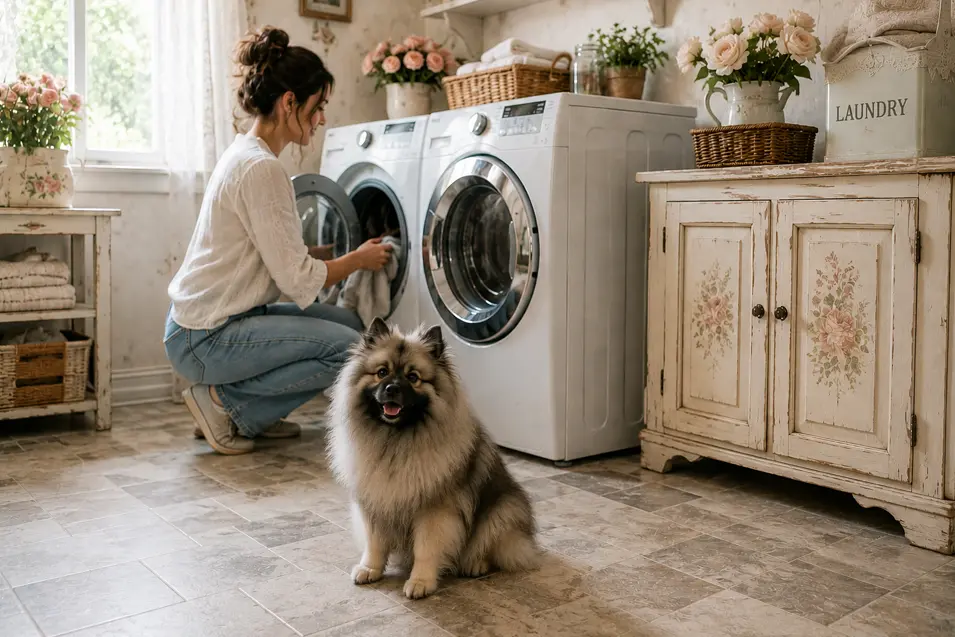
For most families, the laundry room is simply another part of the home. It’s where clothes are washed, towels are dried, and laundry baskets seem to multiply overnight. Yet for pet owners, this everyday space can contain several hidden hazards that often go unnoticed.
Cats and dogs are naturally curious. They investigate small spaces, climb into unusual places, and often seek out warm, enclosed areas for naps. Unfortunately, washers and dryers can appear particularly attractive to pets, especially cats. While many pet owners are aware of obvious household dangers, few realize that laundry appliances can present serious risks.
Understanding these hidden dangers can help prevent accidents and keep your pets safe.
Why Pets Are Attracted to Laundry Rooms
Laundry rooms offer several things that appeal to animals.
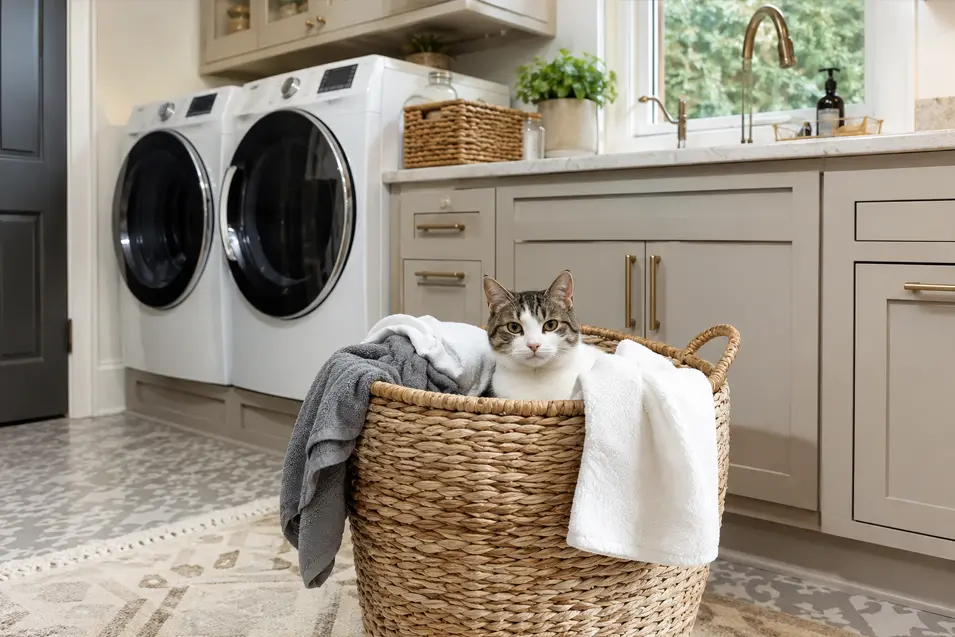
Cats are especially drawn to warm, enclosed spaces that resemble dens. A dryer that has recently finished a cycle may still be warm, while an open washing machine can look like a cozy hiding place. Add the comforting scent of family members on clothing, and it’s easy to see why pets may find the area inviting.
Dogs may be less likely to climb into appliances, but they are often attracted to laundry baskets, clothing, dryer sheets, and detergent products.
Because many owners don’t think of the laundry room as a high-risk area, pets may have access to hazards without supervision.
The Danger of Pets Climbing Into Dryers
One of the most serious risks involves pets entering dryers.
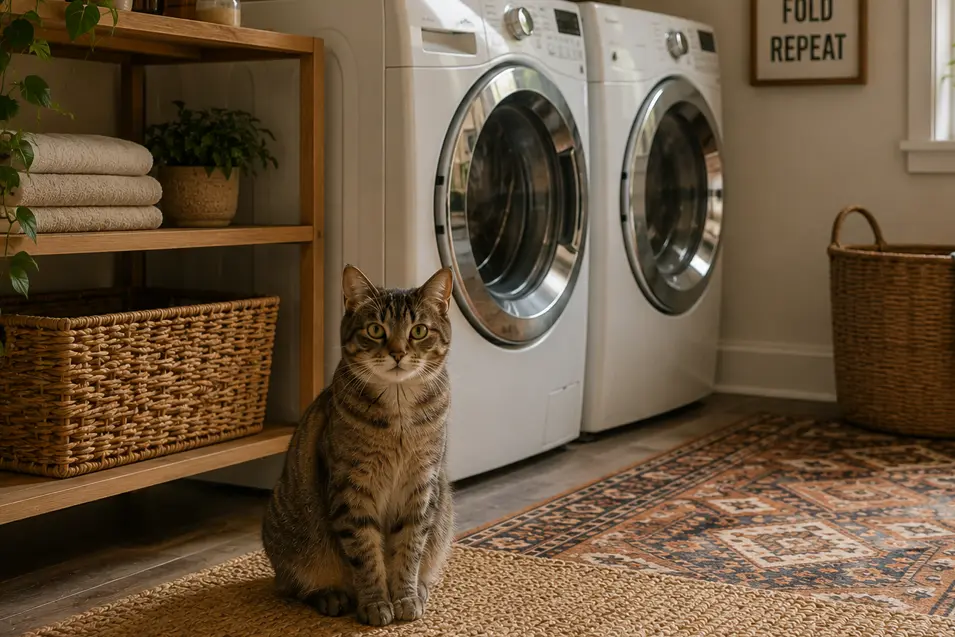
Cats are notorious for seeking warm, quiet locations to nap. An open dryer door may look like the perfect resting spot. Unfortunately, if a pet climbs inside unnoticed and the dryer is started, the consequences can be catastrophic.
Animal rescue organizations and veterinary professionals regularly warn about incidents involving cats trapped inside dryers. These accidents can occur in a matter of seconds and often result in severe injury or death.
Before loading or starting a dryer, pet owners should always check inside the drum. Taking a quick glance can save a life.
It’s also a good habit to keep dryer doors closed whenever the appliance is not in use.
Washing Machines Can Be Just as Dangerous
While dryers receive most of the attention, washing machines present similar risks.
Front-loading washers are particularly attractive to curious cats because the drum is easily accessible when the door is open. A cat may climb inside unnoticed while an owner is sorting laundry or stepping away briefly.
Because modern washing machines often seal tightly when closed, a pet trapped inside may be unable to escape.
Experts recommend checking the washer before every load and keeping doors closed when the machine is not actively being used.
Some pet owners place reminder stickers near appliance controls to encourage family members to check for pets before starting a cycle.
Toxic Laundry Products
Many common laundry products contain chemicals that can be harmful to pets.
Liquid detergents, powdered detergents, stain removers, bleach products, and fabric softeners can all cause illness if ingested. Even small amounts may trigger vomiting, drooling, digestive upset, or chemical burns in the mouth and digestive tract.
Laundry detergent pods deserve particular attention.
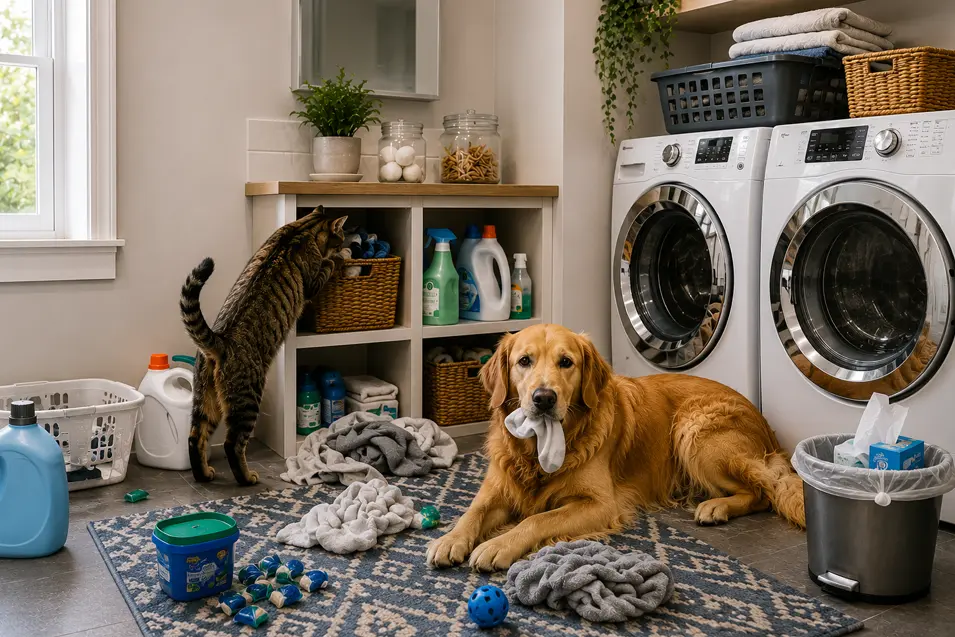
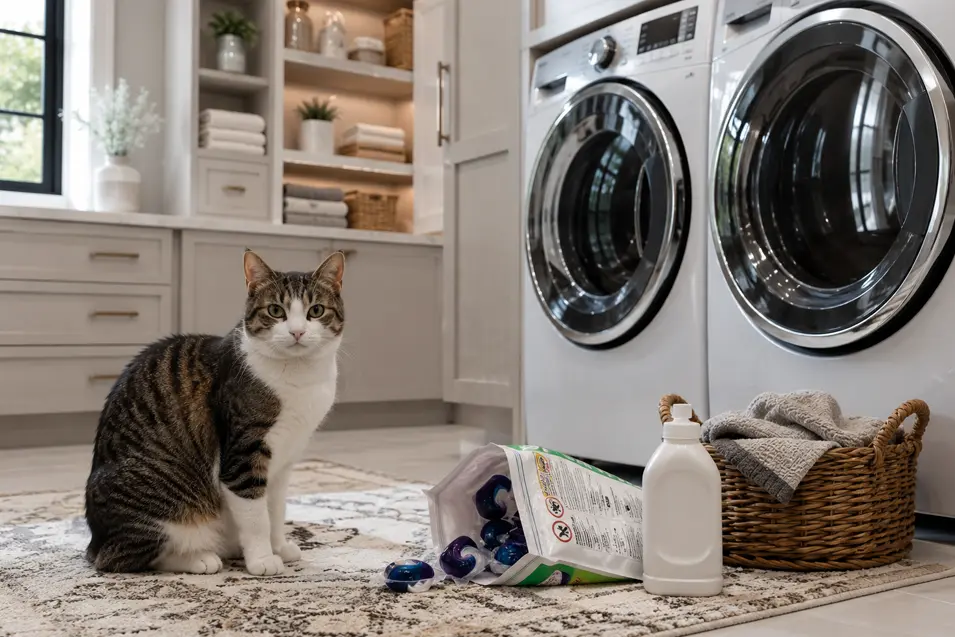
The brightly colored packets may resemble toys or treats to pets. If punctured or swallowed, the concentrated detergent inside can cause serious injury. Exposure may result in breathing difficulties, severe gastrointestinal irritation, and eye damage.
All laundry products should be stored in secure cabinets or on shelves that pets cannot access.
Dryer Sheets Can Cause Problems
Many pet owners don’t realize that dryer sheets can also pose a risk.
Used dryer sheets may seem harmless, but they still contain chemical residues that can irritate a pet’s digestive system if chewed or swallowed. Some animals are attracted to their texture or scent, making them tempting objects to play with.
Dryer sheets can also become choking hazards or cause intestinal blockages if consumed.
Used sheets should be disposed of promptly in a covered trash container.
Loose Clothing and Laundry Hazards
Laundry itself can create unexpected dangers.
Cats and dogs may chew on strings, drawstrings, ribbons, elastic bands, or loose threads found on clothing. If swallowed, these items can cause intestinal blockages or serious internal injuries.
Cats are particularly vulnerable to problems caused by string-like objects. Veterinarians frequently treat cats that have swallowed thread, yarn, ribbon, or elastic materials.
Laundry baskets should be kept tidy, and damaged clothing with loose strings should not be left where pets can access it.
Lint and Dust Accumulation
The lint trap may not seem dangerous, but it can create problems in certain situations.
Pets that spend time in laundry rooms may inhale excessive dust, lint, or debris, particularly if lint traps are not cleaned regularly. While occasional exposure is unlikely to cause significant issues, poor ventilation combined with accumulated lint can contribute to respiratory irritation.
Lint buildup also creates a fire hazard, which poses a risk to every member of the household, including pets.
Cleaning lint filters after every drying cycle helps improve safety and appliance efficiency.
Hot Surfaces and Burns
Dryers and associated venting systems can become surprisingly hot during operation.
Curious pets may lean against warm surfaces or investigate vents without realizing the potential danger. While severe burns are uncommon, contact with hot components can still cause discomfort or injury.
Keeping pets away from operating appliances helps reduce this risk.
Preventing Laundry Room Accidents
Fortunately, most laundry room accidents are entirely preventable.
Simple safety habits can dramatically reduce risk:
- Always check washers and dryers before starting them.
- Keep appliance doors closed when not in use.
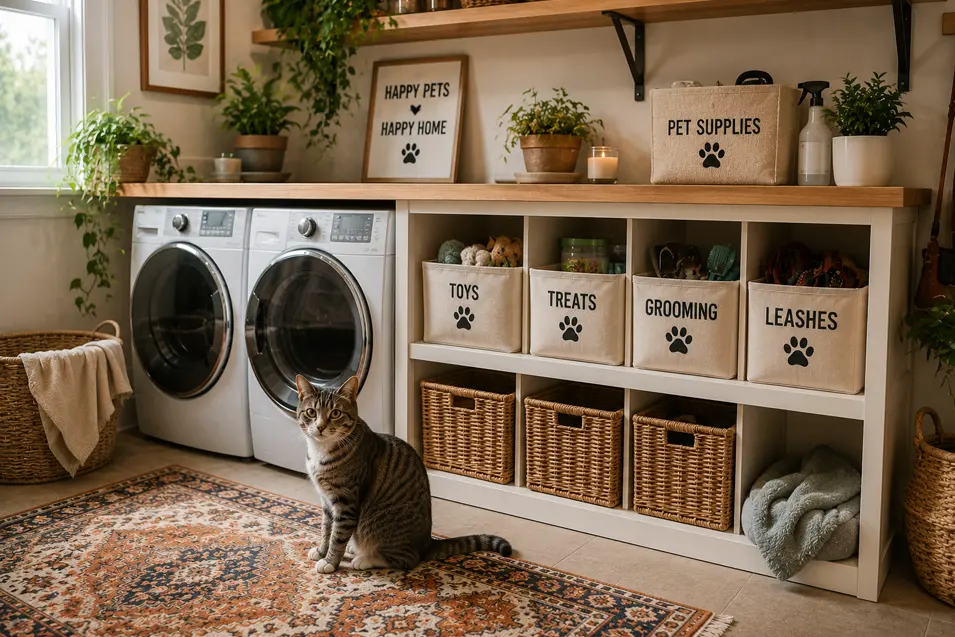
- Store detergents, bleach, and cleaning products securely.
- Dispose of dryer sheets promptly.
- Keep laundry rooms organized and free of loose strings or cords.
- Clean lint traps regularly.
- Supervise pets when they are in the laundry area.
These small precautions require very little effort but can prevent potentially tragic accidents.
The Bottom Line
Washers and dryers are everyday appliances that most people rarely think twice about. However, for curious pets—especially cats—they can present a surprising number of hazards.
From the risk of becoming trapped inside appliances to exposure to toxic detergents and choking hazards, the laundry room deserves the same level of safety awareness as any other area of the home.
A quick check before starting a load of laundry and a few simple preventive measures can go a long way toward protecting the pets that share our homes. After all, keeping them safe is far more important than getting the laundry finished a few minutes sooner.