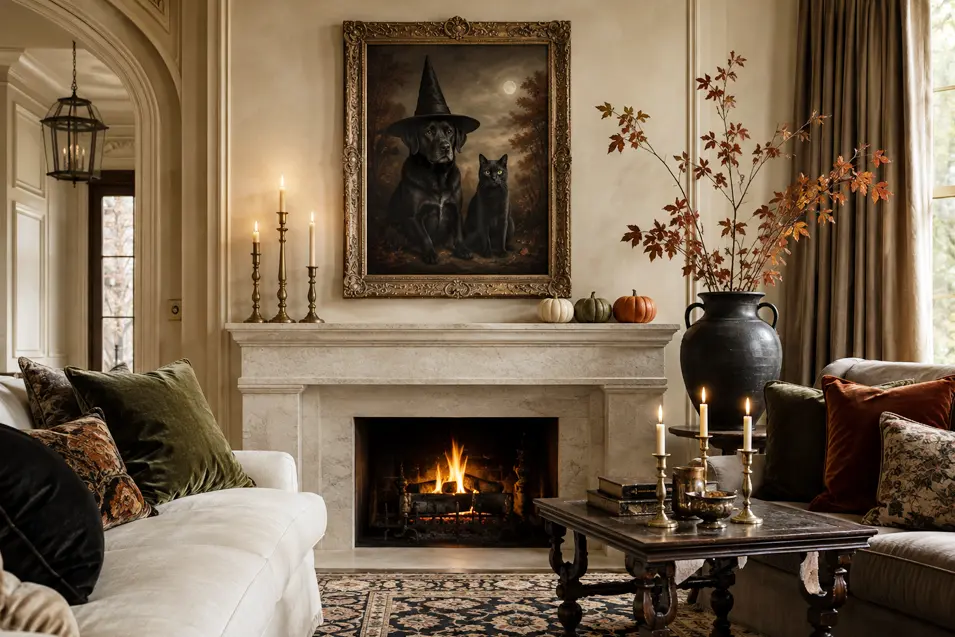
Halloween decorating does not have to mean plastic skeletons, artificial cobwebs and an explosion of orange and purple. In a beautiful home, the season can be celebrated with the same care used to choose furniture, lighting and artwork throughout the rest of the year.
That is where Halloween pet art becomes surprisingly compelling.
Imagine an old-master-style portrait of a dog in a witch’s hat, a ghostly Greyhound rendered in charcoal or a wonderfully peculiar sheep presiding over a farmhouse mudroom. Treated with restraint—and displayed in the right surroundings—these pieces can be witty, atmospheric and genuinely beautiful.
The secret is to let the artwork lead. A few heirloom pumpkins, autumn branches, aged brass candlesticks or carefully placed curios are often all the room needs. The result feels less like a Halloween display and more like a home that has quietly taken on a darker personality for October.
Here are 12 very different ways Halloween pet art could become part of a truly beautiful interior.
The Witch Dog
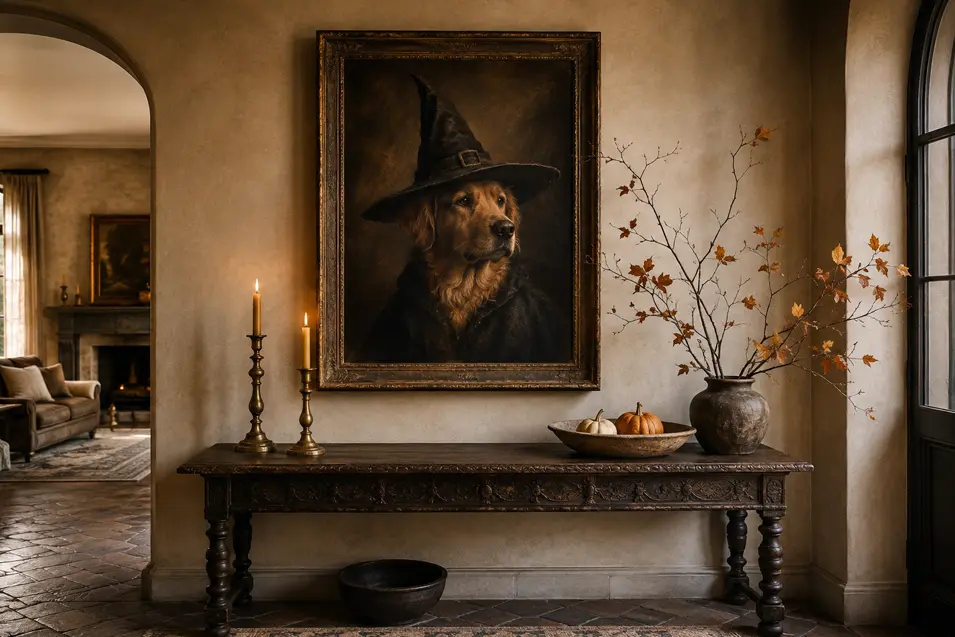
An elegant entryway deserves something more memorable than a generic seasonal sign. Above a graceful antique console hangs an old-master-style portrait of a dignified dog wearing a tall, beautifully weathered witch’s hat.
The painting is dark and richly layered, with deep brown, black and amber tones that complement the wood furniture below it. A pair of aged brass candlesticks, a bowl of small heirloom pumpkins and several twisting branches provide just enough seasonal context.
The dog’s expression remains completely serious, as though this is not a costume at all but an important ancestral portrait that has belonged to the family for generations.
Autumn on the Farm
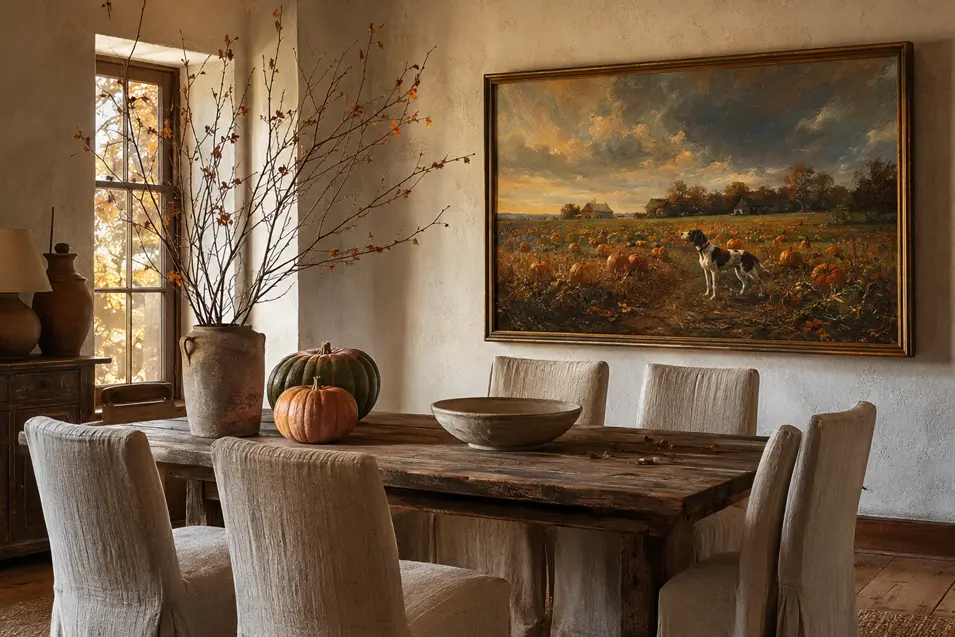
Not every piece needs to be unmistakably Halloween. Some of the most beautiful seasonal rooms simply capture the mood of late October.
In a warm country dining room, a painterly portrait shows a farm dog standing at the edge of a pumpkin field beneath a dramatic autumn sky. It is rustic without becoming overly sentimental, with loose brushwork and the rich, earthy colours of harvest season.
A timeworn farmhouse table, linen-covered chairs and a simple arrangement of branches allow the painting to settle naturally into the room. It could remain in place throughout autumn, giving the collection a quieter moment before things become a little stranger.
The Witch’s Sheep
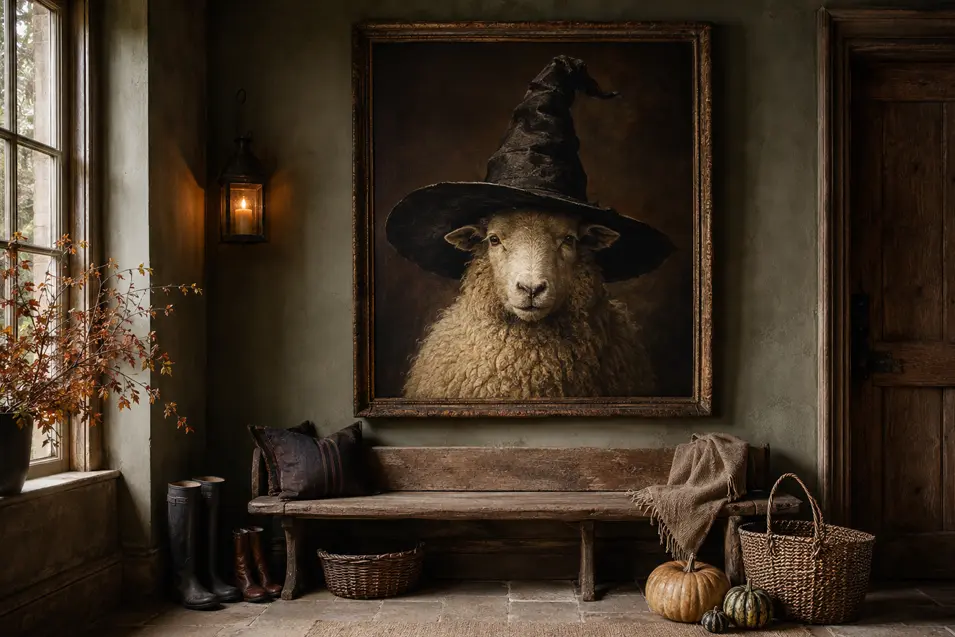
A sophisticated farmhouse mudroom may be the last place one expects to encounter an enormous portrait of a sheep wearing a witch’s hat—which is precisely why it works.
The sheep is painted with extraordinary seriousness, its pale wool emerging from a dark background beneath the dramatically oversized hat. There is something faintly ridiculous about it, but the artwork itself is so beautifully executed that it feels oddly important.
Displayed above a weathered bench with antique baskets, tall boots and a few carefully chosen pumpkins, the portrait brings humour into the room without sacrificing an ounce of style. It may be the most unexpected piece in the entire collection.
The Pumpkin Patch Terrier
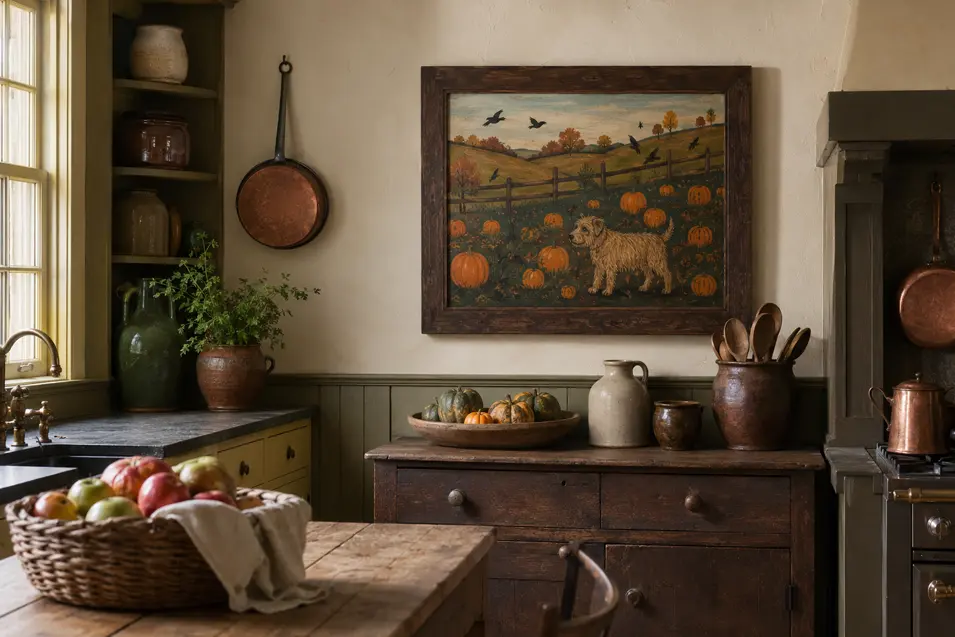
A cozy cottage kitchen provides the perfect home for something lighter and more playful. Here, a small terrier wanders through an exuberant pumpkin patch in a primitive folk-art painting filled with crooked fences, black birds and rolling autumn hills.
The deliberately simple perspective and hand-painted character give the piece the feeling of a treasured vintage discovery. It is cheerful rather than frightening, but still unmistakably suited to Halloween.
Hung against warm plaster or painted panelling and surrounded by old pottery, copper cookware and baskets of late-season produce, it adds charm without making the kitchen feel decorated for a children’s party.
The Black Cat
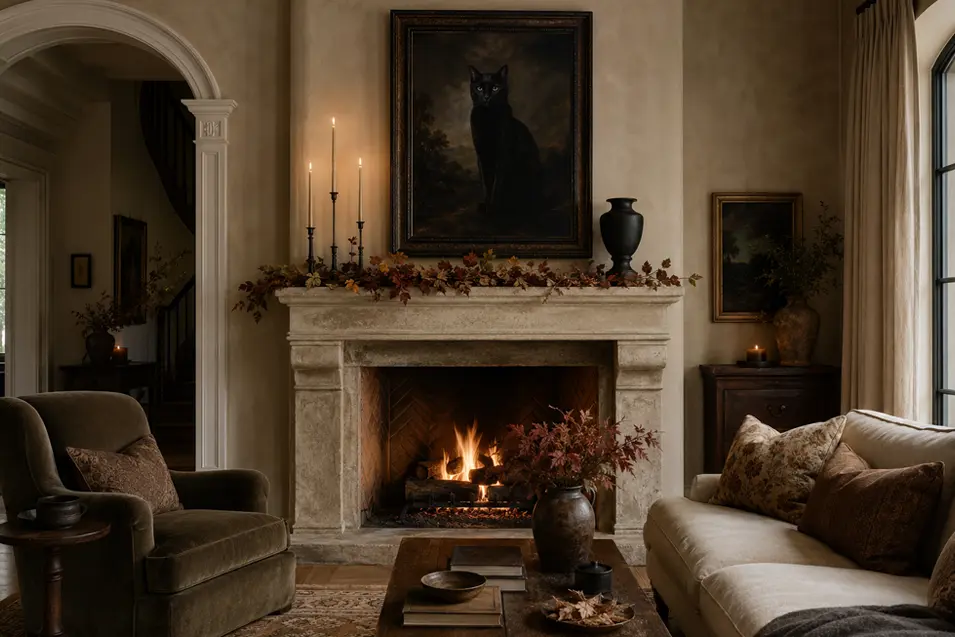
Few animals belong to Halloween as naturally as the black cat, but the familiar subject can still be treated with extraordinary elegance.
Above the fireplace in a refined living room hangs a large oil portrait of a sleek black cat seated against a shadowy landscape. Only its luminous eyes and the subtle highlights along its coat separate it from the darkness.
The mantel is kept restrained: several beeswax candles, one sculptural black urn and a trail of autumn foliage. The room itself remains sophisticated and comfortable, allowing the cat to become the quiet, mysterious focal point.
The Ghost Dog
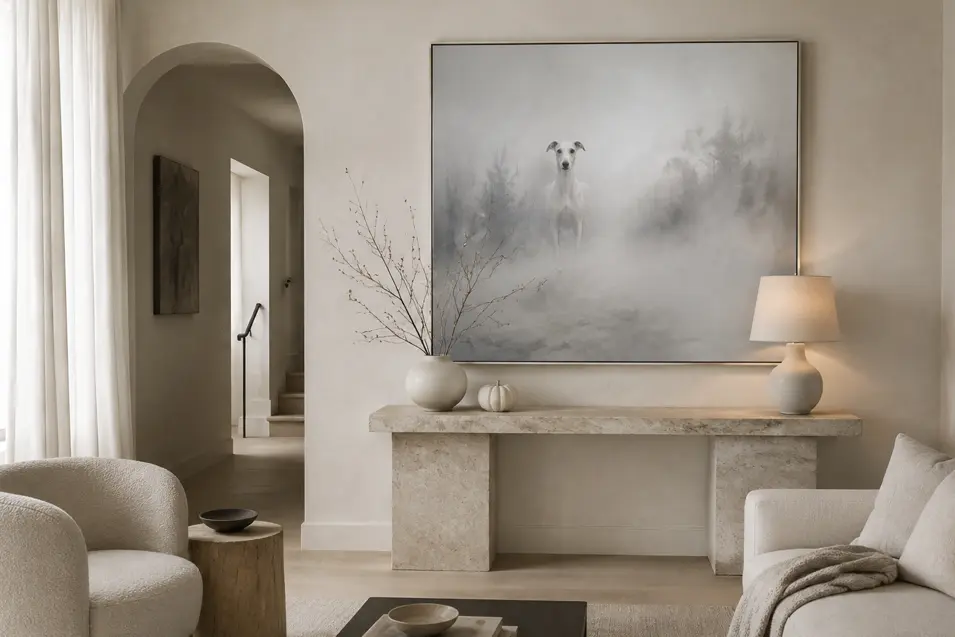
In a pale contemporary room, Halloween arrives almost entirely through atmosphere.
A large, dreamlike painting depicts a slender white dog emerging through silver mist. The landscape around it is barely visible—perhaps a field, perhaps the edge of a forest—and the animal seems caught somewhere between appearing and disappearing.
The artwork hangs on a softly textured plaster wall above a simple limestone console. There are no orange pumpkins or obvious props, only a white gourd, an arrangement of bare branches and the subtle glow of a single lamp.
It is calm, modern and just unsettling enough.
The Haunted Greyhound
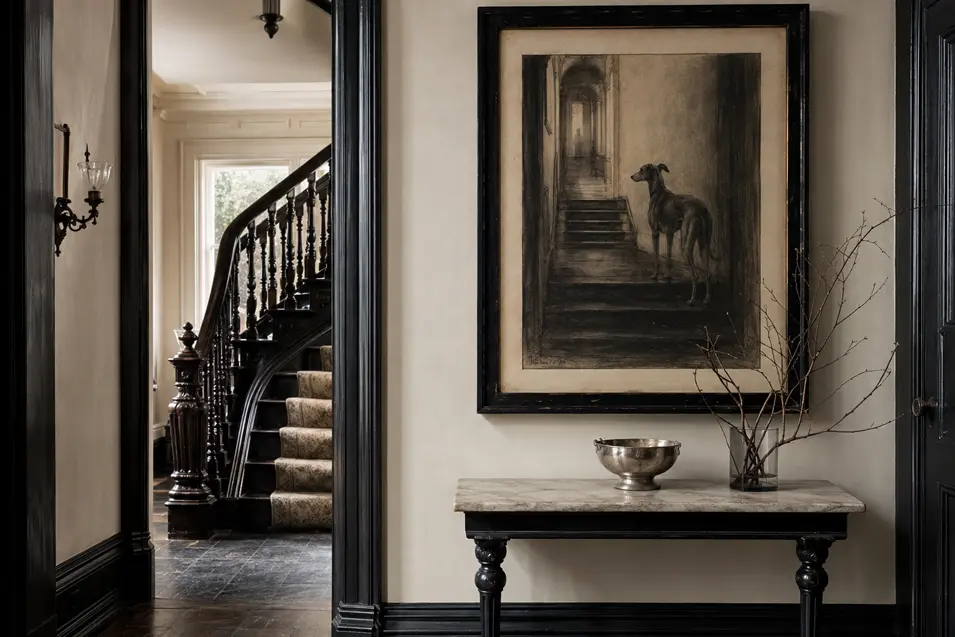
A black-and-cream hallway becomes the setting for a portrait that feels as though it has been rescued from a forgotten Victorian estate.
Rendered in charcoal and faded washes, an elegant Greyhound stands at the top of an old staircase. Its long body is partially swallowed by shadow, while a barely perceptible figure appears in the distant hallway behind it.
The picture is framed in worn black wood and displayed above a narrow marble-topped table. A tarnished silver bowl and several dark branches complete the scene.
Nothing in the room announces Halloween, yet the entire space feels haunted.
The Raven and the Dog
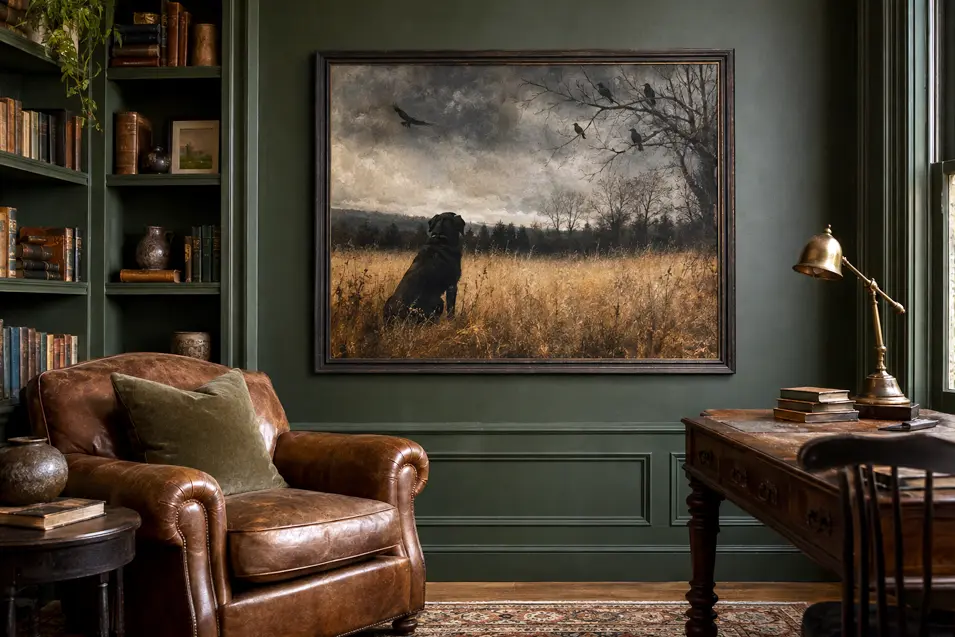
Some Halloween artwork does not need costumes at all.
In a moody fine-art photograph or richly painted landscape, a large black dog sits alone in an autumn field while ravens gather in the trees overhead. The sky is heavy, the grass has turned gold and the distant woods are almost completely dark.
Displayed in a sophisticated study with deep green walls, leather seating and old books, the piece feels sombre and cinematic. It suggests that something has happened—or is about to happen—without ever explaining what.
That ambiguity makes it far more compelling than anything overtly frightening.
The Vampire Doberman
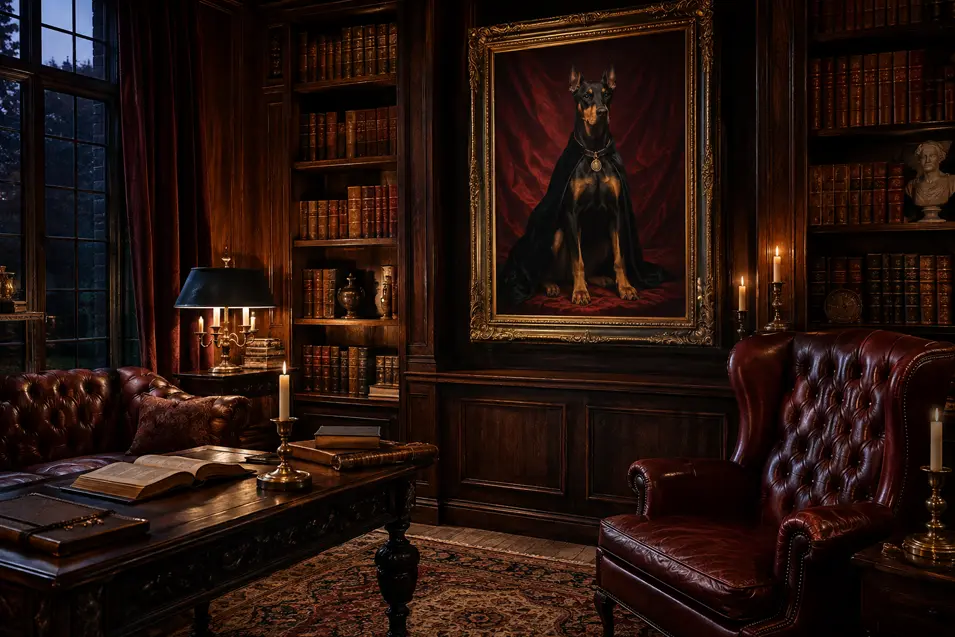
A dramatic home library can carry a much darker portrait.
Here, a powerful Doberman is painted as an aristocratic vampire, seated formally against crimson velvet with the faintest suggestion of an antique collar or cape. The painting remains tasteful and beautifully rendered, avoiding exaggerated fangs or theatrical horror.
Oxblood leather, dark wood, old books and low candlelight make the portrait look completely at home. One might almost believe the estate has belonged to the Doberman for several centuries—and that the current residents are merely his guests.
The Aristocratic Vampire Cats
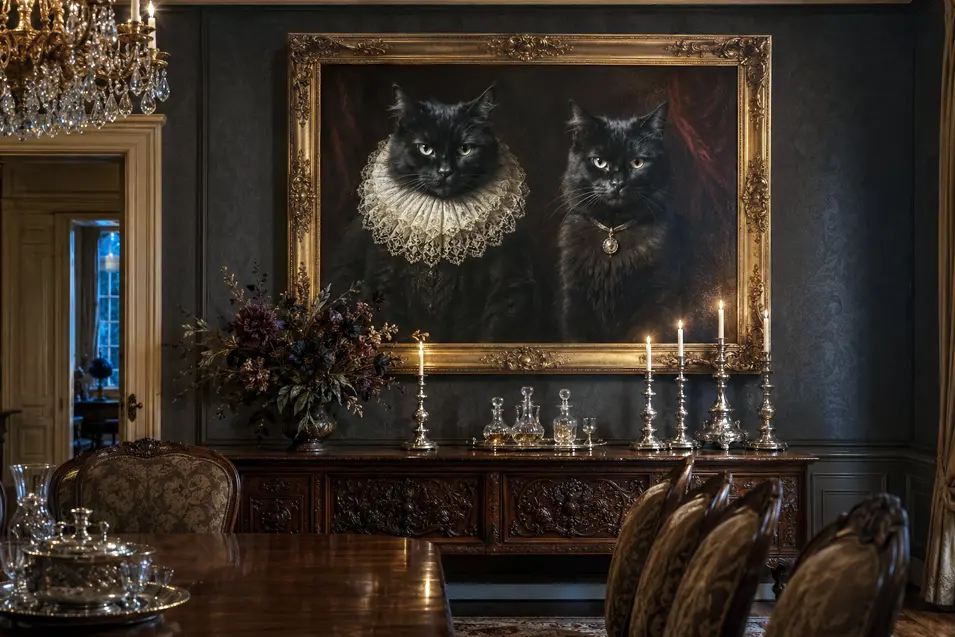
A pair of cats appears in a wonderfully excessive double portrait, dressed as severe Gothic aristocrats. One wears a high lace collar; the other is adorned with a tiny antique medallion. Both stare outward with the cold confidence of animals who have inherited a considerable fortune and have no intention of sharing it.
The humour works because the portrait is displayed beautifully. Hung above a carved sideboard in a formal dining room, it is surrounded by dark floral arrangements, silver candlesticks and carefully arranged antique glassware.
The image is ridiculous, but the room treats it with such complete seriousness that it somehow becomes magnificent.
The Halloween Gallery Wall
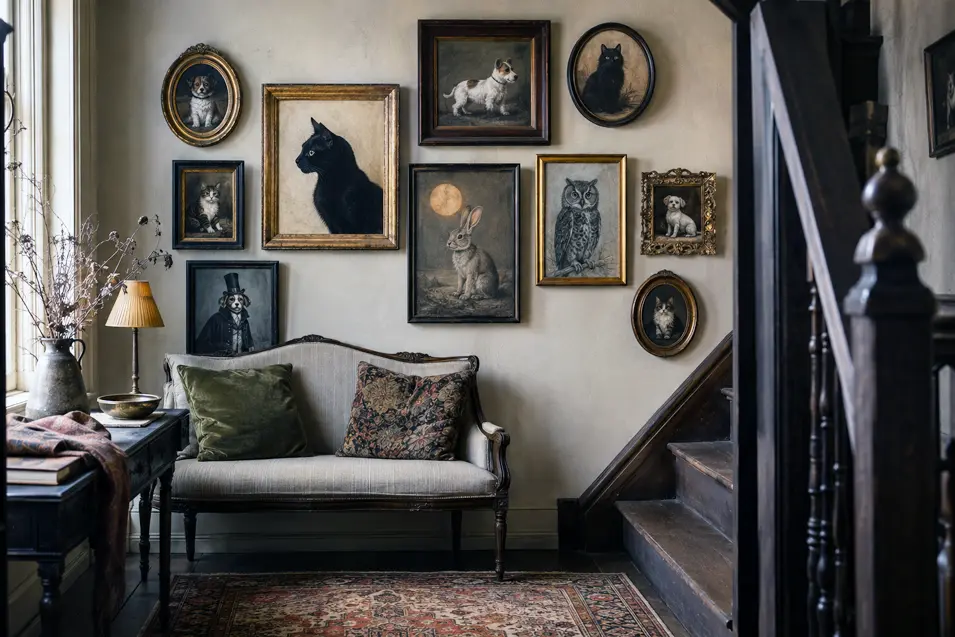
Not every room needs one commanding painting. A collection of smaller works can create an equally memorable effect.
In a stairway or intimate sitting room, a gallery wall brings together a black cat in profile, a solemn rabbit beneath a harvest moon, a tiny dog dressed as a magician, an owl rendered in charcoal and several miniature ancestral pet portraits.
Different frames—aged gilt, black wood, dark walnut and antique oval styles—make the collection feel gathered over time rather than purchased as a matching set.
The result is layered, personal and full of discoveries. Guests may not notice every Halloween detail immediately, which only makes the wall more enjoyable to explore.
The Grand Portrait
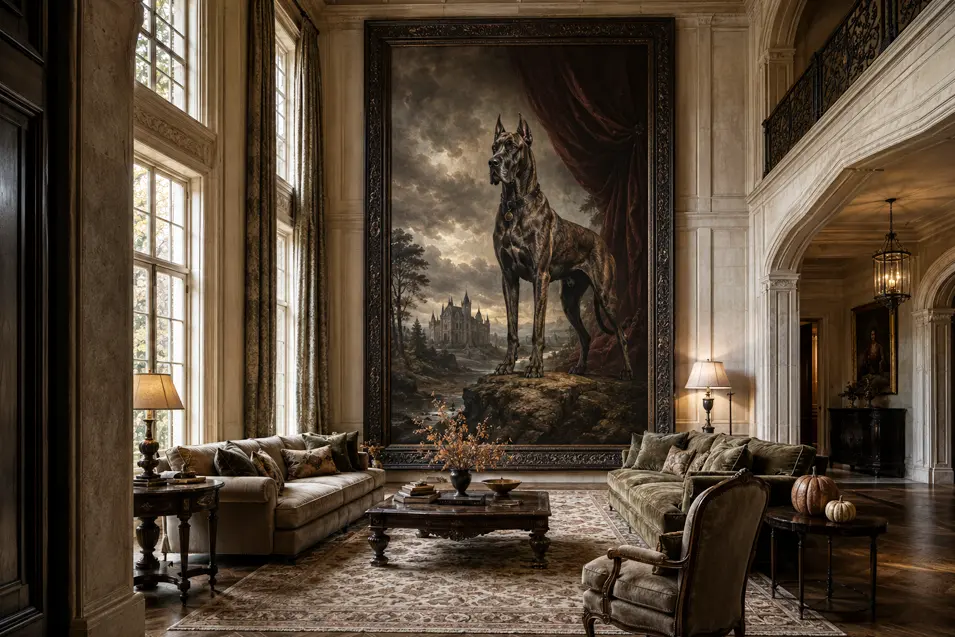
The final room abandons restraint in one spectacular way.
An enormous floor-to-ceiling portrait dominates an otherwise exceptionally elegant living room. The family dog appears as a magnificent Gothic figure—perhaps the mysterious ruler of a forgotten estate—standing beneath a stormy sky with an ancient house in the distance.
The scale is outrageous. The painting is theatrical. Yet everything around it is beautifully controlled: fine upholstery, dark antique tables, tailored curtains and only a handful of carefully selected autumn details.
It is the sort of room that makes visitors stop in the doorway. More importantly, it captures what makes sophisticated Halloween decorating so much fun. A beautiful home does not have to lose its sense of humour simply because it has excellent taste.
A More Beautiful Kind of Halloween
The best Halloween interiors are not necessarily the ones containing the most decorations. They are the rooms that create a mood.
Beautiful pet art offers a way to bring personality, humour and a little darkness into the home without covering every surface in seasonal accessories. The artwork may feature a ghostly dog, an aristocratic cat or a sheep wearing a truly magnificent hat, but it should still feel considered enough to deserve its place on the wall.
Keep the surrounding details restrained. Choose natural materials, atmospheric lighting and objects that complement the room rather than overwhelm it. Let one wonderful piece become the story.
After all, Halloween is much more interesting when the strange and unexpected are presented with impeccable taste.
More Halloween Ideas for a Beautiful Pet-Friendly Home
Halloween decorating doesn’t have to mean filling the house with plastic skeletons and fake cobwebs. There are plenty of ways to celebrate the season while keeping great design — and your pets — firmly in the picture.
For more decorating inspiration, explore our collection of modern Halloween pet art in beautiful homes, where contemporary artwork becomes part of thoughtfully designed interiors.
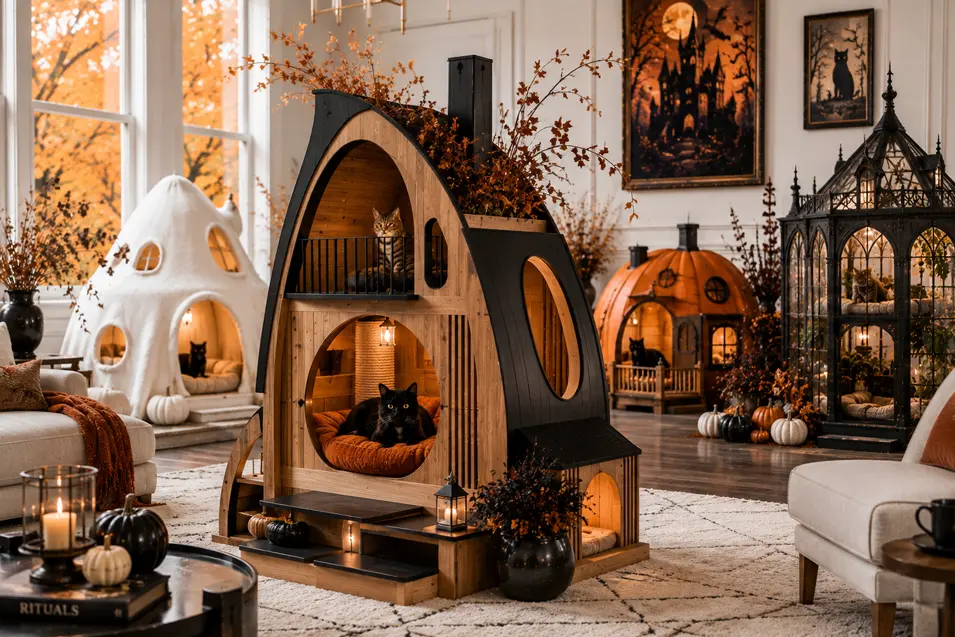
You can also step outside and discover our imaginative Halloween dog houses, ranging from playful seasonal retreats to surprisingly sophisticated canine architecture.
And if you want Halloween to make an impression before anyone even steps inside, take a look at these Halloween entranceways that prove spooky, stylish and pet-friendly can absolutely live together.