Summer makes it relatively easy for children to spend time with their pets. There are long afternoons for backyard games, relaxed mornings for walks and fewer demands competing for their attention.
Once school begins, that can change quickly.
Early mornings become a rush of alarms, lunches and missing shoes. Afternoons fill with homework, sports and activities. By evening, everyone may be tired—including the dog who has been waiting all day for the family to come home.
Giving children age-appropriate pet care responsibilities can help protect the relationship they developed over the summer. It can also teach consistency, empathy and respect for another living creature.
The key is to create responsibilities that fit the child’s age and schedule without making the pet depend on a child who may forget or need help.
An Adult Must Remain Responsible
Children can play an important role in caring for a family pet, but an adult must remain ultimately responsible for the animal’s health and wellbeing.
A child should never be blamed if a dog misses a meal, a cat’s litter box becomes dirty or an animal does not receive necessary veterinary care. Adults are responsible for making sure essential tasks are completed, even when those tasks have been assigned to a child.
The goal is to involve children in pet care—not transfer adult responsibility to them.
Younger children require close supervision, while older children may be able to manage more independently. Even teenagers can become overwhelmed by exams, jobs, sports and social commitments, so parents should continue checking that the pet’s needs are being met.
Choose Responsibilities That Can Survive a School Morning
A responsibility is only helpful if it can realistically be completed.
Asking a child to take the dog for a long walk every morning may sound reasonable in August. It may be far less realistic when the child must catch a school bus at 7:20, finish breakfast and find a misplaced assignment.
Start with the household’s actual weekday schedule. Look for small tasks that fit naturally into routines that already exist.
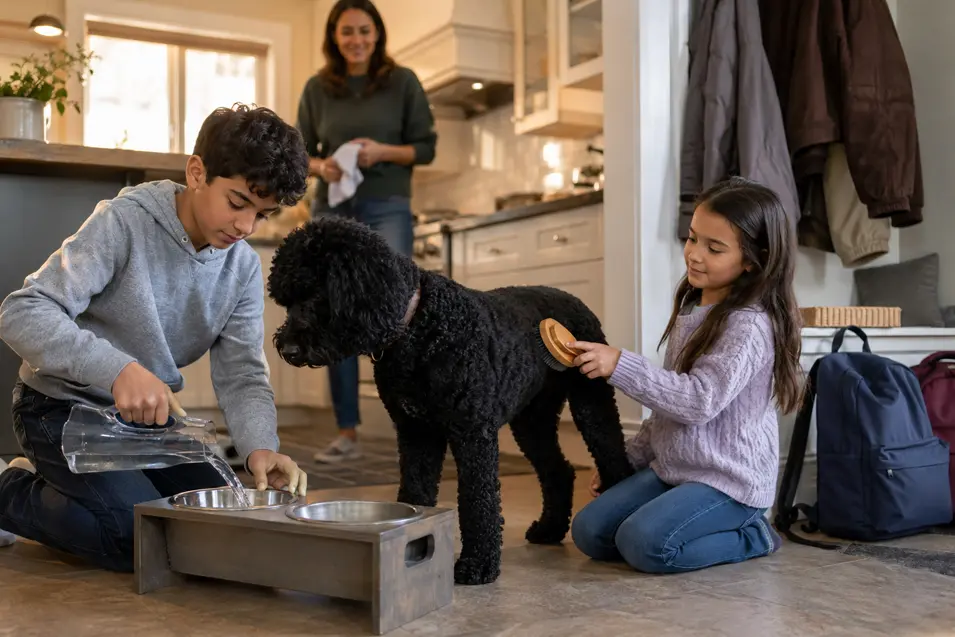
A child might refill the water bowl after brushing their teeth, feed the cat before eating breakfast or let an adult know that the dog is waiting by the door.
Short, predictable tasks are more likely to become habits than complicated morning chore lists.
Pet Care Responsibilities by Age
Children develop at different rates, so age should be treated as a general guide rather than a guarantee of ability. Temperament, experience and the type of pet also matter.
Every interaction between a young child and an animal should be supervised.
Children Ages 3 to 5
Preschool-aged children can begin participating in very simple tasks alongside an adult.
They may be able to:
- Place a toy in the pet’s basket
- Help an adult pour pre-measured food into a bowl
- Choose a toy for a supervised play session
- Gently brush a calm pet while an adult helps
- Say good morning or goodnight to the pet
- Help refill a small animal’s hay under supervision
At this age, the emphasis should be on gentle behaviour and learning that pets have feelings and boundaries.
Children should be taught not to climb on animals, pull tails, disturb sleeping pets or take away food and toys. They should never approach an unfamiliar animal without permission.
Children Ages 6 to 8
Early elementary-aged children may be ready for a few regular tasks, but they still need reminders and supervision.
They may be able to:
- Carry a pre-measured bowl of food to the feeding area
- Check whether the water bowl needs refilling
- Help brush a calm dog or cat
- Participate in a short training session with an adult
- Play an appropriate indoor game
- Help collect toys at the end of the evening
- Accompany an adult on a walk
- Help prepare a food-filled toy
Children this age may be enthusiastic but easily distracted. A visual checklist can help, provided an adult confirms that important tasks have been completed.
Children Ages 9 to 12
Older elementary-aged children can often take on more consistent responsibilities.
Depending on the child and pet, they may be able to:
- Feed the pet using portions prepared or approved by an adult
- Wash food and water bowls
- Brush the pet regularly
- Help clean a small animal’s enclosure
- Scoop a litter box with instruction and proper hygiene
- Practise basic training cues
- Join an adult for longer walks
- Lead a calm, appropriately sized dog with an adult present
- Help pack supplies for an outing
- Record feeding, medication or bathroom information for an adult
Whether a child can walk a dog depends on much more than age. The dog’s size, strength, behaviour and reaction to other animals must all be considered. A child should not walk a dog they cannot safely control.
Teenagers
Teenagers may be capable of managing significant portions of a pet’s routine, but adults should continue providing oversight.
They may be able to:
- Feed pets and monitor water
- Walk a manageable, well-trained dog independently
- Clean litter boxes or enclosures
- Handle regular grooming
- Participate in training classes
- Help schedule reminders for routine care
- Recognize and report changes in behaviour or appetite
- Assist with transportation to veterinary or grooming appointments
- Provide care after school before adults return home
Teenagers should know whom to contact if something goes wrong. They also need clear instructions about when not to handle a situation alone, such as a dog fight, escaped animal, injury or possible poisoning.
Create Simple Morning Responsibilities
School mornings are usually the least forgiving part of the day. Keep pet-related responsibilities brief and essential.
A workable routine might include:
- One child checks the water bowl
- Another gives the pet a pre-measured breakfast
- An older child accompanies a parent on a short dog walk
- Everyone gives the pet space while bags and shoes are collected
- An adult confirms that feeding and bathroom needs have been handled
Preparing supplies the night before can make the routine easier. Measure food, place the leash near the door and make sure waste bags are available.
Avoid assigning a task that leaves the pet waiting if the child sleeps late or misses the bus. The adult backup plan should be automatic rather than treated as a punishment.
Use the Evening to Reconnect
Evenings offer better opportunities for children to spend meaningful time with their pets.
After being away at school, a child may want to greet the dog with a burst of excitement. The dog may be equally enthusiastic. Teaching children to enter calmly can prevent jumping, scratches and accidental collisions in the doorway.
Once everyone has settled, children can reconnect through:
- A family walk
- A supervised game of fetch or tug
- A short training session
- Gentle grooming
- Preparing a puzzle feeder
- Quiet reading beside the pet
- Cleaning bowls or organizing pet supplies
- Sitting together while completing homework
Not every interaction needs to be energetic. A child reading on the sofa with the dog beside them may be maintaining the relationship just as meaningfully as a game in the yard.
Make Pet Care Part of Existing Routines
New habits are easier to remember when they are connected to something the child already does.
For example:
- After brushing teeth, check the water bowl
- Before breakfast, feed the pet
- After arriving home, go outside with the dog and an adult
- Before starting homework, spend five minutes playing with the cat
- After dinner, wash the pet’s food bowl
- Before bed, put away pet toys and check that the water bowl is full
These connections make pet care part of the day rather than another unrelated chore competing for attention.
Use a Family Pet-Care Chart Carefully
A simple chart can help children remember responsibilities, particularly when several family members share pet care.
The chart might list:
- Morning feeding
- Water check
- Dog walks
- Litter box cleaning
- Grooming
- Evening play
- Medication administered by an adult
- Weekly enclosure or bedding care
Keep the chart easy to understand and place it somewhere visible. Avoid turning every interaction with the pet into a points system. Children should learn that caring for an animal is an ongoing commitment, not merely a way to earn a prize.
Adults should quietly verify that essential tasks have been completed. A checked box does not always mean the cat received the correct amount of food or the water bowl was thoroughly cleaned.
Allow Children to Choose Some Responsibilities
Children are more likely to stay engaged when they have some ownership over their role.
One child may enjoy feeding the dog, while another prefers brushing the cat or hiding treats for a scent game. A teenager who dislikes early mornings may be much more dependable with an after-school walk.
Offer a limited selection of appropriate tasks and allow each child to choose. Responsibilities can be rotated occasionally, but constant changes may make the routine harder to remember.
The pet’s needs must still come first. A child cannot choose to handle a task that is unsafe or beyond their ability.
Teach Children to Notice, Not Diagnose
Pet care offers an opportunity to teach children how to pay attention to another living creature.
Encourage them to tell an adult if they notice:
- The pet is not eating or drinking normally
- The water bowl is unusually full or empty
- The dog is limping
- The cat is hiding more than usual
- There is vomiting or diarrhea
- The pet has difficulty going to the bathroom
- The animal appears unusually tired or restless
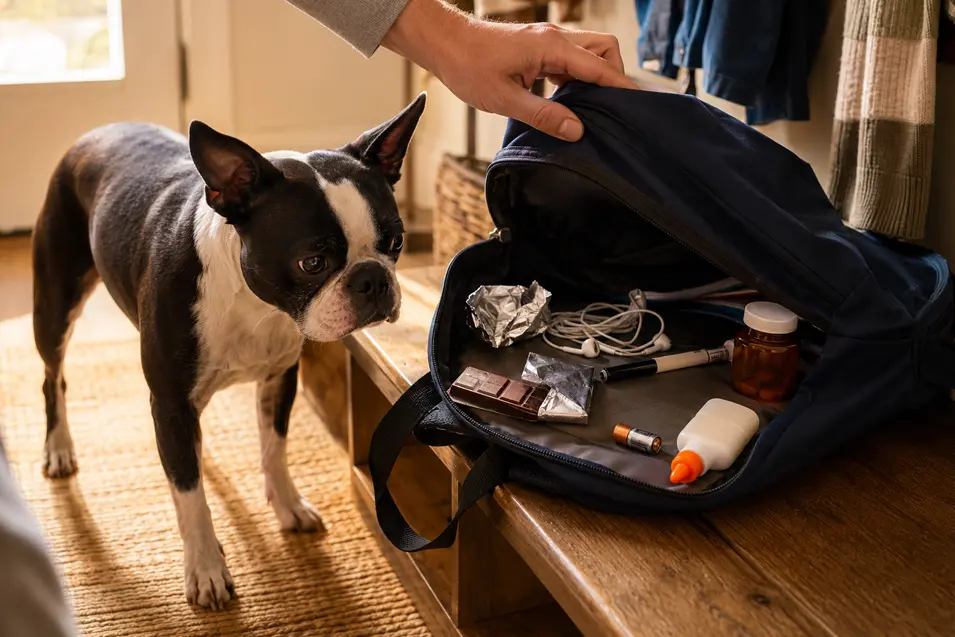
- A pet has chewed or swallowed something suspicious
- Behaviour changes suddenly
Children should not be expected to determine what is wrong. Their job is to notice and tell an adult immediately.
Respect the Pet’s Boundaries
Involving children in pet care must also include teaching them when to leave an animal alone.
Pets need quiet places where they can sleep, eat and retreat without being followed. Children should understand that a pet may not want to play simply because the child has arrived home.
Teach children to recognize basic signs that a dog or cat may be uncomfortable, such as turning away, leaving, hiding, stiffening, flattening the ears, growling or swishing the tail sharply.
Growling should never be punished or treated as bad behaviour. It is a warning that the dog is uncomfortable and needs space. An adult should calmly separate the child and pet, then determine what caused the situation.
Do Not Force Affection
Children may be disappointed when a pet does not want to cuddle, pose for a photo or sleep in their room. This is an important opportunity to teach consent and empathy.
A healthy relationship is not measured by how often a child can hug the dog or carry the cat. It grows through predictable, respectful interactions.
Children can invite a pet to approach rather than chasing or cornering them. They can offer a toy, sit nearby or allow the animal to choose whether to make contact.
Pets often become more comfortable around children who consistently respect their choices.
Adjust Responsibilities During Busy Weeks
School schedules are rarely consistent for an entire year. Exams, performances, tournaments and illnesses will interrupt even the best routine.
Families should discuss in advance who will take over when a child cannot complete a task. A shared responsibility should not become a source of arguments while the pet waits for dinner or a walk.
During particularly busy periods, reduce the child’s role temporarily. They might replace a long evening walk with five minutes of training while an adult handles the exercise.
The relationship can be maintained through small, positive moments until the regular routine returns.
Keep Pet Care Positive
Children should understand that caring for a pet includes unglamorous jobs. Bowls need washing, litter boxes need scooping and dogs still require walks when the weather is unpleasant.
However, pet care should not be used primarily as punishment. Repeatedly assigning unpleasant animal-related tasks when a child misbehaves can create resentment toward the pet.
Provide calm reminders, clear expectations and age-appropriate consequences when responsibilities are ignored. At the same time, recognize genuine effort and improvement.
A School-Year Routine Can Strengthen the Bond
Back-to-school schedules do not need to weaken the relationship between children and their pets.
Small responsibilities can keep children connected while teaching them that animals require daily care regardless of homework, activities or weather. Feeding breakfast, checking the water bowl, practising a few training cues or sharing a quiet moment after school can all become meaningful parts of the day.
The most successful routines are realistic, safe and supported by adults. When children are given responsibilities they can genuinely manage, pet care becomes more than another chore—it becomes one of the ways a lasting friendship is built.