
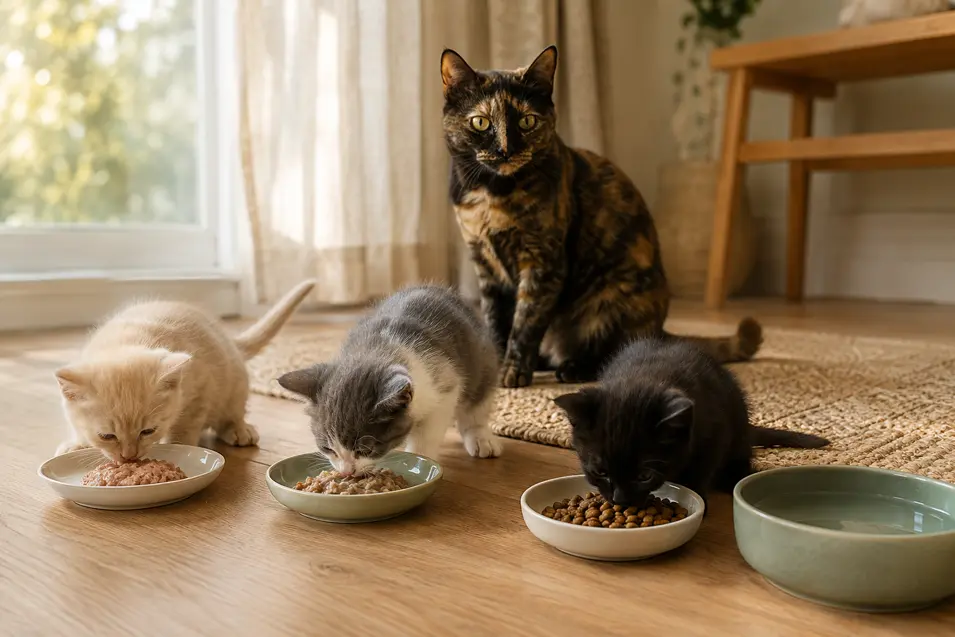
Feeding a cat should be simple: choose an appropriate food, serve the correct amount and provide fresh water. In practice, owners face shelves filled with formulas for kittens, adults, seniors, indoor cats and cats with medical conditions. They must also decide between wet and dry food, determine how often to feed and recognize when a change in appetite signals something more serious than fussiness.
A cat’s nutritional needs change throughout life. A growing kitten requires considerably more energy and different concentrations of nutrients than a sedentary adult. Pregnancy, nursing, aging, illness, activity and body condition can also affect what and how much a cat should eat. Understanding these differences makes it easier to select an appropriate diet without being distracted by marketing claims or changing food unnecessarily.
Understanding a Cat’s Basic Nutritional Needs
Cats are obligate carnivores. This means their bodies depend on nutrients naturally found in animal tissue, including taurine, preformed vitamin A and certain fatty acids. They also need protein, fat, vitamins, minerals and water in carefully balanced amounts.
Being an obligate carnivore does not mean a cat should live on plain meat. Chicken breast, tuna or another single ingredient cannot provide every required nutrient in the correct proportions. Feeding an unbalanced homemade diet over time can cause serious deficiencies even when the ingredients appear fresh and wholesome.
For most cats, the safest foundation is a commercial food labeled as complete and balanced for the cat’s species and life stage. In the United States, the nutritional adequacy statement commonly refers to standards established by the Association of American Feed Control Officials, or AAFCO. Similar nutritional standards and labeling systems apply in other countries.
Look for a statement indicating that the food is complete and balanced for one of the following:
- Growth or kittens
- Adult maintenance
- Gestation and lactation
- All life stages
“Complementary,” “supplemental,” “intermittent feeding” and “treat” products are not intended to provide a cat’s entire diet. Some canned fish, gourmet foods, toppers and broths resemble complete meals but lack the nutritional adequacy statement required of a primary diet.
Water is also an essential nutrient. Cats should have constant access to clean, fresh water regardless of whether they eat wet food, dry food or a combination. Some cats drink more readily from wide bowls, multiple water stations or circulating fountains. Keep water away from litter boxes and clean bowls frequently.
Wet Food Versus Dry Food
Both wet and dry cat food can provide complete nutrition when properly formulated. One is not automatically superior for every cat. The best choice depends on the individual cat’s health, preferences, eating habits and household routine.
Benefits of Wet Cat Food
Canned and pouched foods typically contain much more moisture than kibble. This can increase a cat’s overall water intake, which may be useful for cats that drink very little or have certain urinary, kidney or digestive concerns.
Wet food is often aromatic and easy to chew. These qualities can make it appealing to kittens, older cats and cats with dental discomfort or reduced appetite. It is also available in different textures, including pâté, mousse, minced food, shreds and chunks in gravy.
Because wet food contains water, an equal-sized portion may be less calorie-dense than dry food. The larger volume can help some cats feel satisfied while consuming an appropriate number of calories.
Wet food does have practical disadvantages. It is generally more expensive per calorie, and opened portions require refrigeration. Food left in a bowl can dry out or spoil, particularly in a warm room. Serve an amount the cat will eat during the meal and refrigerate the remainder promptly.
Benefits of Dry Cat Food
Dry food is convenient to store, measure and use in automatic feeders or food puzzles. It usually costs less per calorie than wet food and remains palatable in a bowl longer, although it must still be kept fresh.
Kibble can work well for cats that prefer to eat several small meals. Its concentrated calories, however, make overfeeding easy. A bowl that looks modest to a person may contain more calories than an indoor cat requires.
Ordinary dry food should not be assumed to clean a cat’s teeth. Most pieces break apart with limited contact against the tooth surface. Certain veterinary dental diets are specifically designed and tested to provide a dental benefit, but routine kibble is not a substitute for dental care.
Is a Combination Diet a Good Choice?
Many cats do well with a combination of wet and dry food. This approach provides some of the moisture and variety of wet food while retaining the convenience of kibble.
Count the calories from both foods rather than serving a full daily allowance of each. For example, if wet food supplies half the cat’s daily calories, the dry-food portion must be reduced accordingly.
A combination diet can also help maintain familiarity with multiple textures. That flexibility may be useful if a cat later needs a different food for medical or practical reasons. However, constantly replacing refused meals with something more appealing can teach a cat to hold out for preferred food.
Choosing Food for a Cat’s Life Stage
Nutritional needs do not remain constant from birth through old age. The life-stage statement on the package is more meaningful than attractive terms such as “premium,” “holistic” or “natural.”
Newborn Kittens
During the first weeks of life, kittens depend on their mother’s milk. Orphaned kittens require a commercially prepared kitten milk replacer—not cow’s milk, goat’s milk or a homemade mixture unless a veterinarian has provided a temporary emergency recipe.
Neonatal kittens need frequent feeding, warmth and help eliminating urine and stool. The volume and frequency of formula depend on the kitten’s weight and age. Because small mistakes can quickly lead to dehydration, aspiration, diarrhea or inadequate growth, contact a veterinarian or experienced rescue organization for guidance.
Never feed a chilled kitten. Warm the kitten gradually first, as a cold kitten may be unable to digest formula safely. Formula should be warm rather than hot, and kittens should be fed in a natural belly-down position instead of on their backs like human babies.
Kittens From Weaning to Approximately One Year
Growth places heavy demands on a kitten’s body. Kitten food generally contains more calories and is formulated with nutrient levels appropriate for developing bones, muscles, organs, vision and the nervous system.
Most kittens should continue eating food labeled for growth, kittens or all life stages until approximately 12 months of age. The ideal transition point may vary with growth, body condition, sterilization and veterinary advice.
Young and Mature Adult Cats
At around one year, most cats can transition to a complete and balanced adult-maintenance food. Adult cats no longer need the same calorie concentration required for rapid growth. Continuing to feed energy-dense kitten food can contribute to unwanted weight gain, particularly after spaying or neutering.
Food requirements vary considerably among adults. A highly active outdoor cat may need more calories than an indoor cat with a quiet lifestyle. Monitor body condition and weight rather than relying solely on the broad feeding range printed on the package.
Senior Cats
The AAHA and AAFP feline life-stage guidelines classify cats older than 10 years as seniors, although age alone does not determine the ideal diet. Some older cats gain excess weight as activity declines, while others lose weight and muscle mass despite eating normally.
There is no single formula that suits every senior cat. Kidney disease, hyperthyroidism, diabetes, dental disease, arthritis and digestive disorders become more common with age and can change nutritional priorities. Regular veterinary examinations, weight checks and laboratory testing help determine whether an older cat should remain on a standard complete diet or change to a therapeutic one.
Do not automatically restrict a healthy senior cat’s protein. Older cats need adequate high-quality protein to help preserve muscle, and unnecessary restriction may be counterproductive. A veterinarian can recommend an appropriate diet if kidney disease or another condition requires specific nutrient adjustments.
Pregnant and Nursing Cats
Pregnancy and milk production greatly increase nutritional demands. Pregnant and nursing cats are commonly fed a food formulated for growth, reproduction or all life stages. These diets provide concentrated calories and nutrients to support the mother and her kittens.
A nursing cat may require several times her usual calorie intake, particularly when caring for a large litter. She should have easy access to food and water, and her weight and condition should be monitored closely.
When Can Kittens Start Eating Soft Food?
Kittens generally begin showing interest in food other than their mother’s milk at approximately three to four weeks of age. This is the beginning of weaning, not an abrupt switch from milk to solid food.
Start with a shallow dish containing a soft gruel made from wet kitten food and warm kitten milk replacer or water. The mixture should be easy to lap. Some kittens walk through the dish or wear more food than they swallow during their first attempts, so use a washable surface and gently clean them afterward.
Never push a kitten’s face into food. Allow the kitten to smell and investigate it. A small amount placed on a clean fingertip or the kitten’s lips may encourage licking, but food should not be forced into the mouth.
Over the following weeks, gradually reduce the liquid until the kittens can eat wet kitten food on its own. Dry kitten food can initially be softened with warm water or kitten milk replacer. By approximately six to eight weeks, most kittens can eat wet or dry kitten food and are largely or completely weaned.
The process should follow the kittens’ development rather than a rigid deadline. Premature, orphaned, underweight or unwell kittens may need an individualized schedule. Kittens should continue receiving kitten-specific nutrition after weaning; becoming capable of chewing solid food does not mean they are ready for adult cat food.
Can Kittens Eat Adult Cat Food?
A kitten stealing a few bites from an adult cat’s bowl is unlikely to be harmed. The problem arises when adult-maintenance food becomes the kitten’s regular diet.
Kittens require more energy and specific levels of protein, fat, vitamins and minerals to support rapid growth. Adult-maintenance food is designed to maintain a mature body rather than build a developing one. Feeding it as the primary diet can leave a kitten short of calories or essential nutrients.
Food labeled for all life stages is formulated to support growth as well as adulthood, so it can generally be fed to kittens. Because all-life-stages food must meet the demands of growth, it may also be relatively calorie-dense. Adult cats sharing the same food may therefore need carefully controlled portions.
In a household with kittens and adult cats, separate meals are often the easiest solution. Feed each cat in a different room, pick up bowls after the meal or use microchip-activated feeders. This prevents kittens from filling up on adult food and stops adult cats from overeating rich kitten food.
Most kittens can begin changing to adult-maintenance food around their first birthday. Make the transition gradually rather than switching overnight. A veterinarian may recommend different timing for a cat that is still growing, underweight, overweight or managing a medical problem.
Helping a Cat That Struggles With Dry Food
A cat may have difficulty eating kibble because the pieces are too large or hard, the mouth is painful, the cat is dehydrated or the food has become stale. Kittens learning to eat and some senior cats may also prefer a softer texture.
Dry cat food can be softened with warm water. Place the measured portion in a clean bowl, add enough warm—not boiling—water to moisten it and allow the kibble to absorb the liquid. Mash it with a fork if a smoother consistency is needed.
A small amount of the cat’s usual wet food can also improve aroma and texture. Use a complete cat food rather than milk, gravy, salty broth or tuna brine. If using commercial broth, confirm that it contains no onion, garlic, excessive sodium or other unsuitable ingredients.
Once water has been added, kibble should be treated more like wet food. Prepare only one meal at a time, discard uneaten food after the meal and wash the bowl. Do not keep repeatedly adding fresh food to old, moistened leftovers.
Softening food may help temporarily, but it does not explain why chewing has become difficult. A cat that suddenly drops kibble, chews on one side, paws at the mouth, drools, has bad breath or refuses hard food may have dental disease, a damaged tooth, oral inflammation or another painful condition. Arrange a veterinary examination instead of relying indefinitely on softer food.
How to Change Cat Food Without Causing Digestive Upset
An abrupt diet change can cause vomiting, diarrhea, gas or refusal to eat. Unless a veterinarian recommends an immediate change, introduce the new food gradually over approximately seven to ten days.
A simple transition schedule is:
- Days 1 and 2: 75 percent old food and 25 percent new food
- Days 3 and 4: 50 percent old food and 50 percent new food
- Days 5 and 6: 25 percent old food and 75 percent new food
- Day 7 onward: 100 percent new food
Sensitive cats may need a slower transition lasting 10 to 14 days or longer. If loose stool or vomiting develops, pause at the current ratio or return to the last well-tolerated mixture and contact a veterinarian if symptoms persist.
Some cats notice even small changes and refuse a mixed meal. In that case, place a small amount of the new food in a separate dish beside the familiar food. Gradually increase exposure without allowing the cat to go hungry in an attempt to force acceptance.
Texture matters as much as flavor. A cat accustomed to pâté may reject chunks in gravy even when both foods contain the same protein. When possible, begin with a new food that resembles the familiar diet in texture and temperature.
Transitioning from kitten to adult food should also be gradual. The same applies when changing brands, proteins, wet-food textures or prescription diets. A veterinarian may modify the schedule when a rapid nutritional change is medically necessary.
How Much Should a Cat Eat?
The correct portion depends on the food’s calorie density and the cat’s age, weight, body condition, activity, reproductive status and health. Two foods occupying the same volume can contain very different numbers of calories.
The feeding guide on the package is a starting point rather than a guarantee. Monitor the cat’s weight and body condition and adjust the amount with veterinary guidance. A kitchen scale provides more consistent measurements than estimating by eye, and it is often more accurate than a measuring cup for dry food.
At an ideal body condition:
- The ribs can be felt beneath a light layer of fat without pressing firmly.
- A waist is visible behind the ribs when viewed from above.
- The abdomen has a slight upward tuck when viewed from the side.
- The spine and hip bones are not sharply prominent.
- There is no heavy covering of fat over the ribs or lower back.
Weigh growing kittens regularly to confirm steady development. Adult cats should also be weighed periodically because gradual gain or loss can be difficult to notice under fur. An unexplained change of even a modest amount can be meaningful in a small animal.
Treats, dental chews, table food, supplements and food used to administer medication all contribute calories. Extras should generally remain below 10 percent of the daily calorie allowance so they do not displace complete nutrition.
How Often Should Cats and Kittens Be Fed?
Cats naturally tend to eat several small meals rather than one very large meal. A practical schedule depends on age and household routine.
Newborn and Bottle-Fed Kittens
Very young kittens require formula at frequent intervals around the clock. The schedule changes quickly as they grow and should be based on age, weight and veterinary or rescue guidance.
Weaning and Growing Kittens
Most growing kittens do well when their daily food is divided into three or four small meals. Their stomachs are small, but their energy needs are high. Regular meals also make it easier to monitor how much each kitten eats.
As kittens approach adulthood, meals can gradually shift toward an adult schedule. Do not simply keep a large bowl continuously full unless intake and growth are being carefully monitored.
Adult Cats
Most healthy adult cats can be fed at least twice daily. Some benefit from three or more smaller meals, especially if they eat too quickly, vomit after large meals or beg between feedings.
Automatic feeders and food puzzles can divide dry food into several measured portions. Wet food feeders with cooling elements may provide similar scheduling options, but they must be cleaned carefully.
Senior Cats
Senior cats may prefer smaller, more frequent meals, particularly if appetite declines or digestive problems develop. Easy access is important. Place food and water where a cat with arthritis, weakness or impaired vision can reach them without climbing stairs or competing with other pets.
Is Free Feeding a Good Idea?
Free feeding means leaving food available throughout the day. It may work for a cat that regulates intake well and maintains an ideal weight, but many cats consume more calories than they need when food is constantly accessible.
Free feeding also makes it difficult to know whether a cat’s appetite has changed, especially in a multi-cat home. Measured meals provide better information about intake and make weight management easier.
If you leave dry food available, measure the entire daily amount rather than repeatedly filling an empty-looking bowl. Replace stale food and wash the dish regularly.
Feeding Multiple Cats
Cats sharing a home do not necessarily have the same nutritional needs. One may require kitten food while another needs adult maintenance, calorie restriction or a prescription diet.
Feeding cats separately allows you to measure intake and prevents stealing. Separate rooms, visual barriers, elevated feeding areas or microchip feeders can help. Do not assume the shy cat is eating simply because food disappears; a more confident housemate may be consuming both portions.
Food competition can create stress even without obvious fighting. Provide multiple feeding stations with space between them and avoid placing every bowl in a tight row. A cat should be able to eat without being stared at, cornered or blocked from leaving.
Common Feeding Problems
Eating Too Quickly
Fast eating can lead to regurgitation or vomiting immediately after a meal. Divide the daily portion into smaller meals, spread wet food across a wide plate or use a puzzle feeder designed for cats. Make sure other pets are not creating competition.
Repeated vomiting is not always caused by eating quickly. Arrange veterinary care if it continues, contains blood, is accompanied by weight loss or occurs with other signs of illness.
Refusing a New Food
Cats can be sensitive to changes in smell, texture, bowl location and serving temperature. Introduce new food gradually and avoid offering an endless rotation of alternatives after each refusal.
Serve wet food at room temperature or warm it slightly to increase aroma. Stir it thoroughly and test the temperature before serving. Never microwave food in a metal container, and be aware that microwaves can create hot spots.
Begging Despite Eating Enough
Begging may be learned behavior, boredom or competition rather than genuine hunger. Use measured meals, interactive play and food puzzles instead of responding with extra portions.
A sudden increase in appetite can also accompany hyperthyroidism, diabetes, intestinal disease or other medical problems. Veterinary attention is warranted when increased hunger occurs with weight loss, excessive thirst, frequent urination, vomiting or diarrhea.
Weight Gain
Weight gain usually develops when calorie intake exceeds energy use. Even small daily excesses accumulate over time. Measure food, include treats in the total and provide daily play.
Do not place an overweight cat on a severe crash diet. Cats that lose weight too quickly—especially overweight cats that stop eating—are at risk of hepatic lipidosis, a dangerous liver condition. Work with a veterinarian on a controlled weight-loss plan.
Weight Loss
Unplanned weight loss is not a normal consequence of aging. Dental pain, kidney disease, hyperthyroidism, diabetes, cancer, digestive disorders and other conditions can cause weight loss. A cat may lose muscle while body weight changes only slightly, so pay attention to the spine, shoulders and hindquarters as well as the number on the scale.
Eating Dirt or Other Non-Food Materials
A cat that repeatedly eats dirt, litter, plastic, fabric, paper or other non-food material may have pica. Possible contributors include gastrointestinal disease, anemia, nutritional imbalance, stress, compulsive behavior or simple exploratory behavior in a young cat.
Eating dirt is not a reliable way for a cat to correct a nutritional deficiency and should not be dismissed as harmless. Soil may contain fertilizer, pesticides, parasites, mold, sharp debris or toxic plants. Block access and arrange a veterinary examination, particularly if the behavior is new, frequent or accompanied by vomiting, diarrhea, lethargy, pale gums or weight loss.
Signs a Feeding Problem Requires Veterinary Attention
Changes in eating behavior can be among the earliest signs of illness. Contact a veterinarian if your cat:
- Refuses food or eats substantially less than usual
- Has difficulty chewing or swallowing
- Drops food from the mouth
- Drools, paws at the mouth or has noticeably bad breath
- Vomits repeatedly
- Develops persistent diarrhea or constipation
- Gains or loses weight unexpectedly
- Drinks or urinates much more than usual
- Appears hungry but continues losing weight
- Coughs, gags or struggles to breathe while eating
- Becomes weak, withdrawn or unusually sleepy
- Develops a swollen or painful abdomen
- Eats dirt, litter, fabric, plastic or other non-food material
- Cannot keep food or water down
A cat that has eaten little or nothing for approximately 24 hours requires prompt veterinary advice. Do not wait that long for a young kitten, a cat with diabetes or another medical condition, or a cat showing additional symptoms. Kittens have limited energy reserves and can deteriorate quickly.
Cats should never be forced to go without food to make them accept a new diet. Prolonged food refusal can become dangerous, particularly in overweight cats.
Frequently Asked Questions
What is the best food for a cat?
The best starting point is a food that is complete and balanced for the cat’s life stage and that the cat can digest, maintain a healthy weight on and eat reliably. Health conditions, calorie needs, preferences and veterinary recommendations may narrow the choice further. Price, ingredient-list appearance and marketing terms alone do not determine nutritional quality.
Is wet food better than dry food for cats?
Wet food provides more moisture and may be useful for certain cats, while dry food offers convenience and works well in measured feeders and puzzles. Either can provide complete nutrition. Many cats thrive on a carefully portioned combination.
Can dry cat food be softened?
Yes. Add warm water to a measured portion and allow the kibble to absorb it before serving. Discard leftovers after the meal and wash the bowl. A cat that suddenly cannot chew dry food should receive a dental and veterinary examination.
When can kittens eat soft food?
Most kittens begin trying soft food at approximately three to four weeks. Start with wet kitten food thinned into a gruel and gradually reduce the added liquid. Most kittens can eat wet or dry kitten food by six to eight weeks.
Can kittens eat adult cat food?
An occasional bite is unlikely to cause harm, but adult-maintenance food should not be a growing kitten’s primary diet. Use food labeled for kittens, growth or all life stages until approximately one year of age unless a veterinarian recommends otherwise.
When should a kitten switch to adult food?
Most cats can gradually transition around 12 months old. Make the change over approximately seven to ten days. Body condition, breed, growth rate and health may affect the timing.
How many times a day should a cat eat?
Growing kittens commonly do best with three or four small meals. Most adult cats should receive at least two measured meals, although several smaller meals may suit feline eating behavior and help some cats feel satisfied.
Should cats have food available all day?
Some cats maintain a healthy weight while free feeding, but others overeat. Leaving food out also makes changes in appetite harder to detect. Measured meals are generally easier for monitoring intake and body weight.
Why has my cat suddenly become picky?
A sudden change in appetite may reflect dental pain, nausea, stress, illness, spoiled food or a change in the food’s formula or texture. A cat that refuses meals, loses weight or shows other symptoms should be examined rather than assumed to be merely fussy.
Can cats eat homemade food?
A home-prepared diet can be appropriate only when it is formulated to provide all required nutrients in the correct amounts. Recipes assembled without veterinary nutritional expertise are frequently incomplete or unbalanced. Consult a board-certified veterinary nutritionist before feeding a homemade diet long term, particularly to a growing kitten or a cat with a medical condition.
The Bottom Line
Good feline nutrition begins with a complete and balanced food selected for the cat’s life stage. Kittens need growth-specific nutrition and several small meals as they develop. Most adults require carefully measured portions to maintain a healthy body condition, while senior cats benefit from individualized feeding plans based on weight, muscle condition and health.
Wet food, dry food or a combination can all be suitable. The label, calorie content, portion size and cat’s response matter more than broad claims that one format is universally best. Introduce dietary changes gradually, keep fresh water available and monitor how much each cat actually eats.
Difficulty chewing, food refusal, unexpected weight changes, excessive hunger or eating non-food materials should not be dismissed as quirks. Feeding behavior provides valuable information about a cat’s health, and timely veterinary attention can prevent a manageable problem from becoming an emergency.